Egyptian Jewelry Museum Materials: Ancient vs Modern Properties
Explore the material properties of ancient gems and metals seen in an Egyptian jewelry museum, comparing historical artifacts to modern grades.

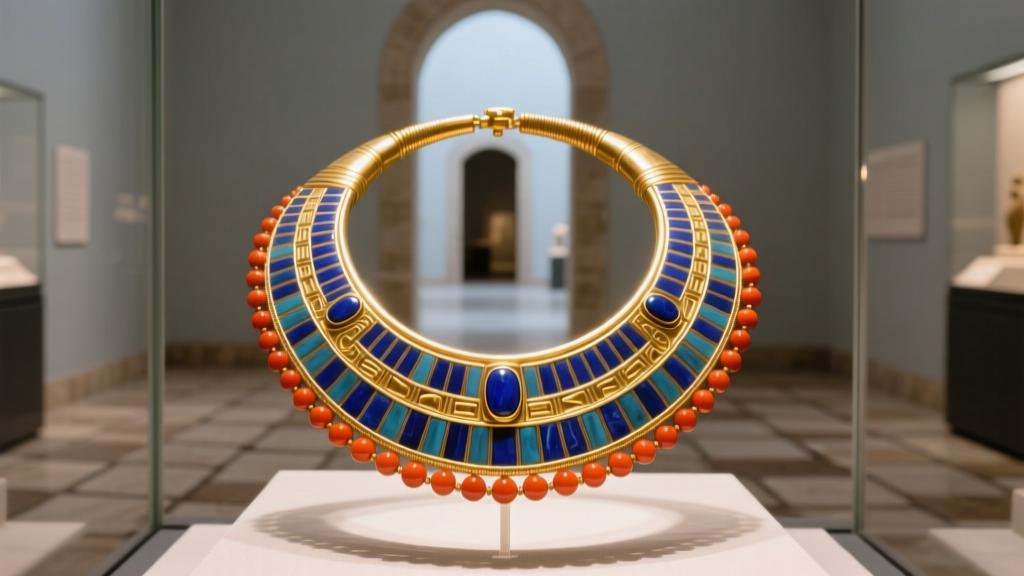
Walking through the hallowed halls of an Egyptian jewelry museum, whether it is the Grand Egyptian Museum in Giza or the Metropolitan Museum of Art in New York, one is immediately struck by the vibrant, enduring colors of ancient adornments. The broad collars, pectorals, and scarab rings of the pharaohs were not merely decorative; they were deeply symbolic, crafted from materials believed to hold divine power. But how do these ancient materials compare to the gems and metals available to modern jewelry enthusiasts and collectors?
As a jewelry historian and gemologist, I frequently analyze the physical properties of ancient artifacts to understand their longevity. In this comprehensive guide, we will decode the material science behind the masterpieces of ancient Egypt, comparing historical grades and metallurgical techniques with their modern equivalents. Whether you are sourcing museum-quality replicas or simply want to understand the gemological properties of these sacred stones, this material comparison will provide actionable, expert-level insights.
Decoding the Display Cases: The Sacred Trinity of Gems
The most iconic pieces in any Egyptian jewelry museum exhibit rely on a specific triad of semi-precious stones: Lapis Lazuli, Carnelian, and Turquoise. These stones were chosen not just for their striking visual contrast against gold, but for their metaphysical associations with the heavens, blood, and the Nile. However, the material grades used by ancient lapidaries differ significantly from what is commercially available today.
Lapis Lazuli: Afghan Grade vs. Chilean Grade
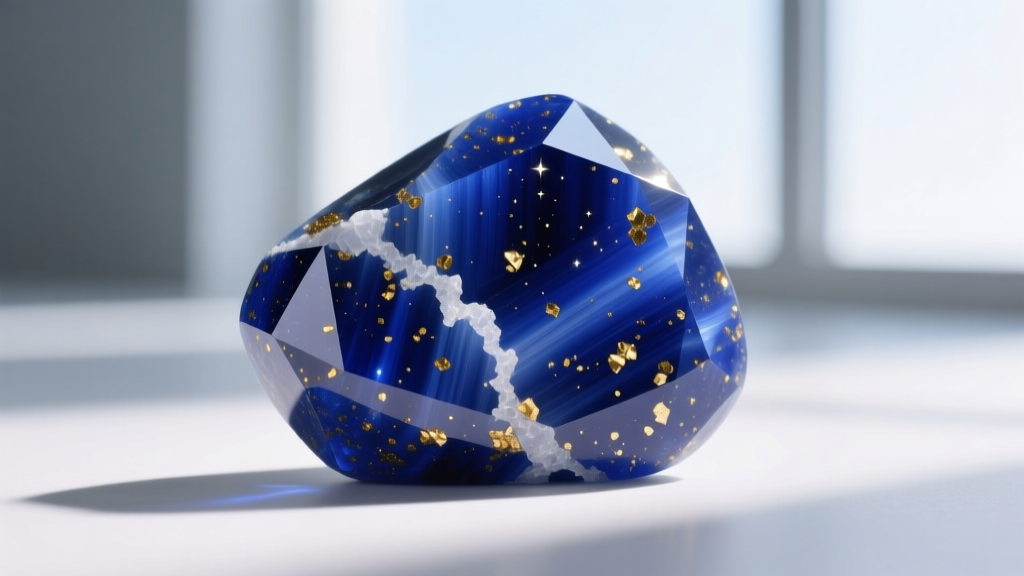
Ancient Egyptian lapis lazuli was sourced almost exclusively from the Sar-e-Sang mines in the Badakhshan province of modern-day Afghanistan. This material is considered the global benchmark for quality. According to the Gemological Institute of America (GIA), top-tier Afghan lapis is characterized by a deep, saturated royal blue color (often described as ultramarine) with minimal white calcite veining and evenly distributed golden pyrite inclusions.
- Ancient/Badakhshan Grade: Mohs hardness of 5 to 5.5. Specific gravity of 2.7 to 2.9. The lazurite content exceeds 25%, providing the intense blue hue. It is highly porous and susceptible to damage from acids and harsh chemicals.
- Modern Chilean Grade: Often lighter in tone with a noticeable greenish tint due to higher hauyne content and prominent white calcite matrix. While more affordable, it lacks the depth required for high-end museum replicas.
- Modern Russian (Lake Baikal) Grade: Features a distinct, heavy pyrite matrix that can sometimes overpower the blue, making it less historically accurate for Egyptian replication.
Carnelian: Natural vs. Heat-Treated Agate
Carnelian, representing the life force and the sun, was a staple in Egyptian signet rings and amulets. True carnelian is a variety of chalcedony colored by iron oxide impurities. Today, the market is flooded with dyed and heat-treated agate sold as carnelian.
Natural, untreated carnelelian exhibits a Mohs hardness of 6.5 to 7, making it highly durable for daily wear. When examining a piece, look for a cloudy distribution of color and subtle internal banding. Heat-treated agate, conversely, often displays an unnaturally uniform, hyper-saturated orange-red hue with a glassy, highly polished finish that lacks the waxy luster of genuine ancient carnelian.
Turquoise: The Matrix and Stabilization Debate
While the Egyptians heavily utilized turquoise from the Sinai Peninsula, modern sourcing relies on deposits in the American Southwest, Iran, and China. Sinai turquoise is largely depleted, but its historical profile was a robin's-egg blue with minimal brown matrix.
| Material | Mohs Hardness | Specific Gravity | Common Modern Treatments | Care & Maintenance |
|---|---|---|---|---|
| Lapis Lazuli (Afghan) | 5.0 - 5.5 | 2.7 - 2.9 | Waxing, Dyeing (poor grades) | Avoid ultrasonic cleaners; wipe with damp cloth |
| Carnelian (Natural) | 6.5 - 7.0 | 2.58 - 2.64 | Heat treatment (industry standard) | Highly durable; safe for ultrasonic cleaning |
| Turquoise (Persian) | 5.0 - 6.0 | 2.6 - 2.9 | Epoxy stabilization, Zachery method | Avoid cosmetics and heat; highly porous |
| Faience (Modern Ceramic) | 6.0 - 7.0 | 2.2 - 2.6 | None (inherently synthetic) | Brittle; avoid hard impacts and thermal shock |
Electrum and Gold: The Metallurgy of the Pharaohs
Gold was considered the flesh of the gods in ancient Egypt, but pure 24k gold is too soft (Mohs 2.5) for the intricate structural settings required in broad collars and heavy pectorals. To solve this, Egyptian metallurgists frequently utilized electrum, a naturally occurring alloy of gold and silver.
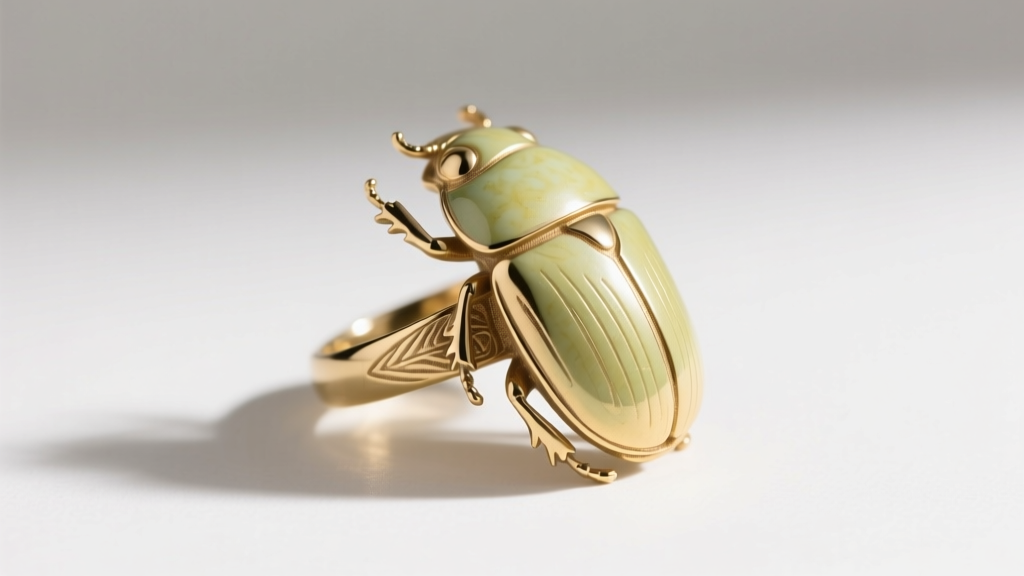
Historical analysis of artifacts housed in institutions like the Metropolitan Museum of Art reveals that ancient electrum typically contained between 70% and 90% gold, with the remainder being silver and trace amounts of copper. This composition yielded a distinct pale yellow-green hue and significantly increased the Vickers hardness of the metal, allowing for the crisp chasing and repoussé work seen on scarab beetles and falcon motifs.
Modern Equivalents for Sourcing
If you are commissioning a custom piece inspired by museum artifacts, requesting "electrum" from a modern jeweler can be challenging, as it is not a standard commercial alloy. Instead, consider these metallurgical alternatives:
- 18k Green Gold: An alloy of 75% gold and 25% silver (sometimes with a touch of cadmium or zinc, though cadmium is restricted in many regions). This mimics the color and hardness of high-grade ancient electrum.
- 22k Yellow Gold: Comprising 91.6% gold, this was used for the main bodies of ancient rings and amulets. It offers a rich, warm color and is hard enough for bezel settings, though it will scratch more easily than 18k alloys.
- Sterling Silver with Heavy Gold Vermeil: For budget-conscious collectors wanting the visual weight of museum pieces without the bullion price, a thick 2.5-micron 22k vermeil over sterling silver provides historical color accuracy and structural durability.
Faience: The Original Synthetic Gemstone
No discussion of an Egyptian jewelry museum is complete without addressing faience. Often mistaken for glazed clay, true Egyptian faience is a sintered-quartz ceramic. It was created by mixing ground quartz or sand with copper oxide (for the iconic blue-green color), lime, and an alkali binder. The mixture was shaped, dried, and fired, causing the copper to migrate to the surface and form a vitreous, glassy glaze.
Faience was the "gemstone of the commoner," allowing widespread access to the protective colors of the gods. From a material science perspective, ancient faience is highly fragile, with a low tensile strength and a tendency to craze (develop fine surface cracks) over millennia due to moisture absorption.
Modern Faience vs. Enamel
When sourcing modern replicas, you will rarely find true sintered-quartz faience. Instead, jewelers use two primary substitutes:
- Vitreous Enamel (Plique-à-jour or Champlevé): Fusing powdered glass to a metal backing at high temperatures. This provides a brilliant, glassy finish that closely mimics the vitreous surface of ancient faience, with vastly superior durability and color stability.
- Epoxy Resin/Cold Enamel: Frequently used in mass-market tourist replicas. While it can be dyed to match the exact Pantone shade of Egyptian blue, resin lacks the refractive index of glass, appears plasticky under UV light, and degrades (yellows and chips) within a few years of wear.
Sourcing Museum-Quality Replicas: A Buyer’s Framework
Translating the awe of an Egyptian jewelry museum exhibit into a wearable, modern wardrobe requires a discerning eye for material integrity. Use this decision framework when evaluating potential purchases:
The Museum-Quality Checklist:
1. Stone Backing: Ancient Egyptians often backed thin slices of turquoise and lapis with bitumen or resin to prevent breakage. Modern high-end replicas should use a solid metal backing or a stabilized stone, never bare, untreated porous stone in a tension setting.
2. Bezel vs. Prong: Prong settings are a modern invention. Authentic Egyptian-style jewelry relies exclusively on bezel, channel, or cloisonné settings to secure cabochons.
3. Alloy Disclosure: Ensure the jeweler provides the exact karat and alloy composition. If a piece is marketed as "Egyptian Gold," it must be hallmarked (e.g., 18k or 22k); otherwise, it is likely gold-plated brass.
Conclusion
The materials preserved within an Egyptian jewelry museum are a testament to the ancient world's profound understanding of geology and metallurgy. By understanding the specific grades of lapis lazuli, the treatment realities of carnelian, and the alloy compositions of electrum, modern collectors can make informed decisions. Whether you are investing in a bespoke 22k gold and Afghan lapis broad collar or a stabilized turquoise scarab ring, prioritizing material properties ensures your jewelry will endure just as the pharaohs intended.


