Understanding Chumash Indian Jewelry: Shell & Stone Properties
Explore the material properties of authentic Chumash Indian jewelry. Compare olivella shell, abalone, and steatite in our detailed guide.

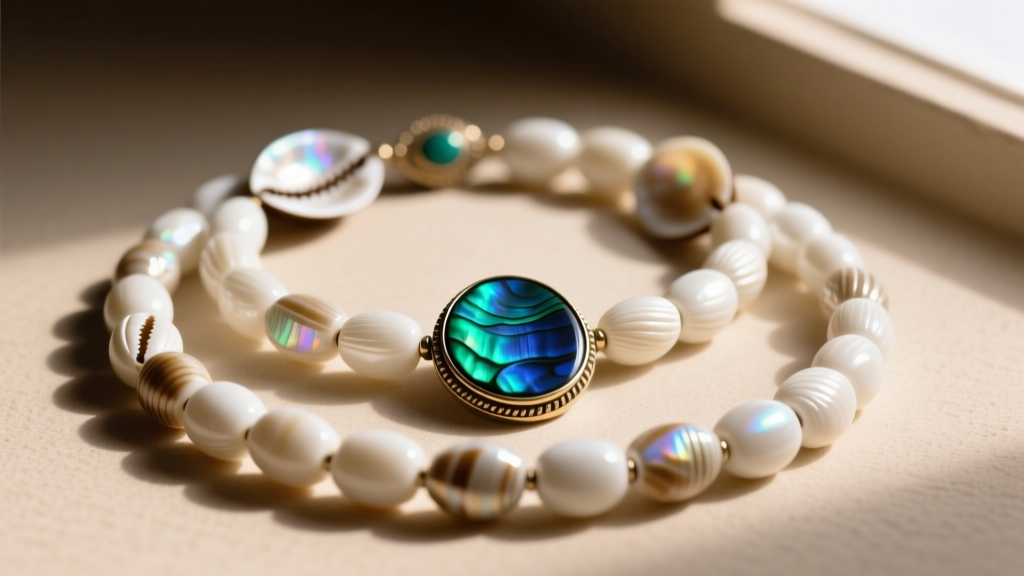
The Material Science of Coastal Adornment
When evaluating regional and cultural adornments, few traditions demonstrate a mastery of local material science quite like the Chumash people of California's central and southern coast. Authentic Chumash Indian jewelry is not merely decorative; it is a complex socio-economic marker, a form of currency, and a testament to advanced lapidary skills. As collectors, historians, and enthusiasts navigate the market in 2026, understanding the specific mineralogical and organic properties of these materials is critical for authentication, preservation, and appreciation.
The Chumash utilized a highly specific triad of materials: Olivella biplicata (purple olive shell), Haliotis rufescens (red abalone), and steatite (soapstone). Each material possesses distinct structural characteristics, Mohs hardness ratings, and vulnerabilities that dictate how they were historically worked and how they must be preserved today. According to archives from the Santa Barbara Museum of Natural History, the Chumash were among the most prolific shell bead manufacturers in North America, producing millions of beads that circulated through vast indigenous trade networks.
The Big Three: Organic and Lithic Materials
Olivella Shell: The Currency of the Coast
The foundation of Chumash Indian jewelry and regional trade was the Olivella biplicata shell. While the shell's exterior is a mottled purple and brown, the Chumash specifically targeted the columella—the thick, solid, white central axis of the shell. By breaking away the fragile outer whorls, artisans isolated the dense columella to create highly durable, tubular beads.
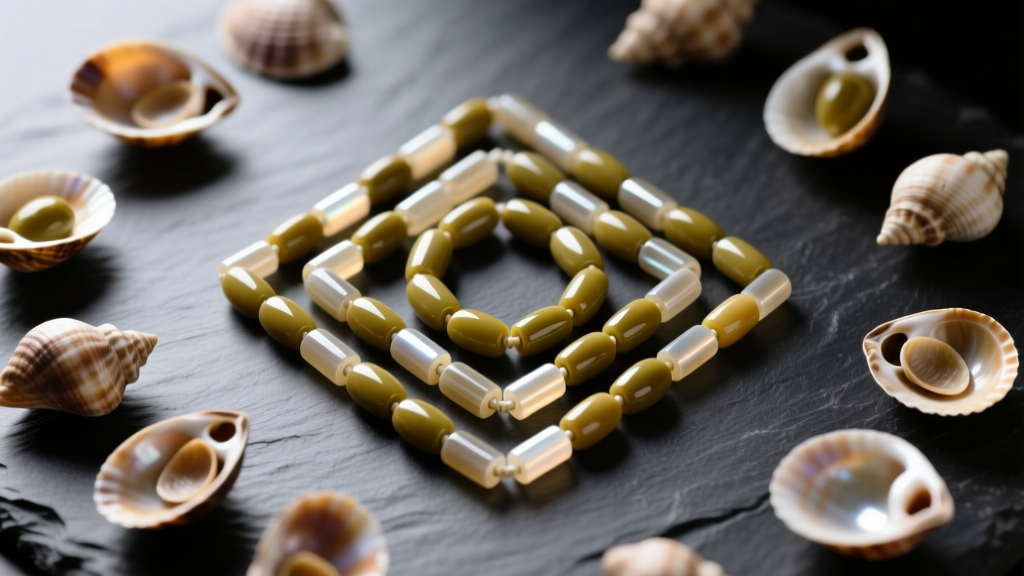
From a material science perspective, the columella is composed of dense calcium carbonate (aragonite) with a Mohs hardness of roughly 3.5 to 4.0. This density allowed the Chumash to employ a sophisticated micro-drilling technique. Using chert or chalcedony micro-drills mounted on wooden shafts, they bored precise, biconical holes through the thick shell. Modern machine-drilled replicas often feature perfectly cylindrical, laser-straight holes, whereas authentic historical beads display a distinct hourglass-shaped bore where the drill met in the center.
Abalone: Iridescence and Structural Fragility
While Olivella was the workhorse of trade, red abalone (Haliotis rufescens) was reserved for high-status pendants, ear spools, and ceremonial adornments. The mesmerizing iridescence of abalone nacre is caused by the microscopic layering of aragonite platelets and conchiolin (an organic biopolymer), which interfere with light waves to produce vibrant blues, greens, and pinks.
Abalone is notoriously difficult to work. With a Mohs hardness of 3.5, it is soft enough to be shaped with sandstone abrasives but highly prone to delamination. The nacre layers can easily split if subjected to percussive force. Historically, Chumash artisans carefully ground the edges of abalone blanks to create smooth, circular ear spools and rectangular pendants, polishing them with fine sand and animal fats to achieve a glass-like luster. Today, abalone remains highly sensitive to ultrasonic cleaners and acidic solutions, which can dissolve the calcium carbonate matrix and permanently dull the nacre.
Steatite (Soapstone): The Carver's Medium
For three-dimensional effigies, frog pendants, and intricate beads, the Chumash relied on steatite, commonly known as soapstone. Sourced primarily from outcrops on Santa Catalina Island and the mainland coast, steatite is a metamorphic rock composed predominantly of talc. It registers a mere 1 to 2.5 on the Mohs scale, making it exceptionally soft and easily carved with chert or bone tools.
However, steatite's softness is also its greatest vulnerability. It scratches easily and is highly porous. To mitigate this, Chumash artisans often employed thermal alteration—heating the carved steatite in a fire to drive out moisture and slightly harden the surface. They also rubbed the finished pieces with natural pigments and resins to darken the stone and fill the microscopic pores, enhancing the contrast of carved geometric lines. The Channel Islands National Park Service notes that these steatite effigies are some of the most fragile and culturally significant artifacts recovered from coastal middens.
Material Comparison Matrix
Understanding the physical properties of these materials is essential for both collectors and conservators. The table below outlines the critical metrics for authentic Chumash Indian jewelry materials.
| Material | Primary Composition | Mohs Hardness | Specific Gravity | Historical Function | Primary Vulnerability |
|---|---|---|---|---|---|
| Olivella Columella | Calcium Carbonate (Aragonite) | 3.5 - 4.0 | 2.7 - 2.9 | Currency, trade beads, necklaces | Acid dissolution, structural fracture |
| Red Abalone | Aragonite Platelets / Conchiolin | 3.0 - 3.5 | 2.6 - 2.7 | Ear spools, high-status pendants | Delamination, heat damage, acids |
| Steatite (Soapstone) | Talc (Hydrous Magnesium Silicate) | 1.0 - 2.5 | 2.7 - 2.8 | Effigy beads, pipes, bowls | Severe scratching, oil staining |
| Bone (Avian/Mammal) | Calcium Phosphate / Collagen | 5.0 | 1.7 - 2.0 | Pins, awls, tubular beads | Desiccation, UV degradation |
Identifying Authentic Chumash Indian Jewelry vs. Modern Replicas
The market for indigenous artifacts is unfortunately saturated with mass-produced replicas. Distinguishing authentic Chumash Indian jewelry from modern tourist-trade items requires a keen eye for material anomalies.
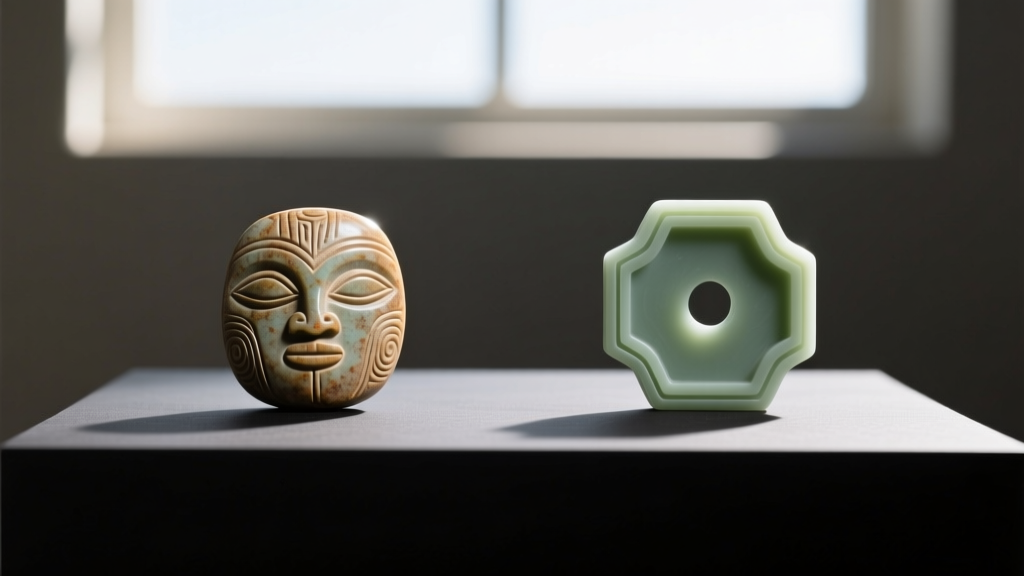
- The Drill Hole Test: Authentic Olivella beads were drilled from both sides using stone micro-drills, resulting in a biconical (hourglass) hole profile with slight asymmetry. Modern replicas are machine-drilled, leaving perfectly straight, uniform cylindrical holes with sharp, unweathered edges.
- The Thermal Reaction Test: If you carefully touch a heated needle to an inconspicuous area of a suspected shell bead, genuine calcium carbonate will remain unaffected. If the piece is made of modern celluloid or epoxy resin, it will melt, emit a chemical odor, and leave a permanent mark.
- Steatite Weight and Temperature: Genuine soapstone feels dense and cold to the touch due to its specific gravity (~2.8). Resin or plastic imitations will feel noticeably lighter and will quickly warm to body temperature.
- Tool Marks: Under 10x magnification, authentic steatite carvings reveal multidirectional, irregular scratching from stone and bone tools. Replicas cast in molds will show smooth surfaces, air bubbles, or distinct mold lines along the edges.
Preservation and Care for Organic Shell Jewelry
Preserving organic Chumash Indian jewelry requires a departure from standard gemstone care protocols. According to conservation guidelines published by the Smithsonian National Museum of the American Indian, organic artifacts demand strict environmental controls.
Avoid Ultrasonic and Chemical Cleaners: Never place abalone or Olivella shell in an ultrasonic cleaner. The high-frequency vibrations will cause the aragonite layers to delaminate and shatter. Furthermore, commercial silver dips or ammonia-based cleaners will chemically etch the calcium carbonate, leaving a chalky, irreversible white residue.
Proper Dusting and Hydration: To clean shell beads, use a soft, dry microfiber cloth. If the shell appears desiccated or chalky, conservators sometimes apply a microscopic layer of conservation-grade microcrystalline wax (like Renaissance Wax) to stabilize the surface and restore luster. Avoid standard oils, which can turn rancid and stain the porous steatite or bone components.
Environmental Controls: Store these pieces in an environment with a stable relative humidity of 45-55%. Fluctuations in humidity can cause the conchiolin in abalone to expand and contract, leading to micro-fractures. Keep the jewelry away from direct UV light, which will bleach the natural pigments of the Olivella shell and yellow any accompanying bone elements.
Conclusion
Authentic Chumash Indian jewelry represents a profound intersection of art, economics, and material science. By understanding the specific properties of Olivella, abalone, and steatite—from their Mohs hardness to their microscopic structural vulnerabilities—collectors and historians can better authenticate, preserve, and honor these remarkable artifacts of California's coastal heritage.


