Indian Tikka Jewelry Buying Guide: What to Look For
Discover our expert Indian tikka jewelry buying guide. Learn about Polki vs. Kundan, face-shape matching, weight limits, and 2026 pricing tiers.

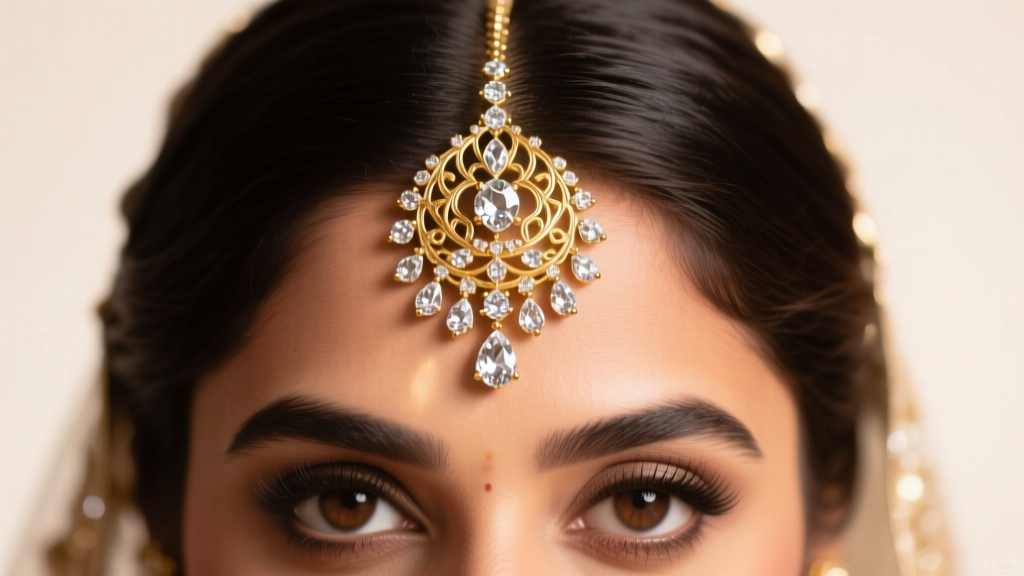
When it comes to South Asian bridal and festive adornment, few pieces carry the gravitational pull of the maang tikka. Resting elegantly on the hair's center parting and culminating on the forehead, this iconic piece of indian tikka jewelry is far more than a simple accessory. It represents the Ajna chakra (the third eye) and is a cornerstone of the traditional Solah Shringar (sixteen adornments) of an Indian bride. However, navigating the market for a tikka can be overwhelming. Between confusing terminology, vast price disparities, and structural comfort issues, buyers often end up with pieces that are either inauthentic, poorly balanced, or entirely wrong for their face shape.
This comprehensive buying guide cuts through the noise. Whether you are investing in heirloom-quality Polki, shopping for lightweight festive Meenakari, or navigating the world of American Diamonds, here is exactly what you need to look for when purchasing a maang tikka.
The Anatomy of a Maang Tikka: Beyond the Pendant
A common mistake buyers make is focusing solely on the central pendant while ignoring the structural components that dictate how the piece sits on the head. A high-quality tikka consists of three vital elements:
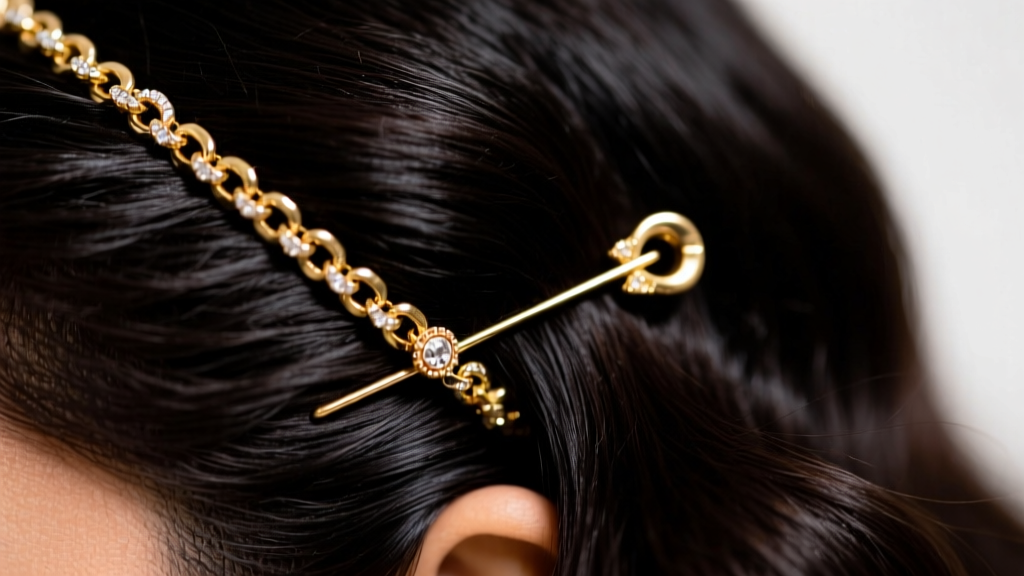
- The Silsila (Chain): This is the chain that runs along the hair parting. For heavy bridal pieces, look for a chain thickness of at least 2mm to 3mm. Delicate 1mm chains will snap under the weight of a 40-gram pendant.
- The Tikka (Pendant): The focal point that rests on the forehead. The back of the pendant should be finished smoothly (often with Meenakari enameling) so it does not snag on baby hairs or irritate the skin.
- The Kanta (Hook) and Clasp: The traditional S-hook slides into the hair, but for heavy pieces, this is a failure point. Modern, high-end tikkas often feature an integrated alligator clip or a reinforced loop designed to anchor the piece to the hair using a bobby pin, preventing it from sliding backward during movement.
Material Mastery: Kundan, Polki, and Meenakari Explained
The terminology surrounding Indian heritage jewelry is frequently misused by commercial retailers. Understanding the difference is critical for assessing value and authenticity.
Polki vs. Kundan
According to the Gemological Institute of America (GIA), Polki refers specifically to uncut, raw, and unpolished diamonds. They are naturally occurring and retain their organic, slightly uneven facets, offering a soft, luminous sparkle. Kundan, on the other hand, does not refer to the stone. Kundan is the highly refined, 24k gold foil used to secure stones (which can be glass, semi-precious gems, or Polki diamonds) into their settings without the use of prongs or claws. When a retailer sells "Kundan jewelry," they are referring to the setting technique, and the stones are often glass or quartz unless explicitly certified as Polki.
Meenakari and Oxidized Silver
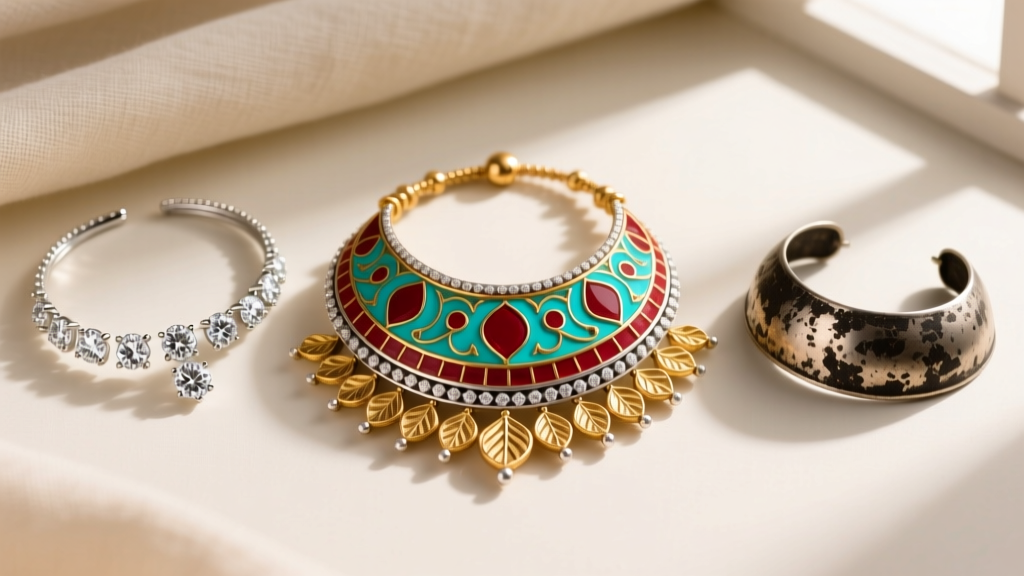
Meenakari is the art of enameling the reverse side of the jewelry with vibrant colors. Historically, this was done so the wearer could enjoy the beauty of the piece even when it was flipped. The Victoria and Albert Museum notes that traditional Jaipur Meenakari uses natural mineral pigments fused to gold or silver at high temperatures. For everyday or fusion wear, oxidized silver (often paired with mirror-work or lac) offers a bohemian, lightweight alternative that is highly durable and budget-friendly.
Proportion and Balance: Matching Your Face Shape
Because the tikka draws the eye directly to the center of the face, the scale and geometry of the pendant must complement your natural bone structure. Use this framework to select the ideal silhouette:
| Face Shape | Ideal Pendant Style | Styles to Avoid |
|---|---|---|
| Round | Long, teardrop, or geometric vertical drops that elongate the forehead. | Wide, circular medallions or overly short, chunky pendants. |
| Oval | Almost any style; classic circular or floral motifs sit perfectly. | Extremely long pendants that disrupt the natural facial balance. |
| Square | Curved, floral, or asymmetrical designs to soften a strong jawline. | Sharp, angular, or rigid geometric shapes. |
| Heart | Bottom-heavy designs or chandelier styles that add width to the lower face. | Inverted triangles or top-heavy clusters. |
Sizing, Weight, and Comfort Hacks
A beautiful tikka is useless if it gives you a migraine halfway through your event. Weight distribution is the most overlooked factor in the buying process.
Weight Categories
- Lightweight (10g - 25g): Ideal for festive wear, receptions, and long-duration events. Usually crafted in 18k gold, silver, or brass with cubic zirconia.
- Medium (25g - 45g): The standard bridal weight. Features a substantial pendant with moderate stone coverage. Requires proper anchoring.
- Heavy/Heritage (50g - 100g+): Reserved for the main wedding ceremony. These are often solid 22k gold or heavily layered Polki. Warning: Never buy a heavy tikka without testing the chain's tensile strength and ensuring the hook has a secondary loop for a bobby pin.
The Bobby Pin Anchor Technique
Regardless of the hook style, professional stylists always use a secondary anchor. When trying on a piece in-store, ask the jeweler for a standard hairpin. Thread the pin through the final link of the chain (near the clasp) and secure it to your hair. This transfers the weight from the delicate front hairline to the thicker hair at the crown of the head.
Price Guide: What Should You Actually Pay?
Pricing in the Indian jewelry market is heavily dependent on the base metal, the authenticity of the stones, and the labor intensity of the setting. Below is a realistic pricing framework for 2026.
- American Diamond (AD) / Cubic Zirconia on Brass or Silver: $30 – $150. Best for one-off events, sangeet ceremonies, or budget-conscious buyers. Look for "AAA quality" CZ for maximum brilliance.
- Imitation Kundan / Meenakari on Alloy: $50 – $250. Highly popular for bridesmaids and festive wear. Ensure the enamel work is smooth and the metal does not have a strong metallic odor (a sign of cheap, reactive alloys).
- Authentic Polki and 22k Gold Kundan: $1,500 – $10,000+. This is investment-grade jewelry. Always demand a Bureau of Indian Standards (BIS) hallmark for the gold purity (usually 22k/916 for the frame, 18k for the diamond settings) and a certificate of authenticity detailing the carat weight of the uncut diamonds.
Final Authenticity Checks Before You Buy
When purchasing authentic gold and Polki indian tikka jewelry, always inspect the back of the pendant. High-end heritage jewelers will finish the reverse with intricate Meenakari or a clean, polished gold backing. If the back is covered in a thick, opaque layer of wax or cheap resin, it is often a tactic to hide poor craftsmanship, hollow gold structures, or synthetic glass stones masquerading as Polki. Furthermore, check the joints where the chain meets the pendant; they should be soldered smoothly, with no visible gaps or sharp burrs that could catch on your silk dupatta or hair.
Care and Maintenance for Longevity
Heritage tikkas require specific care to maintain their structural integrity and brilliance. Never spray perfume or hairspray directly onto Kundan or Polki jewelry; the chemicals can dissolve the gold foil (kundan) and cloud the uncut diamonds. After wearing, gently wipe the piece with a dry, lint-free microfiber cloth. Store the tikka flat in a padded box to prevent the chain from tangling and to ensure the pendant's stones do not bear the weight of other jewelry. For oxidized silver pieces, store them in an anti-tarnish ziplock bag with a silica gel packet to prevent premature blackening.


