The Ultimate Egyptian Scarab Jewelry Buying Guide & Style Tips
Discover how to buy authentic Egyptian scarab jewelry. Learn about lapis lazuli grades, gold karats, historical motifs, and pricing in this expert guide.

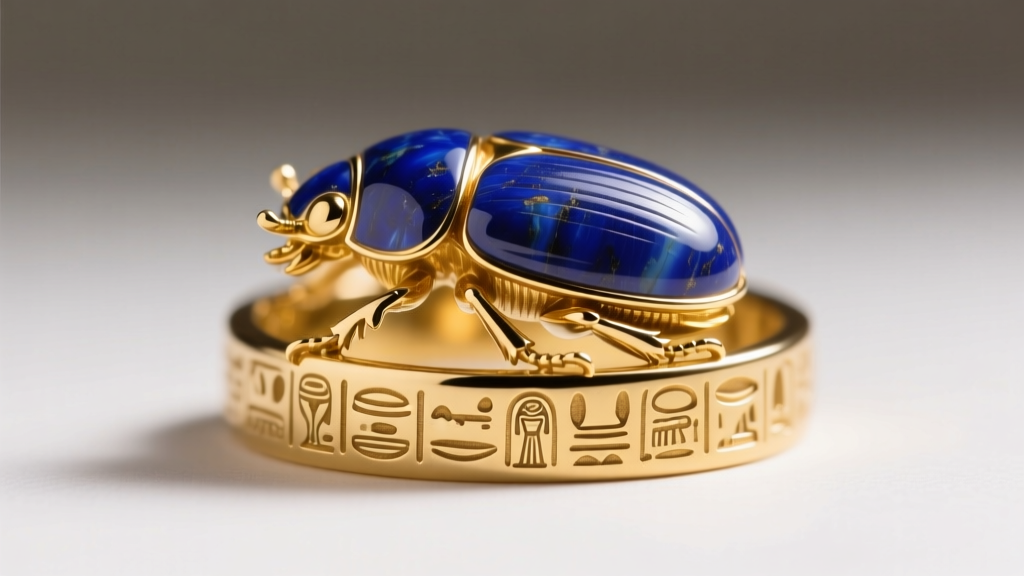
The Anatomy of an Authentic Scarab
Egyptian scarab jewelry is far more than a simple aesthetic choice; it is a wearable artifact rooted in thousands of years of spiritual symbolism. The scarab beetle (Scarabaeus sacer) was intrinsically linked to Khepri, the god of the rising sun and rebirth. Whether you are hunting for a vintage 1920s Art Deco revival piece or a modern artisan interpretation, the market is heavily saturated with mass-produced tourist wares. To buy authentic Egyptian scarab jewelry with confidence, you must understand the structural and material markers that separate genuine craftsmanship from bazaar souvenirs.
An authentic scarab carving features two distinct sides: the dorsal (top) and the ventral (base). High-end and historically accurate pieces feature deeply carved hieroglyphs, protective deities, or royal cartouches on the flat ventral side, mimicking ancient administrative seals or heart scarabs. Conversely, mass-produced tourist pieces typically feature flat, smooth bases or poorly cast, shallow resin imprints that lack tactile depth.
Gemstone Grading: Beyond the Souvenir Shop
The traditional triad of Egyptian jewelry stones consists of lapis lazuli, carnelian, and turquoise. However, the quality of these materials varies wildly across the market. According to the Gemological Institute of America (GIA), understanding the origin and treatment of these stones is critical for accurate valuation.
Lapis Lazuli: The Royal Standard
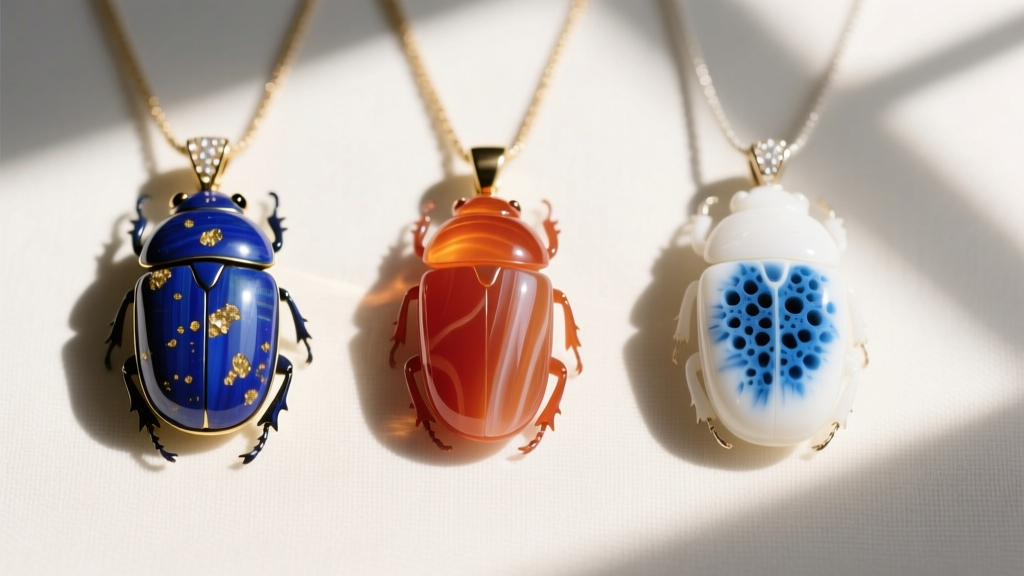
The most valuable lapis lazuli exhibits a deep, intense medium-dark blue. Afghan lapis is highly prized for its rich color and golden pyrite inclusions, which should be evenly distributed. When evaluating Egyptian scarab jewelry, avoid pieces with heavy white calcite veining or a dull, grayish-blue hue. These are indicators of lower-grade Chilean or Russian material, which is frequently dyed to mimic top-tier Afghan stone and sold at inflated prices in tourist markets.
Carnelian: Natural vs. Heat-Treated
Natural carnelian features subtle color banding, cloudy inclusions, and a slightly translucent edge when held to the light. Most commercial scarabs today use heat-treated agate, which yields a uniform, hyper-bright orange. While heat treatment is an accepted ancient practice—the Egyptians themselves heated stones in sand to enhance their color—modern collectors should know the difference when paying premium prices for "natural" gems.
Turquoise and Faience Imitations
Genuine Persian turquoise, historically favored in high-end Middle Eastern jewelry, lacks the dark webbed matrix found in American stones. However, many modern "turquoise" scarabs are actually dyed howlite or magnesite. True Egyptian faience (a glazed, non-clay ceramic material) is highly collectible in antique markets but easily faked with painted resin or cheap enamel.
Metal Purity and Structural Integrity
The metalwork in Egyptian scarab jewelry dictates its longevity and skin-safety. High-end regional jewelry typically utilizes 18k gold (75% pure), favored for its rich, buttery yellow hue that complements warm skin tones and vibrant gemstones. For silver pieces, always look for the 925 sterling silver hallmark.
"O my heart which I had from my mother, do not stand against me as a witness." — Excerpt from the Book of the Dead, traditionally inscribed on the base of heart scarabs to ensure safe passage into the underworld.
Beware of "Egyptian Brass" or gold-plated zinc alloys commonly sold in bazaars like Khan el-Khalili. These base metals are prone to rapid oxidation, cause severe skin discoloration, and degrade structurally over time. If a piece feels unusually light or lacks a clear karat stamp, assume it is plated base metal.
Swivel Ring Mechanics: A Critical Failure Point
One of the most iconic forms of Egyptian scarab jewelry is the swivel ring, which allows the beetle to flip 180 degrees, revealing the hieroglyphic base against the finger. While visually striking, this mechanism introduces specific structural vulnerabilities that buyers must inspect.
- The Tension Pin: The horizontal wire holding the scarab in the bezel is the primary weak point. Ensure the pin is made of solid steel, platinum, or high-karat gold. If the pin is thin, bent, or shows signs of friction wear, the ring will eventually snap under daily use.
- Bezel Depth and Tension: The metal collar holding the stone must have a minimum 1.5mm lip (depth). Shallow bezels will drop the stone upon minor impact. Furthermore, the swivel mechanism should offer moderate resistance; if it spins too freely, the tension wire is compromised.
- Prong vs. Bezel Settings: For antique Art Deco revival pieces, inspect the prongs holding calibrated cabochons. Decades of wear can thin the platinum or gold prongs, requiring immediate re-tipping by a bench jeweler.
Market Pricing and Value Tiers
Navigating the pricing of Egyptian scarab jewelry requires understanding the distinct market tiers. Use the following matrix to benchmark your purchases and avoid overpaying for mass-produced wares.
| Tier | Materials & Construction | Price Range (USD) | Where to Buy |
|---|---|---|---|
| Tourist / Mass-Produced | Dyed howlite, resin, brass, gold-plated zinc. Flat bases, glued settings. | $15 – $60 | Bazaars, airport shops, online marketplaces. |
| Artisan / Semi-Precious | Genuine Afghan lapis, natural carnelian, 925 silver or 14k gold. Carved bases. | $150 – $800 | Specialty jewelers, estate sales, verified artisans. |
| High-End / Antique | 18k/22k solid gold, untreated Persian turquoise, Art Deco platinum revival pieces. | $1,500 – $15,000+ | Auction houses, high-end estate dealers, museum-affiliated galleries. |
Vintage vs. Modern Revival: What Collectors Seek
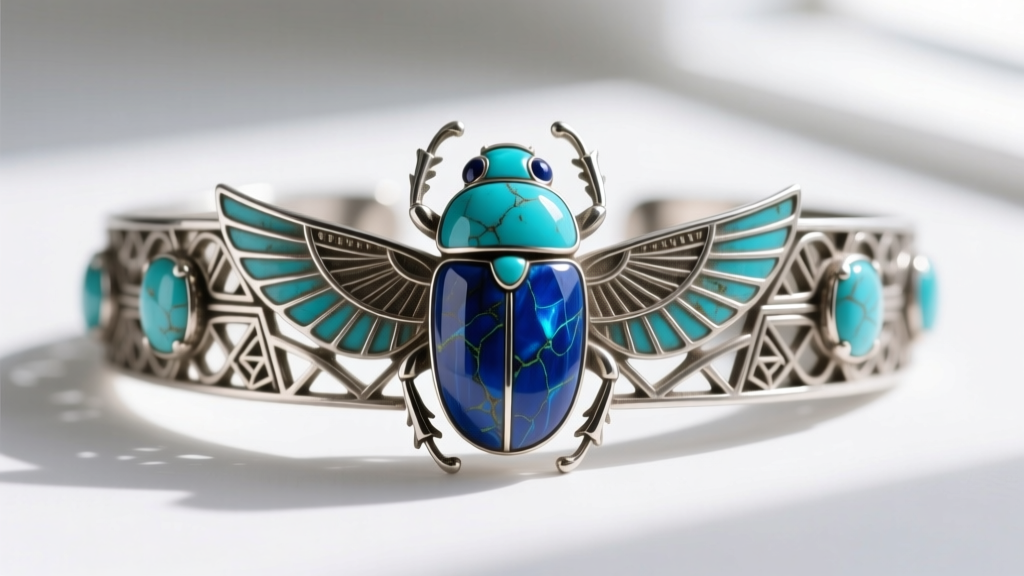
The discovery of Tutankhamun’s tomb in 1922 sparked a massive "Egyptian Revival" movement in Western jewelry design. Houses like Cartier, Boucheron, and Tiffany & Co. produced exquisite scarab pieces combining ancient motifs with Art Deco geometry. When buying vintage revival Egyptian scarab jewelry, look for hallmarks of the era: platinum or white gold settings, calibrated gemstone cuts, and intricate plique-à-jour or champlevé enameling. Modern reproductions often lack the precise geometric symmetry and micro-milgrain detailing characteristic of 1920s master craftsmen.
Care and Maintenance for Porous Antiquities
Preserving your scarab collection requires abandoning modern cleaning habits. Lapis lazuli, turquoise, and carnelian are highly sensitive to chemicals and sudden temperature changes.
- Never use ultrasonic cleaners: The high-frequency vibrations can fracture internal inclusions in lapis and turquoise, while the heat can strip natural oils and waxes used to stabilize the stones.
- Avoid harsh chemicals: Chlorine, bleach, and even acidic skin pH can dull the polish of carnelian and cause the pyrite flecks in lapis lazuli to oxidize and turn black.
- Proper Cleaning Method: Use a solution of lukewarm water and a single drop of mild, phosphate-free dish soap. Gently agitate with a baby toothbrush, rinse quickly, and pat dry with a microfiber cloth. Store pieces in a climate-controlled environment away from direct sunlight to prevent UV fading.
Final Verdict
Investing in Egyptian scarab jewelry is an exercise in historical appreciation and material scrutiny. By prioritizing deep-blue Afghan lapis, verifying the structural integrity of swivel mechanisms, and demanding solid precious metals, you ensure that your collection honors the ancient legacy of Khepri while retaining its intrinsic market value for decades to come.


