Fixing Common Personalized Women's Jewelry Problems
Discover expert troubleshooting tips for personalized women's jewelry. Learn how to fix faded engravings, tangled chains, and metal allergies.

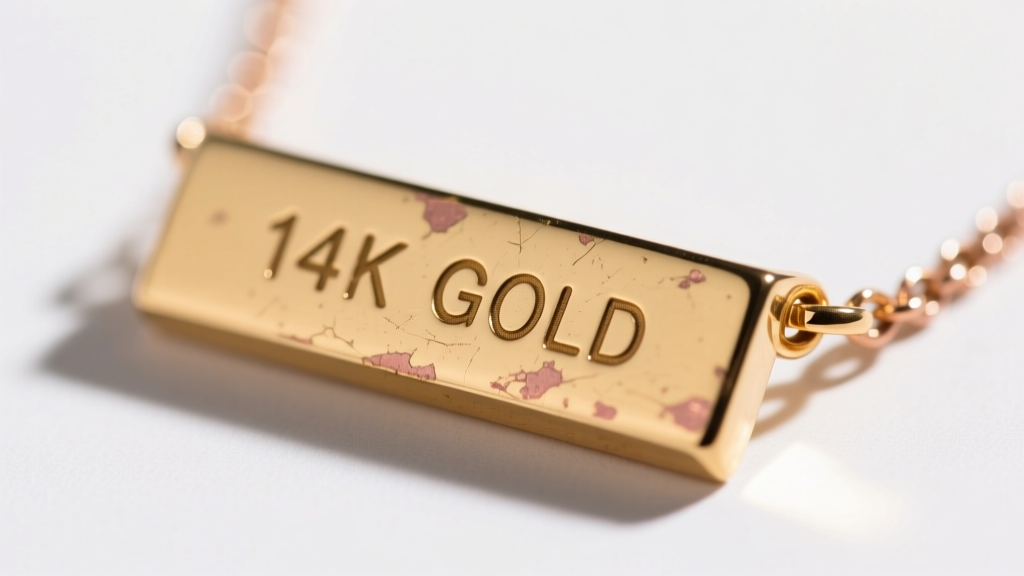
The Hidden Vulnerabilities of Custom Jewelry
Personalized women's jewelry holds immense sentimental value, but the custom manufacturing processes used to create these pieces often introduce unique structural vulnerabilities. Whether you are dealing with a custom-cast nameplate necklace, a hand-stamped initial pendant, or a bespoke birthstone ring, troubleshooting these items requires a deep understanding of metallurgy, CAD/CAM design flaws, and daily wear mechanics. As of 2026, while 3D printing and laser technologies have revolutionized custom jewelry, they have also birthed a new generation of repair challenges. This guide provides actionable, bench-jeweler-level solutions to the most frequent problems plaguing custom and personalized pieces.
The Fading Engraving Dilemma: Laser vs. Rotary
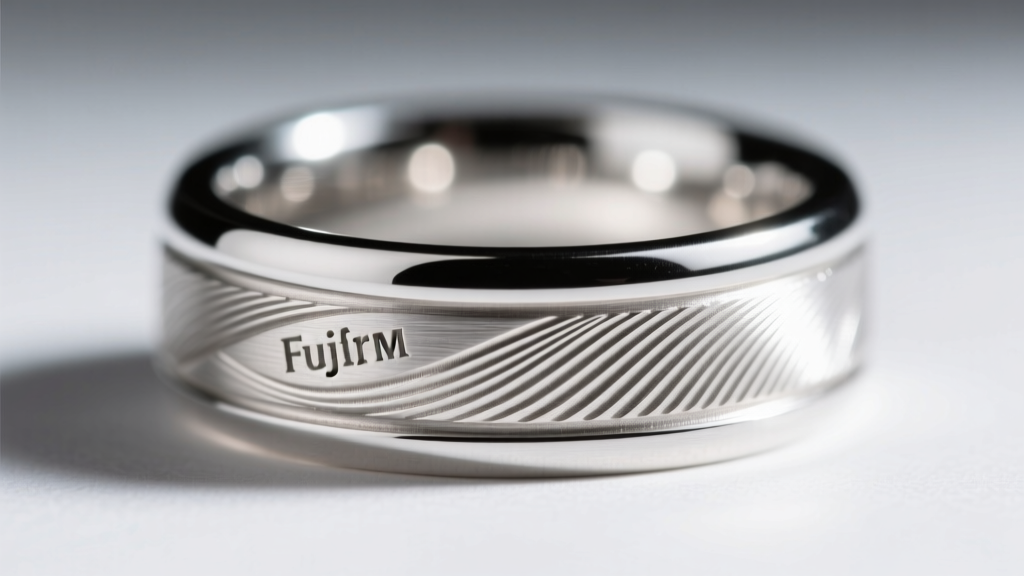
The most common complaint with personalized women's jewelry is the premature fading of engravings on bar necklaces, signet rings, and ID bracelets. To fix this, you must first identify the engraving method used by the manufacturer.
Shallow Laser Marking vs. Deep Rotary Cutting
Most mass-market personalized jewelry utilizes YAG or fiber laser engraving. While precise, standard laser marking only alters the surface oxidation or etches to a depth of roughly 0.01mm to 0.03mm. Over time, friction from clothing, skin oils, and lotions wear away this microscopic layer, leaving the text illegible. In contrast, traditional rotary (CNC or pantograph) engraving physically carves into the metal to a depth of 0.05mm to 0.15mm, creating a permanent shadow line that survives decades of wear.
Troubleshooting and Restoration Steps
- Do Not Polish: If your laser-engraved 14k gold or sterling silver piece is fading, never use a polishing cloth or rouge wheel. You will erase the remaining oxidized contrast.
- The Re-Cut Solution: Take the piece to a master jeweler and request a "re-cut" using a CNC mill or a graver machine. They can trace the existing faint lines and cut them to a permanent 0.08mm depth.
- Enamel Infill: For wide custom stampings on signet rings, ask your jeweler to apply a vitreous enamel or epoxy resin infill (typically in black or navy) to restore the contrast without needing to cut deeper into potentially thin metal.
Chain Tangling and Bail Friction on Initial Pendants
Initial pendants and custom nameplates frequently suffer from "flip and tangle" syndrome. This is rarely a defect in the chain itself, but rather a physics issue related to the pendant's center of gravity and the bail dimensions.
Diagnosing the Flip
When a personalized initial pendant (especially asymmetrical letters like 'S', 'R', or 'K') hangs from a chain, the heavier side of the letter pulls downward, forcing the bail to rotate. If the bail hole is too tight against the chain, this rotation twists the chain links, eventually causing severe tangling and work-hardening the metal until it snaps.
Hardware Upgrades for Stability
- Upgrade the Chain Gauge: A standard 0.9mm cable chain is too flimsy to support a solid 14k gold initial pendant. Upgrade to a 1.2mm to 1.5mm rope or box chain. The heavier chain acts as a counterweight, resisting the rotational pull of the pendant.
- Install an Oversized Jump Ring Bail: Replace the integrated cast bail with a heavy-duty 5mm x 3mm oval jump ring. This provides the pendant with enough lateral clearance to swing freely without twisting the chain links.
- Use a Counterweight Bead: For custom nameplates, adding a small 2mm solid gold or tungsten bead to the back of the chain (near the clasp) shifts the center of gravity, keeping the nameplate anchored flat against the collarbone.
Metal Allergies in Custom-Cast Nameplates
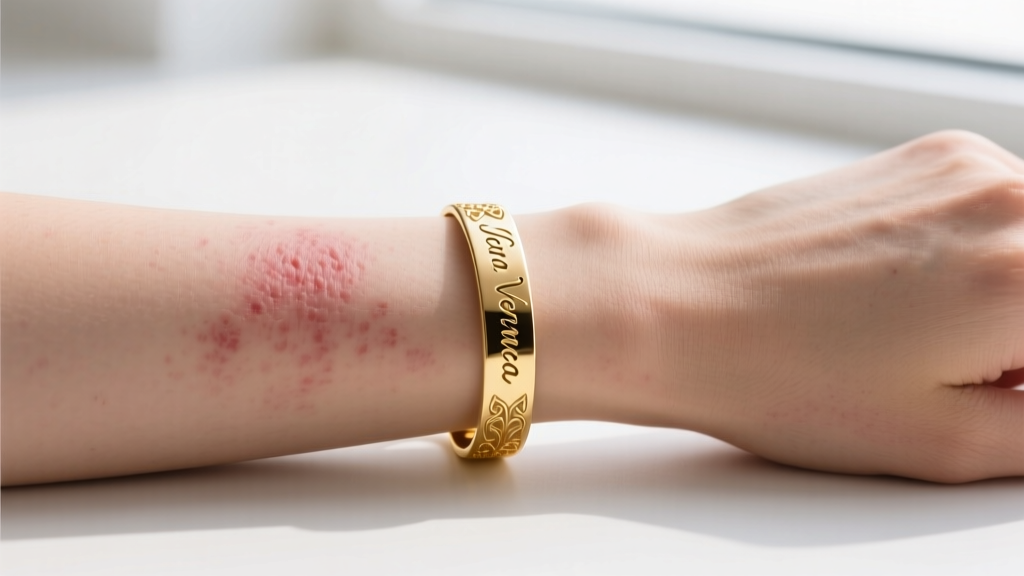
A severe, often overlooked issue with personalized women's jewelry is contact dermatitis triggered by custom casting alloys. When jewelers cast custom nameplates or signet rings, they sometimes use lower-karat alloys, scrap gold mixes, or nickel-containing solders to reduce manufacturing costs.
| Metal Grade / Type | Typical Nickel Content | Allergy Risk Level | Recommended Troubleshooting Action |
|---|---|---|---|
| 14k Yellow Gold (US Standard) | Often contains Nickel/Zinc | Moderate to High | Request a nickel-free alloy (Silver/Palladium mix) from the caster. |
| 14k White Gold | High (Nickel is the whitener) | Very High | Plate with thick rhodium or switch to Platinum/Palladium. |
| 316L Surgical Steel | Contains Nickel (bound) | Low (but possible) | Ensure it meets EU Nickel Directive release limits. |
| Gold Vermeil (Custom Cast) | Base is usually Sterling Silver | Low | Verify the silver is not mixed with nickel-silver alloys. |
According to the American Academy of Dermatology, nickel allergy is the most common cause of allergic contact dermatitis. If your custom-cast piece is causing a green rash or itching, the issue is likely the solder used to attach the jump rings or the clasp, rather than the main body of the jewelry.
Pro-Tip: If you suspect a nickel allergy from a custom piece, apply a micro-thin layer of clear urethane nail polish to the skin-facing side of the clasp and jump rings as a temporary barrier. For a permanent fix, have a jeweler laser-weld the joints using nickel-free 14k palladium-white gold solder.
Birthstone Prong Failures in Custom Rings
Personalized birthstone rings frequently lose their gemstones within the first year of wear. This is largely due to the way custom CAD (Computer-Aided Design) models are optimized for aesthetics rather than structural integrity.
The "Thin Prong" CAD Flaw
When designers create custom rings in CAD software, they often shrink the prong dimensions to maximize the visible surface area of the calibrated birthstones (e.g., 3mm or 4mm round nanospinels or genuine garnets). Prongs printed and cast at under 0.6mm in width lack the tensile strength to withstand daily impacts. Furthermore, softer birthstones like opals (Mohs 5.5-6.5) or emeralds (Mohs 7.5-8, but highly included) require specific setting techniques that thin prongs cannot accommodate without chipping the stone's girdle.
Reinforcing Custom Settings
- Re-Tipping: Have a bench jeweler perform a "re-tipping" procedure. They will use hard solder to build the prong width up to a minimum of 0.8mm and ensure the prong tip wraps at least 30% over the stone's crown.
- Switch to Bezel or Channel: If you are redesigning a personalized family ring, abandon shared prong settings entirely. A custom CAD bezel setting with a 0.4mm metal wall offers 90% more protection for soft, personalized birthstones.
Sizing Custom Stamped Cuffs and Rings
Resizing personalized women's jewelry is notoriously difficult. If a ring features a continuous engraved pattern, a stamped fingerprint, or a custom-milled topography map, traditional stretching or compressing will distort the artwork, turning a sentimental masterpiece into an illegible mess.
For custom rings with shank engravings, do not allow a jeweler to use a ring stretcher. Instead, opt for a "cut and shank" addition. The jeweler will cut the bottom of the band, insert a new piece of matching alloy, and laser-weld it. While this leaves a small blank spot on the inside of the finger, it preserves the structural integrity and visual perfection of the personalized exterior. For hinged custom cuffs, never attempt to bend the metal to adjust the fit; repeated flexing will cause work-hardening and result in a catastrophic snap along the engraved fault lines. Always have a professional adjust the hinge tension or add a discrete sizing chain.


