How to Master 70's Style Jewelry Layering for Modern Outfits
Master 70's style jewelry with our step-by-step layering guide. Mix vintage boho metals, turquoise, and modern chains for an effortless retro look.

The 1970s Jewelry Revival: Beyond the Costume Bin
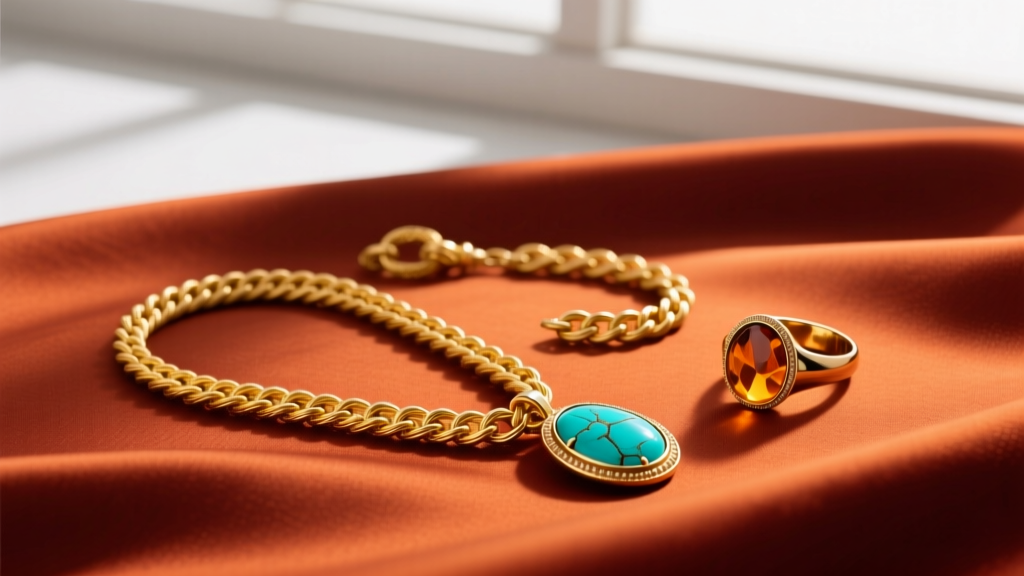
The 1970s remains one of the most influential decades for personal adornment, characterized by a distinct split between high-glamour disco aesthetics and grounded, earthy bohemian styles. Today, mastering 70's style jewelry is not about wearing head-to-toe vintage costumes; it is about strategically integrating the era's bold silhouettes, rich textures, and organic gemstones into a modern wardrobe. Whether you are drawn to the heavy yellow gold rope chains favored by the disco crowd or the intricate Native American turquoise inlay beloved by the boho set, executing this look requires a deep understanding of material weight, chain gauges, and layering proportions.
In this comprehensive styling guide, we will break down the exact metallurgy, gemstone grades, and step-by-step layering frameworks needed to curate an authentic yet contemporary 1970s-inspired jewelry stack.
The Core Materials of 70's Style Jewelry
Before building your stack, you must understand the materials that defined the decade. The 1970s saw a massive shift away from the cool, understated platinum and white gold of the mid-century toward warm, expressive yellow gold and organic, unpolished gemstones. According to the Victoria and Albert Museum (V&A), the era's jewelry was heavily influenced by global travel and the counterculture movement, bringing materials like amber, lapis lazuli, and turquoise to the forefront of high fashion.
When sourcing pieces, pay close attention to the alloy composition. Vintage 14k and 18k yellow gold from the 1970s often contained higher copper ratios than modern alloys, giving it a deeper, richer mustard hue that is highly sought after today.
| Material | 1970s Application | Modern Sourcing Tip | Price Range (Vintage/Artisan) |
|---|---|---|---|
| 14k Yellow Gold | Rope chains, dome rings | Look for copper-heavy alloys for deeper color | $300 - $1,200 |
| Turquoise | Inlay, heavy cabochons | Verify Sleeping Beauty or Kingman mine origins | $150 - $800 |
| Lapis Lazuli | Geometric pendants, cuffs | Ensure no dye enhancement; look for pyrite flecks | $100 - $500 |
| Amber | Chunky beads, signet rings | Test with saltwater float; avoid plastic copals | $50 - $300 |
Step-by-Step Guide to the Boho 70s Necklace Stack
The quintessential 70's style jewelry look is the multi-strand necklace stack. However, simply throwing three chains together will result in a tangled mess. You need a structured approach to lengths, gauges, and clasp types.
Step 1: The Anchor (14 to 16 Inches)
Your base layer should sit snugly on the collarbone. Opt for a 14k yellow gold herringbone or snake chain with a width between 3mm and 5mm. These flat, liquid-like chains reflect light beautifully and mimic the sleek, glamorous side of 70s fashion. Avoid standard lobster clasps for this layer; seek out vintage spring-ring clasps or small fold-over clasps, which are historically accurate and sit flatter against the skin.
Step 2: The Mid-Layer (18 to 20 Inches)
The second layer introduces texture and a focal point. A 3mm Figaro or rope chain is ideal here. The rope chain, in particular, was a staple of 1970s menswear and womenswear alike due to its durability and complex light refraction. Suspend a coin pendant—such as a vintage Mexican peso or a replica Roman denarius—from this layer. Ensure the pendant bail is wide enough to slide freely over the chain without catching, preventing the pendant from flipping backward.
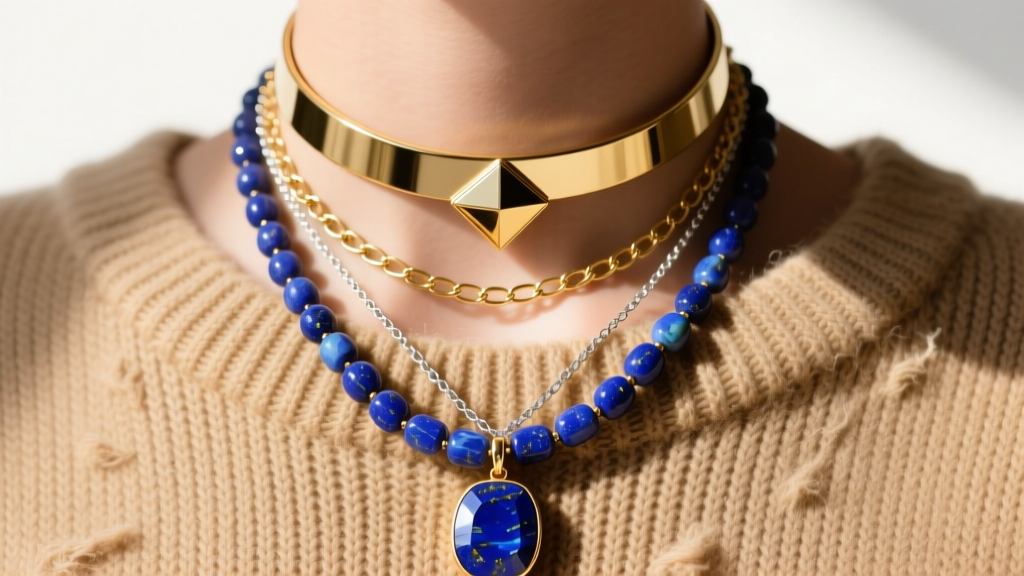
Step 3: The Statement (24 to 30 Inches)
This is where the bohemian influence takes over. The Gemological Institute of America (GIA) notes that the 1970s saw a massive surge in demand for high-grade, untreated turquoise. Choose a heavy, matrix-rich turquoise or lapis lazuli pendant set in oxidized sterling silver or brass. Suspend it on a thick 4mm rope chain or a braided leather cord. The 24-to-30-inch length ensures it rests on the sternum, drawing the eye downward and elongating the torso.
Earring Curation: Hoops and Chandeliers
Earrings in the 1970s were unapologetically large. To replicate this without overwhelming your features, focus on the structural integrity and thickness of the metal.
The Classic Hoop: Avoid thin, lightweight wire hoops. The 70s demanded volume. Look for hollow-tube yellow gold hoops with an outer diameter of 40mm to 60mm and a thickness of at least 4mm. The hollow construction keeps the weight manageable, preventing earlobe stretching over long wear periods. Ensure the post gauge is at least 18-gauge (1.0mm) for stability.
The Chandelier Drop: For evening wear, chandelier earrings featuring cascading geometric shapes or amber beads were highly popular. When styling these, keep your necklaces minimal. A single 16-inch gold choker is the perfect companion to a heavy, shoulder-grazing chandelier earring, balancing the visual weight across your silhouette.
Ring Stacking and Wrist Armor
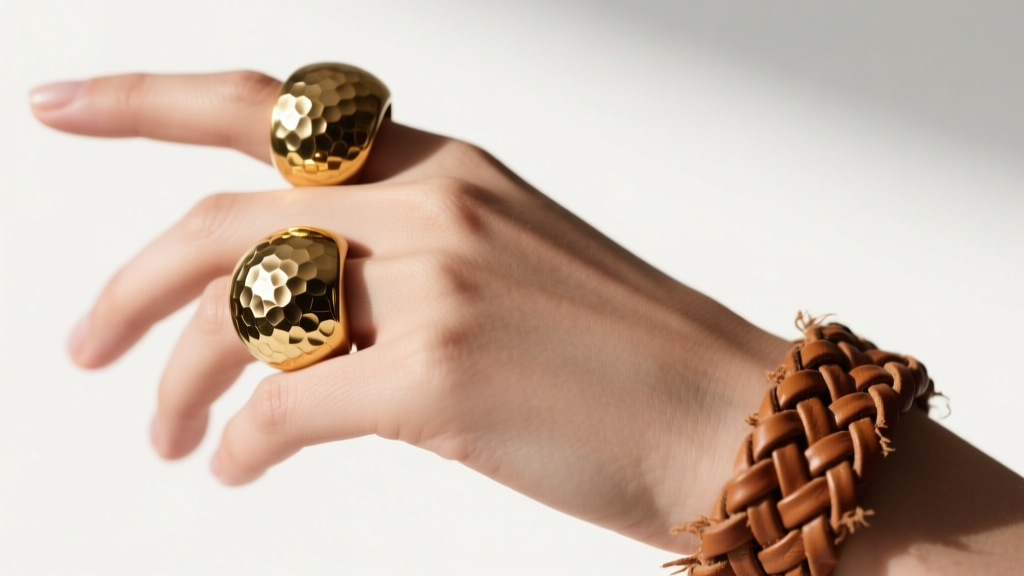
The 1970s approach to rings and bracelets was all about coverage and texture. Unlike the delicate midi-rings of the 2010s, 70's style jewelry favors chunky, sculptural pieces that cover the knuckle and the wrist.
The Dome and Signet Ring Stack
Build your ring stack using heavy dome rings and oversized signets. A classic 1970s dome ring features a high-polish, convex surface that mimics a cabochon gemstone but is cast entirely in 14k or 18k gold. Stack two dome rings on your index finger, and pair them with a wide, flat-faced signet ring on your middle finger. Look for rings with hammered or brushed finishes on the shank to introduce the artisanal, handcrafted vibe that defined the decade's boho movement.
Wrist Armor: Cuffs and Chain Bracelets
For the wrist, the wide gold cuff is non-negotiable. Inspired by designers like Elsa Peretti, a 1.5-inch to 2-inch wide yellow gold cuff with a rounded, bone-like silhouette is the ultimate 70s power piece. If gold is outside your budget, opt for a wide Navajo-style sterling silver cuff featuring intricate stamp-work and inlaid turquoise. To modernize the look, stack the rigid cuff alongside a flexible, woven leather bracelet with heavy metal end-caps, blending the rigid luxury of the disco era with the earthy textures of Woodstock.
Modernizing the Retro: Common Styling Mistakes
While embracing 70's style jewelry, it is easy to cross the line from 'curated vintage' to 'Halloween costume.' Avoid these critical styling errors:
- Mixing Metal Tones Carelessly: The 1970s was heavily dominated by yellow gold and brass. Mixing in cool-toned white gold or platinum can disrupt the warm, cohesive aesthetic of the stack. Stick to warm metals.
- Overloading Gemstones: Do not wear turquoise, amber, lapis, and coral all at once. Choose one or two hero gemstones per stack to maintain a sophisticated, intentional look.
- Ignoring Proportions: If you are wearing massive 60mm hoops and a 30-inch heavy pendant, skip the chunky dome rings. Balance the visual weight by leaving the hands bare or wearing only a simple, thin gold band.
- Using Flimsy Chains: Avoid chains under 2mm in width for your outer layers. The 70s aesthetic relies on the visual weight and presence of the metal. Thin, delicate chains will look anachronistic and get lost against the bold textiles of the era.
Final Thoughts on the 70s Aesthetic
Mastering 70's style jewelry is an exercise in balancing raw, organic materials with precise, structured layering. By investing in high-quality yellow gold alloys, sourcing ethically mined turquoise and lapis lazuli, and adhering to strict length and gauge frameworks, you can build a jewelry collection that honors the rebellious, glamorous spirit of the 1970s while remaining entirely relevant for today's modern wardrobe.


