How to Master the 1920 Jewelry Style for Modern Evening Wear
Learn how to authentically style 1920 jewelry style pieces for modern evenings. Step-by-step guide to layering Art Deco gems, pearls, and filigree.

Introduction: Beyond the Costume Box
The 1920 jewelry style remains one of the most influential eras in gemological history. Characterized by bold geometry, stark color contrasts, and unprecedented advancements in metalworking, the Art Deco movement birthed pieces that were as much architectural marvels as they were adornments. However, as we navigate evening wear in 2026, the challenge lies in integrating these historical masterpieces into modern wardrobes without looking like you are heading to a themed costume party. Authentic styling requires a deep understanding of the era's materials, proportions, and the deliberate restraint needed to let the jewelry speak for itself.
This step-by-step guide will walk you through the precise techniques for layering, stacking, and balancing authentic 1920 jewelry style pieces with contemporary silhouettes. Whether you are working with inherited heirlooms or sourcing vintage platinum from estate jewelers, mastering this aesthetic demands an expert eye for detail.
Step 1: Decoding Authentic 1920s Materials and Motifs
Before you begin styling, you must understand the foundational elements that define the 1920 jewelry style. The post-WWI era saw a massive shift away from the soft, floral motifs of the Edwardian period toward stark, machine-inspired geometry. According to the Gemological Institute of America (GIA), the discovery of new diamond mines in South Africa and the perfection of platinum casting techniques allowed jewelers to create impossibly intricate designs.
The Metals: Platinum and White Gold
Platinum was the undisputed king of the 1920s. Its exceptional tensile strength allowed artisans to create "filigree" (delicate, lace-like openwork) and "milgrain" (tiny beaded edges) that would snap if cast in softer yellow gold. When styling, look for pieces stamped with platinum hallmarks (often 900Pt or 950Pt). If you are working with 18k white gold, ensure it has the rhodium plating characteristic of the era's "white on white" aesthetic, which paired diamonds with white metal for maximum light refraction.
The Gemstones: High Contrast and Precision Cuts
To achieve the authentic 1920 jewelry style, focus on the specific lapidary techniques of the decade. The Victoria and Albert Museum notes that calibré-cut stones (gems custom-cut to fit perfectly into geometric channels without gaps) were a hallmark of high-end Deco design. Incorporate pieces featuring:
- Black Onyx and Rock Crystal: Used to create stark, high-contrast backgrounds for bright diamonds.
- Carved Coral and Jade: Brought vibrant, opaque pops of color to platinum settings.
- Baguette and Trapezoid Diamonds: Utilized in straight-line bracelets and architectural shoulder accents on rings.
Step 2: The Art of the Long Pearl Sautoir
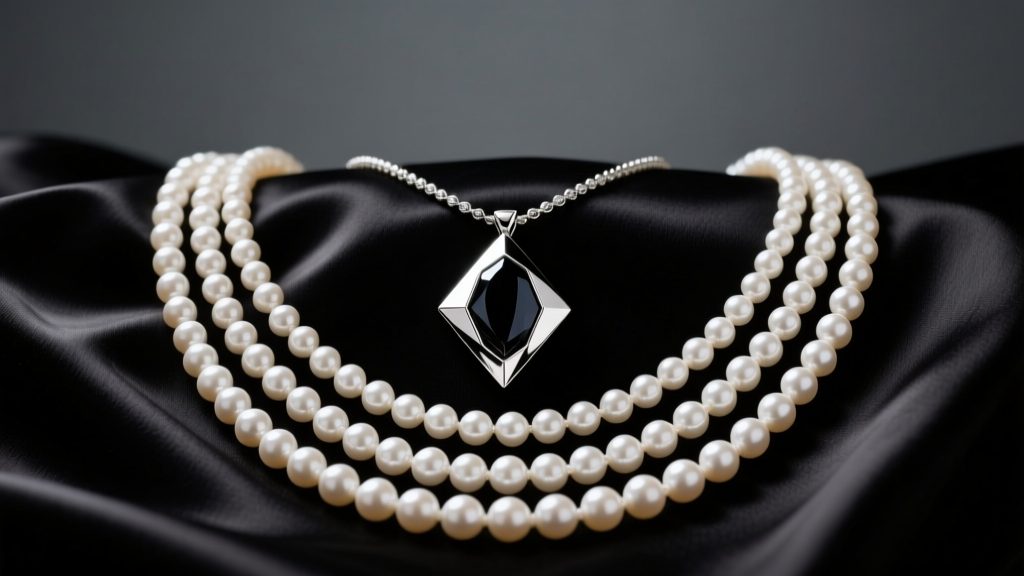
No 1920 jewelry style guide is complete without addressing the sautoir—a remarkably long pearl necklace, typically measuring between 45 and 60 inches. The 1920s boom in cultured pearls, pioneered by Kokichi Mikimoto, made these extravagant ropes accessible and highly fashionable. Today, wearing a sautoir requires deliberate styling to avoid overwhelming your frame.
Technique A: The Asymmetrical Drape
For modern evening wear, such as a minimalist silk slip dress, avoid the traditional centered loop. Instead, drape the 60-inch rope over one shoulder, allowing the ends to fall at different lengths across your back and front. This breaks the rigid symmetry of the pearls and introduces a fluid, contemporary movement to the rigid geometry of the 1920s.
Technique B: The Flapper Knot with a Modern Twist
If you are wearing a structured tuxedo or a sharp-shouldered blazer, loop the pearls once around your neck and tie a loose, low overhand knot at the sternum. Pull the knot tight enough to create a structured "Y" silhouette, but leave the tails hanging freely. This draws the eye vertically, elongating the torso and framing the lapels of your jacket perfectly.
Step 3: Structuring the Art Deco Ear
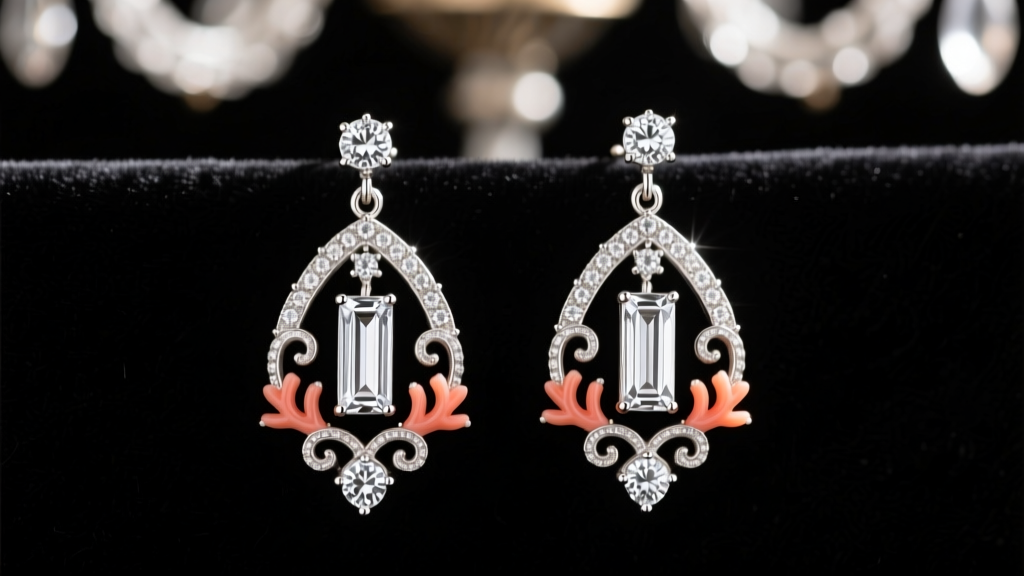
Earrings in the 1920 jewelry style were designed to be seen from across a crowded jazz club. Chandelier drops, geometric plaques, and long articulated pendants were the standard. However, because these pieces are often heavy and visually dominant, they require careful balancing with your hairstyle and neckline.
Managing Weight and Proportion
Authentic platinum chandelier earrings from this era can weigh between 8 and 15 grams per ear. If you are sourcing vintage pieces, check the ear wires. Many original pieces feature shepherd hooks or early screw-backs. For modern comfort, have a jeweler retro-fit them with secure lever-backs or add transparent silicone earring supports to prevent the lobes from stretching during a long evening.
The Updo Imperative
To properly showcase 1920s ear architecture, the hair must be cleared away. A sleek, low chignon or a sharp, wet-look bob provides the necessary negative space. Avoid high-volume, romantic updos; the 1920 jewelry style demands clean, severe lines to allow the baguette diamonds and carved coral drops to catch the light without competing with textured hair.
Step 4: Wrist Stacking with Filigree and Line Bracelets
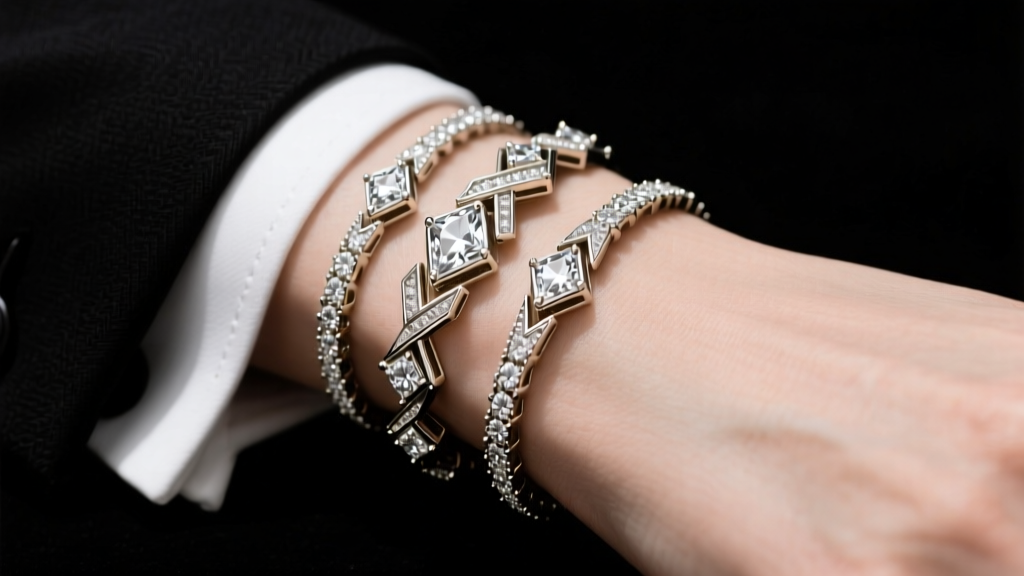
The wrist was a major focal point in the 1920s, with women stacking multiple straight-line bracelets (the precursor to the modern tennis bracelet) or wearing wide, intricate filigree cuffs. Straight-line bracelets feature geometric links, often channel-set with diamonds and accented with synthetic or natural sapphires.
Bracelet Styling Matrix
When building a 1920 jewelry style wrist stack, you must balance visual weight and metalwork complexity. Use the table below to guide your pairings based on your evening wear sleeve length.
| Bracelet Style | Defining Features | Typical Carat Weight | 2026 Vintage Market Range | Best Sleeve Pairing |
|---|---|---|---|---|
| Straight-Line | Geometric links, channel-set baguettes | 3.00 - 8.00 ctw | $4,500 - $18,000 | Sleeveless or thin strap |
| Filigree Cuff | Openwork platinum, milgrain edges, onyx accents | 1.50 - 4.00 ctw | $2,800 - $9,500 | Long tuxedo sleeve (cuff peek) |
| Charm/Link Plaque | Interlocking plaques, calibré-cut sapphires | 1.00 - 3.00 ctw | $1,500 - $5,000 | Three-quarter length bell sleeve |
The Rule of Three
When stacking straight-line bracelets, adhere to the "Rule of Three." Stack exactly three bracelets of varying widths: one wide geometric link (approx. 8mm), one medium milgrain line bracelet (approx. 4mm), and one delicate single-cut diamond line (approx. 2mm). This creates a graduated, textured look that clinks beautifully and avoids the bulky appearance of stacking identical pieces.
Step 5: Modernizing the Look (Avoiding the Costume Trap)
The most common mistake when adopting the 1920 jewelry style is pairing it with clothing that mimics the 1920s silhouette. Drop-waist dresses, feathered headbands, and heavy beading will instantly push your look into costume territory. The secret to mastering this style in 2026 is extreme contrast.
Pairing with Minimalist Silhouettes
Let the jewelry provide the historical context while your clothing provides a modern, minimalist canvas. A bias-cut, heavy silk slip dress in a solid, jewel-toned color (like emerald or deep plum) provides the perfect backdrop for a platinum and diamond sautoir. Alternatively, a sharply tailored, oversized women's tuxedo worn with a simple black bralette underneath creates a striking, androgynous base that allows geometric Art Deco brooches and cuffs to pop with fierce, contemporary energy.
Strategic Brooch Placement
Do not limit 1920s double-clip brooches to the lapel. For a modern styling hack, use the trombone clasp to secure a geometric diamond and onyx brooch at the waist of a tailored trouser, or use it to cinch the back of a draped cowl-neck gown. This unexpected placement signals a deep understanding of vintage styling, proving you are curating the 1920 jewelry style rather than simply wearing it.
Conclusion: Curating with Confidence
Mastering the 1920 jewelry style is an exercise in architectural balance. By respecting the integrity of the platinum metalwork, understanding the precise geometry of calibré-cut stones, and deliberately contrasting these historical pieces with sharp, modern silhouettes, you elevate vintage jewelry from mere accessory to wearable art. Approach your evening styling with intention, and let the bold, unapologetic spirit of the Art Deco era command the room.


