A Material Guide to Mens Native American Jewelry & Stone Properties
Discover the metallurgical and gemological properties of authentic mens Native American jewelry. Compare silver, copper, turquoise, and more.

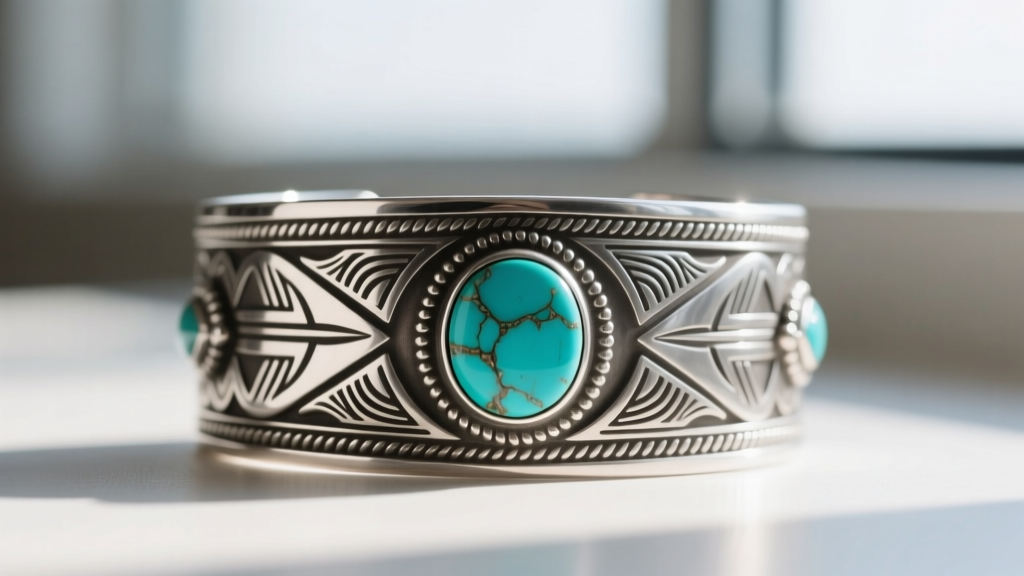
When building a collection of authentic mens Native American jewelry, understanding the raw materials is just as critical as appreciating the artistry. The Southwest jewelry tradition is rooted in a deep, metallurgical relationship with the earth. From the specific gauge of sterling silver used in a Navajo cuff to the porosity of a Lander Blue turquoise cabochon, every material choice dictates the piece's durability, value, and aging process. In 2026, as the market for vintage and contemporary Indigenous jewelry continues to surge, knowing how to evaluate these materials protects you from mass-produced imitations and ensures your pieces withstand daily wear.
The Metallurgical Foundation: Sterling Silver vs. Copper & Brass
The backbone of Native American silversmithing is sterling silver, but alternative base metals play a significant role in both historical and contemporary designs. Understanding the alloy composition helps you predict how a piece will react to your skin chemistry and environment.
Sterling Silver (925): The Navajo & Zuni Standard
Authentic sterling silver is an alloy consisting of 92.5% pure silver and 7.5% copper. This copper addition is what gives the metal the necessary tensile strength to be forged into heavy cuffs and concho belts. For men's jewelry, look for pieces stamped '925' or 'Sterling'. In men's cuff bracelets, the thickness of the silver is typically measured in gauges. A standard, durable men's cuff is usually crafted from 14-gauge (1.6mm) or 12-gauge (2.0mm) silver. Anything thinner than 16-gauge risks warping under the pressure of a man's daily movements, while 10-gauge (2.6mm) offers a heavy, heirloom-quality weight that molds perfectly to the wrist over time.
Copper and Brass: The Patina Play
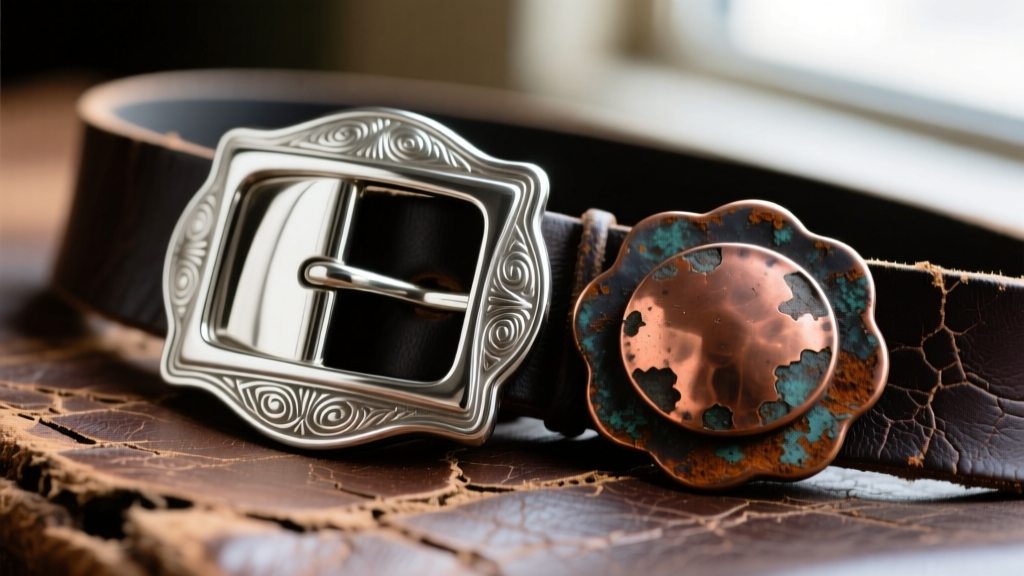
Before the widespread availability of silver in the late 19th century, copper and brass were the primary metals used by Navajo and Hopi smiths. Today, these metals are still utilized for their warm, earthy tones and rapid oxidation rates. Copper reacts quickly with the oils and acidity in human skin, developing a rich, dark-brown patina within weeks. While some collectors love this lived-in aesthetic, others prefer to maintain the bright, rose-gold shine using a mild lemon juice and salt bath. Brass, an alloy of copper and zinc, offers a brighter, more gold-like appearance and oxidizes at a slower, more predictable rate.
Gemstone Hardness & Porosity: Beyond the Aesthetic
The stones set into mens Native American jewelry are not merely decorative; they are geological markers of the Southwest. However, their varying hardness and porosity levels require vastly different care protocols.
Turquoise: Natural vs. Stabilized vs. Treated
Turquoise is the undisputed king of Indigenous jewelry, but not all turquoise is created equal. Natural, untreated turquoise is relatively soft, ranking between 5 and 6 on the Mohs hardness scale. It is highly porous and will absorb oils, lotions, and sweat, gradually shifting from a bright sky blue to a deep, earthy green over decades of wear. To combat this, the industry developed stabilization—a process where natural, chalky turquoise is subjected to a vacuum chamber and infused with a clear epoxy resin. Stabilized turquoise (Mohs 7) retains its original color and is far more resistant to chipping, making it ideal for men's rings that endure heavy impact. Beware of 'block' turquoise, which is entirely synthetic dyed plastic or crushed chalk, and holds no collectible value.
Lapis Lazuli, Coral, and Shell
Zuni artisans frequently incorporate Lapis Lazuli, red coral, and spiny oyster shell into complex inlay work. Lapis is a rock (not a mineral) with a Mohs hardness of 5.5, often flecked with iron pyrite. Coral and shell are organic materials, ranking even lower (3 to 4 on the Mohs scale) and are highly susceptible to scratching and chemical degradation. Never expose coral or shell to ultrasonic cleaners, harsh soaps, or prolonged sunlight, as the organic pigments will bleach and fracture.
| Material | Mohs Hardness | Porosity | Primary Care Directive |
|---|---|---|---|
| Natural Turquoise | 5.0 - 6.0 | High | Avoid oils/chemicals; expect color shift |
| Stabilized Turquoise | 7.0 | None | Wash with mild soap; highly durable |
| Lapis Lazuli | 5.5 | Medium | Wipe with damp cloth; avoid acids |
| Red Coral / Shell | 3.0 - 4.0 | High | No ultrasonics; store away from heat |
| Sterling Silver (925) | 2.5 (Metal) | N/A | Polish with treated cloth; anti-tarnish bags |
Inlay and Overlay Techniques: Structural Integrity
The way metals and stones are assembled dictates the structural longevity of the piece. When shopping for mens Native American jewelry, recognizing these techniques helps you assess the craftsmanship and price point.
- Hopi Silver Overlay: This technique involves soldering two sheets of silver together. The top sheet (usually 14-gauge) features intricate, cut-out geometric or nature-inspired designs, while the bottom sheet (18-gauge) is heavily oxidized and textured. The contrast creates a striking, three-dimensional effect without the need for gemstones, making it highly durable for everyday men's wedding bands and cuffs.
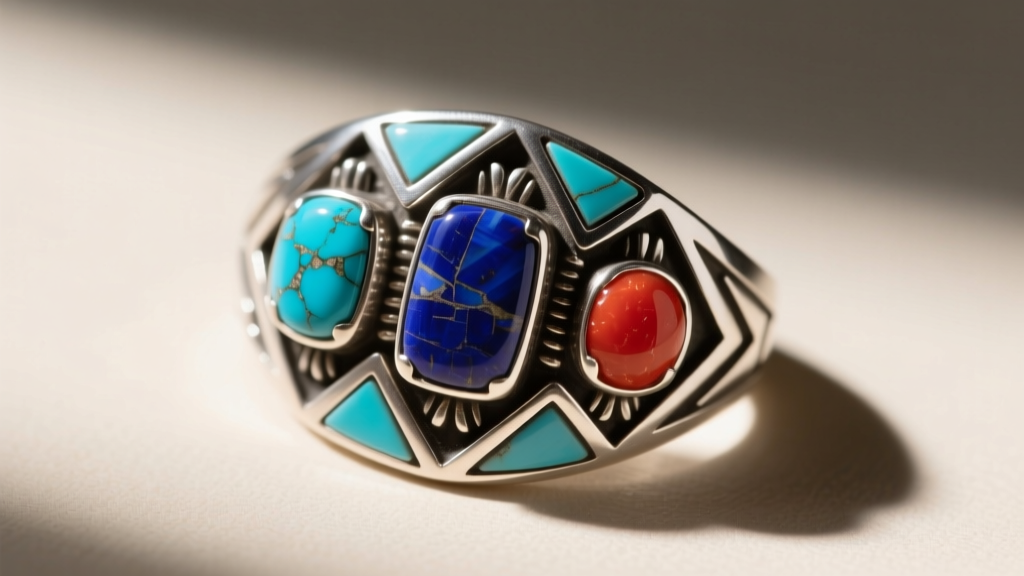
- Zuni Channel Inlay: Artisans cut precise, geometric shapes of turquoise, coral, lapis, and shell, setting them side-by-side within a grid of thin silver channels. The silver dividers protect the fragile stones from chipping against one another, making channel inlay rings surprisingly robust for daily wear.
- Navajo Cluster Work: Often seen in bolo ties and belt buckles, this involves setting multiple small, round cabochons (petit point) or elongated ovals (needlepoint) in individual silver bezels. The structural risk here is bezel wear; over decades, the thin silver lips holding the stones can wear down, requiring a jeweler to re-tighten the bezels.
Sizing, Weight, and Wearability Metrics
Men's jewelry requires a different approach to ergonomics than women's. A beautifully crafted piece is useless if it impedes movement or catches on clothing. When evaluating men's cuff bracelets, the inner diameter and the gap (the opening) are crucial. A standard men's cuff has an inner circumference of 6.5 to 7.5 inches, including a 1.25-inch gap. Heavy-gauge cuffs should not be repeatedly squeezed open and closed to fit over the hand; this work-hardens the silver and will eventually cause the metal to snap. Instead, roll the cuff onto the wrist from the side.
For men's rings, wide bands (8mm to 14mm) are popular in Native American designs, particularly for Zuni inlay and Navajo turquoise settings. Because wide bands cover more surface area of the finger, they fit tighter than narrow bands. Always size up by a half or full size when purchasing a wide-band Native American ring to accommodate natural finger swelling throughout the day.
Authenticity Markers and Legal Protections
The market is unfortunately flooded with overseas imitations masquerading as Indigenous craft. In the United States, the Indian Arts and Crafts Act of 1990 makes it illegal to offer or display for sale any art or craft product in a manner that falsely suggests it is Indian-produced. When buying mens Native American jewelry, always look for the artist's hallmark—usually a stamped initial, a clan symbol, or a full signature on the interior of a cuff or the back of a pendant.
Expert Insight: A '925' stamp alone does not guarantee Native American origin. Authentic pieces will typically feature a distinct hallmark alongside the silver purity mark. Furthermore, according to the Gemological Institute of America (GIA), understanding the geographic origin of turquoise—such as the deep, webbed blues of the Bisbee mine or the rare, high-value stones from Lander Blue—can drastically alter the appraisal value of a vintage piece.
By prioritizing material integrity, understanding the geological properties of the stones, and respecting the structural techniques of the silversmiths, you can curate a collection of men's Native American jewelry that is not only visually commanding but built to endure for generations.


