How to Choose Jewelry: A Technical Guide to Metals and Wear
Learn how to choose jewelry based on metallurgy, skin chemistry, and durability. An expert guide to metal alloys, hardness, and gemstone settings.

Most mainstream style guides on how to choose jewelry stop at superficial advice: match gold to warm undertones, or pair silver with cool wardrobes. While color theory has its place, true jewelry styling for daily wear requires a fundamental understanding of metallurgy, skin chemistry, and mechanical engineering. If you are investing in fine jewelry, you are essentially wearing applied chemistry. Understanding how different alloys interact with your unique biology and daily environment is the difference between a piece that becomes a generational heirloom and one that degrades within a year.
This expert deep dive bypasses the marketing fluff. We will examine the Vickers hardness of precious alloys, the electrochemical realities of galvanic corrosion in layered styling, and the structural engineering required to keep gemstones secure. Here is the technical framework for selecting jewelry that survives the real world.
The Metallurgy of Daily Wear: Hardness vs. Malleability
When evaluating how to choose jewelry for everyday wear, consumers often conflate 'hardness' with 'durability'. In metallurgy, these are distinct properties. Hardness measures a metal's resistance to surface scratching (typically measured on the Vickers Hardness scale, or HV), while malleability and tensile strength dictate how the metal behaves under blunt impact.
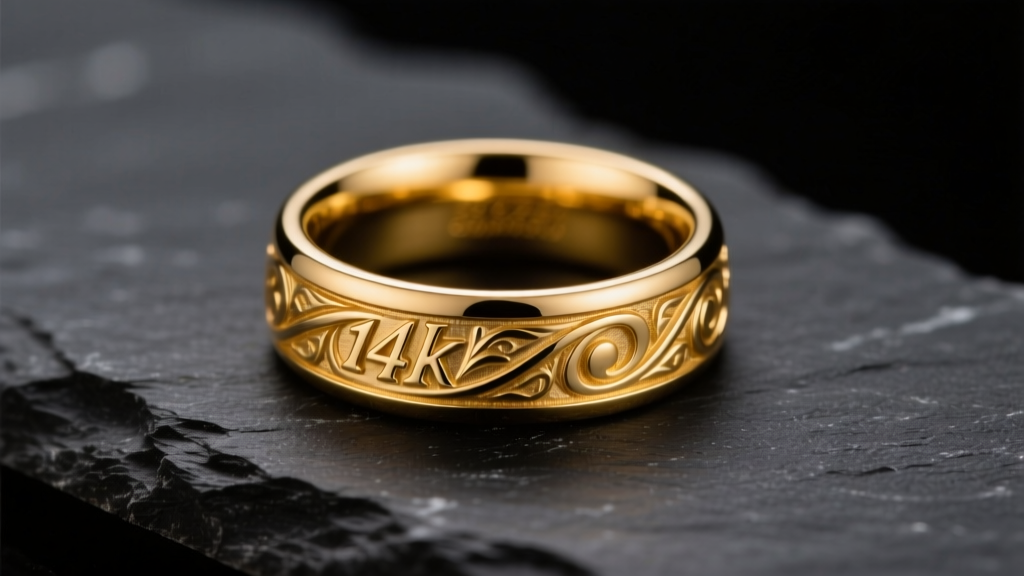
Take 18-karat yellow gold (75% pure gold) versus 14-karat yellow gold (58.5% pure gold). Pure gold is incredibly soft (approx. 25 HV). To make it wearable, it is alloyed with copper, silver, and zinc. 14k gold boasts a higher Vickers hardness (approx. 135-150 HV) than 18k gold (approx. 115-125 HV), meaning it will resist micro-scratches slightly better. However, 18k gold is more malleable. If a 14k gold ring band is bent out of shape, it is more prone to cracking under stress due to its lower ductility, whereas an 18k band will bend and can be easily reshaped by a jeweler without compromising the metal's crystalline structure.
Platinum 950 (95% platinum, usually alloyed with 5% ruthenium or cobalt) presents a different paradigm. It has a relatively low Vickers hardness (approx. 110-130 HV) compared to titanium or hardened steel, meaning it scratches easily. However, platinum's extreme density and tensile strength mean it displaces rather than loses metal when scratched. A scuff on a platinum band is merely metal pushed aside, whereas a scuff on a white gold band is metal permanently lost to abrasion.
Skin Chemistry and the Myth of 'Hypoallergenic'
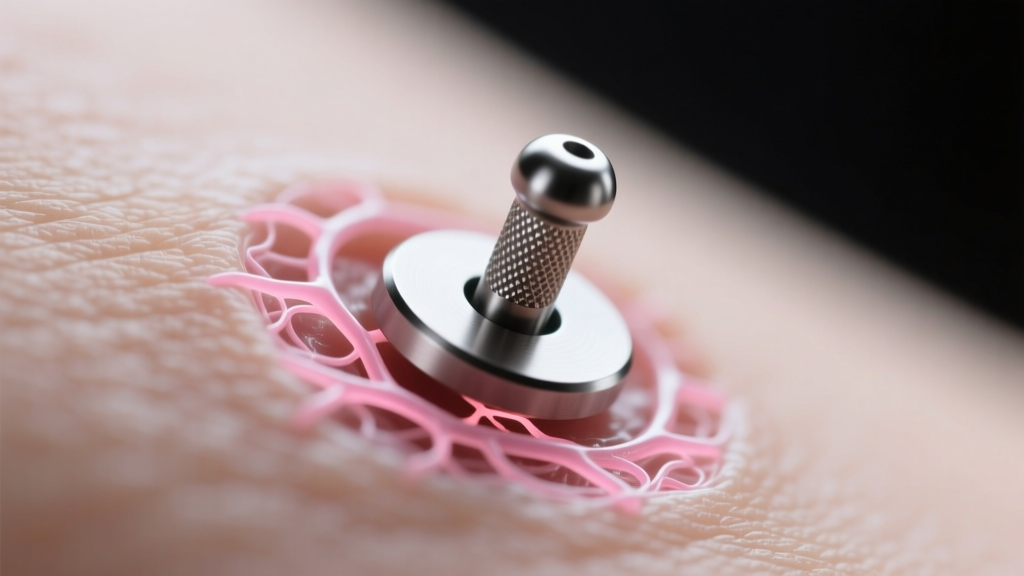
The term 'hypoallergenic' is a marketing invention, not a legally regulated metallurgical standard. When figuring out how to choose jewelry for sensitive skin, you must look at specific elemental release rates, primarily concerning nickel and copper.
Nickel allergy is the most common contact dermatitis triggered by jewelry. The European Union's REACH regulation (specifically the EN 1811:2011 standard) strictly limits nickel release from prolonged skin-contact items to 0.5 µg/cm²/week. If you are buying white gold, understand that it is not naturally white; it is yellow gold alloyed with nickel, palladium, or manganese, and then flash-plated with rhodium. Once the rhodium wears off (usually within 6 to 18 months), the underlying nickel-containing alloy is exposed to your sweat, which acts as a mild acid, accelerating ion release and triggering dermatitis.
If you have a known nickel sensitivity, avoid standard 14k and 18k white gold entirely. Opt for nickel-free white gold (alloyed with palladium, though it has a slightly warmer, grayish hue) or switch to 950 Platinum, which is inherently hypoallergenic and requires no rhodium plating.
For those with highly acidic sweat (a lower pH), copper-heavy alloys like rose gold (which can contain up to 20% copper) or sterling silver (7.5% copper) may cause harmless but unsightly green oxidation on the skin. This is not an allergic reaction; it is simply copper chloride forming on the skin's surface. To mitigate this, choose higher purity metals or ensure the inner shank of the ring is rhodium-plated.
Galvanic Corrosion in Layered Styling
Layering necklaces and stacking rings is a staple of modern styling, but mixing disparate metals introduces the risk of galvanic corrosion. Galvanic corrosion occurs when two dissimilar metals are in physical contact in the presence of an electrolyte—in this case, your perspiration.
In this electrochemical cell, the more 'noble' metal (like platinum or high-karat gold) acts as the cathode, while the less noble metal (like sterling silver or lower-karat gold) acts as the anode. The anode will corrode and degrade at an accelerated rate to protect the cathode. If you constantly layer a sterling silver chain directly against a platinum pendant, the friction and sweat will cause the silver to tarnish and pit much faster than if it were worn alone.
Safe Layering Protocols
- Separate by Length: Maintain at least a 2-inch gap between layered necklaces to prevent constant metal-on-metal friction.
- Use Spacers: When stacking rings, place a silicone or enamel-lined band between a platinum ring and a sterling silver ring to break the electrical circuit.
- Match the Noble Scale: If you must stack metals tightly, stick to metals close together on the galvanic series, such as 18k yellow gold and 14k yellow gold, rather than mixing silver and platinum.
Gemstone Cleavage and Prong Engineering
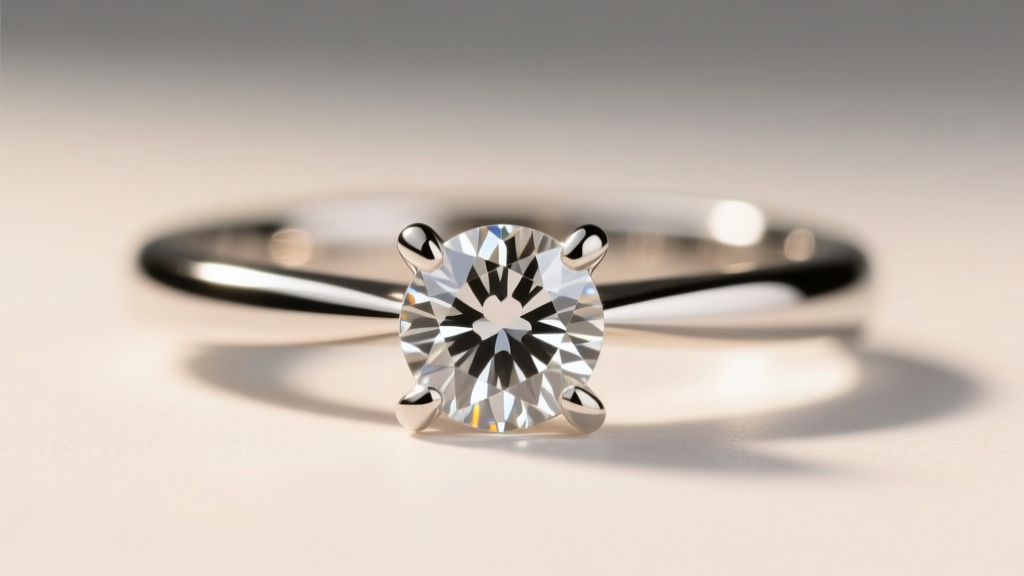
When evaluating how to choose jewelry featuring gemstones, amateurs look only at the Mohs scale of hardness. Experts look at cleavage planes and prong engineering. The Mohs scale only measures scratch resistance. Cleavage describes how a gemstone fractures along internal structural weaknesses when struck.
Diamonds rank a perfect 10 on the Mohs scale, meaning they will not scratch. However, diamonds have 'perfect cleavage' in four directions. A sharp, direct impact to a diamond's girdle (the outer edge) at the wrong angle can split the stone cleanly in half. Conversely, a sapphire (Mohs 9) has no true cleavage, meaning it is less likely to split upon impact, though it may chip.
This structural reality dictates how the stone must be set. For daily-wear rings, prong thickness and geometry are critical. A standard commercial prong might be stamped from 0.7mm wire, which is entirely insufficient for an active lifestyle. For a daily-wear diamond solitaire, demand a minimum of 0.9mm to 1.1mm wire for the prongs. Furthermore, the prong tips should be rounded and polished smooth; flat or 'tab' prongs are prone to catching on knitwear, which can slowly pull the prong away from the stone's crown over time.
Technical Specifications Matrix
Use this data table as a quick reference when evaluating material specifications for your next fine jewelry commission or purchase.
| Material | Composition | Vickers Hardness (HV) | Corrosion Resistance | Best Application |
|---|---|---|---|---|
| 950 Platinum | 95% Pt, 5% Ru/Co | 110 - 130 | Exceptional | Heavy daily wear, secure prong settings |
| 18k Yellow Gold | 75% Au, 12.5% Ag, 12.5% Cu | 115 - 125 | High | Heirloom pieces, low-impact daily wear |
| 14k Yellow Gold | 58.5% Au, Ag/Cu/Zn mix | 135 - 150 | Moderate-High | Active daily wear, durable band rings |
| Grade 5 Titanium | Ti-6Al-4V Alloy | 340 - 360 | Exceptional | Lightweight structural bands, dermal anchors |
| Sterling Silver | 92.5% Ag, 7.5% Cu | 60 - 75 | Low (Tarnishes) | Occasional wear, statement pieces |
Final Decision Framework
Ultimately, knowing how to choose jewelry is about aligning material science with your personal lifestyle variables. If your profession involves frequent exposure to harsh chemicals, chlorine, or manual impact, platinum and Grade 5 titanium are your only viable options for long-term structural integrity. If you prioritize the warm luster of gold but work with your hands, 14k gold offers the necessary tensile strength to prevent band deformation. By prioritizing metallurgical data and structural engineering over fleeting aesthetic trends, you ensure your jewelry collection remains resilient, beautiful, and structurally sound for decades.
For further reading on precious metal standards and gemological properties, consult the World Gold Council for alloy composition data, the European Chemicals Agency (ECHA) for nickel restriction guidelines, and the GIA Gem Encyclopedia for in-depth gemstone cleavage and hardness metrics.


