Styling Seekers Men's Jewelry: A Step-by-Step Guide
Master the earthy, intentional aesthetic with our step-by-step guide to styling seekers men's jewelry, from talisman stacks to raw stone rings.


The Seeker Archetype: Defining the Aesthetic
The modern 'seeker' aesthetic in men's fashion is not about fleeting trends; it is rooted in narrative, intentionality, and a deep connection to the natural world. When we talk about seekers men's jewelry, we are referring to pieces that look as though they have been discovered on a journey rather than purchased off a sterile showroom shelf. This style blends rugged outdoor elements, spiritual or talismanic motifs, and artisanal craftsmanship. Think oxidized metals, raw-hewn gemstones, and organic textures that age beautifully alongside the wearer.
Styling this aesthetic requires a departure from the polished, high-shine rules of traditional menswear. Instead, it embraces asymmetry, layered depth, and the beauty of imperfection. This step-by-step guide will walk you through the exact materials, proportions, and layering techniques required to master the seeker aesthetic with confidence and precision.
Step 1: Selecting Earth-Bound Materials
The foundation of any seeker-inspired collection lies in its raw materials. High-polish platinum and flawless diamonds have no place here. Instead, you must gravitate toward metals that develop a rich patina and stones that retain their natural inclusions and matrix patterns.
According to the The Silver Institute, sterling silver is highly reactive to sulfur and moisture, making it the perfect candidate for intentional oxidation. Jewelers often treat 925 silver with liver of sulfur to darken the crevices, highlighting hammered or cast textures. For leather, vegetable-tanned hides (typically 2mm to 4mm in thickness) are essential, as they absorb skin oils and UV exposure to develop a dark, personalized patina over time.
| Material | Patina Profile | Seeker Styling Application |
|---|---|---|
| Oxidized 925 Silver | High contrast; darkens in recessed textures | Heavy chain links, cast talisman pendants, signet rings |
| Veg-Tanned Leather | Darkens richly; softens and molds to the wrist | Braided wraps, macrame cord, thick cuff bracelets |
| Raw Turquoise | Porous; absorbs oils, shifting toward deeper greens | Cabochon pendants, inlay rings, statement beads |
| Solid Brass | Warm golden hue; oxidizes to a deep, earthy brown | Knuckle rings, lightweight anchor chains, cuff links |
Step 2: Building the Talisman Necklace Stack
The necklace stack is the focal point of seekers men's jewelry. A successful stack tells a story through varying lengths, weights, and textures. The golden rule of layering is to maintain at least a two-inch gap between chains to prevent tangling and allow each piece to breathe.
The 18-Inch Anchor
Begin with an 18-inch chain that sits just below the collarbone. A 2mm oxidized silver rolo chain or a simple black waxed cotton cord works perfectly here. This layer should be subtle, acting as a foundational texture rather than a statement piece. Ensure the clasp is proportionate; a small 5mm lobster clasp is ideal for chains under 3mm in width.
The 22-Inch Mid-Layer
Drop down to 22 inches for your mid-layer. This is where you introduce organic textures. A 3mm braided leather cord with a sterling silver tube clasp or a strand of 6mm matte onyx beads adds immediate depth. The matte finish of the beads absorbs light, contrasting beautifully with the metallic sheen of the base layer.

The 24-Inch Hero Pendant
Your final layer should rest at the sternum. Opt for a heavier 4mm Figaro or curb chain holding a substantial pendant. Raw, unpolished stones are the hallmark of the seeker style. The Gemological Institute of America (GIA) notes that turquoise with heavy brown or black matrix (the host rock) is highly prized for its earthy, organic appearance. A 1.5-inch raw turquoise or lapis lazuli pendant set in an unpolished, bezel-wrapped silver casing serves as the ultimate talismanic anchor.
Step 3: Curating Intentional Ring Stacks
Ring stacking in the seeker aesthetic is about balancing weight and texture across the hand. Avoid matching sets; instead, mix metals and finishes to create a curated, collected-over-time look.
- The Index Finger: Start with a 3mm to 4mm hammered silver band. The hammered texture catches the light irregularly, mimicking forged iron or raw silver pulled straight from the earth.
- The Middle Finger: This is your statement piece. A heavy signet ring featuring a matte-finished onyx, raw meteorite, or turquoise inlay grounds the hand. Look for comfort-fit interiors (slightly domed) to ensure the wider 6mm-8mm band sits comfortably over the knuckle.
- The Pinky Finger: Add a subtle 2mm brass or copper knuckle ring (typically sized 3 to 5). This adds a flash of warm, oxidized metal to the periphery of the hand without overwhelming the overall silhouette.
When stacking, always leave at least one finger completely bare to provide visual negative space and prevent the hand from looking overly cluttered.
Step 4: Balancing Wristwear with Leather and Stone
Wristwear for the seeker should feel tactile and grounded. The most effective approach is to mix rigid elements with flexible, organic materials. Avoid high-shine metal link bracelets; instead, focus on beadwork, leather, and woven textiles.
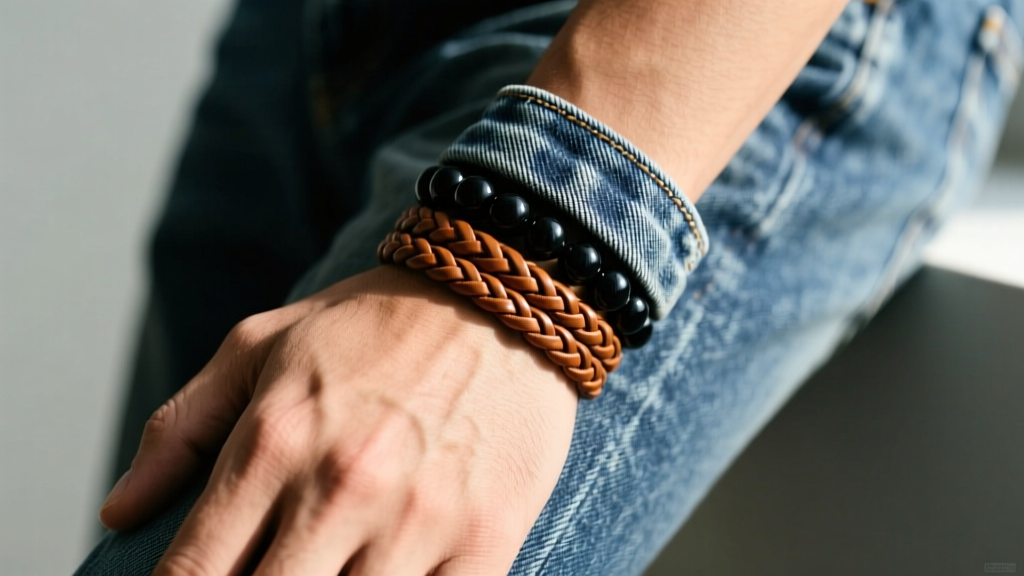
Begin with a 6mm or 8mm bead bracelet. Matte-finished stones like lava rock, picture jasper, or unpolished tiger's eye provide a rugged, porous texture. Lava rock, in particular, is highly tactile and carries a distinctly volcanic, earth-born energy. Pair this with a 3mm veg-tanned leather wrap bracelet that fastens with an adjustable macrame sliding knot rather than a metal buckle. The sliding knot allows for micro-adjustments, accommodating natural wrist swelling throughout the day while maintaining a seamless, hardware-free aesthetic.
If you wear a mechanical field watch or a rugged dive watch, position the bead bracelet on the opposite wrist, or stack the leather wrap directly below the watch case on the same wrist to bridge the gap between the timepiece and your hand.
Maintenance: Honoring the Patina
The cardinal rule of seekers men's jewelry is to avoid over-cleaning. The goal is not to maintain a factory-new shine, but to honor the oxidation, scratches, and oil absorption that give the pieces their character.
For oxidized silver, never use liquid silver dips or ultrasonic cleaners, as these will strip the intentional darkening from the crevices. Instead, use a dry, soft polishing cloth to gently buff only the highest raised surfaces, leaving the recesses dark and highly textured. For raw, porous stones like turquoise or lapis lazuli, simply wipe them with a slightly damp cloth after heavy wear to remove excess dirt, allowing them to slowly absorb your natural skin oils to deepen their color over the years. Embrace the wear; it is the physical record of your journey.


