Troubleshooting Men's Kays Jewelry: Sizing, Wear, Style Fixes
Solve common issues with men's Kays jewelry. Expert fixes for rhodium wear, unresizable tungsten bands, warranty claims, and styling mall-brand pieces.


The Reality of Mall-Brand Men's Jewelry
Kay Jewelers remains one of the most accessible entry points for men's jewelry, offering everything from diamond wedding bands to black onyx pendants. However, mass-produced mall-brand jewelry comes with a unique set of structural, material, and warranty challenges. Whether you are dealing with a fading black rhodium finish, a tungsten band that no longer fits, or a confusing extended service plan, troubleshooting men's Kays jewelry requires a specific playbook. In this 2026 guide, we bypass the sales pitch and dive straight into the metallurgical and practical realities of maintaining, repairing, and styling mass-market men's pieces.
Troubleshooting Material Wear: Black Gold and Rhodium Fading
One of the most common complaints regarding men's Kays jewelry involves color-changing metals. Kay frequently markets 'black gold' or bright white gold rings. It is crucial to understand that neither of these is a naturally occurring solid metal color. White gold is an alloy of yellow gold and white metals (like nickel or palladium), which is then plated with a microscopic layer of rhodium to achieve a mirror-like white finish. Black gold is achieved by using black rhodium or ruthenium plating over a standard gold or silver base.
Men's rings endure significant friction. By the 18-month mark, the rhodium plating (typically applied at a commercial thickness of 0.75 to 1.0 microns) will inevitably wear thin on the knuckles and palm-side of the band, revealing the yellowish or grayish base metal beneath.
The Fix: Re-Dipping vs. Polishing
Do not attempt to polish a faded white or black gold ring with a standard jeweler's cloth. Polishing compounds are mildly abrasive and will strip the remaining rhodium plating entirely, accelerating the fading process. Instead, take the piece to a local bench jeweler (not necessarily the Kay counter) for an ultrasonic cleaning and a 're-dip.' A professional rhodium re-plating usually costs between $45 and $85 and restores the ring to factory condition. For black rhodium, ensure your jeweler has the specific black ruthenium or black rhodium electrolyte baths, as not all independent shops keep these in stock.
The Resizing Dilemma: Tungsten, Titanium, and Sizing Fixes
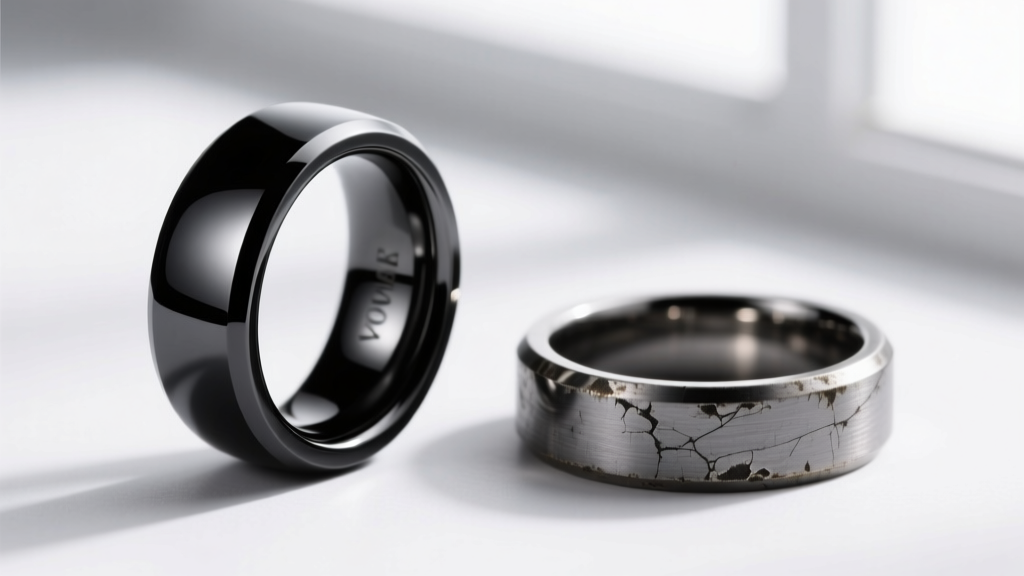
As of 2026, alternative metals dominate the men's wedding band market at retailers like Kay due to their scratch resistance and aggressive price points. However, these materials introduce a massive troubleshooting hurdle: they cannot be traditionally resized. If your finger swells due to weight gain, heat, or sodium intake, a standard jeweler's torch and mandrel will not work.
| Metal Grade (Typical Kay Offerings) | Mohs Hardness | Resizing Capability | Emergency Removal Method |
|---|---|---|---|
| Tungsten Carbide | 8.5 - 9.0 | Impossible (Must be replaced) | Shatter with locking vice grips |
| Cobalt Chrome | 5.5 - 6.0 | Extremely difficult / High risk of cracking | Specialized diamond-blade ring cutter |
| Titanium (Aerospace Grade) | 6.0 | Impossible (Requires specialized laser welding) | Standard hardened steel ring cutter |
| 10k / 14k Yellow Gold | 2.5 - 3.0 | Easily sized up or down by 1-2 sizes | Standard ring cutter / Snips |
Sizing Workarounds for Alternative Metals
If your Kay tungsten or titanium band is slightly too large, avoid the temptation to use liquid silicone guards, which can trap moisture and cause skin maceration. Instead, use a food-grade silicone sizing sleeve (like the 'Ring Guard' brand), which wraps around the base of the band. If the ring is too tight, your only viable option is to utilize Kay's exchange policy. Most Kay alternative metal bands come with a lifetime sizing exchange program, allowing you to trade the ring for a new one in the correct size for a nominal fee, provided you have the original receipt and the ring is not engraved.
Navigating the Extended Warranty (Kay Care) Claims
The 'Kay Care' extended service plan is heavily pushed at checkout. While it offers genuine value for routine maintenance, troubleshooting a denied warranty claim is a frequent headache for buyers. According to the Federal Trade Commission (FTC) guidelines on jewelry warranties, retailers must clearly define what constitutes 'wear and tear' versus 'damage.'
The most common point of failure is the 6-month inspection clause. The Kay Care plan typically covers stone replacement and prong tightening, but only if you can provide physical or digital proof that the ring was inspected at a Kay store every six months. If a diamond falls out of a men's cluster ring or a channel-set band, and your inspection log shows a 9-month gap, the corporate warranty department will likely deny the claim, citing that a timely inspection would have caught the loose prong.
How to Bulletproof Your Warranty
- Digital Logging: Always ensure the associate scans your Kay Care barcode and logs the inspection in the corporate database. A paper receipt is often lost; the digital footprint is undeniable.
- Pre-emptive Prong Checks: Men's rings take heavy impacts (gym equipment, steering wheels, tools). Ask the jeweler to specifically check the 'gallery' (the underside of the ring) where prongs are most likely to snag and bend.
- Rhodium Coverage: Confirm that your specific plan includes unlimited rhodium re-plating. Some legacy plans only cover it once a year, which is insufficient for men's daily-wear white gold bands.
Styling Fixes: Elevating Mass-Produced Pieces
A common styling problem with men's Kays jewelry is that the pieces can look overly uniform or 'mall-brand.' Mass-produced diamond crosses, signet rings, and tennis bracelets often lack the bespoke character of artisanal jewelry. The troubleshooting fix here relies on contextual styling and texture contrast.
The Gemological Institute of America (GIA) notes that the visual impact of commercial-grade diamonds (often I1-I2 clarity in mall brands) is heavily influenced by the surrounding metals and lighting. To elevate a standard Kay diamond piece, you must break up the high-polish symmetry.

The Texture Contrast Rule
Never pair a high-polish mall-brand diamond bracelet with a high-polish steel sports watch. The identical reflective surfaces make the jewelry look like a matched set from a catalog. Instead, introduce matte, organic, or brushed textures. Pair a Kay diamond tennis bracelet with a vintage timepiece featuring a matte black leather strap or a brushed titanium case. The organic texture of the leather and the subdued titanium will force the eye to focus on the diamond's scintillation, making the commercial stones appear sharper and more premium.
For men's pendant necklaces (like the ubiquitous diamond-accented dog tags or crosses), swap the standard, flimsy 1mm box chain that Kay provides. Re-string the pendant on a 3mm oxidized silver rope chain or a braided black leather cord. The thicker, darker chain provides a masculine, rugged frame that distracts from the mass-produced nature of the pendant itself, anchoring the piece in a modern, layered aesthetic.
Final Verdict: Maintenance is the Ultimate Fix
Troubleshooting men's Kays jewelry ultimately comes down to proactive maintenance and understanding the metallurgical limits of your purchase. By respecting the un-sizable nature of alternative metals, staying religiously on schedule with warranty inspections, and utilizing independent bench jewelers for rhodium maintenance, you can extend the lifespan and aesthetic appeal of mall-brand pieces for decades. Pair these technical fixes with intelligent, texture-driven styling, and your jewelry will punch far above its retail price point.


