Troubleshooting Clashes: How to Style Jewelry with Outfits
Learn how to style jewelry with outfits by troubleshooting neckline clashes, fabric snags, and metal mismatches with expert fixes.

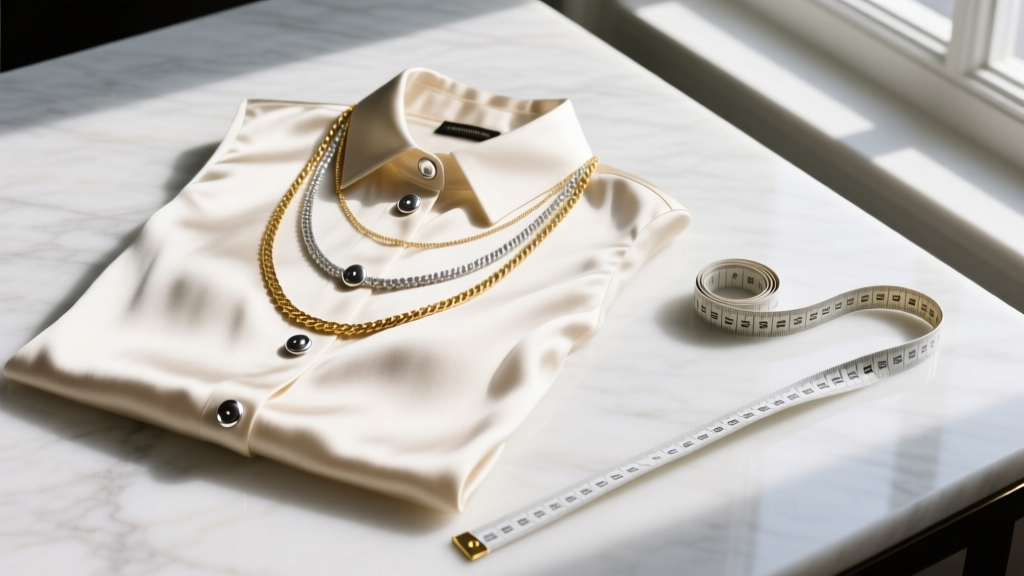
Mastering the art of accessorizing is rarely about simply putting on your favorite pieces; it is an exercise in spatial awareness, material science, and visual balance. Even seasoned collectors struggle when a beloved necklace tangles with a complex neckline or when delicate chains snag on heavy textiles. Understanding how to style jewelry with outfits requires a diagnostic approach to troubleshooting these common physical and aesthetic clashes. This guide bypasses generic styling advice to provide exact measurements, material grades, and structural solutions for the most persistent jewelry-wardrobe conflicts.
The Proportion Problem: Diagnosing Neckline vs. Necklace Tangles
The most frequent styling failure occurs at the neckline, where the geometry of the garment fights the geometry of the chain. The solution lies in matching specific chain lengths and pendant drop sizes to the exact angle of the fabric cut.
The V-Neck and Plunge Line
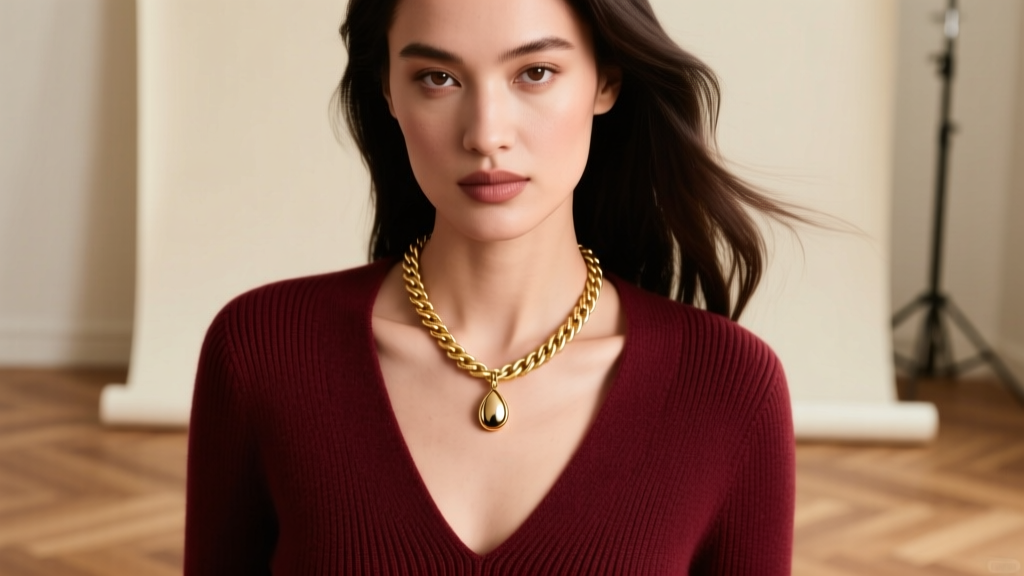
A standard V-neck creates a negative space triangle that demands a focal point. The error most make is wearing a 16-inch choker, which cuts the triangle in half and visually shortens the neck. Instead, opt for an 18-inch princess-length chain. For the pendant, choose a teardrop or marquise shape with a 12mm to 15mm drop. The bail (the loop connecting the pendant to the chain) should be no larger than 4mm to ensure the pendant sits flat against the sternum rather than flipping backward into the fabric.
The Boatneck and Bateau Line
Boatnecks run horizontally across the collarbone, creating a wide, closed visual line. Wearing a short necklace here results in a cluttered, choked appearance. Troubleshoot this by abandoning necklaces entirely in favor of high-impact ear styling, or by dropping a single 24-inch to 28-inch opera-length chain below the garment's hemline. If you must wear a shorter piece, use a rigid 14k gold collar (specifically a 3mm to 5mm tube or box chain) that sits exactly 1 inch above the fabric line, creating a deliberate, structured gap rather than a tangled overlap.
The High Crew and Turtleneck
High necklines eliminate the décolletage canvas. The fix is to treat the fabric itself as the backdrop. A 20-inch to 22-inch matinee chain with a substantial 20mm+ geometric pendant works best here. Ensure the chain is a robust gauge—at least 2.5mm thick—so it does not disappear into the visual texture of the sweater or blouse.
Fabric Friction: Solving Snags, Tarnish, and Visual Noise
Textiles are not passive backdrops; they actively interact with your jewelry. Friction, static, and fiber density can ruin both the garment and the metal. According to the Gemological Institute of America (GIA), environmental factors and physical abrasion are leading causes of micro-scratches and structural fatigue in fine jewelry.
Chunky Knits and Cable Chain Snags
Standard 1mm to 1.5mm cable chains are notorious for catching on the loose loops of chunky wool or mohair knits. Once a thin wire link catches, it can warp or snap under the tension of movement. The Fix: Switch to chains with smooth, continuous surfaces. A 3mm box chain, a 4mm herringbone, or a tightly woven rope chain eliminates the microscopic gaps that fibers slip into. Alternatively, bypass necklaces and use 12mm to 14mm solid gold or gemstone stud earrings, which offer visual weight without the snag hazard.
Silk, Satin, and the Micro-Scratch Dilemma
High-polish metals sliding against the delicate fibers of silk charmeuse or satin can cause friction that dulls the metal's finish over time, while the metal's edges can pull delicate threads. The Fix: Pair high-sheen fabrics with matte, hammered, or brushed-finish jewelry. A brushed 18k yellow gold bangle or a sandblasted sterling silver cuff provides a beautiful textural contrast to the glossy fabric without creating destructive friction.
Fabric and Jewelry Matrix
| Fabric Type | Primary Hazard | Recommended Jewelry Profile | Materials to Avoid |
|---|---|---|---|
| Chunky Wool/Knit | Link snagging, chain warping | 3mm+ Box/Rope chains, large studs | 1mm Cable chains, prong-set rings |
| Silk/Satin | Thread pulling, metal micro-scratching | Hammered/Brushed cuffs, smooth hoops | High-polish sharp-edged pendants |
| Sequin/Beaded | Visual noise, gemstone scratching | Minimalist 14k gold bars, plain bands | Pavé diamonds, multi-gem clusters |
| Linen/Cotton | Sweat tarnish, casual clashing | Argentium silver, mixed-metal layers | Delicate pearl strands, high-carat gold |
The Metal Mismatch: Correcting Undertone and Hardware Collisions
A frequent troubleshooting scenario involves an outfit with built-in hardware that clashes with your preferred jewelry metal. For example, wearing a leather jacket with heavy silver zippers while wanting to wear your everyday 14k yellow gold wedding stack. Forcing a single metal tone in this scenario creates a disjointed, accidental look.
The Two-Tone Bridge Technique
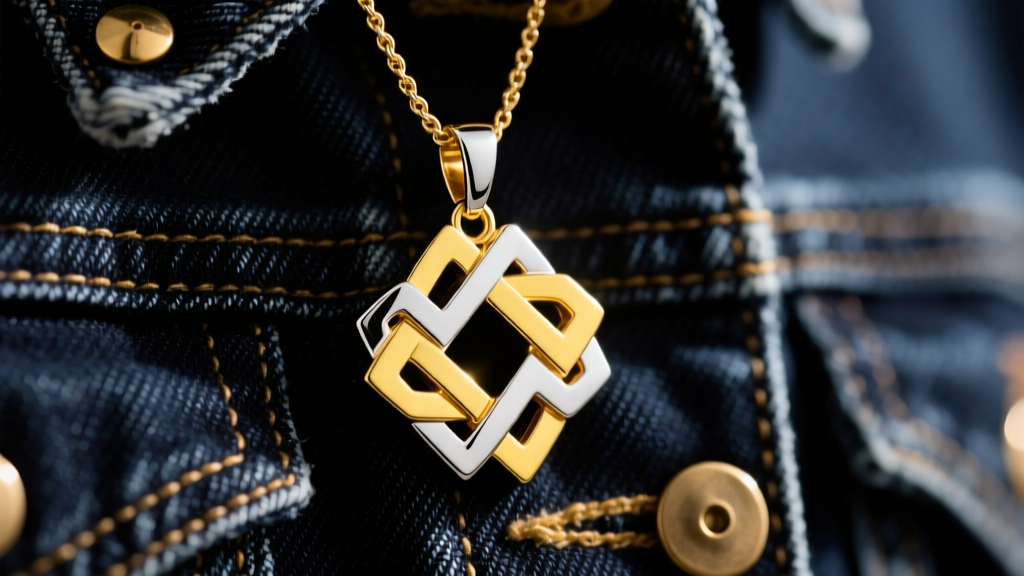
To resolve hardware collisions, use a 'bridge' piece that incorporates both metals. A two-tone interlocking ring pendant (featuring both 14k yellow gold and rhodium-plated sterling silver) or a mixed-metal chain (alternating gold and silver links) intentionally ties the garment's hardware to your jewelry. This signals that the mix is a deliberate styling choice rather than a morning mistake. As noted by Vogue's styling experts, intentional mixed-metal layering requires a unifying element—such as a consistent chain link style or matching gemstone accents across both metals—to maintain cohesion.
Managing Visual Temperature
If the garment lacks hardware but features a strong undertone (e.g., a cool-toned icy blue blouse), warm metals like rose gold or high-karat yellow gold (22k) can sometimes clash with the fabric's dye. In these cases, utilize white metals like platinum, 14k palladium white gold, or Argentium silver (which resists the yellowing tarnish of standard sterling silver) to harmonize with the cool textile palette.
Troubleshooting Scale and Visual Weight (The 'Too Much' Fix)
When an outfit feels overwhelmed by accessories, the issue is rarely the number of pieces, but the miscalculation of visual weight and physical gram distribution.
Earring Weight vs. Visual Volume
The average earlobe can comfortably support 7 to 10 grams before the jewelry begins to droop, pull the piercing, or distort the silhouette. If you are wearing a high-collared or ruffled blouse that requires dramatic ear styling, heavy chandelier earrings will physically drag the ear down. The Fix: Utilize structural volume without weight. Opt for large-diameter (30mm+) hollow tube hoops, lightweight titanium ear cuffs, or threader earrings that create long, dramatic lines using less than 3 grams of metal.
The Rule of Thirds in Layering
When layering necklaces over a simple tee or dress, avoid stacking chains of similar lengths (e.g., 16", 17", and 18"), which creates a thick, heavy band that visually cuts the torso in half. Apply the rule of thirds by spacing the layers with distinct gaps: a 15-inch choker, a 20-inch matinee, and a 26-inch opera chain. This creates three distinct visual zones, elongating the torso and allowing the outfit's fabric to breathe between the metal layers.
Quick-Fix Flowchart for Morning Wardrobe Emergencies
When you are out of time and an outfit simply isn't working with your jewelry, run through this rapid diagnostic checklist:
- Is the neckline complex (ruffles, bows, asymmetrical)? Remove all necklaces. Shift focus to 10mm+ stud earrings or a singular, bold cocktail ring on the index finger.
- Is the pattern too busy (florals, geometric prints)? Remove all gemstones and pavé settings. Switch to solid, high-polish plain metal bands and smooth hoops to provide a visual 'rest' for the eye.
- Does the jewelry feel heavy or clunky? You are likely wearing the wrong gauge. Swap thick, solid chains for hollow-core or paperclip chains that offer the same millimeter width at a fraction of the physical weight.
- Are the metals clashing with your belt buckle or bag hardware? Introduce a mixed-metal watch or a two-tone bracelet to intentionally bridge the gap between your accessories and your garment hardware.
Troubleshooting the intersection of wardrobe and jewelry is a precise discipline. By paying attention to exact chain gauges, pendant drop lengths, textile friction, and gram weights, you transform accessorizing from a game of chance into a reliable, engineered component of your personal style.


