How to Match Jewelry With Outfits: A Beginner's Style Guide
Learn how to match jewelry with outfits using our beginner-friendly guide. Discover metal pairing, neckline rules, and proportion frameworks.

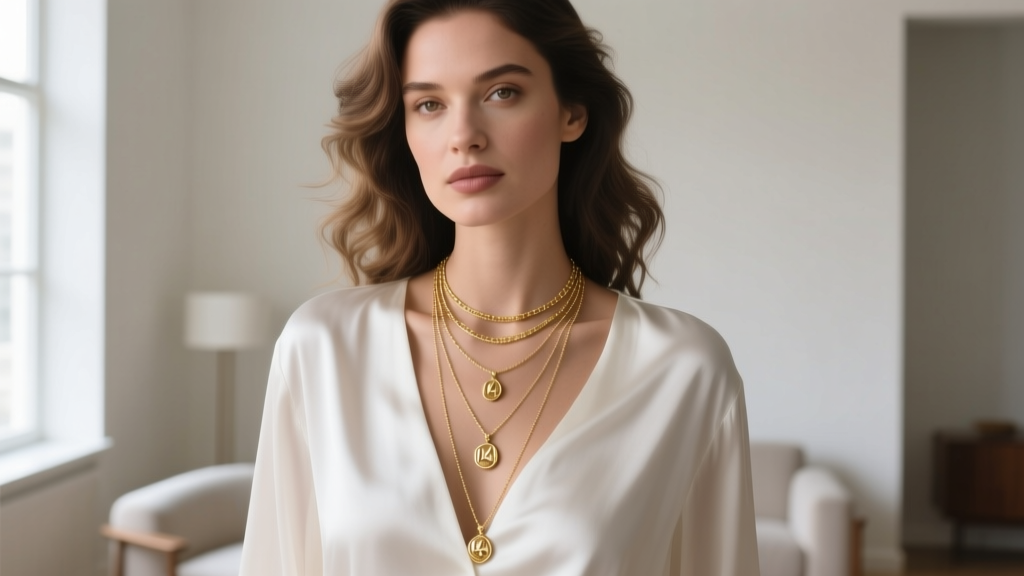
Learning how to match jewelry with outfits is less about memorizing rigid fashion rules and more about understanding proportion, contrast, and material behavior. For beginners, the jewelry box can feel like a minefield of clashing metals, overwhelming gemstones, and tangled chains. However, by applying a few foundational styling frameworks, you can transform any basic wardrobe into a curated, intentional look.
This guide strips away the fluff and provides actionable, specific advice on pairing metals with fabrics, selecting the correct chain lengths for various necklines, and balancing visual weight. Whether you are wearing a structured linen blazer or a relaxed cashmere knit, these principles will help you accessorize with confidence.
The Core Philosophy: Visual Weight and Proportion
Before selecting a specific piece, you must evaluate the 'visual weight' of your clothing. Visual weight refers to how much attention a garment demands based on its texture, pattern, and silhouette.
- High Visual Weight Outfits: Chunky cable-knit sweaters, heavily embroidered fabrics, bold plaids, or garments with complex structural details like ruffles and pleats.
- Low Visual Weight Outfits: Smooth silk slip dresses, fine-gauge merino wool turtlenecks, crisp cotton button-downs, and solid-color minimalist tailoring.
The fundamental rule of proportion is contrast. High visual weight outfits require substantial, heavier jewelry to avoid being swallowed by the fabric. A delicate 14k gold thread chain will disappear against a thick tweed blazer. Instead, opt for a 5mm to 8mm wide curb chain or bold geometric drop earrings. Conversely, low visual weight outfits provide a blank canvas, allowing delicate, intricate pieces—like a 1.5mm cable chain with a micro-pavé diamond pendant—to take center stage without competing for attention.
Neckline Rules: Pairing Chains and Pendants
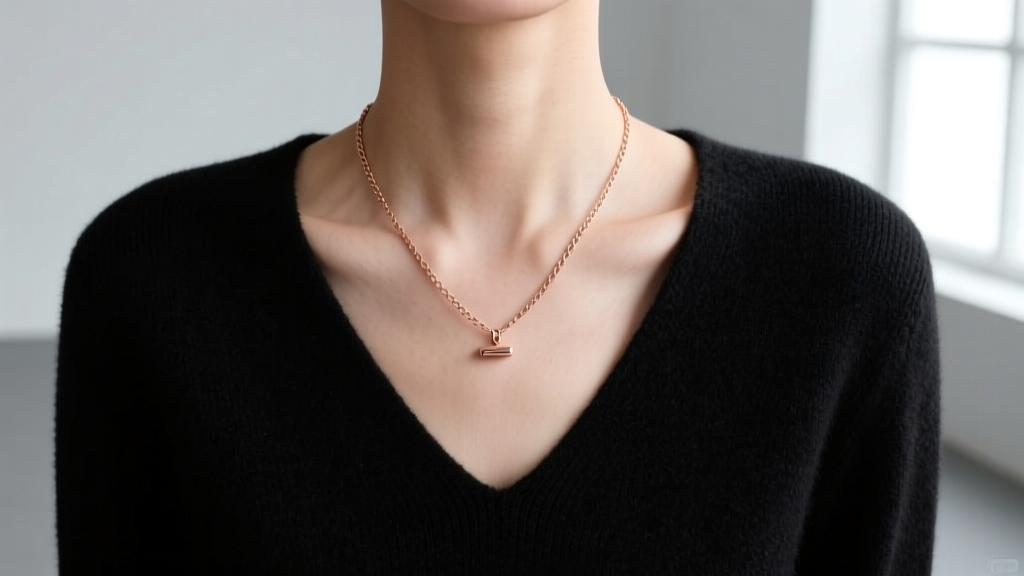
Matching necklaces to necklines is where most beginners struggle. The goal is to follow or intentionally contrast the geometric lines of the garment. Here is a precise breakdown of standard chain lengths and their ideal outfit pairings, according to industry jewelry standards.
14 to 16 Inches (Collar and Choker Length)
This length sits tightly on the base of the neck or collarbone. It is best paired with open necklines that leave the upper chest bare.
- Best Outfits: Off-the-shoulder tops, scoop necks, boat necks, and deep V-necks.
- Avoid: High crew necks or turtlenecks, which will cause the chain to bunch up and tangle against the fabric seam.
18 Inches (Princess Length)
The 18-inch chain is the most versatile standard size, resting perfectly on the collarbone. According to the Brides.com Jewelry Metals Guide, an 18-inch 14k gold chain is the most common starter piece due to its universal flattering placement.
- Best Outfits: Crew neck t-shirts, button-down shirts (worn with the top two buttons undone), and sweetheart necklines.
- Pro-Tip: When wearing an 18-inch chain with a pendant, ensure the pendant drop is no longer than 1.5 inches if wearing a high-necked garment, preventing it from resting awkwardly on the fabric seam.
20 to 24 Inches (Matinee Length)
Falling between the collarbone and the bust, matinee lengths are ideal for business casual and formal wear.
- Best Outfits: Turtlenecks, high-neck blouses, and tailored blazers. A 22-inch oxidized sterling silver chain layered over a black merino turtleneck creates a striking, elongating vertical line.
Metal Tones and Fabric Colors
While skin undertone plays a role in jewelry selection, matching metal to your outfit's color palette is equally critical for a cohesive look. The Gemological Institute of America (GIA) notes that the alloy composition in metals like 14k and 18k gold significantly affects their surface reflectivity and color warmth, which interacts directly with fabric dyes.
| Outfit Color Palette | Optimal Metal Tone | Why It Works |
|---|---|---|
| Earth Tones (Olive, Rust, Mustard, Brown) | Yellow Gold (14k or 18k) | The warm, copper-rich alloys in yellow gold harmonize with autumnal and organic fabric dyes. |
| Cool Jewel Tones (Emerald, Sapphire, Plum) | White Gold or Platinum | The bright, silvery reflectivity of platinum and rhodium-plated white gold provides crisp contrast against deep, cool hues. |
| Neutrals (Black, White, Grey, Navy) | Mixed Metals or Rose Gold | Neutrals act as a blank canvas. Rose gold (alloyed with copper) adds a subtle blush warmth to stark black or grey. |
| Pastels (Blush, Mint, Lavender) | Rose Gold or Silver | Soft metals prevent the jewelry from overpowering the delicate, low-saturation pigments of pastel fabrics. |
Material Note: If you choose sterling silver for dark outfits, be aware that the copper alloy (7.5%) in standard 925 silver can tarnish when exposed to moisture and friction. For daily wear against dark, heavy fabrics, opt for rhodium-plated sterling silver or white gold to maintain a bright finish.
The Rule of Three: Balancing Statement and Subtle Pieces
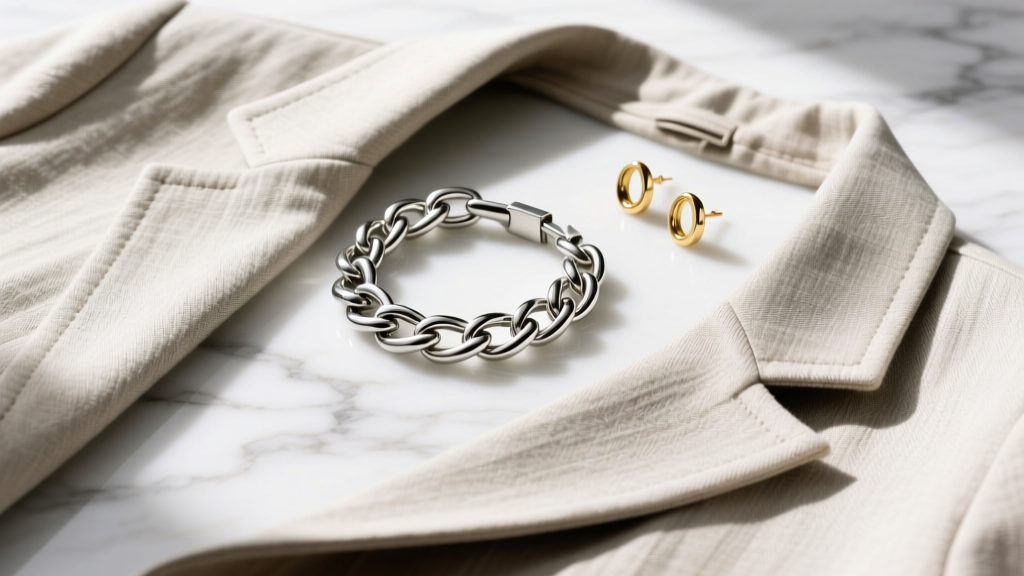
When learning how to match jewelry with outfits, the 'Rule of Three' is a fail-safe framework for accessorizing without looking overdone. The human eye naturally finds odd numbers more visually appealing and balanced. In jewelry styling, this means limiting your focal points to three distinct zones or pieces.
Here is how to execute the Rule of Three in practice:
- The Anchor Piece: This is your primary focal point. If you are wearing a simple linen blazer and a white tee, your anchor might be a pair of substantial 12mm gold hoop earrings or a chunky signet ring.
- The Supporting Element: This piece should complement the anchor without competing. If your anchor is bold earrings, your supporting element could be a delicate 16-inch chain necklace or a stack of three thin 1mm midi-rings on one hand.
- The Subtle Finisher: This is a nearly invisible but intentional detail, such as a simple cuff bracelet or a small stud in a secondary ear piercing.
By capping your look at three zones (e.g., ears, neck, wrists), you prevent the 'costume jewelry' effect where every visible body part is weighed down by metal and stones.
Practical Decision Framework for Daily Wear
To streamline your morning routine, use this three-step decision framework before leaving the house.
Step 1: Identify the Garment's Focal Point
Look at your outfit in a full-length mirror. Where does the eye naturally land? Is it a bold lapel on a suit jacket? A vibrant silk scarf? An intricate pattern on a midi skirt? Once identified, you must decide whether your jewelry will compete with this focal point or frame it. Never introduce a heavy statement necklace if your top already features a loud, ruffled collar.
Step 2: Select the Anchor Based on Fabric Texture
Run your hand over the fabric. If it is smooth (silk, satin, fine cotton), choose jewelry with high polish and faceted gemstones to mimic the sleekness. If the fabric is textured (tweed, corduroy, chunky knits), choose jewelry with matte finishes, hammered metals, or cabochon stones that echo the tactile nature of the clothing.
Step 3: The Hardware Match Test
Check the hardware on your clothing and accessories. Do your belt buckle, handbag clasps, and shoe hardware feature silver-tone or gold-tone metals? While mixing metals is entirely acceptable in modern styling, beginners will achieve a more polished, cohesive look by matching their primary jewelry metal to the dominant hardware on their outfit.
Common Beginner Mistakes to Avoid
Even with the best intentions, certain styling errors can disrupt an otherwise well-curated outfit. Avoid these common pitfalls:
- Ignoring Scale: Wearing a massive, 3-inch chandelier earring with a high-necked, heavily detailed blouse. The jewelry and the garment will fight for dominance, creating visual clutter.
- The Tangle Factor: Layering three chains of the exact same length and gauge. Always vary chain lengths by at least two inches (e.g., 16', 18', and 20') and mix chain styles (e.g., a cable chain, a snake chain, and a paperclip chain) to prevent them from knotting together.
- Over-Accessorizing for the Occasion: Wearing heavy, noisy bangles to a quiet office environment or a formal dinner. Jewelry should enhance your presence, not announce it through sound. Opt for solid, hinged cuffs or silent chain bracelets in professional settings.
Mastering how to match jewelry with outfits is an iterative process. Start with the foundational rules of proportion and neckline pairing, then gradually experiment with mixed metals and layered textures as your personal style evolves. By treating your jewelry as an integral component of your garment's architecture rather than an afterthought, you will consistently achieve a polished, intentional aesthetic.


