How to Build a Versatile Men's Jewelry Capsule Collection
Learn how to build a versatile men's jewelry capsule collection. Step-by-step guide on metals, weights, and proportions for everyday style.

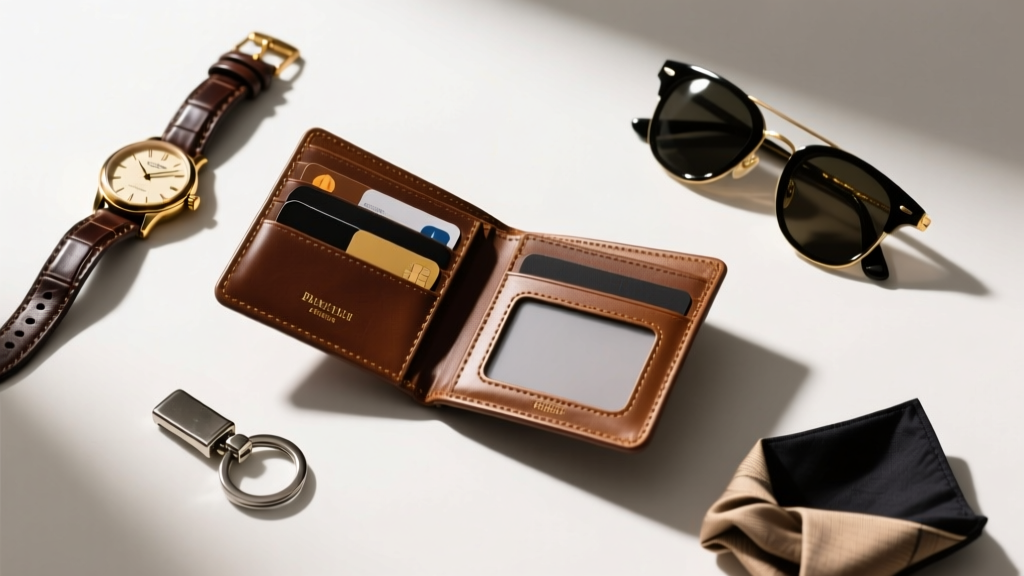
The landscape of men's jewelry has fundamentally shifted. As we navigate 2026, the maximalist, logo-heavy flexes of the previous decade have been entirely replaced by intentional curation, metallurgical purity, and quiet luxury. Building a men's jewelry capsule collection is no longer about accumulating random pieces; it is an exercise in proportional styling and material science. A well-constructed capsule should seamlessly transition from a casual linen shirt to a tailored worsted wool suit without requiring a second thought.
This step-by-step guide strips away the fluff and focuses on the actionable metrics—gauge sizes, metal grades, and anatomical proportions—required to build a foundational men's jewelry wardrobe that lasts a lifetime.
Step 1: Anchor with the Right Metal Grade
The foundation of any capsule is material integrity. Cheap alloys tarnish, cause contact dermatitis, and degrade structurally. When investing in core pieces, you must understand the metallurgical properties of your options. According to the Gemological Institute of America (GIA), understanding alloy composition is critical for predicting how a metal will wear over time.
The Core Metal Matrix
- 316L Surgical Stainless Steel: The ultimate budget workhorse. Contains molybdenum for enhanced corrosion resistance. Ideal for bracelets and rings that take high impact. Vickers hardness sits around 150-190 HV. Price range: $30 - $90.
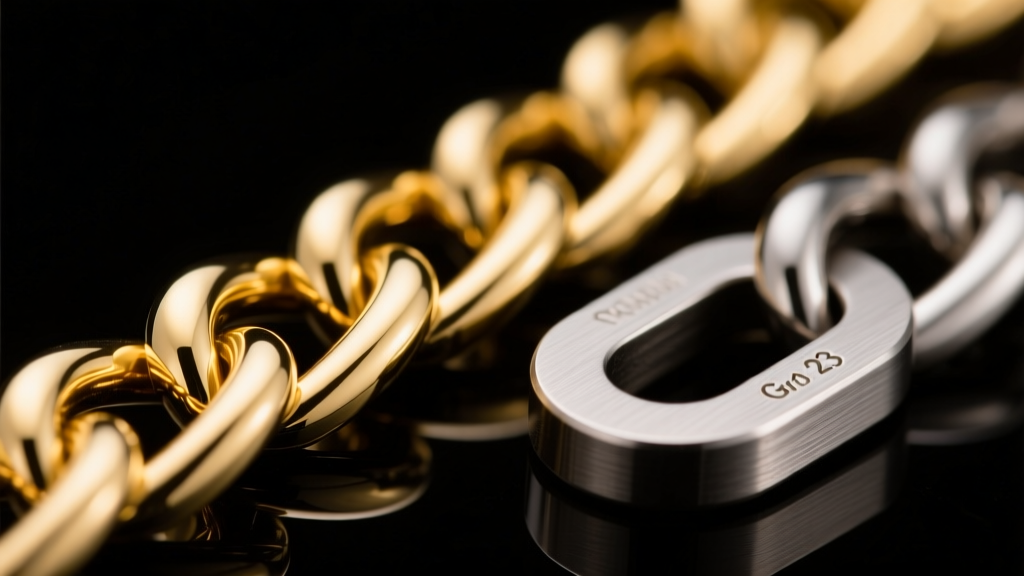
- Grade 23 Titanium (Ti-6Al-4V ELI): The aerospace standard. It is 45% lighter than steel, entirely hypoallergenic, and possesses an incredible strength-to-weight ratio. Best for thick signet rings or wide band bracelets where weight fatigue is a concern. Price range: $60 - $180.
- 14k Solid Gold (58.5% Purity): The gold standard for daily wear chains. Pure 24k gold is too soft (scratching at mere 25 HV), but 14k alloyed with copper and silver reaches approximately 130-160 HV, offering the perfect balance of rich color and structural durability. Price range: $350 - $900+.
Step 2: Establish Proportional Baselines
The most common failure in men's styling is ignoring anatomical scale. A 6mm Cuban link chain will look elegantly substantial on a 7.5-inch wrist but comically oversized on a 6-inch wrist. To achieve visual harmony, you must map your jewelry width to your skeletal frame.
Measure your wrist just below the ulnar styloid (the prominent wrist bone) using a flexible tailor's tape. Use the matrix below to determine your baseline widths for chains, rings, and bracelets.
| Wrist Circumference | Chain Width (Neck) | Ring Band Width | Bracelet Link Width | Max Bracelet Weight |
|---|---|---|---|---|
| < 6.5 inches (Slender) | 2mm - 4mm | 4mm - 6mm | 3mm - 5mm | < 25 grams |
| 6.5 - 7.5 inches (Average) | 4mm - 6mm | 6mm - 8mm | 5mm - 8mm | 25 - 45 grams |
| > 7.5 inches (Robust) | 6mm - 9mm | 8mm - 10mm | 8mm - 12mm | 45 - 75 grams |
Step 3: The 4-Piece Core Capsule Breakdown
A true capsule requires only four core items to cover 95% of your styling needs. Here is exactly what to acquire and the specific design parameters to look for.
1. The Everyday Chain: The Mid-Weight Curb
Skip the fragile cable chains and the overly aggressive rope chains. The flat-linked curb chain is the undisputed king of versatility. For the average male, a 5mm width in a 20-inch length is the mathematical sweet spot. It rests perfectly at the clavicle notch and lays flat enough to remain invisible under an unbuttoned collar while catching the light when exposed.
Pro-Tip on Clasps: For chains over 4mm, abandon the standard lobster clasp. Upgrade to a fold-over safety clasp or a custom T-bar toggle. They distribute tension more evenly and prevent the clasp from migrating to the front of your neck.
2. The Anchor Ring: The Matte Signet
A signet ring provides visual weight to the hands. Avoid high-polish finishes for daily wear, as they attract micro-scratches rapidly. Opt for a brushed or sandblasted matte finish on the face, with polished beveled edges to catch the light. Wear it on your right ring finger or pinky to balance your dominant hand's movement.
3. The Subtle Bracelet: The ID or Curb
Your bracelet must integrate with your timepiece. If you wear a steel dive watch, a 316L steel curb bracelet with a 1mm smaller link width than your watch bezel creates a cohesive, non-competitive stack. Ensure the bracelet length allows for exactly one finger's width of slack between the metal and your wrist bone to prevent clattering against your watch case.

4. The Sleeper Stud or Hoop (Optional but Impactful)
For those with piercings, a 2mm to 3mm bezel-set diamond or black onyx stud in 14k white or yellow gold serves as a permanent, low-maintenance anchor piece that requires zero daily styling effort.
Step 4: The Mathematics of Layering
Layering is where most men derail their aesthetic, resulting in a tangled, noisy mess. To layer necklaces or bracelets effectively, you must adhere to the 30% Variance Rule and the Rule of Odds.
- The 30% Variance Rule: When layering two chains, the secondary chain must be at least 30% thicker or thinner than the primary chain to create distinct visual lanes. For example, pair a 5mm curb chain with a 2mm box chain. Pairing a 5mm with a 4mm chain creates visual mud and guarantees the links will snag and grind against each other.
- The Length Gap: Maintain a strict 2-inch to 3-inch drop between layers. A 18-inch chain layered with a 21-inch pendant chain ensures the hardware never overlaps.
- The Rule of Odds: The human eye finds odd numbers more naturally pleasing. Stack three bracelets or wear three rings across both hands, rather than two or four. As noted by style authorities at Jewelers of America, asymmetrical balance is the hallmark of advanced, intentional styling.
Step 5: Maintenance and Patina Management
High-end men's jewelry requires specific maintenance protocols to preserve its structural integrity and finish. Do not use abrasive toothpaste or generic silver dips on mixed-metal capsules.
- Ultrasonic Cleaning: For solid gold and ungemmed steel/titanium pieces, use a 40kHz ultrasonic cleaner with a few drops of mild dish soap for exactly 3 minutes. This dislodges sebum and dead skin from chain links without scratching the metal.
- Matte Finish Restoration: If your brushed titanium or steel signet ring develops shiny spots from micro-scratches, you can restore the matte finish at home. Rub the face of the ring in one single direction using a Scotch-Brite pad (maroon or grey) to re-establish the uniform grain pattern.
- Chemical Avoidance: Remove all jewelry before exposure to chlorinated pools or hot tubs. Chlorine reacts catastrophically with the copper and zinc alloys in 14k gold, causing a phenomenon known as 'stress corrosion cracking,' which can cause chain links to snap spontaneously.
Building a men's jewelry capsule is an investment in your personal architecture. By prioritizing metallurgical quality, respecting anatomical proportions, and adhering to strict layering mathematics, you develop a signature style that is both timeless and unmistakably yours.


