Guitar Pick Jewelry: Troubleshooting Wear, Breaks & Style
Solve common guitar pick jewelry problems. Learn how to fix broken bails, prevent material wear, and style pendants for a polished look.

The Anatomy of a Failing Pick Pendant
Guitar pick jewelry is a beloved staple for musicians, roadies, and fans, but it is notoriously fragile. The intersection of jewelry making and guitar accessories often results in structural failures because standard picks are engineered to be struck against steel strings, not suspended from a chain and subjected to the acidic environment of human skin. If your favorite pick pendant keeps breaking, tarnishing, or losing its bail, you are likely dealing with a fundamental mismatch between the material's intended use and its new life as jewelry.
The most common failure point is the stress concentration at the bail hole. A standard 351-shape pick is roughly 2mm wide at the top. Drilling a 2mm hole through a standard 0.88mm thick celluloid pick leaves virtually zero structural margin. When the chain pulls at an angle, the polymer tears. To troubleshoot this, you must first diagnose the material and the hardware, then apply targeted fixes that bridge the gap between musical utility and jewelry durability.
Material Breakdown: Why Your Pick is Degrading
Not all guitar picks are created equal. The material science behind your pick dictates how it will react to sweat, UV light, and mechanical stress. Understanding what your pick is made of is the first step in troubleshooting its premature degradation.
| Material | Durability as Jewelry | Skin Reaction & Wear | Best Attachment Method |
|---|---|---|---|
| Celluloid | Low (Brittle over time) | Degrades with sweat; releases nitric acid; highly flammable. | Screw-top bail with wide washer |
| Delrin (POM) | Medium (Tough but slick) | Resistant to sweat; glue will not adhere to the surface. | Mechanical pinch bail or bezel |
| Ultem / Vespel | High (Aerospace grade) | Indestructible; UV resistant; hypoallergenic. | Drilled hole with jump ring |
| Brass / Copper | Very High (Heavy) | Oxidizes with skin oils; requires regular polishing. | Soldered jump ring or heavy bail |
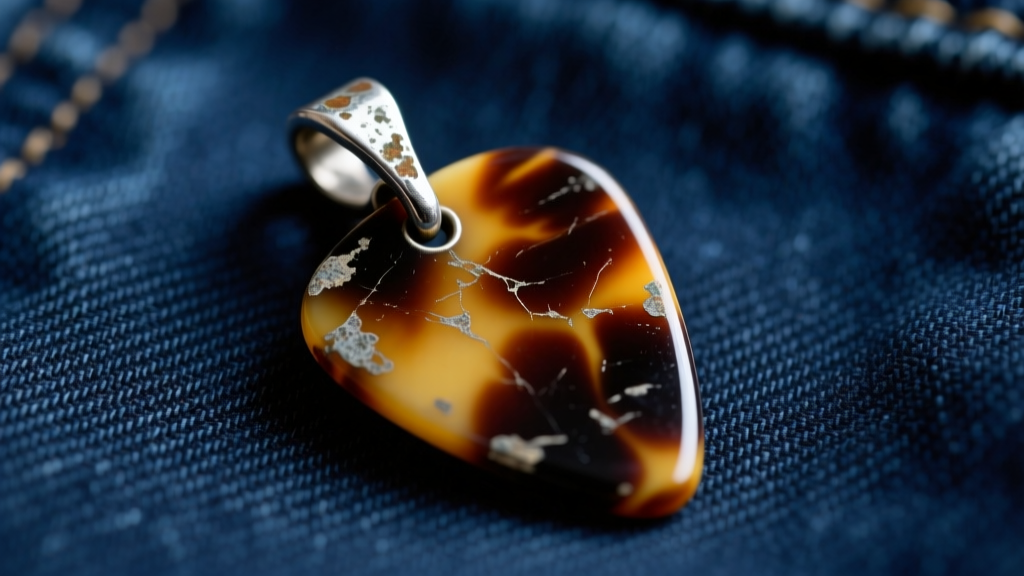
Celluloid, the vintage tortoiseshell-look material, is a jeweler's nightmare. As noted by conservation experts, celluloid degrades over time, releasing acidic gases that can tarnish the very metal chains it hangs from. If your chain is turning black right at the clasp and bail, your celluloid pick is off-gassing. The immediate fix is to swap the chain for a stainless steel or titanium alternative, which resists acidic corrosion far better than sterling silver.
Bail & Attachment Troubleshooting
The bail—the hardware that connects the pick to the chain—is where 90% of guitar pick jewelry fails. Because picks are non-porous and often curved, traditional jewelry adhesives struggle to maintain a bond.
The Glue-On Bail Disaster
Many commercial pick necklaces use a flat pad bail attached with cyanoacrylate (Super Glue). This is a critical error. Cyanoacrylate cures hard and brittle. When the pendant swings and hits your chest, the shockwave shatters the glue bond. Furthermore, glues will not adhere to Delrin or Tortex picks due to their low surface energy. If your glued bail has snapped, do not re-glue it with household adhesives.
The Mechanical Fix: Pinch and Screw Bails
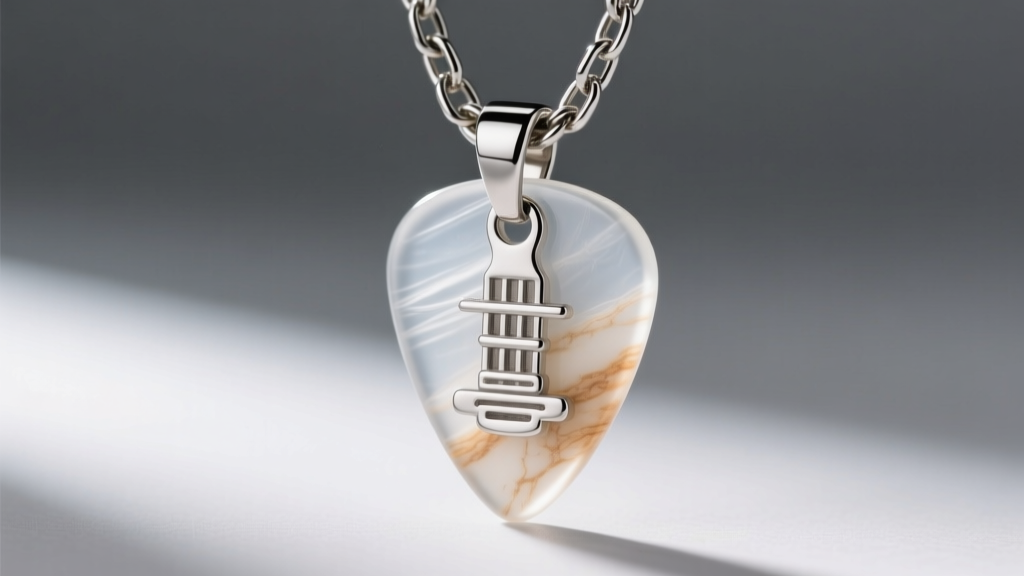
To permanently fix a detached bail, you must switch to mechanical force. Visit a dedicated supplier like Rio Grande or Fire Mountain Gems to source a sterling silver or stainless steel pinch bail (typically 6mm x 8mm).
- For drilled picks: Use a heavy-duty screw-top bail. Place a neoprene or rubber O-ring between the screw cap and the pick. The rubber acts as a shock absorber, distributing the tension and preventing the metal from cracking the polymer.
- For undrilled/slippery picks: Use a glued pinch bail, but prep the surface first. Lightly scuff the back of the pick with 400-grit sandpaper, clean with isopropyl alcohol, and use a two-part flexible epoxy (like E6000 or jeweler's Devcon) rather than super glue. The flexibility allows the bail to absorb impact without shearing off.
Pro-Tip: If you are drilling your own picks, never use a standard twist drill bit on celluloid or acrylic—it will grab and shatter the material. Use a carbide burr bit or a step drill at a low RPM, and back the pick with a sacrificial piece of scrap wood to prevent blowout on the exit side.
Styling Fixes: Elevating the 'Concert Merch' Look
Beyond structural repairs, the most common problem with guitar pick jewelry is stylistic. A thin plastic pick on a flimsy 1mm black leather cord often looks like cheap merchandise rather than a deliberate style choice. Troubleshooting the aesthetic requires upgrading the chain and understanding proportions.

Upgrading the Chain Gauge
The chain must visually support the weight and vibe of the pick. If you are wearing a standard 351 polymer pick, a 2.5mm to 3mm stainless steel Cuban link or a box chain provides the necessary visual weight without overpowering the pendant. If you are using a custom metal pick (like a 2mm thick brass or copper stamp), step up to a 4mm oxidized sterling silver rope chain. The contrast between the bright metal pick and the dark, textured chain creates a high-end, rugged aesthetic.
Layering Frameworks
A single guitar pick pendant can look isolated. Integrate it into a layered necklace stack to anchor it in your personal style:
- The Musician's Stack: 20-inch 2mm cable chain with a small silver dog tag + 22-inch 3mm rope chain with the brass guitar pick pendant + 24-inch beaded onyx necklace.
- The Minimalist Edge: A single, ultra-thick Vespel or Ultem pick (which has a translucent, amber-like glow) on a 24-inch matte black titanium chain. This leans into modern, tech-wear aesthetics rather than vintage rock.
Preventative Maintenance for Musicians
If you play guitar with the same pick you wear as jewelry, you are introducing a massive variable: friction and string grime. Metal picks (brass, copper, stainless steel) will accumulate microscopic metal shavings and skin oils. Clean brass and copper picks weekly with a specialized brass polish to remove tarnish and prevent the transfer of green oxidation to your skin and clothing.
For polymer picks, never use alcohol-based cleaners on celluloid or acrylic, as this will cause micro-crazing (tiny surface cracks) that eventually lead to total structural failure. Instead, wash polymer picks with warm water, mild dish soap, and a soft microfiber cloth. By respecting the material limits and upgrading the hardware, your guitar pick jewelry will transition from a fragile novelty to a permanent, reliable fixture in your everyday wardrobe.