How to Style the 2026 Mixed-Metal Jewelry Trend Step-by-Step
Master the 2026 mixed-metal jewelry trend with our step-by-step styling guide. Learn chain gauges, the 70/30 rule, and layering techniques.


For decades, the golden rule of accessorizing was rigid: never mix your metals. Gold was for warm undertones and formal evenings; silver was for cool undertones and casual days. But as we navigate the style landscape of 2026, that outdated dogma has been entirely dismantled. The mixed-metal jewelry trend is no longer a rebellious fashion faux pas; it is a sophisticated, intentional styling technique championed by high jewelry houses and street-style icons alike. According to trend forecasters at Vogue, the modern approach to accessorizing relies on intentional dissonance—using contrasting metals to create depth, texture, and visual intrigue.
However, throwing on every gold and silver piece you own does not constitute mastering this jewelry trend. True mixed-metal layering requires a strategic understanding of proportions, chain gauges, and metallic temperatures. In this comprehensive, step-by-step guide, we will break down the exact framework you need to curate a flawless, tangle-free mixed-metal stack that looks expensive, deliberate, and effortlessly chic.
The Core Rules of Mixed-Metal Layering in 2026
Before diving into the step-by-step process, it is crucial to understand the foundational principles that separate a curated stack from a cluttered mess. The current jewelry trend emphasizes "structured eclecticism." This means your pieces should look like they were chosen with purpose, even if they appear mismatched at first glance.
- The 70/30 Ratio: Never split your metals 50/50. Choose one dominant metal to take up 70% of the visual weight, and use the secondary metal as a 30% accent. This creates a clear visual hierarchy.
- Spacing is Sacred: Maintain at least 1.5 to 2 inches of space between each necklace layer to prevent tangling and allow each metal to reflect light independently.
- Karat Awareness: Understand that 14k yellow gold has a paler, more subtle warmth that pairs beautifully with sterling silver, whereas 22k or 24k gold can clash aggressively due to its intense orange-yellow hue.
Step 1: Establish Your Anchor Piece (The Foundation)
Every successful layered look begins with an anchor. This is the heaviest, most prominent piece in your stack that dictates the 70% dominant metal. For a mixed-metal aesthetic, a mid-weight chain in your primary metal is the ideal starting point.
If you are leading with gold, opt for a 14k or 18k yellow gold chain with a gauge width between 2.5mm and 4.0mm. A classic Cuban link or a flat Mariner chain provides excellent surface area for light reflection. If silver is your anchor, a 3.0mm oxidized sterling silver (.925) Figaro chain offers a moody, vintage foundation that contrasts brilliantly with brighter gold accents later in the stack.
Pro-Tip: The anchor piece should sit at or just below the collarbone (typically 16 to 18 inches in length). According to gemological educators at the Gemological Institute of America (GIA), ensuring your primary piece sits flat against the skin prevents the secondary layers from sliding underneath and causing friction damage to softer gold alloys.
Step 2: Bridge the Gap with Two-Tone Hardware
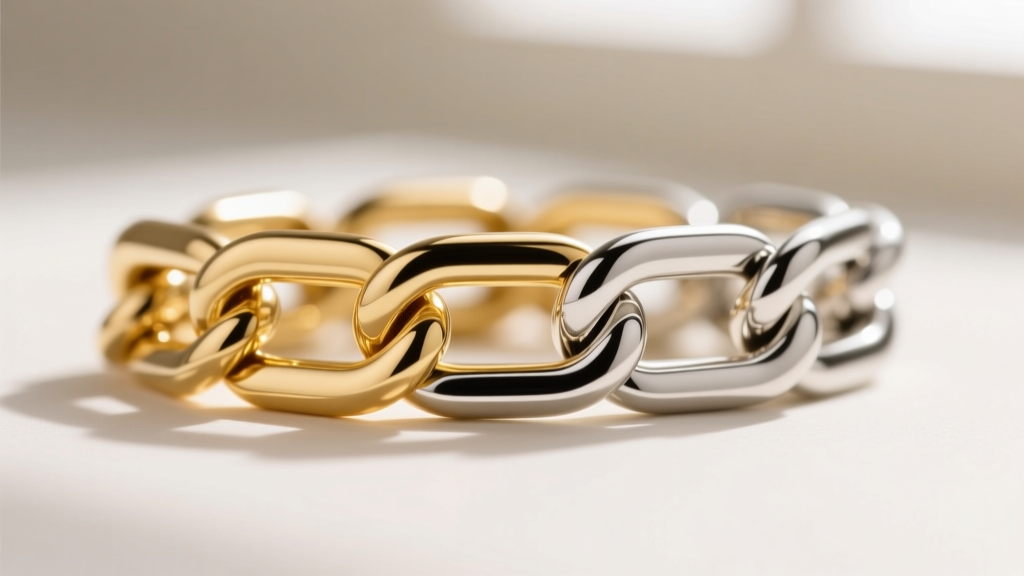
The secret weapon for making the mixed-metal jewelry trend look cohesive rather than chaotic is the "bridge piece." This is a necklace or component that physically incorporates both metals, acting as a visual hinge between your gold and silver layers.
Instead of relying solely on separate chains, introduce a two-tone piece. Look for hardware that utilizes vermeil (a thick plating of at least 2.5 microns of gold over a sterling silver base) or true bimetallic construction where solid gold links are seamlessly soldered to rhodium-plated silver links. A 1.5mm paperclip chain featuring alternating gold and silver links, worn at 20 inches, perfectly bridges the gap between a 16-inch gold anchor and a 22-inch silver pendant.
Understanding Plating vs. Solid Bridges
When shopping for bridge pieces, be mindful of the manufacturing method. Gold-filled components (which contain a mechanical bond of at least 1/20th 14k gold by weight) will withstand daily wear and friction far better than standard flash-plated items, which can rub off and expose the brass or copper base, ultimately ruining the aesthetic of your stack.
Step 3: Integrate Textural Contrast
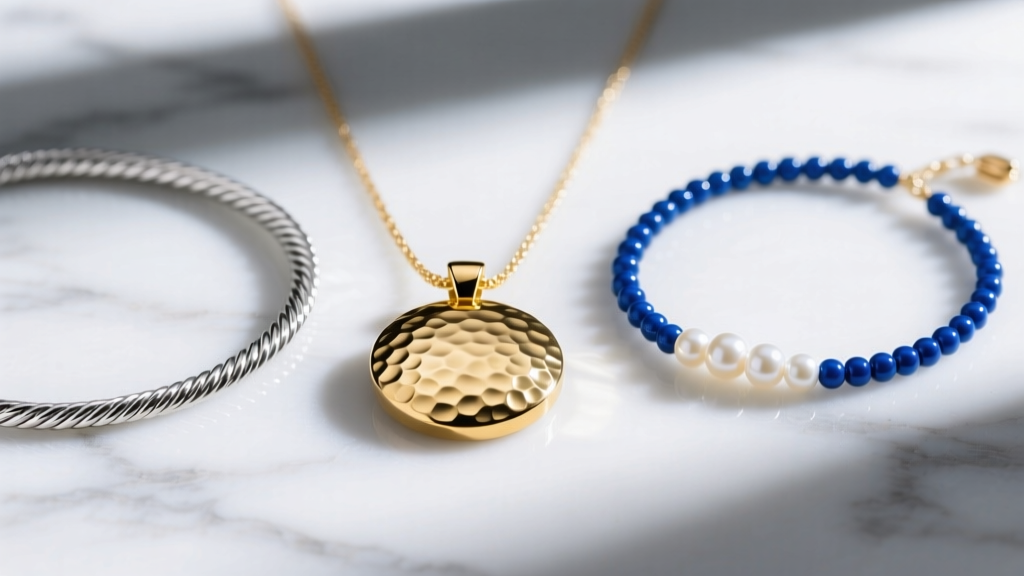
Mixing metals is only half the battle; mixing textures is what elevates the jewelry trend to an editorial level. If all your chains are high-polish and smooth, the stack will look flat, regardless of the color contrast. You must introduce varied light-reflective properties.
Pair a high-polish silver cable chain with a matte, brushed, or hammered gold pendant. Alternatively, incorporate a diamond-cut chain (which features faceted edges that catch the light like gemstones) alongside a smooth, rounded box chain. The juxtaposition of a gritty, oxidized silver texture against a liquid-smooth 18k gold surface creates a tactile experience that draws the eye and demonstrates high-level styling expertise.
Material & Gauge Quick-Reference Chart
To help you build your stack with precision, refer to this structural guide. Matching the correct gauge (thickness) to the chain style ensures your layers have balanced visual weight.
| Chain Style | Ideal Gauge (Width) | Best Metal Pairing | Visual Weight |
|---|---|---|---|
| Cuban / Curb Link | 3.0mm - 5.0mm | 14k Yellow Gold (Anchor) | Heavy / Dominant |
| Paperclip / Elongated | 2.0mm - 3.5mm | Two-Tone / Bimetallic (Bridge) | Medium / Transitional |
| Cable / Rolo | 1.2mm - 1.8mm | Oxidized Sterling Silver (Accent) | Light / Delicate |
| Snake / Box Chain | 1.5mm - 2.5mm | White Gold or Rhodium Silver | Sleek / Modern |
| Rope Chain | 2.0mm - 4.0mm | 18k Yellow Gold (High Polish) | Textured / Complex |
Troubleshooting Common Mixed-Metal Mistakes
Even seasoned stylists encounter issues when executing this jewelry trend. Here is how to troubleshoot the most common mixed-metal layering failures.
The Tangling Nightmare
If your necklaces are constantly knotting together, you are likely using chains with identical weaves or similar gauges. Chains with similar link sizes will interlock like gears. The Fix: Never mix two rope chains or two cable chains. Always vary the weave. Pair a smooth snake chain with a textured Figaro, and ensure there is a minimum 2-inch length difference between each layer.
Galvanic Skin Discoloration
A common myth is that gold and silver touching each other will cause a chemical reaction that degrades the metals. This is false. However, if your sterling silver (.925) has a high copper alloy content, and it rests against your skin while touching a more noble metal like gold, the moisture and salts from your skin can create a mild galvanic cell. This can cause temporary green or black discoloration on your chest. The Fix: Ensure your silver pieces are rhodium-plated, or apply a microscopic layer of clear nail polish to the back of the silver pendants that rest directly against your skin.
Clashing Undertones
Sometimes, the stack looks "off" despite following the rules. This usually happens when mixing rose gold with bright sterling silver. The pinkish hue of rose gold and the stark blue-white of un-plated silver can create a jarring, muddy contrast. The Fix: Stick to yellow gold and silver for the highest contrast, or use white gold and rose gold for a softer, analogous blend.
Final Thoughts on Mastering the Trend
The mixed-metal jewelry trend of 2026 is ultimately about breaking free from rigid sartorial rules and embracing personal expression through metallurgy and design. By anchoring your stack with intentional proportions, utilizing bridge pieces, and contrasting textures, you transform a simple accessory routine into a masterclass of modern styling. Start with the 70/30 rule, invest in quality gauges, and let the interplay of light across gold and silver do the heavy lifting.


