How to Match Jewelry With Makeup: An Expert's Technical Guide
Master how to match jewelry with makeup using color theory, light reflection physics, and material science for flawless, high-fashion styling.

When exploring how to match jewelry with makeup, most style guides stop at basic color wheel theory—pairing warm golds with warm bronzes and cool silvers with icy pinks. But as a technical stylist, I look at the intersection of material science, optics, and cosmetic chemistry. True mastery requires understanding how light interacts with metal finishes, how gemstone refractive indices compete with cosmetic pigments, and how the chemical composition of modern setting sprays can permanently damage porous stones.
This expert deep dive bypasses generic advice to give you a rigorous, physics-and-chemistry-based framework for harmonizing your jewelry and makeup.
The Physics of Light: Specular vs. Diffuse Reflection
The most common styling mistake is ignoring the physics of light reflection. Every surface reflects light, but the type of reflection dictates visual harmony. Metals and makeup both fall into two optical categories: specular (mirror-like, sharp reflection) and diffuse (scattered, soft reflection).
The Specular Clash
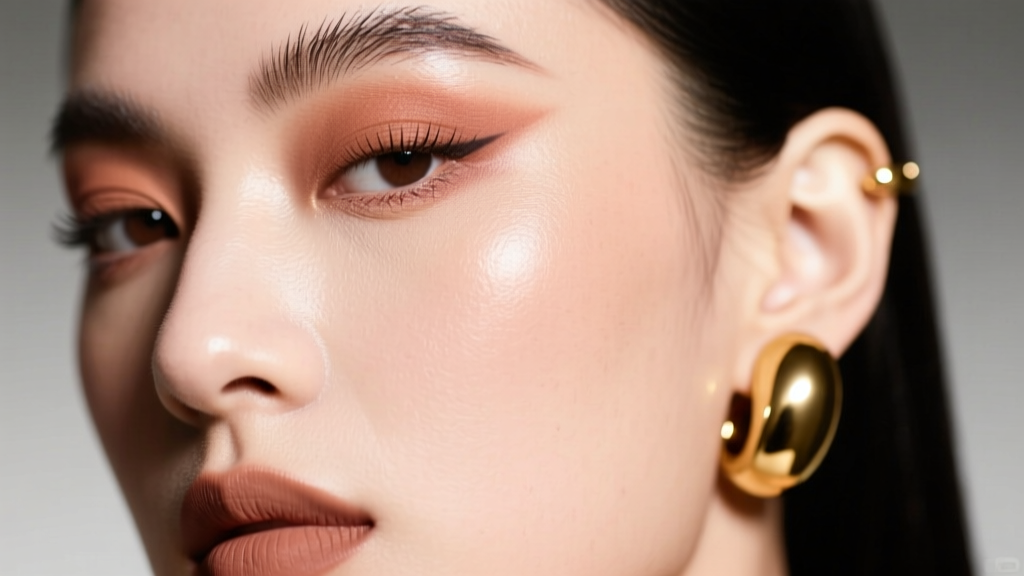
High-polish metals (like a mirror-finished platinum band or a polished 18k gold cuff) produce specular reflection. If you pair these with heavy glitter eyeshadows or a blinding, mica-heavy cheek highlighter, you create "visual noise." The eye cannot rest because multiple points on the face and neck are firing sharp, competing light beams.
The Fix: Pair high-polish jewelry with matte or satin-finish makeup. The diffuse absorption of a matte terracotta eyeshadow allows the specular reflection of a polished gold ear cuff to act as the singular, deliberate focal point of your look.
Diffuse Harmony
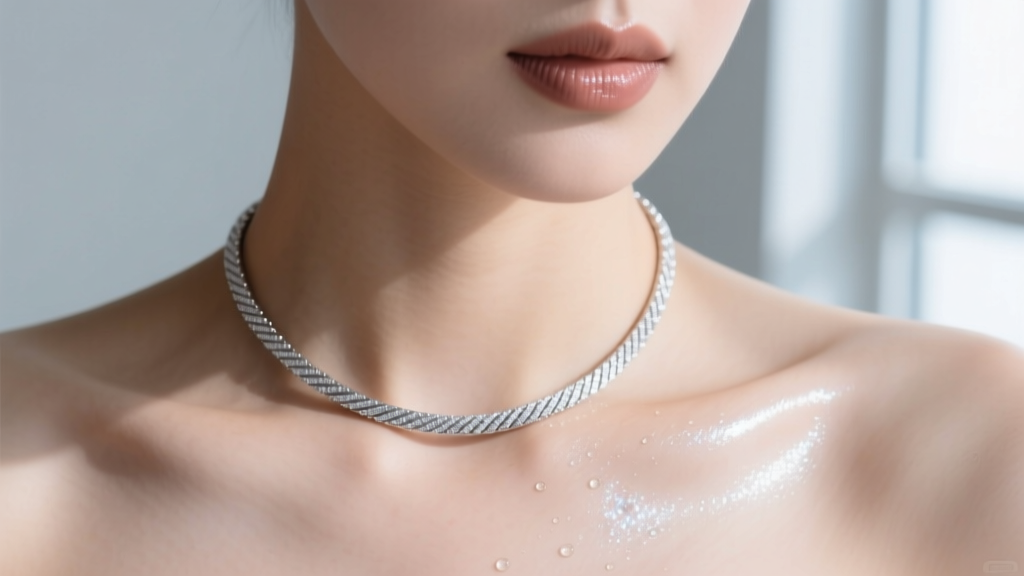
Brushed, hammered, or satin-finished metals scatter light, creating a soft, diffuse glow. These finishes are technically demanding; if paired with matte, flat makeup, the entire look can appear dull and lifeless. Instead, pair diffuse metals with "dewy" or "glass skin" makeup textures. The water-based luminosity of a liquid highlighter mimics the soft light scatter of a brushed silver chain, creating a cohesive, ethereal aesthetic.
Color Theory at the Micro-Level: Pigments and Refractive Indices
Matching undertones is merely step one. Step two is understanding how cosmetic pigments interact with a gemstone's Refractive Index (RI)—the measure of how much light bends as it enters the stone. For a deeper understanding of how complementary and analogous color schemes affect visual perception, the Interaction Design Foundation's color theory literature explains how high-chroma colors demand achromatic or contrasting anchors to prevent visual fatigue.
| Makeup Pigment Base | Optical Property | Ideal Gemstone Pairing | Technical Rationale |
|---|---|---|---|
| Iron Oxide (Warm Browns/Coppers) | High opacity, light-absorbing | Citrine, Fire Opal, Garnet | Stones with high dispersion (like garnet) cut through the dense, opaque pigment without being visually swallowed. |
| Ultramarine & Cobalt (Cool Blues) | Vibrant, high-chroma | Diamond, White Sapphire, Aquamarine | High-RI stones (Diamond RI 2.42) provide sharp, achromatic contrast that prevents the cool blues from looking muddy. |
| Mica & Bismuth (Shimmers/Glitters) | Specular reflection, high-scatter | Cabochon Moonstone, Jade, Onyx | Smooth, non-faceted cabochons offer a solid visual anchor against the chaotic light scatter of mica-based eyeshadows. |
According to the GIA Gem Encyclopedia, a gemstone's cut and RI dictate its brilliance. A brilliant-cut diamond will easily overpower a subtle, neutral matte lip, but it is exactly what you need to anchor a heavy, dark, smokey eye that absorbs ambient light.
The Chemistry of Styling: Protecting Porous Stones
Knowing how to match jewelry with makeup is useless if your cosmetics destroy the materials. Modern makeup formulations are chemical minefields for organic and porous gemstones.
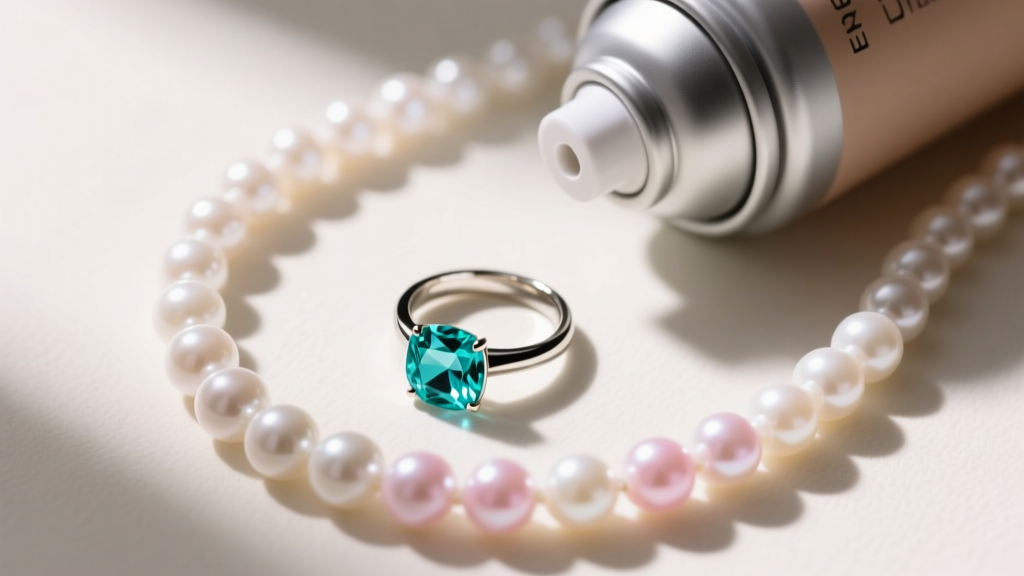
- Setting Sprays and Nacre: Most aerosol and pump setting sprays rely on SD Alcohol 40-B and acrylate copolymers to lock makeup in place. Alcohol rapidly dehydrates the nacre (the crystalline substance) of pearls, leading to micro-cracking and a permanent loss of luster. Always apply pearls after your setting spray has fully dried and off-gassed.
- Silicone Primers and High-Karat Gold: Dimethicone-heavy primers create a smooth canvas for foundation, but they leave a microscopic, hydrophobic film on jewelry. 22k and 24k gold are exceptionally soft and prone to trapping this silicone film in their microscopic surface scratches, resulting in a cloudy, dull appearance that requires professional ultrasonic cleaning to remove.
- Chemical Sunscreens and Turquoise: Liquid foundations with SPF often contain avobenzone or octocrylene. These organic UV filters can react with the copper content in turquoise and malachite, causing the stone's vibrant matrix to darken or develop a chalky white residue.
For comprehensive care guidelines on organic gems, refer to the GIA Pearl Care and Cleaning guide, which explicitly warns against exposing pearls to cosmetics, perfumes, and hairsprays.
Facial Geometry and Highlighter Placement
Makeup alters the perceived geometry of the face through contouring (light absorption) and highlighting (light reflection). Your jewelry must complement this structural mapping, not fight it.
In theatrical and editorial makeup artistry, the "Triangle of Light" refers to the zone from the under-eye down to the cheekbone, which is heavily highlighted to create a youthful, lifted effect. When styling necklaces, you must consider how the metal intersects with this zone. A 16-inch choker or collar necklace sits above the Triangle of Light, framing it and drawing the observer's eye directly to the highlighted cheekbones and eye makeup. Conversely, a 20 to 24-inch matinee or opera-length necklace drops below this focal triangle, effectively pulling the visual weight downward.
If your makeup focuses heavily on a bold, dark lip and a sharp contour (lower-face dominance), a longer necklace complements the downward visual pull. If your makeup is eye-heavy with a bright inner-corner highlight (upper-face dominance), keep the jewelry confined to the ears and upper neck to avoid a fragmented aesthetic.
Expert Decision Framework: The 3-Step Matching Protocol
When building a look for an editorial shoot or a high-stakes event, use this technical protocol to finalize your styling:
- Audit the Texture Map: Identify the dominant finish of your makeup (Matte, Satin, or Dewy). Select the opposing or complementary metal finish based on the specular/diffuse rules outlined above.
- Calculate the Contrast Ratio: Assess the value (lightness/darkness) of your eye and lip makeup. High-contrast makeup (e.g., deep burgundy lip, sharp black wing) requires high-RI, brilliant-cut stones or high-polish metals to maintain visual equilibrium. Low-contrast, monochromatic makeup allows for raw, unpolished stones and brushed metals.
- Execute the Chemical Sequence: Apply all liquid/cream products, set with powders, and use setting sprays. Wait a minimum of 3 minutes for polymers to cure and alcohols to evaporate before clasping your necklaces and securing your earrings.
Mastering how to match jewelry with makeup elevates your styling from mere coordination to intentional, technical design. By respecting the physics of light, the chemistry of cosmetics, and the optical properties of gemstones, you ensure that every element of your aesthetic works in perfect, calculated harmony.


