Is Your Vintage Jewelry Worth Money? Troubleshooting Fakes
Discover if your vintage jewelry worth money with our troubleshooting guide. Learn to spot fake hallmarks, test precious metals, and value estate pieces.

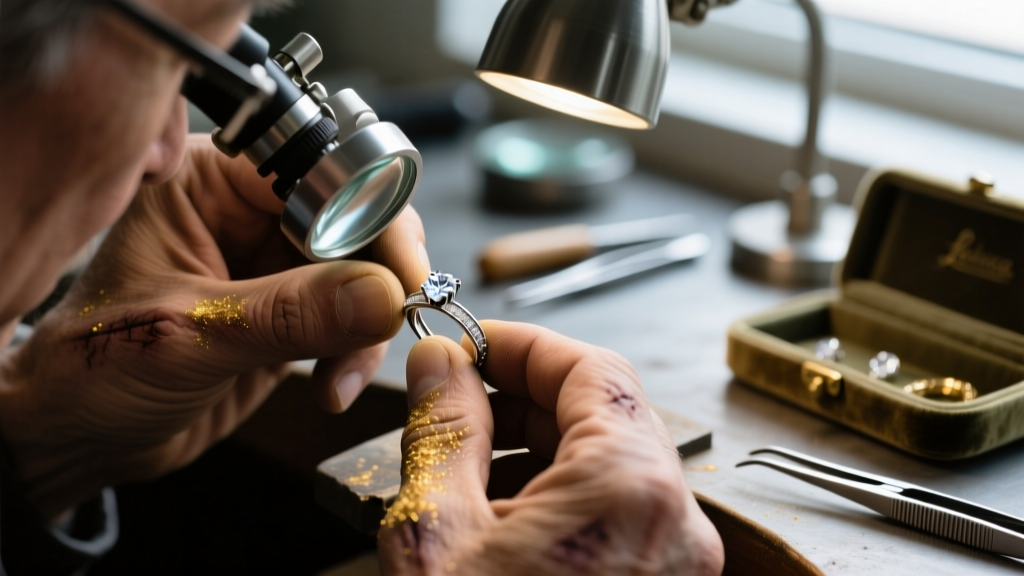
Inheriting an estate collection or hunting through flea markets in 2026 often leads to the same pressing question: is this actually valuable, or just old? The secondary jewelry market is currently saturated with clever reproductions, 'Frankenstein' pieces, and mass-produced mid-century costume jewelry masquerading as high-end antiques. If you are trying to determine if your vintage jewelry worth money, you must move past nostalgia and apply a systematic, forensic approach to evaluation. This troubleshooting guide will help you identify the specific failure modes, fake hallmarks, and structural anomalies that separate genuine, valuable estate pieces from worthless trinkets.
The 'Old vs. Valuable' Dilemma: Why Age Doesn't Equal Value
The most common mistake amateur collectors make is conflating age with intrinsic or collector value. A mass-produced 1970s sterling silver pendant might be technically 'vintage' (over 20 years old), but its value is strictly tied to its melt weight and basic brand recognition. Conversely, a hand-forged Edwardian platinum and diamond filigree ring from 1910 commands premiums ranging from $3,500 to over $15,000 due to the extreme labor intensity of its construction.
To troubleshoot your piece, first establish its true era. According to the Lang Antiques University, genuine antique jewelry (100+ years old) often exhibits specific wear patterns, such as thinning shanks on rings and smoothed milgrain edges, which are incredibly difficult for modern casters to replicate authentically. If a piece claims to be Victorian but features perfectly uniform, sharp casting lines and a modern rhodium plating flash, you are likely looking at a 1980s reproduction.
Troubleshooting Step 1: Decoding (and Debunking) Hallmarks
Hallmarks are the first line of defense, but they are also the most frequently misunderstood and faked elements of estate jewelry. A stamped mark is not a guarantee of authenticity; it is merely a clue that requires verification.
The 14KP Confusion
Many sellers see a '14KP' stamp and assume the 'P' stands for 'plated,' leading them to undervalue a solid gold piece. In reality, 'P' stands for Plumb Gold. Introduced after the 1976 National Stamping Act, a 14KP stamp guarantees the piece is exactly 14 karats (58.5% pure gold), whereas standard 14K stamps historically allowed a tolerance of up to 0.5 karats below the stated purity. A 14KP stamp is a hallmark of high-quality, often American-made vintage jewelry from the 1970s and 1980s.
Silver Marks: Sterling vs. Plate
Do not rely solely on visual tarnish to identify silver. Look for the following stamps to troubleshoot silver value:
- 925 or Sterling: Solid silver (92.5% pure). Holds intrinsic melt value and collector premium for recognized makers like Tiffany & Co. or Georg Jensen.
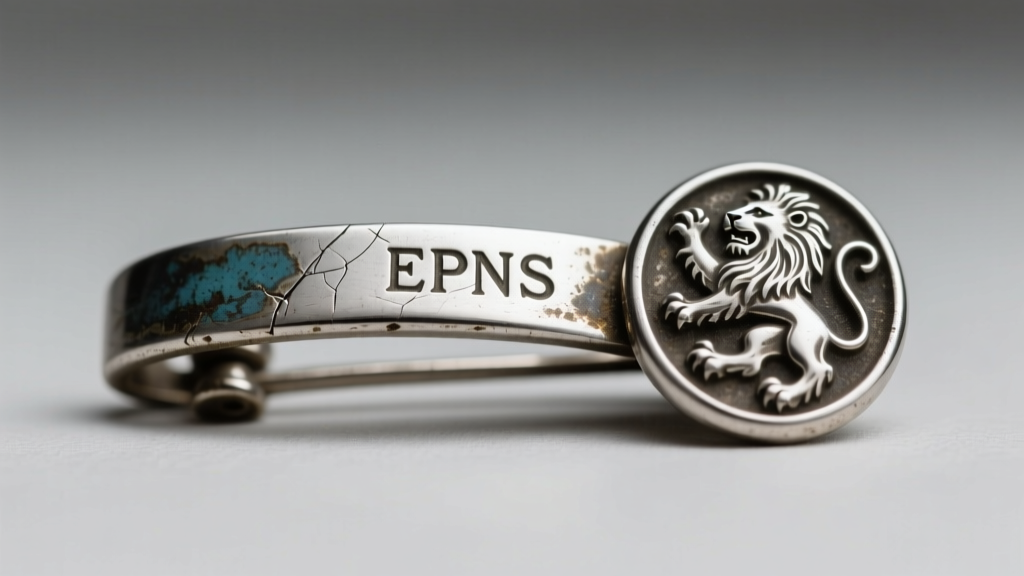
- EPNS (Electroplated Nickel Silver): Contains zero precious silver. The base metal is a copper-nickel-zinc alloy. Melt value is effectively zero.
- Lion Passant: The traditional British hallmark for sterling silver. If accompanied by an anchor (Birmingham) or leopard's head (London), it significantly boosts provenance and value.
Troubleshooting Step 2: The Magnet and Acid Test Failures
Home testing kits are notorious for yielding false positives and negatives, leading to disastrous valuation errors.
Why the Magnet Test Lies
The 'magnet test' is a flawed troubleshooting metric. Gold and platinum are non-magnetic, but the internal mechanisms of vintage jewelry often are not. For example, the spring inside a vintage 14K gold lobster clasp or the pin mechanism of a Victorian gold-filled brooch is almost always made of steel. If your 18K gold chain sticks to a magnet at the clasp, it does not mean the chain is fake; it means the clasp contains a necessary steel spring. Conversely, brass and copper are also non-magnetic, meaning a solid brass counterfeit will easily pass a magnet test.
The Danger of Acid Testing Vermeil
Applying nitric acid to a scratch test on vermeil (gold-plated sterling silver) will strip the gold layer and react with the silver underneath, yielding a milky reaction. An untrained eye might misinterpret this as a base metal reaction, accidentally destroying the finish of a valuable Art Deco vermeil piece in the process. Always use a digital precious metal verifier (like the Kee Gold Tester) or consult a professional before applying destructive acids to estate pieces.
Troubleshooting Step 3: Identifying 'Frankenstein' Jewelry
A 'Frankenstein' piece is a highly valuable troubleshooting concept. These are items cobbled together from different eras or heavily repaired, destroying their historical provenance and collector value.
Clasp Anachronisms
The hardware on a piece of jewelry must match its purported era. Use this framework to spot anachronistic repairs:
| Clasp Type | Era of Origin | Troubleshooting Red Flag |
|---|---|---|
| C-Clasp (No safety catch) | Pre-1900s (Victorian) | Found on a piece with post-1920s synthetic stones or modern casting seams. |
| Trombone Clasp | 1890s - 1940s (European) | Found on American-made mid-century costume jewelry (highly suspect). |
| Safety Catch & Catch | Post-1920s (Art Deco+) | Modern soldering marks around the catch on an otherwise pristine Georgian piece. |
If you spot a modern laser-welded repair joint next to original hand-cut milgrain detailing on an Art Deco platinum ring, the piece has been structurally compromised. While still wearable, its value to serious collectors drops by 30% to 50% compared to an untouched original.
Troubleshooting Step 4: Gemstone Verification Without a Lab
Assuming colored stones in vintage jewelry are natural precious gems is a costly error. The Gemological Institute of America (GIA) notes that synthetic stones have been used in fine jewelry since the early 20th century.
The Verneuil Synthetic Ruby
In the 1920s and 1930s, the Verneuil flame-fusion process made synthetic rubies and sapphires widely available. Many genuine Art Deco platinum rings feature these lab-created stones alongside natural diamonds. While the platinum and diamond framework holds immense value, the synthetic rubies themselves are worth only a few dollars per carat. Under a 10x triplet loupe, look for curved striae (growth lines) or tiny gas bubbles—dead giveaways of flame-fusion synthetics. Natural rubies will show angular color zoning and crystalline inclusions (like rutile silk).
Foil-Backed Paste in Georgian Jewelry
Georgian (1714-1837) and early Victorian jewelry frequently used 'paste' (high-lead glass) backed with metallic foil to simulate diamonds and colored gems. This is historically accurate and highly collectible if original. However, if you see a 'Georgian' ring where the foil backing is pristine, un-tarnished, and sealed with modern clear epoxy rather than the traditional black wax or paint, you are looking at a modern replica designed to deceive.
When to Call a Professional: Appraisal Red Flags
If your troubleshooting confirms the piece is genuine, the final hurdle is valuation. Do not rely on 'insurance appraisals' to determine what you can actually sell the piece for. Insurance appraisals reflect Replacement Value—the cost to buy the item from a high-end retail jeweler, which can be 200% to 300% higher than the Fair Market Value (what a collector or dealer will actually pay you in cash).
'When liquidating an estate, always seek an appraiser accredited by the American Society of Appraisers (ASA) who specifically requests to provide a Fair Market Value report for resale, rather than an insurance replacement document.'
By systematically checking hallmarks, understanding historical construction methods, and verifying gemstone origins, you can confidently separate genuine, high-value vintage treasures from the countless reproductions flooding the 2026 market.


