Eisenberg Vintage Jewelry: 2026 Style & Value Guide
Discover the 2026 market trends for Eisenberg vintage jewelry. Learn to authenticate Original vs. Ice pieces, analyze pricing, and style these classics.

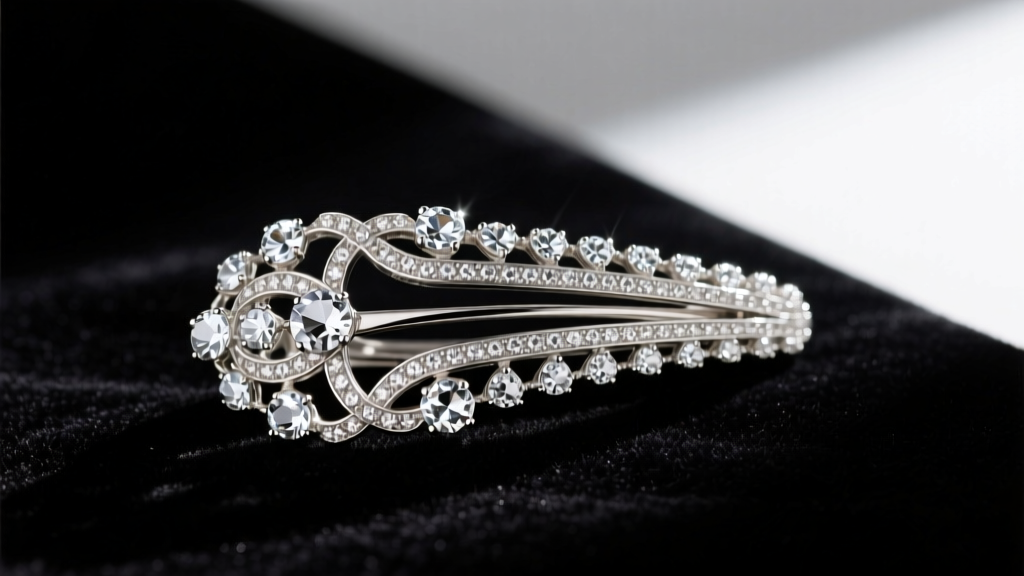
The Resurgence of Eisenberg in 2026 Maximalist Fashion
As the fashion cycle pivots away from the restrained 'quiet luxury' aesthetic that dominated the early 2020s, 2026 has ushered in a renaissance of unapologetic maximalism. At the absolute epicenter of this vintage revival is Eisenberg vintage jewelry. Originally established as a high-end dressmaking house in 1914 by Jonas Eisenberg, the brand inadvertently launched its jewelry empire when customers began demanding to purchase the ornate, crystal-encrusted brooches and clips used to accessorize their garments. Today, Eisenberg remains the gold standard for collectors and stylists seeking museum-quality costume jewelry that rivals fine jewelry in its brilliance and craftsmanship.
Unlike mid-tier contemporaries that relied on mass-production and glued settings, Eisenberg maintained a strict commitment to hand-set stones, premium Austrian and Japanese crystals, and heavy, durable metalwork. For modern collectors and investors, navigating the secondary market requires a precise understanding of the brand's distinct eras, material compositions, and the specific failure modes that impact valuation.
Decoding the Eras: Eisenberg Original vs. Eisenberg Ice
The most critical skill in evaluating Eisenberg vintage jewelry is distinguishing between the brand's two primary historical epochs. The transition between these eras dictates not only the aesthetic of the piece but also its metallurgical makeup and current market premium.
The 'Eisenberg Original' Era (1930s–1950s)
Pieces from this era are the holy grail for serious collectors. Early 1930s examples were often unmarked, but by the late 1930s, the brand began stamping pieces with a block letter 'E' or the full 'Eisenberg Original' mark. Crucially, many pre-war and early post-war Originals were cast in sterling silver due to the high quality standards of the house, though wartime metal rationing forced temporary shifts to base metals. These pieces are characterized by their substantial weight, intricate pavé work, and the use of top-tier Swarovski and Hirshmann crystals.
The 'Eisenberg Ice' Era (1958–1970s)
Introduced in 1958, the 'Eisenberg Ice' line was designed to capture the burgeoning post-war middle-class market. While still exceptionally well-crafted, Ice pieces transitioned to rhodium-plated white metal (pot metal or brass alloys) rather than sterling silver. The hallmarks shifted to a script 'Eisenberg Ice' or later, a block 'E' in a cartouche. The stones transitioned from Austrian crystals to high-quality Japanese stones, which offer incredible refractive indices but possess a slightly different visual warmth.
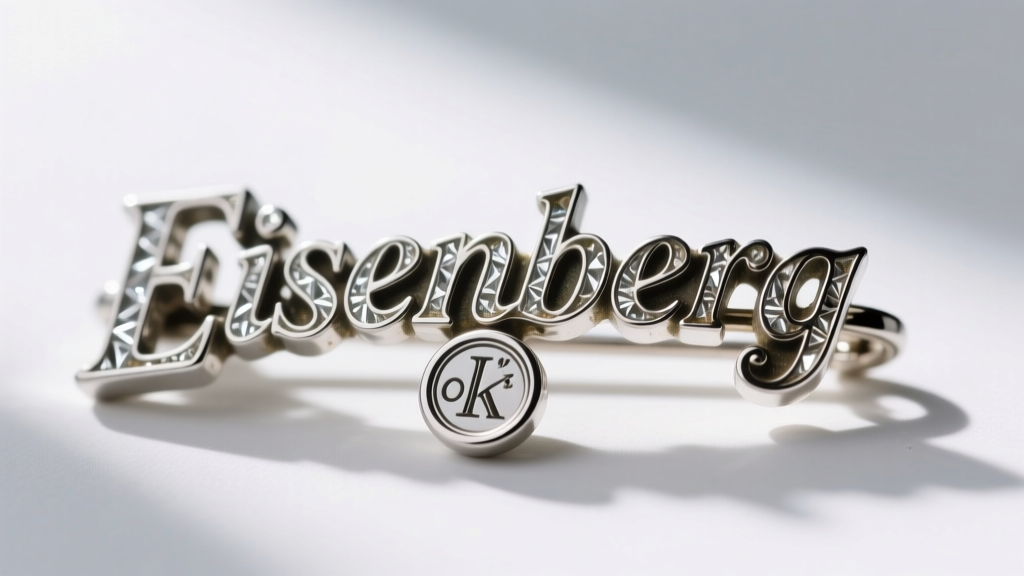
Material & Hallmark Identification Matrix
| Feature | Eisenberg Original (1930s-1950s) | Eisenberg Ice (1958-1970s) |
|---|---|---|
| Hallmark | Block 'E', 'Eisenberg Original', or unmarked (pre-1938) | Script 'Eisenberg Ice', Block 'E' in cartouche |
| Base Metal | Sterling Silver (often marked), heavy white metal | Rhodium-plated pot metal or brass alloy |
| Stone Origin | Austrian (Swarovski, Hirshmann) | Japanese, later Austrian |
| Setting Style | Hand-set prongs, deep pavé channels | Hand-set prongs, chaton settings |
| Market Premium | Highest (Investment Grade) | High (Wearable Collector Grade) |
Market Valuation: What Collectors Are Paying in 2026
The market for Eisenberg vintage jewelry has matured significantly. According to data tracked by Kovels and recent auction results, buyers are increasingly prioritizing condition and rarity over sheer size. Below is a breakdown of current 2026 retail and auction price ranges for highly sought-after categories.
- 1930s Sterling Silver Dress Clips: $250 – $650 (Pairs in pristine condition command the upper tier).
- 1940s Original Fur Clips (with working trombone clasp): $150 – $450.
- 1950s Ice Parures (Necklace, Bracelet, Earrings): $800 – $2,500. Complete suites with original presentation boxes see a 30% premium.
- Figural Brooches (e.g., Ballerina, Poodle, Mermaid): $400 – $1,800. The 'Ballerina' brooches, featuring intricate enamel and crystal work, are highly counterfeited and require expert authentication.
- 1980s Eisenberg Ice (Later Productions): $45 – $120. Post-1970s pieces, often marked with an 'E' and a copyright symbol, are considered vintage costume rather than investment-grade antiques.
Authentication Red Flags & Restoration Realities
When investing in Eisenberg, understanding the specific failure modes of mid-century costume jewelry is non-negotiable. The Vintage Fashion Guild frequently warns collectors about the irreversible damage caused by improper care and inherent material flaws.
Zinc Pest and Pot Metal Degradation
Many Eisenberg Ice pieces were cast using zinc-heavy alloys. Over decades, impurities in the zinc can cause an internal oxidation process colloquially known as 'zinc pest.' This manifests as bubbling under the rhodium plating, micro-cracking along the cast seams, and eventually, the structural crumbling of the metal. Never purchase an Eisenberg piece with visible bubbling or spiderweb cracking on the reverse side; the degradation is unstoppable and cannot be restored.
Foil-Back Degradation
To maximize the sparkle of early Austrian crystals, Eisenberg utilized a delicate metallic foil backing behind the stones. If moisture, perfume, or chemical silver dips penetrate the settings, this foil oxidizes and turns black, resulting in 'dead' stones. Re-foiling a piece requires a master lapidary and costs upwards of $40 per stone, often exceeding the value of the piece itself. Always inspect the back of the brooch; if the metal backing the stones looks dark or cloudy, the foil has failed.
Prong Fatigue vs. Glue
Authentic Eisenberg jewelry relies on metal prongs to hold stones in place. If you see a piece where stones appear to be sitting in a bed of dried, yellowish adhesive, it is either a later-era knockoff or a severely compromised piece that has been improperly repaired. Original factory settings will show clean, hand-folded metal prongs.
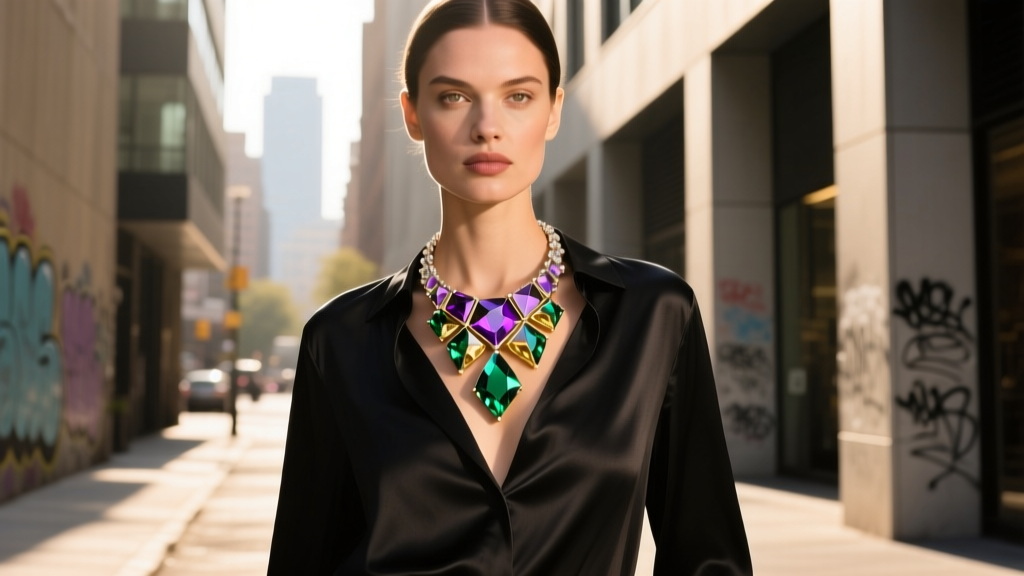
Styling Eisenberg for the Modern Wardrobe
The brilliance of Eisenberg vintage jewelry in 2026 lies in its ability to anchor a modern wardrobe through high-contrast styling. Because these pieces possess immense visual weight and a distinctly 'icy' rhinestone palette, they require deliberate placement to avoid looking costumey.
The High-Low Contrast Technique
Pair an oversized, 1950s Eisenberg Ice crystal bib necklace with a minimalist, architectural garment—such as a structured black silk blouse or a sleek, collarless wool blazer. The absence of competing patterns or necklines allows the refractive index of the Japanese crystals to act as the sole focal point of the silhouette.
Repurposing Fur Clips
Eisenberg Original fur clips, characterized by their heavy, double-pronged trombone clasps, are notoriously difficult to wear on modern, lightweight fabrics without tearing them. Stylists are now repurposing these heavy sterling pieces by attaching them to wide leather lapel belts, securing them at the waist of a slip dress, or clipping them onto the structured brim of a felt fedora for evening wear.
The Layered Brooch Cascade
For outerwear, move away from the traditional single-brooch-on-a-lapel approach. Collect a series of smaller Eisenberg floral or geometric brooches and cluster them in a cascading formation down the shoulder and upper sleeve of a heavy winter coat. This mimics the epaulettes of military tailoring but substitutes brass for high-wattage vintage crystals, perfectly capturing the 2026 neo-romantic trend.
Conclusion: The Investment Case for Eisenberg
Eisenberg vintage jewelry represents a rare intersection of wearable art, historical craftsmanship, and appreciating asset value. As the supply of pristine, stone-complete 'Original' sterling pieces continues to shrink—absorbed into permanent private collections and museum archives—the barrier to entry will only rise. For the discerning collector, prioritizing structural integrity over superficial polish, and understanding the nuanced differences between the Original and Ice eras, is the key to building a collection that outshines the passing trends.


