Advanced Crafts With Vintage Jewelry: A Technical Salvage Guide
Master advanced crafts with vintage jewelry using museum-grade adhesives, pulse-arc welding, and ethical salvage techniques for antique components.

The Paradigm Shift: From Destructive Upcycling to Technical Salvage
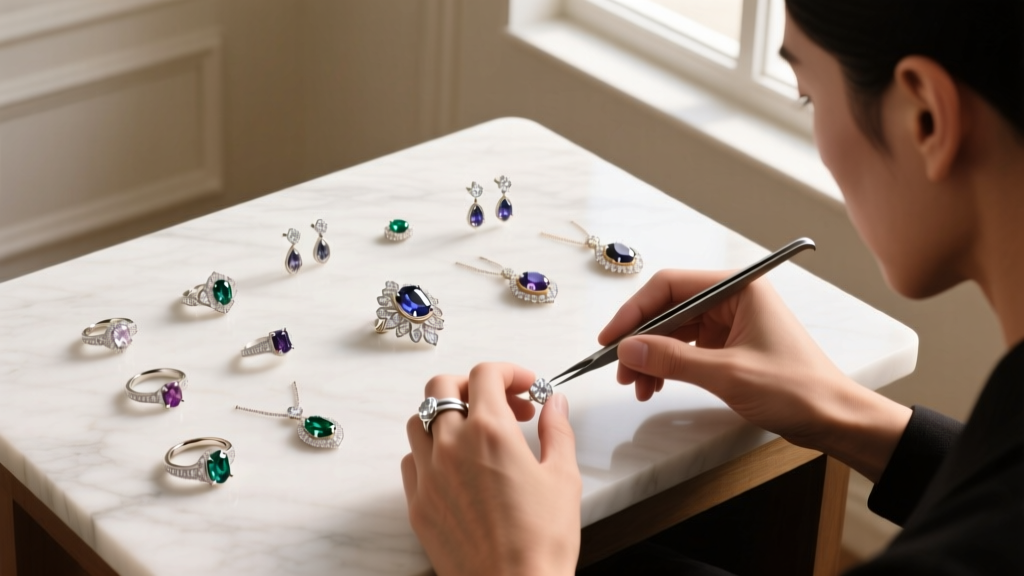
In the evolving landscape of 2026, the phrase 'crafts with vintage jewelry' has undergone a much-needed renaissance. For years, the internet was saturated with destructive upcycling trends—think hot-gluing Victorian mourning brooches onto canvas tote bags or embedding irreplaceable Art Deco enamel pieces into cheap resin coasters. Today, serious artisans, bench jewelers, and conservationists have reclaimed the narrative. Modern crafts with vintage jewelry now prioritize technical salvage, horological preservation, and reversible restoration. This guide dives deep into the metallurgical, chemical, and gemological specifics required to ethically repurpose damaged, low-grade, or broken antique jewelry components without erasing their historical provenance.
Material Triage: Identifying Salvageable Antique Components
Before any adhesive is mixed or torch is fired, a rigorous material triage is mandatory. Antique jewelry is rife with deceptive alloys. A piece that appears to be tarnished silver may actually be Austro-Hungarian 935 silver, while a gold-toned Victorian brooch might be Pinchbeck (an 89% copper, 11% zinc alloy) or rolled gold plate over brass. Misidentifying these materials before attempting salvage crafts with vintage jewelry can lead to catastrophic melting or chemical discoloration.
Non-Destructive Testing Protocols
For high-value salvage, X-Ray Fluorescence (XRF) spectrometry is the gold standard. It allows you to verify the exact elemental composition of a broken Edwardian mount without filing away a sample for acid testing. According to the Gemological Institute of America (GIA), understanding the trace elements in antique gold alloys—such as the higher copper content in early 20th-century rose gold or the cadmium used in vintage green gold—is critical when matching solder or preparing for laser welding.
- Victorian 15k Gold: Common in UK pieces from 1854 to 1932. Requires specific low-karat gold solders to avoid melting the base metal.
- European 800 Silver: Often found in German and Italian estate pieces. Contains more copper than Sterling (925), making it prone to firescale if heated with a traditional torch without proper flux.
- Seed Pearls (1.5mm - 2.0mm): Frequently half-drilled. Salvaging them requires careful extraction using a solvent bath to dissolve the original hide glue without damaging the nacre.
Museum-Grade Conservation Adhesives vs. Commercial Glues
The most common mistake amateurs make when executing crafts with vintage jewelry is reaching for cyanoacrylate (Super Glue) or standard two-part hardware store epoxies. These adhesives cross-link permanently, yellow under UV exposure, and emit acidic vapors that can etch porous gemstones like turquoise, opals, and seed pearls. Professional salvage requires conservation-grade, reversible adhesives.
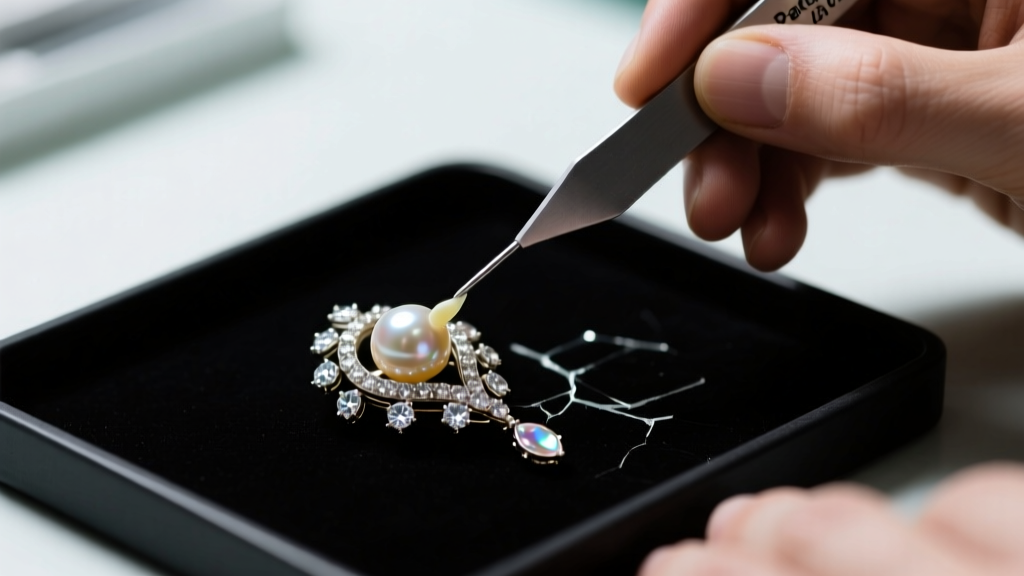
The American Institute for Conservation (AIC) heavily advocates for the use of Paraloid B-72 in artifact stabilization. B-72 is an ethyl methacrylate copolymer dissolved in acetone. It dries clear, remains flexible, and crucially, can be completely reversed later with a mild solvent bath. For structural bonds requiring higher shear strength, Hxtal NYL-1 is the premier choice. It is a non-yellowing, water-clear epoxy that cures slowly over seven days, offering unparalleled longevity for resetting loose cabochons in fragile Georgian foiled-back settings.
| Adhesive Type | Chemical Base | Reversibility | Best Use Case in Vintage Salvage |
|---|---|---|---|
| Paraloid B-72 | Acrylic Copolymer | High (Acetone) | Stabilizing cracked enamel, securing seed pearls |
| Hxtal NYL-1 | Aliphatic Epoxy | Low (Requires heat/solvent) | Structural bonding of heavy stone bezels |
| Lascaux 498 HV | Acrylic Dispersion | Medium | Laminating backing fabrics to textile mourning jewelry |
| Cyanoacrylate | Acrylic Resin | None (Destructive) | NEVER use on antique jewelry components |
Pulse-Arc Welding for Platinum and White Gold Filigree
Art Deco platinum filigree is a marvel of 1920s die-striking engineering, often featuring wire gauges as thin as 0.5mm. When these intricate mountings break, traditional torch soldering is incredibly risky; the intense, broad heat of an oxygen-acetylene torch can easily melt the delicate lattice or shatter the old European cut diamonds set within them. This is where advanced crafts with vintage jewelry intersect with modern horological technology: pulse-arc laser welding.
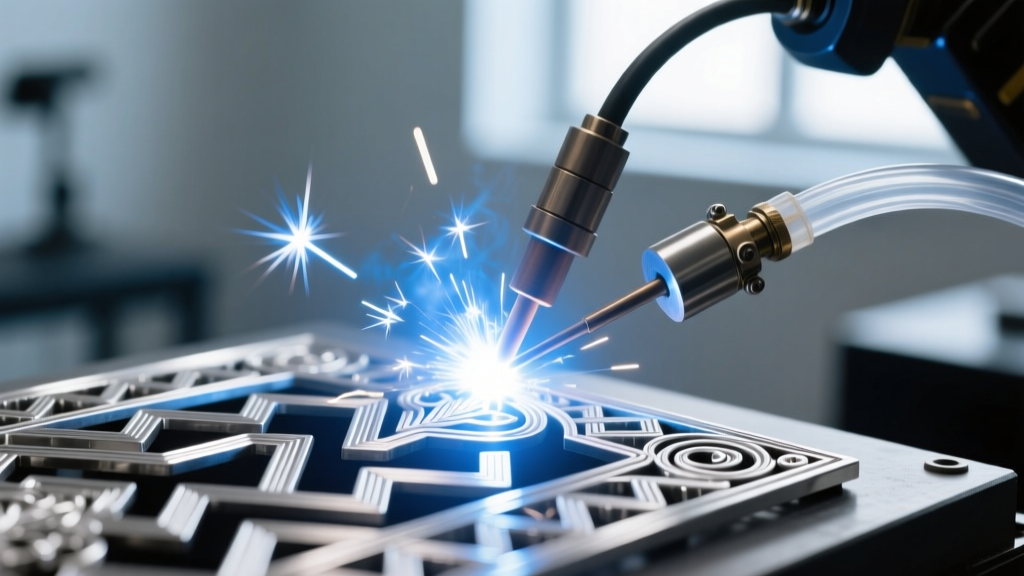
Pulse-arc welders (such as the Orion series) use localized electrical energy to fuse metal in a matter of milliseconds. When repairing 900/1000 platinum filigree, the parameters must be meticulously controlled. A typical setting for a 0.6mm platinum wire joint involves an energy output of 40-50%, a pulse width of 3-5 milliseconds, and a continuous argon gas flow to prevent oxidation. The argon shield is non-negotiable; without it, the platinum will pit and oxidize instantly. By utilizing a laser welder, artisans can seamlessly integrate salvaged Art Deco filigree tops into modern, custom-forged band shanks, creating a wearable piece of history without compromising the structural integrity of the antique component.
Ethical Sourcing and Valuation of Broken Estate Jewelry
The foundation of any ethical salvage practice is sourcing. True artisans do not dismantle pristine, museum-quality antiques for parts. The focus must remain on 'scrap' vintage—pieces that are missing stones, have severely damaged shanks, or suffer from irreversible base-metal corrosion. In 2026, estate auction 'junk boxes' and broken lot parcels remain the most ethical hunting grounds.
Valuation Metrics for Salvage Lots
When purchasing broken Victorian garnet and pearl clusters or damaged Retro-era ruby rings, pricing should be calculated based on intrinsic melt value plus a 'salvage premium' for reusable components. For example, a broken 14k white gold Art Deco mounting weighing 3 grams might have a raw melt value of $90. However, if the die-struck head is intact and the original milgrain detailing is preserved, its value to a bespoke jeweler as a salvage component jumps to $250-$350. Conversely, synthetic stones from the mid-century (like early Chatham-created emeralds or Verneuil flame-fusion rubies) hold minimal monetary value but are highly prized by restorers needing period-correct replacement stones for 1940s Retro pieces.
Furthermore, the Victoria and Albert Museum (V&A) conservation guidelines remind us that historical context matters. When salvaging components, always document the original piece via high-resolution macro photography before disassembly. Maintaining a digital provenance archive ensures that the history of the materials is never truly lost, even if their physical form is adapted for a new generation of wearers.
Conclusion: The Artisan's Responsibility
Engaging in crafts with vintage jewelry is not merely a DIY hobby; it is an act of material stewardship. By abandoning destructive adhesives in favor of conservation-grade polymers, replacing reckless torch work with precision pulse-arc welding, and adhering to strict ethical sourcing frameworks, modern jewelers can breathe new life into forgotten artifacts. The true mastery of vintage salvage lies in the invisible repair and the respectful integration of the past into the present, ensuring these remarkable pieces of wearable art survive for another century.


