A Beginner's Guide to Christmas Tree Vintage Jewelry
Discover how to identify, value, and style Christmas tree vintage jewelry. Learn about mid-century makers like Trifari and Weiss in this beginner guide.

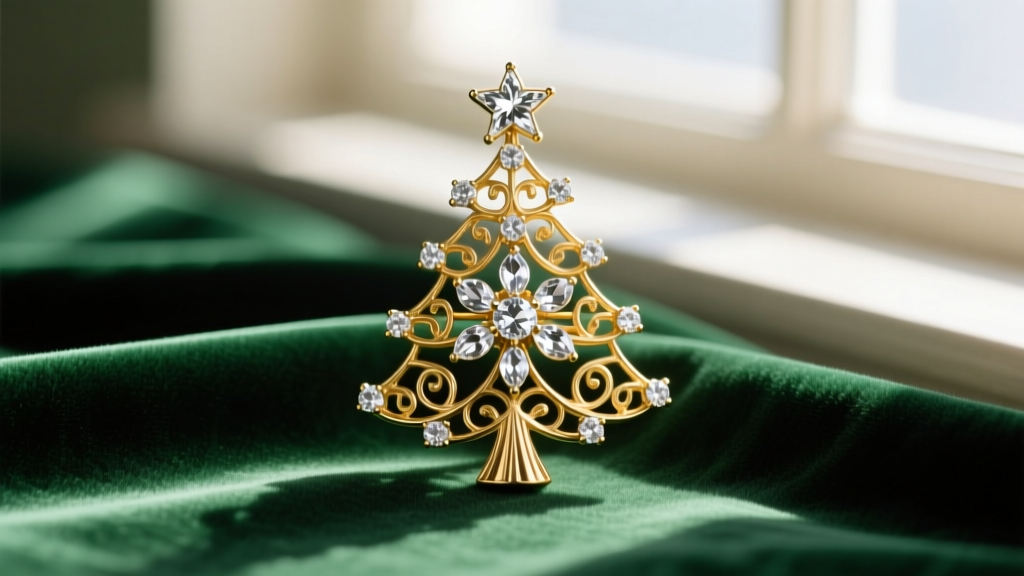
The Magic of Mid-Century Motifs: Why Tree Brooches?
When exploring the vibrant world of estate and retro accessories, few categories capture the imagination quite like christmas tree vintage jewelry. While holiday motifs have existed since the Victorian era, the literal 'Christmas tree' brooch exploded in popularity during the 1940s and 1950s. As a beginner collector in 2026, understanding this niche requires looking past the festive aesthetic and examining the historical context, metallurgy, and gem-cutting techniques that define these wearable sculptures.
During the post-WWII economic boom, American costume jewelry houses experienced a golden age of figural design. Consumers wanted optimism, color, and whimsy. Designers responded by crafting intricate evergreen silhouettes encrusted with faux gems. Today, these pieces are highly sought after not just as holiday novelties, but as serious mid-century design artifacts. This guide will equip you with the exact frameworks needed to authenticate, date, and value these sparkling conifers.
Key Makers & Hallmarks: Who Crafted the Best Trees?
Not all vintage tree pins were created equal. The market is flooded with unmarked, mass-produced imports from the 1980s, so identifying the original mid-century American and European makers is critical for valuation.
Trifari & Coro: The Titans of Design
Trifari, under the direction of Alfred Philippe, produced some of the most structurally complex tree brooches of the 1940s. Look for the 'Crown Trifari' mark on the reverse. Coro, another giant, often utilized sterling silver during the war years when base metals were restricted. A Coro tree pin marked 'Coro Sterling' from the early 1940s is a premium collector's item, often featuring unfoiled, prong-set stones that mimic fine jewelry construction.
Weiss & Hollycraft: The Rhinestone Masters
If you are drawn to blinding sparkle, Albert Weiss and Hollycraft are the names to memorize. Weiss utilized high-grade Austrian rhinestones with exceptional faceting. Hollycraft, famous for its polychrome designs, frequently mixed pastel and vivid stones (sapphire, ruby, and peridot blue) within a single tree silhouette. According to antique jewelry historians at Lang Antiques University, the specific cut and foil-backing of these mid-century stones are primary indicators of authenticity.
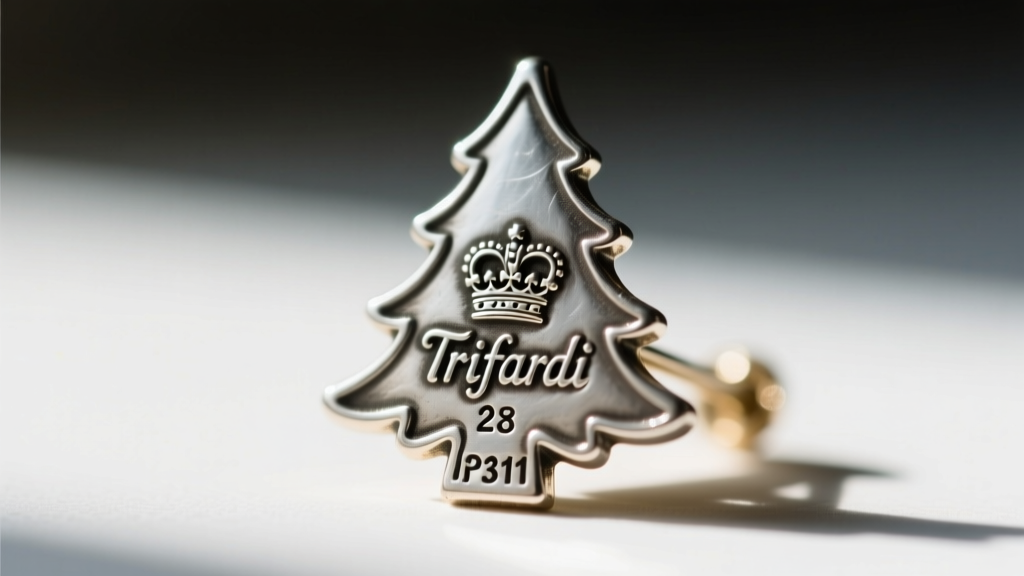
Material Breakdown: Rhinestones, Enamel, and Base Metals
To accurately date your piece, you must understand the materials used during specific decades. Wartime restrictions and post-war innovations drastically altered jewelry manufacturing.
| Material / Feature | Era Indicator | Collector Value Impact |
|---|---|---|
| Pot Metal (Zinc Alloy) | Pre-1945 (Wartime) | High rarity; prone to pitting and plating loss. |
| Sterling Silver Base | 1942–1945 | Premium value; look for 'Sterling' stamp. |
| Aurora Borealis (AB) Stones | Post-1955 | Highly desirable; confirms mid-century origin. |
| Cold Enamel (Resin) | 1950s–1960s | Condition dependent; chipping lowers value. |
The introduction of the Aurora Borealis (AB) rhinestone by Swarovski in 1955 revolutionized the industry. If a vintage tree brooch features stones with that signature iridescent, oily rainbow sheen, it was manufactured no earlier than the late 1950s, instantly ruling out a 1940s origin.
How to Authenticate and Date Your Piece
Beyond the stones, the hardware on the reverse side of the brooch tells a definitive story about its age. Here is a practical checklist for examining the findings:
- The Clasp Mechanism: Early 1940s pieces typically feature a simple 'C-clasp' with a straight pin stem that extends slightly past the catch. By the mid-1950s, the 'roll-over safety clasp' became the industry standard. If your tree pin has a modern, locking safety clasp with a short, thick pin stem, it is likely a later reproduction.
- Hinge Construction: Examine the hinge where the pin stem attaches to the body. A 'tube hinge' (three small cylindrical barrels) indicates hand-assembly typical of the 1930s and early 1940s. A 'round hinge' (a single, stamped circular joint) points to machine-automated manufacturing of the late 1950s and beyond.
- Stone Setting: Authentic mid-century high-end pieces (like Eisenberg or Weiss) feature prong-set stones where metal claws fold over the girdle of the glass. Cheaper, later mass-market pieces rely on glue. Use a 10x jeweler's loupe to inspect the edges of the stones; visible adhesive residue is a red flag for a late 20th-century reproduction.

Valuation Framework: What is Your Tree Worth?
As of 2026, the secondary market for mid-century figural jewelry remains robust, driven by a renewed interest in retro maximalism. However, condition is the ultimate arbiter of price. Missing stones, blackened foil-backing (caused by moisture seeping under the glass), and heavy brassing (where the gold plating wears away to reveal the base metal) will slash a piece's value by up to 70%.
Expert Tip: Never attempt to clean vintage rhinestones with liquid jewelry dips or ultrasonic cleaners. Moisture will destroy the delicate foil-backing, turning brilliant stones permanently grey. Use only a dry, soft-bristled brush and a wooden toothpick to dislodge debris.
For current market benchmarks, collectors and appraisers frequently reference the Kovels Antiques & Collectibles Price Guide. Generally, unsigned or lesser-known maker tree pins trade between $35 and $85. Mint-condition Weiss or Hollycraft trees command $150 to $350. Rare, large-scale Trifari or Eisenberg trees with verified patent numbers can easily exceed $1,200 at specialized auction houses.
Styling Vintage Trees Beyond the Holidays
The most common mistake beginners make is relegating these exquisite pieces to a velvet box for eleven months of the year. The architectural structure of a 1950s tree brooch makes it a versatile styling anchor for year-round wardrobes. Try pinning a sterling silver Coro tree to the collar of a crisp white Oxford shirt, or use a heavy, jewel-encrusted Weiss tree to secure a thick silk scarf at the neck. In the autumn and winter months, anchoring a large tree brooch to the lapel of a tailored charcoal wool coat provides a striking, sophisticated contrast that transcends seasonal novelty.


