Restoring Your Vintage Jewelry Christmas Tree: A Care Guide
Learn expert techniques to clean, repair, and preserve your vintage jewelry Christmas tree brooch without damaging delicate foils.

The Allure and Anatomy of Mid-Century Tree Brooches
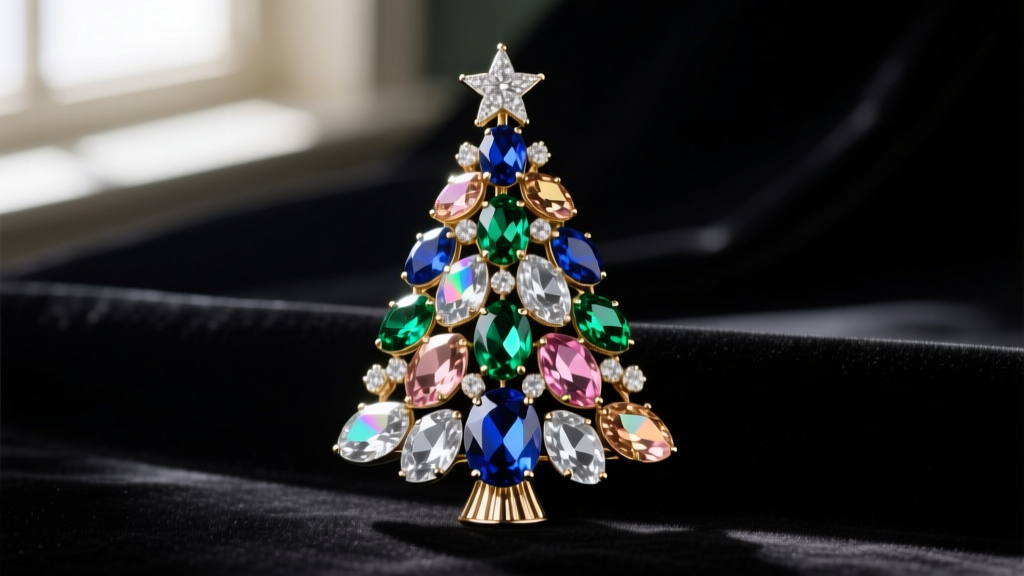
As we navigate the collector market in 2026, the demand for mid-century holiday accessories remains fiercely competitive. Among the most coveted pieces is the vintage jewelry christmas tree brooch, a staple of 1950s and 1960s American costume jewelry. Brands like Hollycraft, Weiss, Trifari, and Coro mastered the art of translating the festive spirit into wearable art, utilizing intricate metalwork and brilliant glass stones. However, preserving these delicate artifacts requires a deep understanding of their material composition.
Most vintage tree brooches are cast from pot metal—a brittle alloy primarily composed of zinc, mixed with lead, tin, and copper. This base is typically electroplated with a microscopically thin layer of gold, silver, or rhodium. The 'leaves' and 'ornaments' are crafted from leaded glass rhinestones (chatons, navettes, and baguettes). Crucially, these stones are foil-backed. A microscopic layer of silver or gold leaf is applied to the pavilion (bottom) of the glass to reflect light and create brilliance. This foil backing is the most vulnerable component of the piece, and improper cleaning will destroy it instantly, leaving the stones looking dark, cloudy, and lifeless.
The Cardinal Sins of Rhinestone Care
Before attempting any maintenance, you must understand what will permanently ruin your vintage jewelry christmas tree. According to conservation guidelines highlighted by Ruby Lane, the majority of irreversible damage to vintage costume jewelry is caused by well-meaning but misinformed cleaning methods.
- Never Use Ultrasonic Cleaners: The high-frequency vibrations will shatter fragile mid-century glass and strip the delicate foil backing from the stones.
- Never Immerse in Water: Capillary action will draw water beneath the prongs or glue. Once moisture reaches the foil backing, it will oxidize and turn black within hours.
- Avoid Ammonia and Commercial Silver Dips: These harsh chemicals will eat through the pot metal base, causing pitting, and will dissolve the electroplated finish.
- Never Use Cyanoacrylate (Super Glue): For stone replacement, super glue releases fumes that permanently fog the glass and degrade the foil.
Step-by-Step Dry Cleaning Protocol
To safely restore the brilliance of your brooch, you must rely on mechanical dry cleaning and highly controlled spot treatments. Gather a soft-bristled makeup brush, wooden toothpicks, lint-free microfiber cloths, and high-purity (90% or higher) isopropyl alcohol.
Phase 1: Dry Dusting and Debris Removal
Begin by gently sweeping the entire surface of the brooch with the soft makeup brush. This removes loose dust and grit that could scratch the glass or metal during subsequent steps. Use a wooden toothpick to carefully dislodge any compacted dirt trapped in the crevices of the pot metal casting. Never use metal needles or safety pins, as they will scratch the soft zinc alloy and the electroplating.
Phase 2: Targeted Metal Polishing
If the gold or silver plating is tarnished, do not use liquid polishes. Instead, use a dry, treated polishing cloth specifically designed for delicate metals, such as a Godards Silver Cloth. Gently buff the exposed metal branches and the trunk of the tree. Avoid rubbing the cloth directly against the rhinestones, as the mild abrasives in the cloth can scratch the glass surfaces over time.
Phase 3: Safe Stone Revival
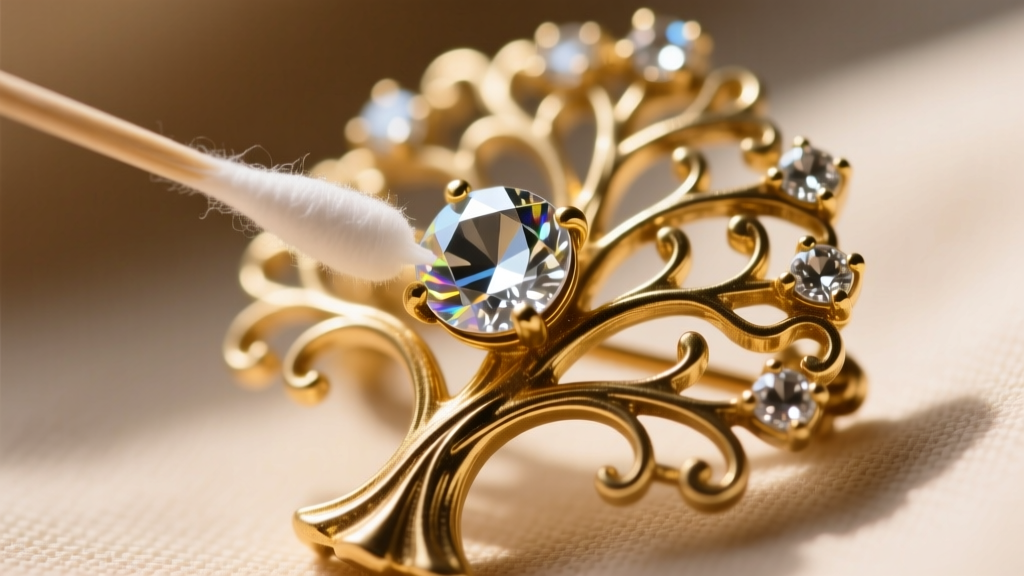
If the rhinestones are dull due to skin oils or hairspray buildup, use a cotton swab barely dampened with a 50/50 mix of distilled water and a single drop of mild dish soap. Wring the swab out until it is almost completely dry. Gently roll the swab over the *top* (table and crown) of each individual stone. Immediately follow with a dry microfiber cloth to absorb any residual moisture. Never let liquid pool around the prongs.
Advanced Troubleshooting: Verdigris and Stone Loss
Even with meticulous care, vintage pieces often present structural challenges. Understanding the chemistry of these failure modes is essential for the serious collector.
Combating Verdigris
Verdigris is a green, crusty copper acetate corrosion that frequently appears on the copper-rich alloys used in mid-century findings and pin stems. While some collectors view it as a sign of age, it is actively destructive and will eventually crack the pot metal. To remove it, use a fiberglass scratch pen or a wooden toothpick dipped in a minuscule amount of mineral oil. Mechanically scrape the corrosion away. Do not use vinegar or lemon juice; the acids will react violently with the zinc in the pot metal, causing irreversible blistering.
Re-Setting Loose Rhinestones
When stones fall out, the original foil backing is often left behind in the cup. If the foil is intact, you can re-glue the stone. Use a specialized jeweler's adhesive like GS Hypo Cement for small chatons, or E6000 for larger navettes and structural components. Apply a microscopic dot of glue to the bottom edge of the stone (avoiding the foil center) using a fine needle, and press it into the prong setting. Allow 24 hours to cure in a low-humidity environment.
Archival Storage for the Modern Collector
How you store your vintage jewelry christmas tree is just as critical as how you clean it. Pot metal is highly susceptible to environmental fluctuations, and the copper content in the alloy will react with sulfur and moisture in the air. As noted in historical jewelry conservation resources like Collectors Weekly, proper archival storage is the key to halting degradation.
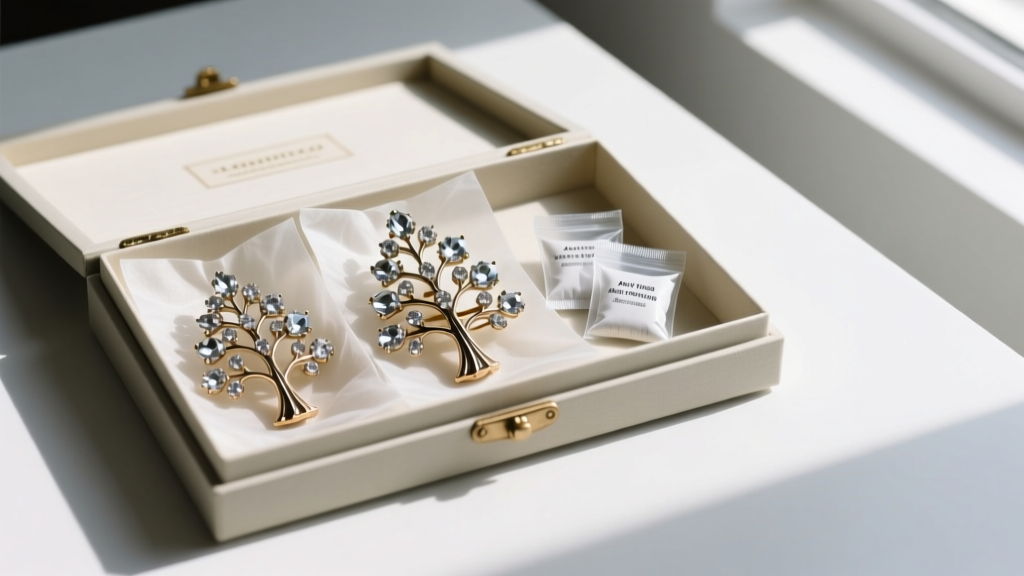
Wrap each brooch individually in acid-free, unbuffered tissue paper. Avoid standard plastic ziplock bags, as PVC and low-grade polyethylene can off-gas chemicals that accelerate the yellowing of rhinestones and the tarnishing of metal. Instead, store the wrapped pieces in a lined archival jewelry box or a Pacific Silvercloth pouch. Include 3M anti-tarnish strips and silica gel desiccant packets in the storage container to neutralize airborne sulfur and control humidity. Replace the desiccant packets every six months to ensure a stable microclimate.
Troubleshooting and Repair Matrix
Use the following diagnostic table to quickly identify and address common issues with your mid-century tree brooches.
| Issue Identified | Root Cause | Corrective Action | Preventative Measure |
|---|---|---|---|
| Cloudy or Dark Stones | Moisture penetrated prongs, oxidizing the silver foil backing. | Irreversible. Stone must be carefully removed, cup cleaned, and stone replaced. | Never immerse in water; store with silica gel. |
| Green Crust (Verdigris) | Copper in the alloy reacting with moisture and skin acids. | Mechanical removal with a wooden pick and mineral oil. | Wipe metal with a dry cloth after wearing; store in anti-tarnish pouches. |
| Pin Stem Won't Lock | Tension loss in the brass pin stem or worn C-catch clasp. | Gently bend the pin stem downward with nylon-jaw pliers to increase tension. | Always unpin using the rolling 'C' catch method to avoid stressing the hinge. |
| Flaking Gold Plating | Base metal oxidation pushing through the thin electroplated layer. | Cannot be replated safely. Stabilize with a micro-coat of Renaissance Wax. | Keep away from perfumes, lotions, and high-humidity environments. |
Conclusion
Owning a vintage jewelry christmas tree is a privilege that connects us to the golden age of American costume jewelry design. By respecting the fragile chemistry of pot metal and foil-backed glass, and by abandoning harsh modern cleaning chemicals in favor of patient, dry conservation techniques, you ensure these sparkling mid-century masterpieces will continue to shine for generations to come. For further education on gemstone and glass conservation, the Gemological Institute of America (GIA) offers excellent foundational guidelines on handling delicate crystalline structures safely.


