How to Find Vintage Jewelry by Decoding Era-Specific Materials
Learn how to find vintage jewelry by decoding era-specific materials. Compare Georgian pinchbeck to Retro rose gold and authenticate with confidence.

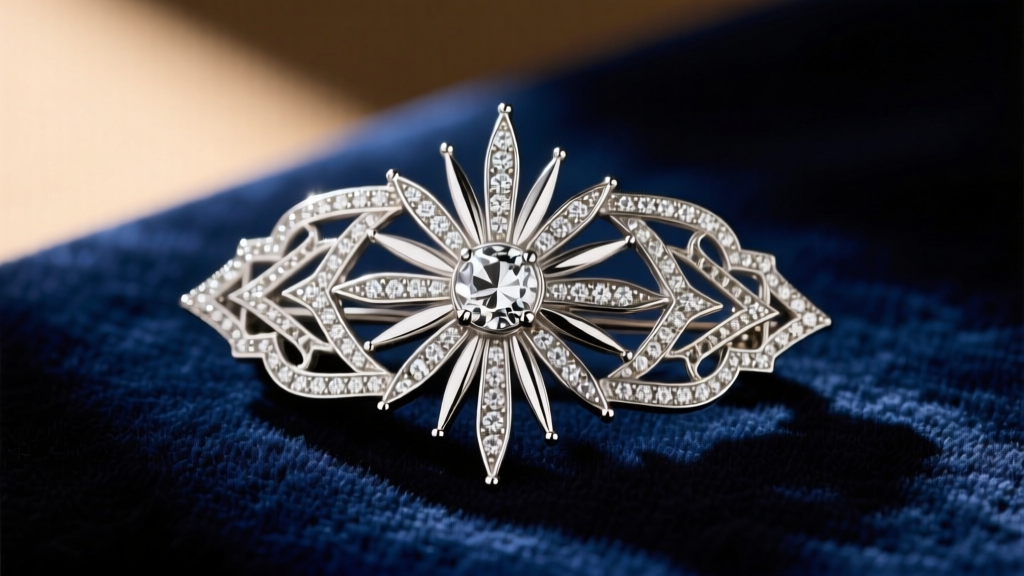
The secondary jewelry market is flooded with mass-produced modern replicas masquerading as historical treasures. When learning how to find vintage jewelry that is genuinely authentic, most beginners rely on visual aesthetics or vague seller descriptions. However, the true cheat code for authentication lies in material science. Every historical era was constrained by the technology, geopolitics, and metallurgical advancements of its time. By understanding the specific material properties and alloy compositions unique to different decades, you can bypass deceptive marketing and source genuine antique and vintage pieces with absolute confidence.
The Metallurgy of Eras: Gold Alloys and Plating Techniques
Gold has been a staple of fine jewelry for centuries, but the way it was alloyed, plated, and manufactured shifted dramatically from the Georgian era through the mid-20th century. Identifying these metallurgical fingerprints is crucial for accurate dating.
Georgian and Victorian: Pinchbeck and Rolled Gold
Before the invention of modern electroplating in the 1840s, achieving a gold look without the prohibitive cost of solid gold required ingenious mechanical and chemical solutions. Pinchbeck, invented by Christopher Pinchbeck in the early 18th century, is a specific copper-zinc alloy (typically 89% copper and 11% zinc). Unlike modern gold plating, which flakes or wears away to reveal a starkly different base metal, high-quality Georgian pinchbeck was cast and carved as a solid alloy. It possesses a distinct, slightly reddish-gold hue and a heavier specific gravity than modern brass.
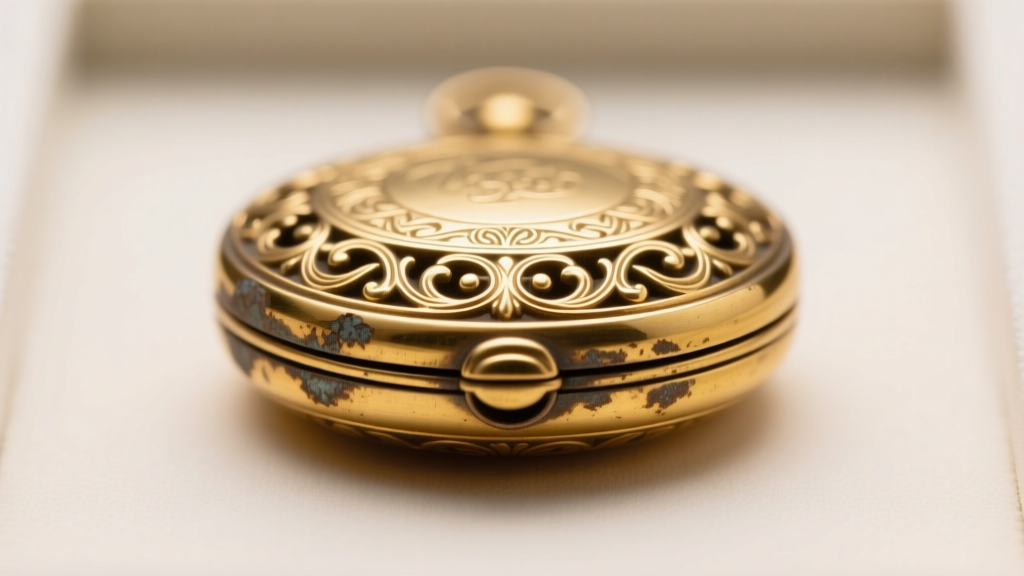
By the Victorian era, rolled gold and gold-filled techniques dominated the middle-class market. Rolled gold involves mechanically bonding a thin sheet of gold to a brass core using heat and pressure. According to the Antique Jewelry University by Lang Antiques, early rolled gold pieces often bear stamps like 'Rolled Gold Plate' or 'RGP'. If you examine the high-wear edges of a Victorian locket or watch chain under a 10x loupe, you will not see the flaking typical of modern electroplating; instead, you will see a smooth, gradual transition where the gold layer has worn thin, revealing the brass beneath.
Edwardian: The Platinum Revolution
The Edwardian era (1901-1915) was defined by the 'garland style' and the widespread introduction of platinum in fine jewelry. Because early 20th-century jewelers lacked the high-temperature torches required to melt pure platinum (which has a melting point of 1,768°C), they initially backed delicate platinum wirework with 18k yellow gold. By the 1910s, the oxyhydrogen torch allowed for the use of pure platinum alloyed with 10% iridium for durability. If you are inspecting an Edwardian piece and a neodymium magnet attracts the clasp, or if the metal lacks the dense, heavy, cool-to-the-touch thermal conductivity of platinum, you are likely looking at a later white-gold reproduction.
Retro (1940s): Rose Gold and Wartime Rationing
During World War II, platinum and high-karat gold were declared strategic metals and restricted for military use. This forced jewelers into using 14k and 10k rose gold, which required higher copper content to stretch the available gold supply. Retro jewelry is instantly recognizable by its bold, three-dimensional sculptural forms and the distinct, warm reddish-pink hue of its copper-heavy alloys. If a piece features heavy, voluminous gold work stamped '14k' with a distinctly rosy tint and no maker's mark, you are likely holding a genuine 1940s Retro artifact.
Gemstone Properties and Period-Specific Synthetics
Understanding how to find vintage jewelry also requires a deep knowledge of historical gemology and the evolution of synthetic materials. The Gemological Institute of America (GIA) notes that the cut of a diamond is often a more reliable indicator of age than its setting, as settings are frequently updated over a stone's lifetime.
- Old Mine Cut (Georgian to Early Victorian): Characterized by a high crown, deep pavilion, small table, and a distinctively visible culet when viewed from the top. These stones were cut by candlelight to maximize brilliance in low-light environments.
- Old European Cut (Late Victorian to Art Deco): Rounder than the Mine cut but retaining the high crown and small table. The advent of the bruting machine allowed for more symmetrical rounding.
- Transitional Cut (1930s-1940s): The bridge between antique cuts and the modern round brilliant, featuring a larger table and a smaller culet.
Testing Early Plastics: Bakelite and Celluloid
In the 1920s and 1930s, costume jewelry designers embraced early plastics. Bakelite (phenol formaldehyde resin) is highly sought after by collectors. Unlike modern acrylics, Bakelite is heavily dense and possesses a distinct acoustic property: when two pieces of Bakelite are tapped together, they produce a deep, hollow 'clack' rather than a high-pitched click. To authenticate Bakelite, collectors use Simichrome metal polish; rubbing a small amount on an inconspicuous area will turn the polish a vibrant mustard yellow or orange. Alternatively, running the piece under hot tap water for 30 seconds will release a faint, distinct chemical odor resembling camphor or formaldehyde—a smell modern plastics simply do not produce.
Sourcing Strategy: Applying Material Knowledge in the Wild
When researching how to find vintage jewelry in physical spaces like estate sales, flea markets, or antique shows, your toolkit should be minimal but highly effective. A high-quality 10x triplet loupe, a neodymium magnet, and a small bottle of Simichrome polish are non-negotiable.
'The loupe is your primary weapon against deception. Modern cast reproductions often show microscopic pitting or porosity from the silicone molds used in mass production. Genuine antique hand-fabricated pieces will show continuous, flowing solder lines and file marks consistent with hand-finishing.' — Master Bench Jeweler
Online sourcing requires a different approach. When browsing auction houses or digital estate liquidators, always request high-resolution macro photographs of the clasps, jump rings, and any worn edges. Look for the 'lead test' on jump rings: modern machine-made jump rings are perfectly flush and uniform, whereas antique jump rings were hand-cut and often feature a slight bevel or uneven gap. Furthermore, utilize the Victoria and Albert Museum's jewelry archives as a visual baseline to compare the proportions and construction techniques of questionable pieces against verified historical artifacts.
Quick-Reference Hallmark & Material Testing Matrix
Use this structured matrix as a rapid-decision framework when evaluating potential acquisitions in the field.
| Era | Dominant Metal / Material | Key Material Property | Primary Authentication Tell |
|---|---|---|---|
| Georgian (1714-1837) | Pinchbeck, Silver, Foiled Gems | Cu-Zn alloy; closed-back settings to protect foil | Seamless alloy wear (no flaking); darkened patina in deep crevices; irregular rose-cut diamonds. |
| Victorian (1837-1901) | Rolled Gold, 15k Gold, Jet, Gutta-Percha | Mechanically bonded gold; organic mourning materials | 'RG' stamps; brass visible at high-wear edges; jet leaves a brown streak on unglazed porcelain. |
| Edwardian (1901-1915) | Platinum-Iridium, Silver-topped Gold | High-density, non-magnetic, intricate milgrain edges | 'PT' or 'PLAT' stamps; heavy thermal conductivity; microscopic knife-edge wirework. |
| Art Deco (1920-1935) | White Gold, Platinum, Onyx, Coral | Geometric contrasts; early synthetic rubies/sapphires | Calibrated custom-cut stones; hand-engraved gallery work beneath the stones; invisible settings. |
| Retro (1935-1950) | 14k/10k Rose Gold, Topaz, Citrine | Copper-heavy alloys; large, bold volumetric forms | Reddish-gold hue; lower karat stamps; flexible gas-pipe link chains (snake chains). |
Conclusion: The Intersection of History and Science
Mastering the art of sourcing authentic historical pieces is not about memorizing endless dates; it is about understanding the physical constraints and material innovations of the past. By shifting your focus from superficial design trends to the hard science of metallurgy, gemology, and polymer chemistry, you elevate yourself from a casual shopper to a serious horologist and jeweler. The next time you set out to discover how to find vintage jewelry, let the materials tell you the true story of the piece.


