Identifying Vintage Brutalist Jewelry: A Beginner's Guide
Discover how to identify, value, and style vintage brutalist jewelry. Learn about key mid-century makers, raw materials, and authentic hallmarks.

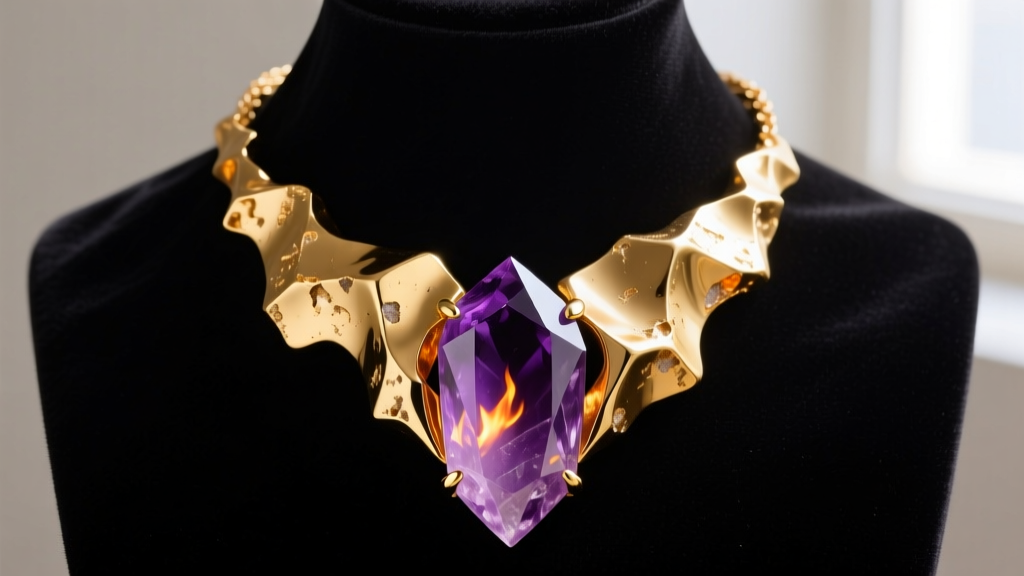
The term "Brutalism" originates from the French béton brut, meaning "raw concrete," a phrase popularized by architect Le Corbusier to describe his uncompromising, textured mid-century buildings. By the late 1960s and 1970s, this architectural philosophy had bled into the decorative arts, giving rise to vintage brutalist jewelry. Rejecting the polished, symmetrical perfection of the post-war era, brutalist jewelers embraced jagged edges, raw textures, and uncut gemstones. For collectors and vintage enthusiasts today, these pieces represent some of the most striking, wearable art of the 20th century. This beginner-friendly explainer will teach you how to identify authentic pieces, understand the metallurgy behind them, and navigate the current collector's market.
What Defines the Brutalist Aesthetic in Jewelry?
Unlike Art Deco's geometric precision or Victorian sentimentality, brutalist jewelry is defined by its deliberate roughness and organic asymmetry. It was a rebellion against mass-produced, high-polish commercial jewelry. When evaluating a potential vintage piece, look for these core characteristics:
- Raw, Unpolished Textures: Metals are often hammered, pitted, scorched, or melted to resemble volcanic rock, tree bark, or lunar landscapes.
- Uncut and Rough-Hewn Gemstones: Instead of faceted diamonds, brutalist makers favored raw crystals, geode slices, and unpolished cabochons (e.g., raw tourmaline, pyrite, amethyst, and quartz).
- Asymmetry and Biomorphism: Forms are rarely perfectly round or square. They mimic natural, chaotic growth patterns or jagged, abstract sculptures.
- Heavy, Substantial Weight: Authentic vintage pieces were typically cast in solid gold or thick-gauge silver, giving them a noticeable, satisfying heft on the wrist or neck.
Pioneering Makers You Must Know
To confidently identify vintage brutalist jewelry, you need to recognize the masters who pioneered the movement. According to the Victoria and Albert Museum's jewelry archives, the 1960s and 70s saw a global explosion of studio jewelers pushing metallurgical boundaries.
Andrew Grima (United Kingdom)
Grima is arguably the most famous brutalist jeweler. Working in London, he revolutionized high jewelry by casting rough, uncut gemstones directly into textured 18k yellow gold. His signature technique involved using the lost-wax casting method with carved wax models that mimicked cracked earth or crumpled paper. Look for his maker's mark (often "AG" or his sponsor marks) alongside London assay marks.
Björn Weckström and Lapponia (Finland)
Weckström’s work for the Finnish house of Lapponia is iconic. His designs, such as the famous "Planetarian" or "Space" collections, feature melting, organic silver and gold forms that look like frozen liquid. As noted in the official Lapponia history archives, Weckström's inspiration came from the rugged Finnish landscape. Authentic pieces will bear the Lapponia crown hallmark, the Finnish crown, and Weckström's personal maker's mark.
Jean Vendome (France)
Vendome was a master of juxtaposing raw, uncut minerals (like pyrite and raw beryl) with highly textured gold nuggets. His work is heavily sculptural, often resembling archaeological artifacts or alien flora.
Materials and Techniques: How It Was Made
Understanding the metallurgy of vintage brutalist jewelry is crucial for authentication. Modern reproductions often rely on 3D printing or basic sandblasting, but mid-century makers used intense, hands-on heat manipulation.
The Art of Reticulation
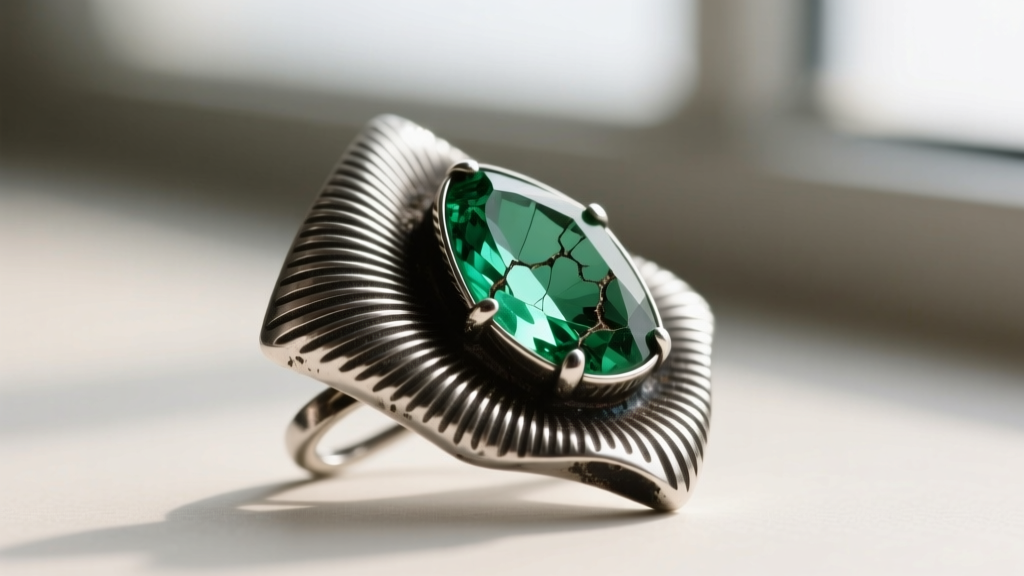
Reticulation is the hallmark technique of the brutalist silversmith. The artisan heats a sheet of sterling silver or high-karat gold (usually 14k or 18k) repeatedly with a blowtorch. This depletes the surface copper (in silver) or alloy metals (in gold), leaving a thin layer of pure metal. When heated to the exact melting point, the pure surface ripples and folds over the solid core, creating deep, dramatic, mountain-like ridges. Authentication Tip: Genuine reticulation has deep, sharp, randomized valleys. Sandblasted fakes look uniformly pitted and lack deep structural relief.
Oxidation and Patina
Brutalist silver was rarely polished to a mirror shine. Makers used liver of sulfur to oxidize the silver, turning it black, and then lightly sanded the high points. This left the deep crevices dark, emphasizing the rugged texture. Over 50 years, this patina settles into the metal; modern chemical blackening often looks painted-on or flakes off unnaturally.
Valuation and Pricing Guide (2026 Market)
The market for vintage brutalist jewelry has matured significantly. Collectors now view these pieces as wearable mid-century modern art. Below is a pricing framework based on current auction results and specialist dealer listings.
| Maker / Tier | Primary Material | Estimated Price Range | Key Identifier / Hallmark |
|---|---|---|---|
| Unmarked Studio Silver | Sterling Silver, Brass | $150 – $450 | Lack of marks, heavy gauge wire, handmade clasps |
| Björn Weckström (Lapponia) | Sterling Silver, 14k Gold | $800 – $3,500 | Lapponia Crown, Finnish assay, date letter |
| Art Smith / Paul Lobel | Sterling Silver, Copper | $2,000 – $8,000 | "ART SMITH" stamp, biomorphic wirework |
| Andrew Grima | 18k Gold, Raw Crystals | $10,000 – $60,000+ | London Assay, "AG" or sponsor mark, rough stones |
| Jean Vendome | 22k Gold, Pyrite, Beryl | $5,000 – $25,000 | French Eagle's Head (tête d'aigle), "VENDOME" |
How to Spot Authentic Vintage Pieces vs. Modern Reproductions
As brutalist aesthetics cycle back into mainstream fashion, the market is flooded with modern, mass-produced "brutalist-style" jewelry. Use this checklist to verify vintage authenticity:
- Examine the Clasp and Findings: Vintage pieces from the 1960s and 70s often feature handmade hook-and-eye clasps, heavy barrel clasps, or early box clasps with figure-eight safety catches. Modern laser-cut lobster clasps are a red flag.
- Check the Stone Settings: Authentic brutalist jewelry rarely uses perfect prongs. Stones are often "bezelled" roughly, or the metal is melted directly over the edge of a raw crystal in a technique called gypsy setting or flush mounting with rough edges.
- Look for Wear Patterns: A true vintage piece will show microscopic wear on the high points of the texture and inside the clasp mechanism. The oxidation in the crevices should be deeply embedded, not easily wiped away with a fingernail.
Expert Insight: "When buying vintage brutalist silver, always bring a jeweler's loupe. Look at the transition between the textured reticulated areas and the smooth bezels holding the stones. In genuine mid-century work, you will see the physical tool marks where the maker scraped away the oxidation to seat the stone. Cast reproductions will show a perfectly smooth, uniform transition."

Styling Brutalist Jewelry for Modern Wardrobes
The beauty of vintage brutalist jewelry lies in its contrast. Because the pieces are inherently heavy, chaotic, and visually loud, they require a minimalist canvas to truly shine.
For everyday wear, pair a heavily textured sterling silver brutalist cuff with a crisp, oversized white linen button-down or a sleek black turtleneck. The organic metalwork pops beautifully against structured, monochromatic fabrics. For evening wear, a raw amethyst and reticulated gold pendant necklace serves as the ultimate statement piece when worn over a simple silk slip dress. Avoid pairing brutalist jewelry with other ornate, highly detailed vintage pieces (like filigree or Art Deco); let the brutalist piece stand alone as a piece of wearable sculpture.
Final Thoughts for the Beginner Collector
Collecting vintage brutalist jewelry is an exercise in appreciating the beauty of imperfection. By focusing on the metallurgical techniques like reticulation, verifying hallmarks from masters like Weckström and Grima, and understanding the market value of raw materials, you can build a collection that is not only visually stunning but historically significant. Start with unmarked studio silver to train your eye on textures and weight, and gradually work your way up to the high-karat, raw-crystal masterpieces of the 1970s.


