The Ultimate Vintage Costume Jewelry Identifier Guide
Learn how to authenticate and date pieces with our vintage costume jewelry identifier guide. Discover hallmarks, materials, and construction clues.

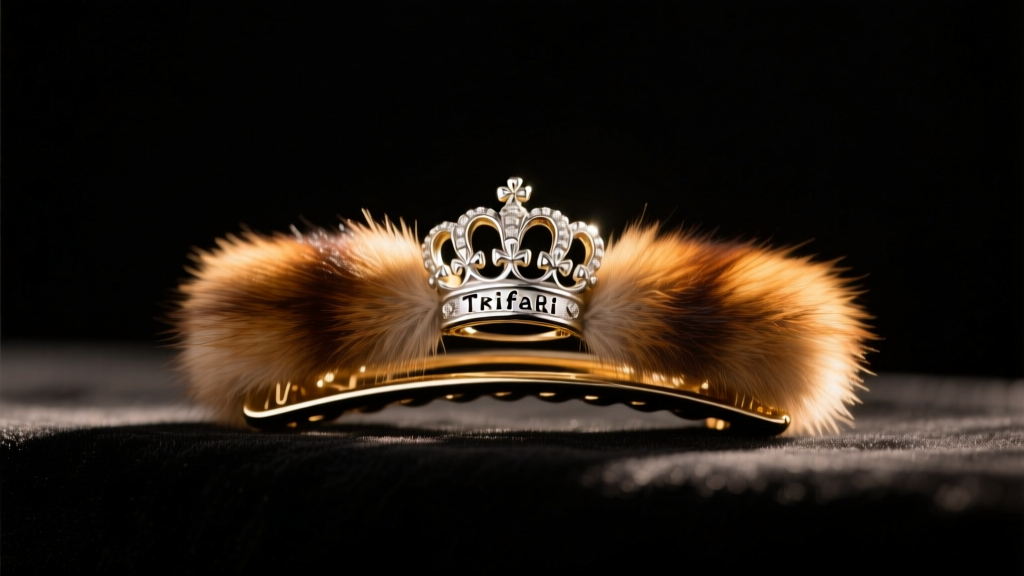
Welcome to the definitive vintage costume jewelry identifier guide. In 2026, the market for mid-century and Art Deco costume jewelry continues to surge, driven by collectors who value the artistry, historical context, and bold aesthetics of these wearable antiques. Unlike fine jewelry, which relies heavily on precious metal stamps and gemological certificates, costume jewelry requires a detective's eye. To accurately date and authenticate a piece, you must synthesize clues from the findings, maker's marks, materials, and construction techniques.
Whether you are evaluating a potential Miriam Haskell necklace at an estate sale or verifying a Trifari brooch found online, this step-by-step framework will transform you from a casual observer into a skilled authenticator. Let us dive into the specific metrics and physical evidence required to properly identify vintage costume jewelry.
Step 1: Decoding Clasps and Findings
The hardware used to secure a piece of jewelry is often the most reliable indicator of its age. Findings were frequently mass-produced and adopted industry-wide during specific decades, making them an excellent starting point for your vintage costume jewelry identifier process.
- Trombone Clasps (1890s–1930s): Named for their push-pull mechanism resembling the musical instrument, these tube-like clasps are a hallmark of early 20th-century European and American pieces. If you see a trombone clasp, the piece likely predates 1940.
- C-Clasps and J-Hooks (Pre-1930s): A simple 'C' shaped wire catch without a rolling safety mechanism is a strong indicator of early 1900s or Victorian-era costume pieces. The pin stem is usually long enough to extend past the edge of the brooch.
- Roll-Over Safety Clasps (1940s–Present): Invented in the early 1900s but not widely adopted in costume jewelry until the late 1930s and 1940s, this clasp features a rolling lever that locks the pin into place. If a piece has a modern, machine-stamped roll-over clasp, it is almost certainly post-1940.
- Fur Clips and Dress Clips (1930s–1950s): Double-pronged fur clips and single heavy-pronged dress clips were wildly popular during the Retro era. By the late 1950s, changing fashion silhouettes rendered them largely obsolete.
Step 2: Hallmarks and the Maker's Mark Matrix
Once you have established a baseline era from the findings, flip the piece over to search for a maker's mark. Major American and European houses used specific hallmarks that evolved over time. According to the Antique Jewelry University, tracking the evolution of a single company's stamp can narrow a piece's production date down to a single decade.
| Brand | Era | Specific Mark Description |
|---|---|---|
| Trifari | 1920s | 'KTF' in a block font (Krusman, Trifari, Fishel) |
| Trifari | 1930s-1940s | 'Trifari' with or without a patent number |
| Trifari | 1955 onwards | 'Trifari' with the 'TM' (Trademark) symbol, following a major lawsuit victory |
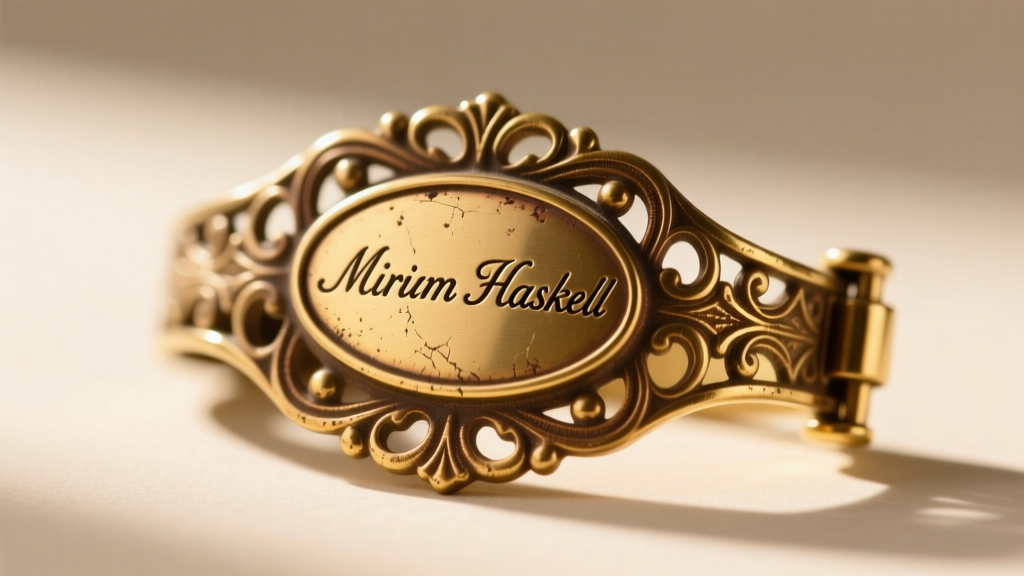
| Miriam Haskell | 1920s-1940s | Often unmarked; early pieces relied on paper tags or specific hand-wiring styles |
| Miriam Haskell | 1940s-1950s | 'Haskell' in an oval cartouche or a horseshoe-shaped plaque |
| Coro | 1930s-1950s | 'Coro' in script, often accompanied by 'CoroCraft' or a Pegasus symbol for higher-end lines |
Step 3: Material Analysis and Stone Dating
The materials used in costume jewelry provide vital chronological data. The Costume Jewelry Collectors International emphasizes that understanding the introduction dates of specific synthetic stones and plastics is crucial for avoiding costly misattributions.
Rhinestones and the Aurora Borealis Rule
Early 20th-century rhinestones were typically foil-backed glass, cut in chaton or marquise shapes, and set in closed-back bezels to protect the delicate silvering from moisture. Open-back settings became more common in the 1950s as manufacturing improved. The most critical dating metric for mid-century stones is the Aurora Borealis (AB) coating. Swarovski introduced this iridescent, rainbow-like finish in 1955. If a piece features AB rhinestones, it is physically impossible for it to be an authentic 1930s or 1940s artifact, regardless of the clasp or backplate design.
The Plastic Polymer Test: Bakelite vs. Lucite
Plastics revolutionized costume jewelry, but different polymers dominated different decades.
- Celluloid (1900s–1920s): Thin, lightweight, and highly flammable. Often carved with floral motifs and prone to a distinct camphor smell when rubbed.
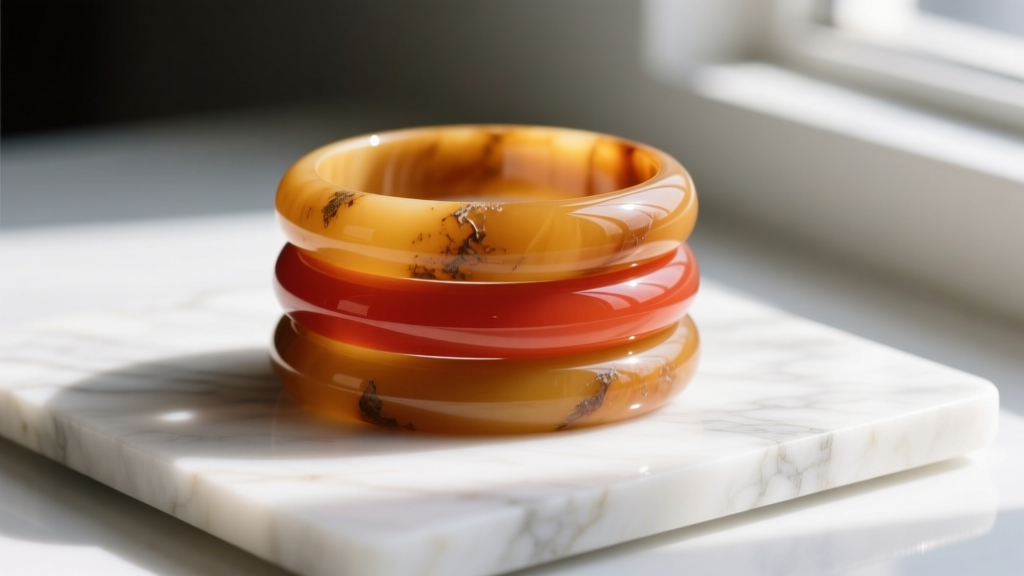
- Bakelite (1920s–1940s): A heavy, dense phenolic resin. Authentic Bakelite will not have any mold seams. When tested with Simichrome polish or rubbed vigorously with hot water, it emits a sharp, formaldehyde-like odor and turns the testing cloth yellow.
- Lucite / Acrylic (1940s–Present): Clearer, lighter, and easily molded. Lucite often features embedded glitter, rhinestones, or carved reverse-intaglio designs (commonly known as 'jelly belly' elements when paired with sterling silver).
Step 4: Evaluating Construction Techniques
High-end vintage costume jewelry was essentially fine jewelry crafted from non-precious metals. The construction methodology reveals the quality tier and the era of the piece.
Hand-Wiring vs. Machine Stamping: Houses like Miriam Haskell and Schiaparelli employed artisans to hand-wire seed beads, faux pearls, and glass leaves onto brass filigree backings. If you examine the reverse of a high-end 1930s piece, you should see the intricate, slightly messy loops of wire securing the elements. Conversely, by the 1960s, mass-production techniques led to glue-set stones and stamped, single-piece metal backs. A piece claiming to be 1930s but featuring heavy adhesive residue and uniform machine stamping is likely a later reproduction.
Prong Settings vs. Glue: Pre-1950s high-quality costume jewelry almost exclusively used metal prongs to secure rhinestones. Glue was reserved for cheap, novelty, or children's jewelry. If you are evaluating a purported Art Deco diamond-cut crystal brooch and the stones are glued into the setting, proceed with extreme caution.
Avoiding "Frankenstein" Jewelry and Modern Fakes
As the market for vintage costume jewelry has matured, so has the sophistication of fakes and 'Frankenstein' pieces. A Frankenstein piece is a genuine vintage component that has been married to a modern or mismatched part to increase its perceived value. For example, a damaged 1940s Trifari bracelet might have its original broken clasp replaced with a modern, shiny gold-tone toggle clasp. While the metal front is authentic, the piece has lost its historical integrity and a significant portion of its collector value.
"Authentication is not just about finding a logo; it is about ensuring every component of the piece—from the solder joints to the patina on the pin stem—tells a cohesive historical story."
To protect yourself, always use a jeweler's loupe (10x magnification) to inspect the wear patterns. Genuine vintage gold-tone plating (often referred to as gold wash or rolled gold) wears away softly over decades, revealing the base brass or pot metal beneath in high-friction areas. Modern reproductions often feature artificial 'antiquing' or uniform, overly bright plating that lacks the nuanced depth of age.
Conclusion and Ongoing Research
Mastering the vintage costume jewelry identifier process requires tactile experience and continuous study. Handle as many authenticated pieces as possible, study the archives of the Victoria & Albert Museum's jewelry collections, and network with established dealers. By systematically analyzing the clasp, decoding the hallmark, testing the materials, and scrutinizing the construction, you will confidently navigate the vibrant and complex world of vintage costume jewelry.


