Troubleshooting Vintage Christian Gothic Jewelry Finds
Learn how to authenticate, clean, and repair vintage Christian Gothic jewelry. Expert tips on identifying Victorian mourning crosses and fixing fragile enamel.

Defining the Niche: Beyond Modern Misconceptions
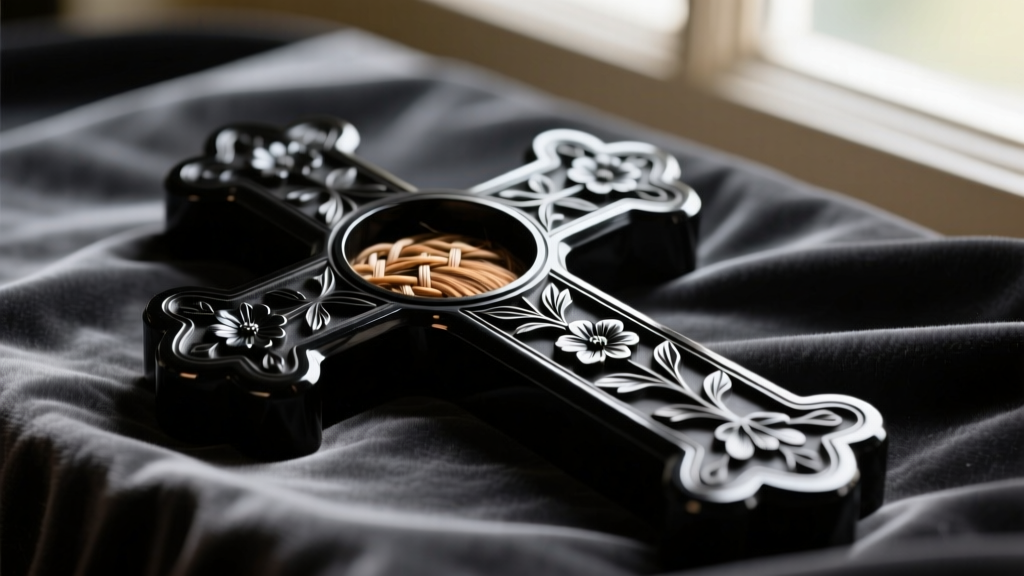
When collectors and estate liquidators encounter the term vintage Christian Gothic jewelry, there is often immediate confusion with late-20th-century subculture fashion. However, in the realm of antique appraisal and restoration, this category refers to a highly specific intersection of 19th-century mourning artifacts, ecclesiastical antiques, and the Victorian Gothic Revival movement. Championed by architects like A.W.N. Pugin, this aesthetic heavily influenced jewelry design from the 1840s through the 1890s, resulting in intricate silver crucifixes, memento mori pendants, and oxidized reliquaries.
Troubleshooting these pieces requires a deep understanding of historical metallurgy, organic material degradation, and period-specific manufacturing techniques. Whether you are attempting to authenticate a suspected 1860s Whitby jet mourning cross or stabilize flaking black enamel on an ecclesiastical rosary, the margin for error is razor-thin. According to the Lang Antiques Antique Jewelry University, the surge in mourning jewelry following the death of Prince Albert in 1861 created a massive market that was quickly flooded with imitation materials, a problem that still plagues authenticators today.
The Black Material Matrix: Authentication Troubleshooting
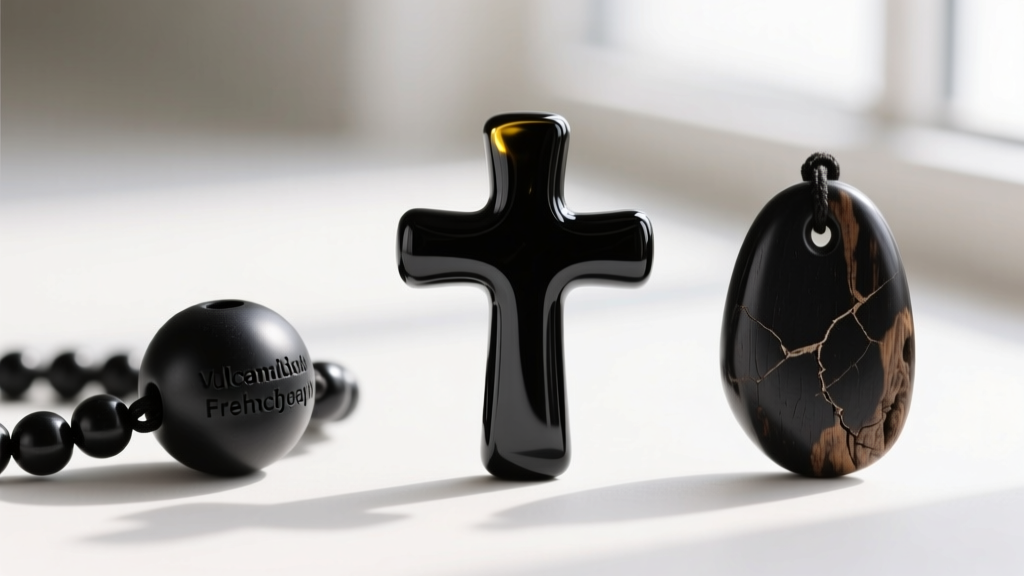
The most frequent issue when evaluating vintage Christian Gothic jewelry—particularly mourning crosses and rosaries—is misidentifying the black materials used. To the untrained eye, 19th-century Whitby jet, vulcanite, French jet (black glass), and bog oak look identical in low-resolution estate auction photos. Misidentification leads to severe valuation errors.
| Material | Thermal Conductivity | Streak Test (Unglazed Porcelain) | Identifying Markers & Flaws |
|---|---|---|---|
| Whitby Jet | Warm to the touch | Light brown/chocolate streak | Lightweight; shows fingerprint-like whorls under magnification; chips rather than shatters. |
| Vulcanite | Warm to the touch | No streak | Faint sulfur/rubber smell when rubbed; mold lines often visible on the edges of beads and crosses. |
| French Jet (Glass) | Cold to the touch | No streak | Heavy; high refractive index; often backed with foil; will shatter if dropped. |
| Bog Oak | Warm to the touch | No streak | Visible wood grain under 10x loupe; lightweight; often carved in Ireland with specific ecclesiastical motifs. |
Troubleshooting Tip: Never perform a destructive hot-point test on a finished antique cross. Instead, use a thermal camera or simply the lip-test (jet and vulcanite will feel noticeably warmer and lighter than glass). For further historical context on how these materials were sourced and carved, the Victoria and Albert Museum's jewelry archives provide exceptional primary documentation on the Yorkshire jet industry's peak and subsequent decline.
Solving Common Restoration Dilemmas
Restoring ecclesiastical and mourning jewelry requires abandoning modern commercial jewelry repair practices. Standard ultrasonic cleaners and harsh chemical dips will destroy the historical integrity and monetary value of these artifacts.
Stabilizing Flaking Taille d'Épargne Enamel
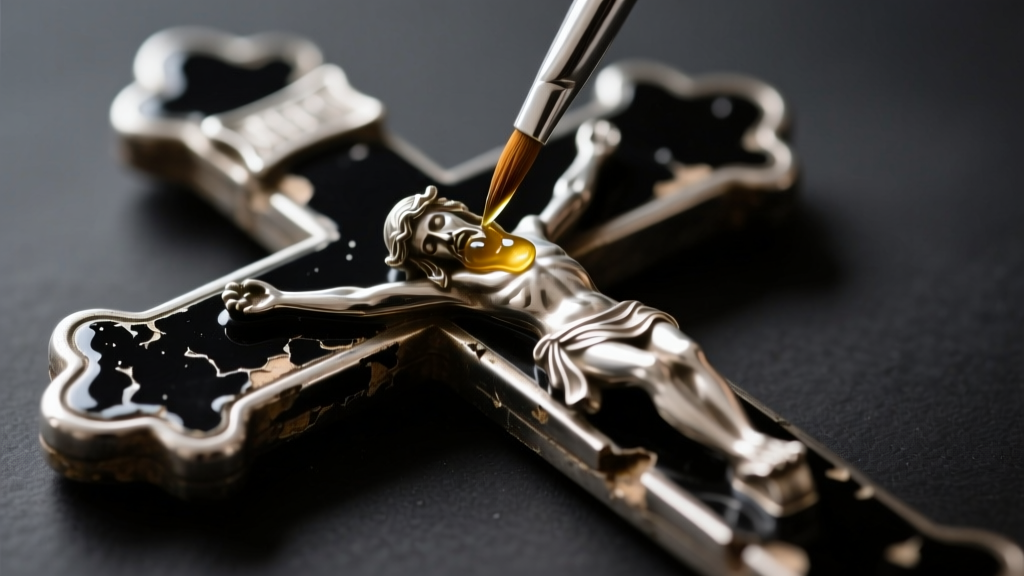
Many high-end 19th-century Gothic Revival crosses feature taille d'épargne, a technique where the metal is carved in relief and the recessed background is filled with opaque black enamel. Over 150 years, this enamel becomes brittle and begins to flake away from the metal substrate.
- The Mistake: Using cyanoacrylate (Super Glue) or modern UV resins, which yellow over time and are impossible to remove without destroying the remaining original enamel.
- The Professional Solution: Use Paraloid B-72, a conservation-grade acrylic copolymer. Dissolve B-72 pellets in pure acetone to create a 5% to 10% solution. Using a 000-size micro-brush, wick the solution under the lifting enamel flakes. The acetone evaporates, leaving a stable, reversible, and optically clear bond that halts degradation without altering the antique patina.
Re-engineering Fragile Reliquary Bales
Antique silver reliquary pendants—often housing sacred relics or woven hair behind glass—frequently suffer from bale failure. The original bales were often stamped from thin 24-gauge or 26-gauge silver sheet to keep the piece lightweight. When they snap, modern jewelers often solder on heavy, cast 18-gauge bales, which look anachronistic and place undue stress on the thin-walled antique housing.
Actionable Fix: Draw down 20-gauge dead-soft sterling silver wire through a draw plate to 24-gauge. Anneal it, form a custom bail that matches the original footprint, and solder it using extra-easy hard solder (which flows at around 1,145°F / 618°C). This lower flow temperature prevents melting the original thin stamping while providing a historically sympathetic repair.
Cleaning Protocols: Preserving Intentional Patina
A critical error in troubleshooting vintage Christian Gothic jewelry is the aggressive polishing of ecclesiastical silver. Gothic Revival pieces rely heavily on deep, dramatic contrast. The recesses of the tracery, the eyes of the memento mori skulls, and the grooves of the crucifixes were intentionally oxidized at the factory to highlight the intricate metalwork.
Using commercial silver dips (like Tarn-X) or aggressive polishing wheels strips this intentional oxidation, leaving the piece flat, blindingly white, and significantly devalued. The Correct Protocol: 1. Create a mild paste using precipitated calcium carbonate and distilled water. 2. Apply only to the high-relief areas using a soft cotton swab. 3. Rinse with distilled water and dry immediately with a microfiber cloth. 4. Apply a micro-crystalline wax (like Renaissance Wax) to seal the silver against ambient sulfur and slow future tarnishing.
2026 Market Valuation and Sourcing Realities
As we navigate the 2026 antique market, the appreciation for authenticated, well-preserved Gothic Revival and mourning jewelry continues to outpace generic Victorian pieces. Collectors are increasingly savvy, meaning misidentified or poorly repaired pieces sit unsold, while pristine examples command premium prices.
"The market for ecclesiastical antiques has shifted heavily toward provenance. A silver rosary with documented ties to a specific 19th-century parish or a mourning cross with its original intact hair compartment will fetch double the price of an orphaned piece." — Estate Appraisal Guidelines, 2025-2026.
Current Pricing Tiers (USD):
- French Jet (Glass) Mourning Crosses: $45 – $120 (Highly dependent on condition and foil backing integrity).
- Vulcanite Rosaries & Pendants: $80 – $250 (Often damaged by UV exposure, turning them a rusty brown; pristine black examples command the top tier).
- Authentic Whitby Jet Carved Crosses: $350 – $900+ (Intricate floral carving and maker's marks from Thomas Andrews or Isaac Watts push values higher).
- Silver Taille d'Épargne Reliquaries: $600 – $1,800 (Condition of the enamel and presence of hallmarks are the primary value drivers).
Successfully troubleshooting vintage Christian Gothic jewelry requires a shift in mindset from modern jewelry repair to historical conservation. By mastering material identification, utilizing conservation-grade adhesives, and respecting the intentional patinas of the 19th century, collectors and restorers can preserve these hauntingly beautiful artifacts for the next century.


