Collecting Vintage Rhinestone Costume Jewelry: A Guide
Discover how to identify, value, and care for vintage rhinestone costume jewelry. Learn to spot top makers, stone types, and condition red flags.

The Allure of Sparkle: Beyond Fine Jewelry
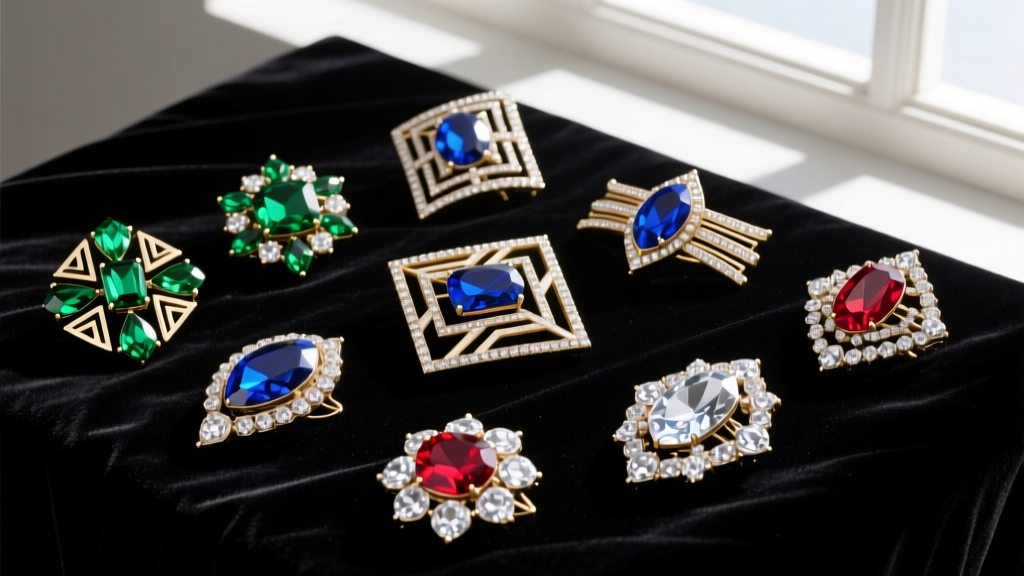
When we think of heirloom jewelry, diamonds and platinum often steal the spotlight. However, the world of vintage rhinestone costume jewelry offers a vibrant, historically rich alternative that has captivated collectors for decades. Emerging in its modern form during the 1920s, costume jewelry was never meant to be a cheap knockoff; rather, it was designed as a standalone art form. Visionary designers utilized base metals, leaded glass, and innovative foiling techniques to create bold, accessible statements that fine jewelry houses simply could not match in scale or whimsy.
As of 2026, the secondary market for mid-century and Art Deco costume pieces continues to surge, driven by a renewed appreciation for sustainable fashion and the unparalleled craftsmanship of the 'Golden Age' (roughly 1925 to 1965). Whether you are hunting for a wearable conversation piece or building an investment-grade archive, understanding the anatomy, eras, and condition markers of these glittering artifacts is essential.
Decoding the Eras: Design Shifts and Stone Cuts
To accurately identify and value vintage rhinestone costume jewelry, you must first recognize the distinct design languages of the major 20th-century eras. The materials, metal finishes, and stone cuts evolved rapidly alongside global events and fashion silhouettes.
| Era | Design Characteristics | Common Stone Cuts & Colors | Notable Makers |
|---|---|---|---|
| Art Deco (1920-1935) | Geometric symmetry, filigree metalwork, platinum or white-metal plating, Egyptian and Cubist motifs. | Baguettes, emerald cuts, calibré-cut glass. Clear, onyx black, ruby red, and sapphire blue. | Trifari, Coro, B. David |
| Retro (1935-1950) | Chunky, three-dimensional forms, patriotic motifs, 'Jelly Belly' lucite, heavy gold-tone plating due to WWII metal rationing. | Large cabochons, chatons, carved lucite. Citrine, aquamarine, and amethyst glass. | Trifari (Alfred Philippe), Eisenberg, CoroCraft |
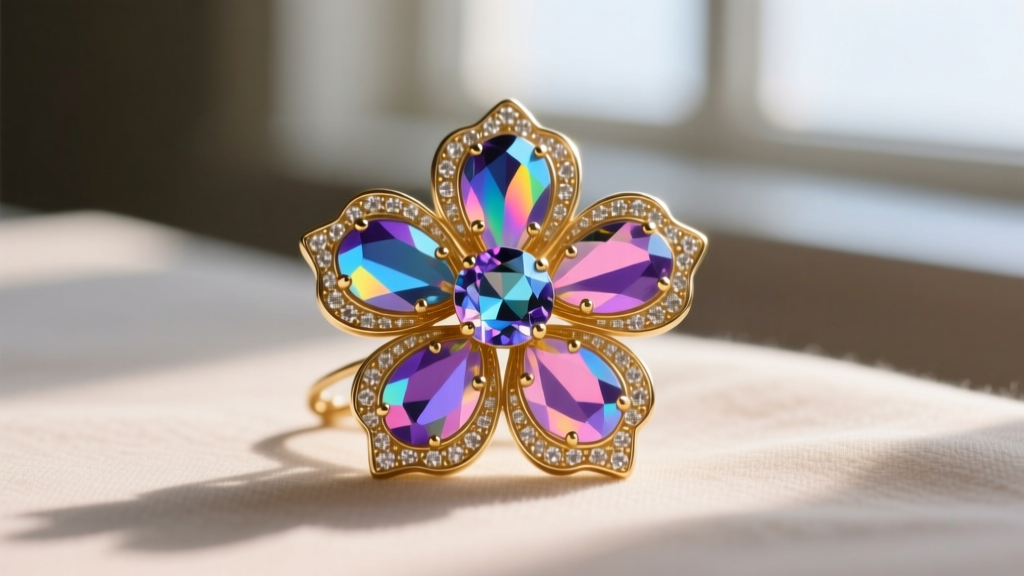
| Mid-Century (1950-1970) | Floral sprays, abstract atomic shapes, matching parures (necklace, earrings, bracelet), textured gold and silver tones. | Aurora Borealis (AB), navettes (marquise), teardrops. Iridescent, pastel, and vivid jewel tones. | Miriam Haskell, Weiss, Kramer, Hollycraft |
According to the Collectors Weekly archives, the transition from the utilitarian Retro period to the opulent Mid-Century boom was heavily influenced by Christian Dior's 'New Look', which demanded lavish, sparkling accessories to complement full-skirted silhouettes.
Anatomy of a Rhinestone: Glass, Foil, and Settings
The term 'rhinestone' originally referred to rock crystals gathered from the river Rhine. By the late 19th century, however, it evolved to describe high-lead-content glass that mimicked the refractive index of diamonds. The true magic of vintage rhinestone costume jewelry lies not just in the glass, but in the backing and the setting.
The Foil Backing
Most vintage glass stones are foil-backed. A microscopic layer of silver or colored metallic paint is applied to the flat bottom (the pavilion) of the stone to act as a mirror, bouncing light back through the faceted crown. When examining a piece, look closely at the backing. High-end makers used pristine, even silver foils, while lower-tier manufacturers often used painted coatings that degrade quickly.
Prong-Set vs. Glued
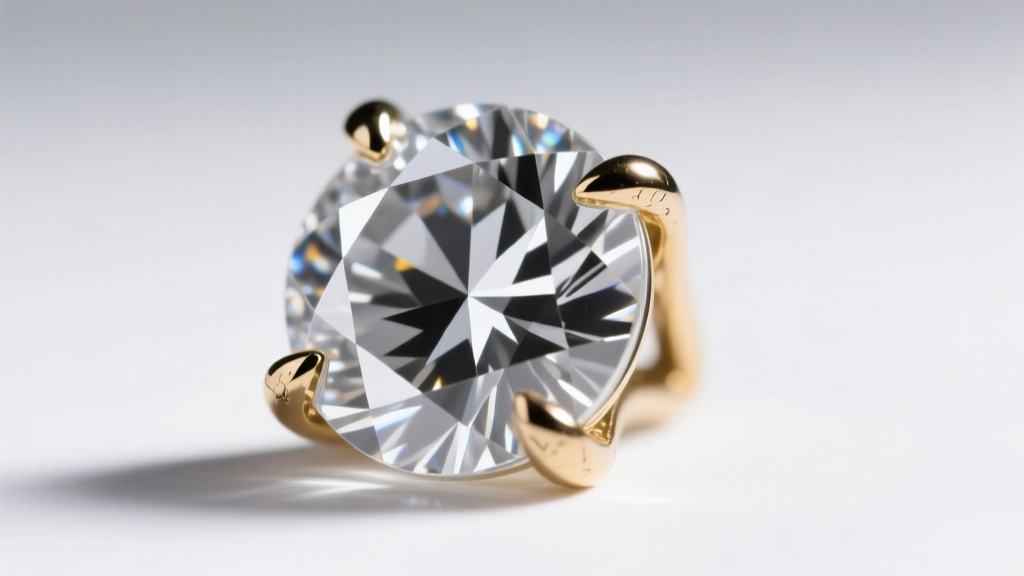
This is the fastest way to gauge the quality of a vintage piece. Premium manufacturers like Miriam Haskell and Trifari almost exclusively used prong settings—tiny metal claws bent over the girdle of the glass to hold it in place. Glued stones, where the glass is simply adhered into a metal cup with epoxy or resin, are generally indicative of lower-tier, mass-produced pieces from the late 1960s and beyond. Glue also yellows over time, trapping dirt and killing the stone's brilliance.
The Aurora Borealis (AB) Revolution
In 1956, Swarovski collaborated with Christian Dior to create the Aurora Borealis (AB) finish. By applying a microscopically thin layer of vaporized metal to the surface of the glass, they achieved a rainbow-like iridescence. When hunting for 1950s vintage rhinestone costume jewelry, look for the distinct oil-slick sheen of true AB stones. Later imitations often look overly pink or uniformly blue, lacking the complex, multi-chromatic fire of the original mid-century runs.
Condition is King: Spotting Red Flags and 'Desert Sand'
Unlike fine jewelry, which can often be melted down and reset, costume jewelry is highly vulnerable to environmental damage. Because the base metals and foils are reactive, condition dictates up to 80% of a piece's market value. Here are the critical flaws to inspect before purchasing:
- Desert Sand (Dead Stones): When the silver foil backing oxidizes, flakes, or is exposed to moisture, the stone loses its mirror effect. The glass turns dull, gray, and sparkly in a flat, lifeless way—collectors call this 'desert sand.' A piece with multiple dead stones should be heavily discounted, as replacing them requires specialized lapidary skills and period-correct stock.
- Pot Metal Rot (Zinc Pest):Many 1930s and 1940s pieces were cast from 'pot metal'—an unstable alloy of zinc, lead, and tin. Over decades, the zinc oxidizes internally, causing the metal to pit, crack, or literally crumble. If you see deep, crater-like pitting on the reverse of a brooch or a hairline fracture near the clasp, walk away. This degradation is irreversible.
- Plating Wear: Gold-tone and rhodium platings are incredibly thin. 'Rub' or 'brass show' on the high points of a bracelet or the clasp of a necklace is common, but heavy flaking ruins the aesthetic and exposes the skin to base-metal allergens like nickel.
Valuation and Top Makers to Hunt
The Antique Jewelry University by Lang Antiques notes that signatures and hallmarks are paramount in the costume jewelry market. A beautifully designed unsigned piece might fetch $40, while the exact same design stamped with a coveted maker's mark can command $400 to over $2,000.
The Heavy Hitters
Trifari: Look for the 'Crown over T' mark or 'DES PAT PEND' (Design Patent Pending). Alfred Philippe, Trifari's head designer from 1930 to 1968, brought fine-jewelry techniques to costume pieces. His 'Jelly Belly' animal brooches (sterling silver with carved Lucite bellies) routinely sell in the $1,500–$5,000 range.
Miriam Haskell: Famous for intricate, hand-wired floral designs using Russian gold plating and complex baroque faux pearls. Haskell pieces are rarely signed on the metal itself; instead, look for the signature on the original paper hangtags or the specific horseshoe-shaped backplates used in the 1940s.
Eisenberg: Known for their 'Eisenberg Original' marks and heavy, oversized sterling silver and rhinestone pieces from the 1930s and 40s. Their replication of 18th-century fine jewelry motifs is legendary.
Expert Dating Tip: Examine the clasp. A simple 'C-clasp' without a rolling safety catch usually dates a brooch to the 1920s or early 1930s. The 'trombone' clasp (a push-pull tube mechanism) is heavily associated with European and high-end American pieces from the 1930s to 1950s. Modern safety catches with a rolling lock mechanism became standard post-1960.
Sourcing, Cleaning, and Storing Your Collection
Finding high-quality vintage rhinestone costume jewelry requires patience. Estate sales, specialized antique malls, and vetted online platforms like Ruby Lane or 1stDibs are your best bets. Avoid general thrift stores unless you have a trained eye, as the market is heavily saturated with 1980s reproductions and modern fast-fashion knockoffs.
The Golden Rule of Cleaning
Never submerge vintage costume jewelry in water or use liquid silver cleaners. Moisture will seep under the glass, destroy the foil backing, and turn your vibrant rhinestones into dull 'desert sand.' Instead, use a soft, dry makeup brush to gently sweep dust out of the prongs and crevices. For the metal, lightly buff with a dry, untreated microfiber cloth. If a stone is exceptionally greasy, breathe on it lightly to create condensation and wipe immediately with a dry cotton swab, avoiding the edges where the foil is exposed.
Proper Storage
Store your pieces individually in acid-free tissue paper or unbleached cotton pouches. Keep them in a climate-controlled environment with low humidity. Silica gel packets placed in your jewelry drawers can help absorb ambient moisture, protecting both the metal plating and the fragile foil backings from oxidizing.
Final Thoughts
Collecting vintage rhinestone costume jewelry is an exercise in wearable history. Each brooch, necklace, and clip-on earring tells a story of 20th-century design innovation, wartime material adaptations, and mid-century glamour. By training your eye to recognize quality prong settings, pristine foil backings, and the hallmarks of master makers, you can build a collection that not only sparkles but holds its historical and financial value for generations to come.


