How to Authenticate Victorian Jewelry: A Buyer's Guide
Learn how to authenticate Victorian jewelry with our expert buyer's guide. Discover clasp types, metal hallmarks, and construction clues to avoid fakes.

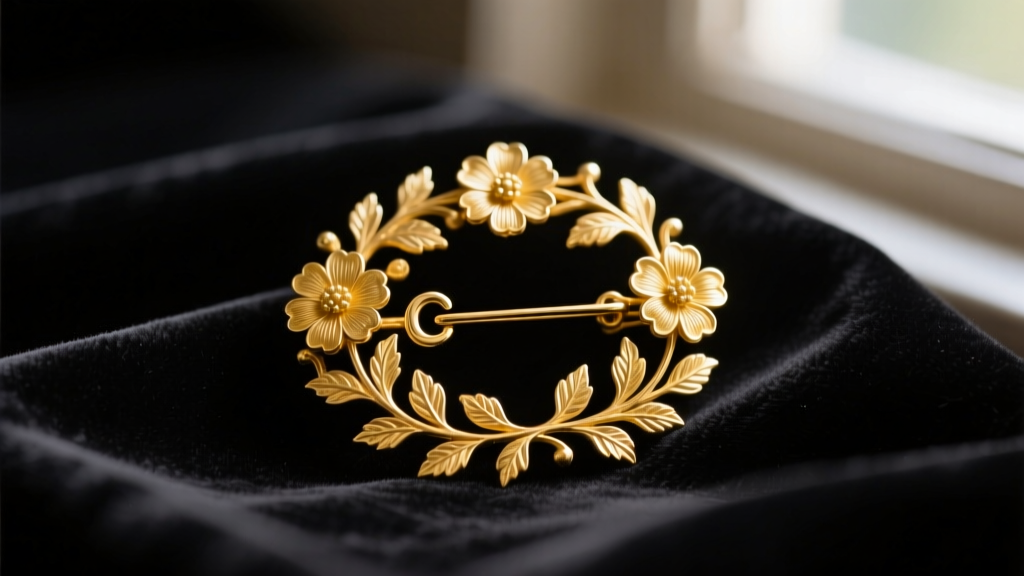
The Victorian era (1837–1901) remains one of the most fiercely collected periods in antique jewelry history. Driven by Queen Victoria’s personal milestones, global industrialization, and shifting mourning customs, jewelry from this epoch is incredibly diverse. However, the lucrative nature of the antique market has spawned a secondary industry of high-quality reproductions, franken-pieces (assembled from mixed-era parts), and outright forgeries. For serious collectors and vintage buyers, distinguishing an authentic 19th-century artifact from a 20th-century reproduction requires looking past the aesthetic and examining the structural DNA of the piece.
This comprehensive buyer’s guide breaks down the exact metallurgical, mechanical, and lapidary markers you need to inspect before acquiring Victorian jewelry. We will move beyond basic visual assessments into the microscopic details that appraisers and estate liquidators use to verify provenance.
The Anatomy of a Victorian Clasp: Hinges and Catches
The reverse of a brooch or pin tells a more accurate story of its age than the front. Clasp mechanics evolved significantly between 1837 and 1901, providing a reliable framework for dating.
The C-Clasp and Pin Stem Extension
From the early to mid-Victorian periods, the standard fastener was the simple 'C' catch. Because these early catches lacked a locking mechanism, the pin stem was intentionally crafted to extend well past the edge of the 'C' curve. This overhang allowed the wearer to weave the sharp point of the pin through their heavy wool or silk garments, securing it by tension. If you find a piece with a C-clasp where the pin stem stops short of the catch, approach with caution; this is a hallmark of later 20th-century manufacturing or a replaced catch.
Tube Hinges vs. Ball Hinges
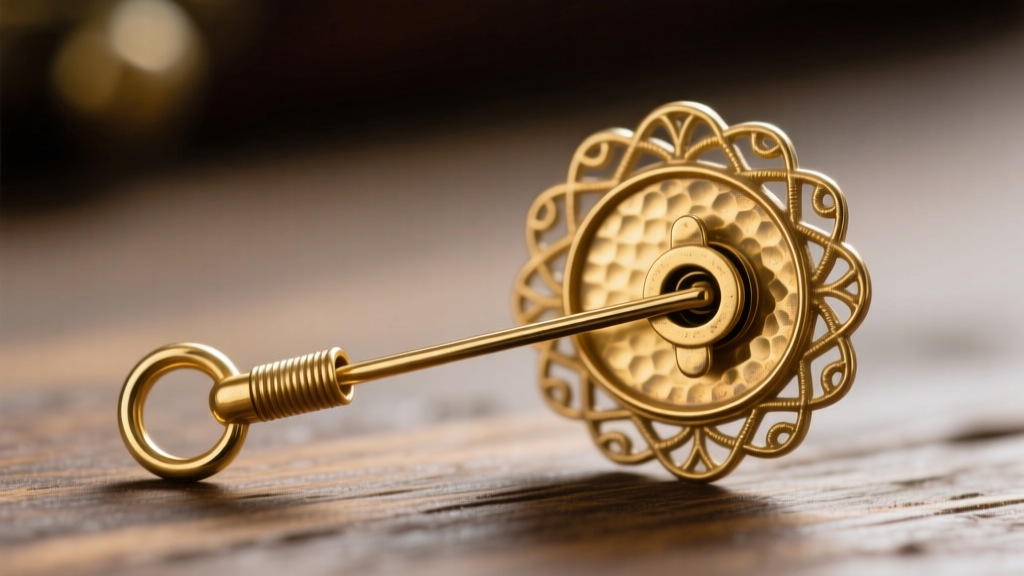
Examine how the pin stem attaches to the body of the brooch. Early Victorian pieces (1840s–1880s) typically feature a 'tube' or 'barrel' hinge. This consists of three hollow metal cylinders—one on the pin stem and two on the base—aligned and secured with a straight wire. By the 1890s, the ball-and-socket hinge (a rounded, pivoting joint) began to replace the tube hinge. While a tube hinge doesn't guarantee an 1850s origin, a modern, machine-stamped ball hinge on a purportedly early-Victorian piece is an immediate red flag.
The Safety Catch Anachronism
The locking safety catch—the lever that snaps over the pin stem to prevent accidental unfastening—was patented in 1898 but did not see widespread commercial adoption until the Edwardian era (post-1901). If a piece marketed as 'mid-Victorian' (1850s–1870s) features a modern-style locking safety catch, it is either a later reproduction, or the original clasp was damaged and replaced in the 20th century, significantly altering its collector value.
Metallurgy of the Era: Gold, Silver, and Pinchbeck
Understanding 19th-century metallurgy is non-negotiable for authentication. The alloys used during Queen Victoria's reign differ vastly from modern standards, both in composition and legal hallmarking requirements.
| Metal / Alloy | Victorian Characteristics & Hallmarks | Authentication Clues |
|---|---|---|
| British Gold (15k) | 15-karat gold was the British standard from 1854 until 1932. Often stamped with a crown and '15' or '625'. | A warm, deep yellow hue. If marked '14k', it is likely American or a later remount. |
| American Coin Silver | Before the widespread adoption of Sterling (925), US silversmiths melted down coins, resulting in 900/1000 purity. | Often unmarked or stamped with the maker's name. Tarnishes slightly darker than modern sterling. |
| Pinchbeck | A copper-zinc alloy invented to mimic gold. Highly prized in the Georgian and early Victorian eras. | Lighter than gold, lacks hallmarks. Shows wear at high points revealing a reddish-copper undertone. |
| Rolled Gold / Gold Filled | A mechanical bonding of a gold sheet to a brass core, popular for middle-class sentimental jewelry. | Look for seams or wear on edges. Early pieces rarely have 'GF' stamps; later ones might. |
The White Gold Fallacy
One of the most common traps for novice buyers is the 'Victorian white gold' ring. Antique Jewelry University notes that white gold was not patented and introduced to the commercial market until 1912 (the Edwardian/Art Deco transition). If you are presented with a white gold piece claimed to be from the 1880s, it is factually impossible. The metal is either platinum (which was used in late Victorian pieces but is distinctly heavier and grayer), silver, or the piece is a 1920s reproduction.
Lapidary Clues: Identifying Period-Correct Gemstones
The way gemstones were cut and set in the 19th century was dictated by the technology of the time and the desire to maximize candlelight reflection. Modern precision cutting did not exist, and these 'imperfections' are your best allies in authentication.
The Old Mine Cut and the Open Culet
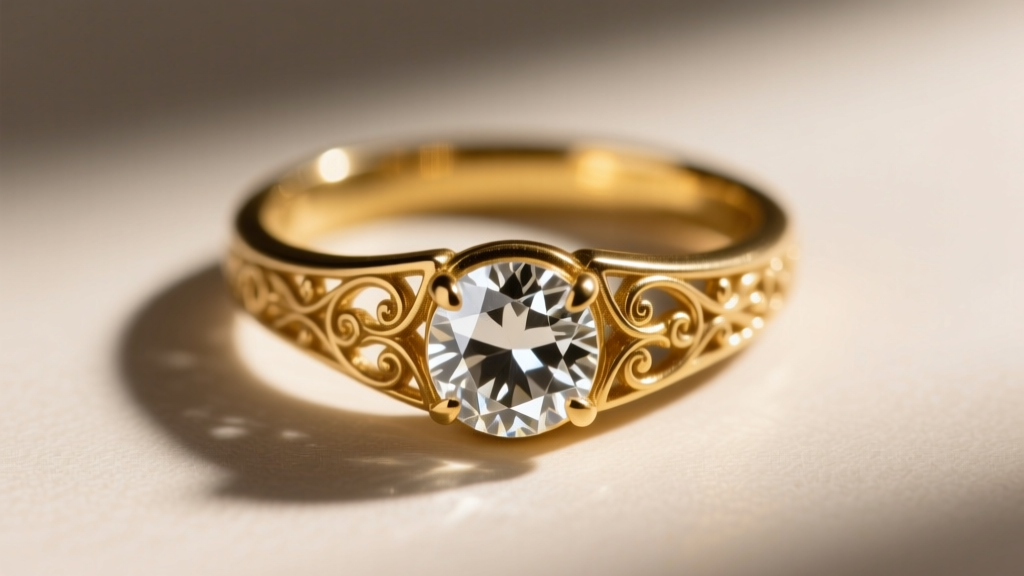
The old mine cut was the dominant diamond shape of the Victorian era. These stones were cut by hand to follow the natural octahedral shape of the rough diamond. They feature a high crown, a small table, and a deep pavilion. Crucially, they possess an open culet—the bottom point of the diamond is polished flat rather than coming to a sharp point. When looking down through the table of an authentic old mine cut, you will see a distinct dark circle or 'hole' in the center, often referred to as a nail head. Modern brilliant cuts have pointed culets and will not show this feature.
Foil-Backed and Closed-Back Settings
Before the advent of modern electric lighting, jewelers used thin sheets of metallic foil behind gemstones (especially garnets, topaz, and amethysts) to reflect light and enhance color. Because moisture destroys the foil, these stones were set in closed-back settings, sealing the stone entirely within the metal. If you are examining a purported early-Victorian foil-backed ring and the setting is open at the back, the stone has likely been replaced, or the piece is a modern reproduction attempting to mimic the look without understanding the functional necessity of the closed back.
Construction Anomalies: Spotting the Fakes
Reproduction techniques leave distinct physical evidence that differs from 19th-century hand-fabrication. Use a 10x jeweler's loupe to inspect the following areas:
- Casting Porosity: Most Victorian jewelry was hand-fabricated from sheet metal and wire, or cast using early cuttlebone molds which left specific textures. Modern reproductions are often centrifugally cast, which can leave tiny, spherical air bubbles (porosity) hidden in crevices or under the gallery. While early casting wasn't flawless, modern microscopic pitting is a telltale sign of a contemporary copy.
- Soldering Marks: Inspect the joints where the bezel meets the shank, or where the pin stem meets the hinge. Victorian jewelers used lead-based or early silver solders that often leave a slightly raised, uneven, or darker seam. Modern laser soldering is virtually invisible, while modern torch soldering often leaves a perfectly smooth, overly bright 'flash' of solder that looks out of place on an antique item.
- Engraving vs. Stamping: Authentic Victorian floral motifs and scrollwork were hand-engraved using a graver tool, which pushes the metal aside, leaving crisp, deep, and slightly varied channels. Reproductions often use CNC milling or stamping, resulting in shallow, perfectly uniform, and rounded grooves with a 'mushy' appearance under magnification.
Provenance and Valuation Framework
When evaluating a piece for purchase, condition and originality supersede almost all other factors. A battered but entirely original 1860s mourning brooch with its original hairwork, glass bezel, and C-clasp is vastly more valuable to a serious collector than a pristine 1880s brooch that has been retrofitted with a modern safety catch and rhodium-plated to look 'new'.
According to the Victoria and Albert Museum's jewelry archives, the historical integrity of a piece is intrinsically tied to its material honesty. Buyers should always request a loupe inspection in natural light. Bring a strong neodymium magnet—while it won't test gold or silver, it will instantly reveal if the internal armature of a 'solid gold' brooch contains a steel tension spring, a material not utilized in Victorian jewelry construction.
Ultimately, buying authentic Victorian jewelry requires a shift in mindset. You are not just buying a beautiful object; you are acquiring a piece of industrial and social history. By mastering the mechanics of clasps, the nuances of 19th-century metallurgy, and the distinct hand-cut signatures of period gemstones, you can navigate the estate and auction markets with confidence, ensuring your collection remains historically pure and financially sound.


