Valuing Vintage Flower Jewelry: A Pricing & Authentication Guide
Discover how to accurately assess and price vintage flower jewelry. Learn authentication markers, material grades, and market value tiers for floral motifs.

The market for vintage flower jewelry has experienced a massive resurgence as collectors and everyday wearers alike seek out botanical motifs that carry historical weight and artisanal craftsmanship. However, the pricing gap between a genuine Edwardian platinum daisy ring and a 1980s reproduction can be staggering. Understanding the true value of floral antiques requires a deep dive into era-specific construction techniques, material grades, and condition assessments. As we navigate the 2026 estate jewelry market, this guide provides a comprehensive framework for evaluating, authenticating, and budgeting for vintage botanical pieces.
The Hierarchy of Floral Motifs: Era-by-Era Value Breakdown
Not all floral jewelry is created equal. The historical era in which a piece was fabricated heavily dictates its baseline market value, driven by the complexity of the metalwork and the rarity of the gemstone cuts used.
Victorian Era (1837–1901): Sentimental and Symbolic
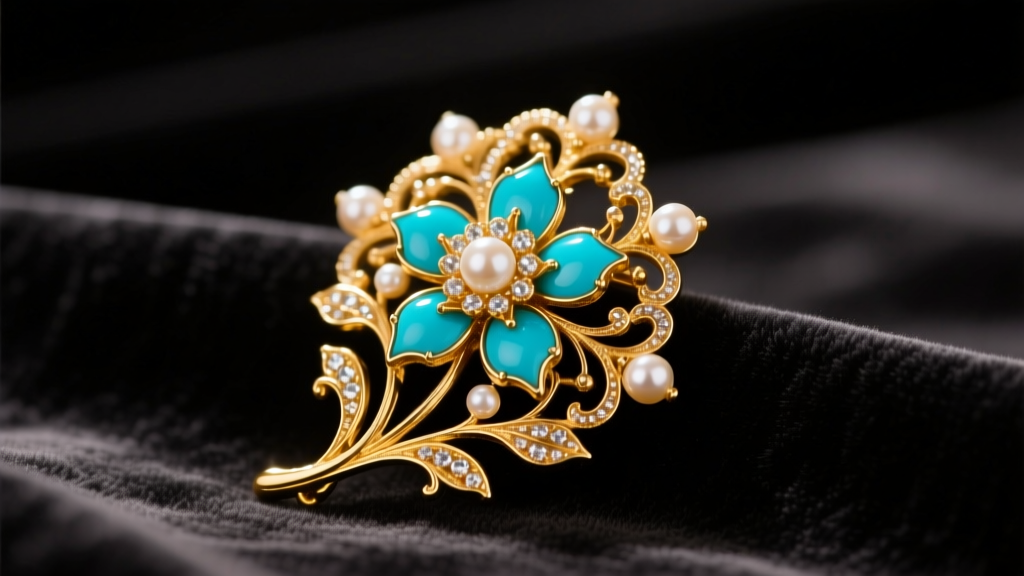
Victorian flower jewelry was deeply rooted in the 'Language of Flowers' (floriography). You will frequently encounter giardinetti (little garden) rings and brooches featuring 1-2mm seed pearls, which symbolized tears or purity, alongside turquoise cabochons representing forget-me-nots. Because these pieces were often hand-engraved in 15k or 18k yellow gold, their value lies in the intricacy of the micro-carving. Budget for authentic Victorian floral brooches typically ranges from $350 to $1,200, while intricate giardinetti rings can command $1,500 to $3,500 depending on the enamel work.
Edwardian Era (1901–1915): Ethereal and Platinum-Heavy
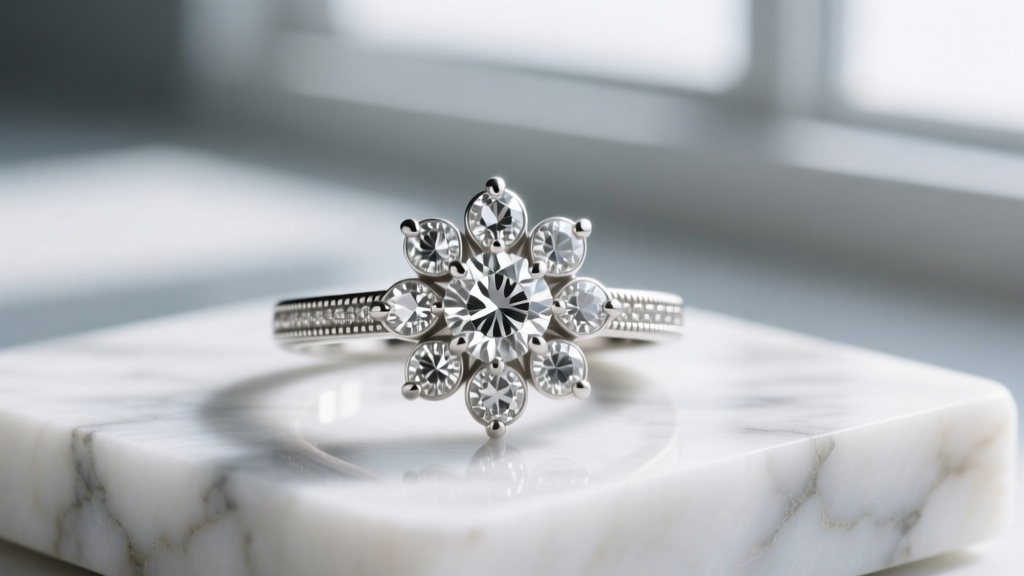
The introduction of the oxyacetylene torch allowed jewelers to work with platinum, resulting in the delicate, lace-like floral motifs characteristic of the Edwardian period. Daisy and garland motifs featuring pierced openwork and millegrain edging are highly prized. Because platinum 950 was used almost exclusively for high-end pieces, Edwardian floral pendants and rings sit at the top of the market, often starting at $2,500 and easily exceeding $10,000 for pieces featuring high-clarity old European cut diamonds.
Retro and Mid-Century (1935–1960): Bold and Three-Dimensional
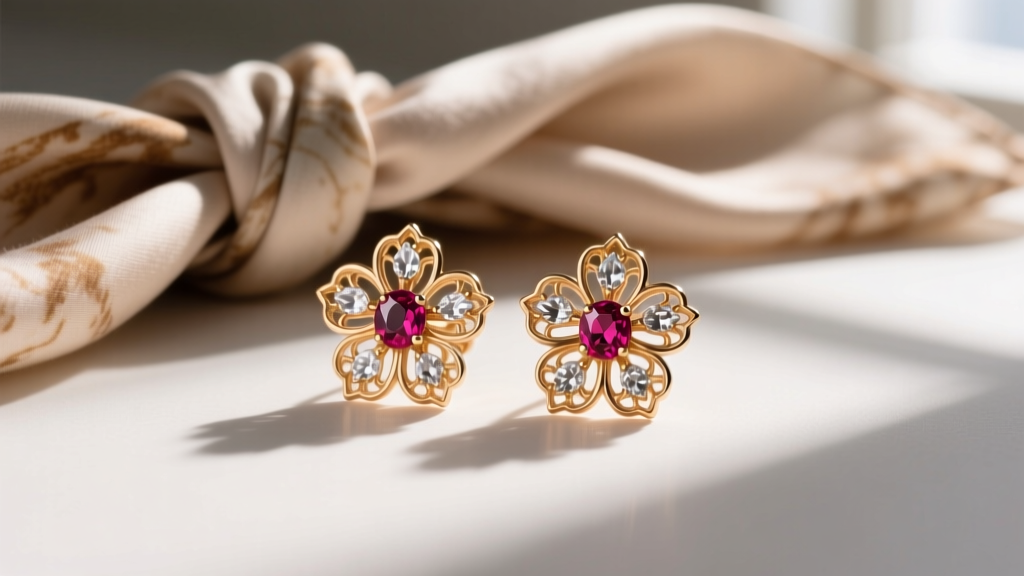
World War II metal rationing led to the use of lower-karat gold alloys, particularly 14k rose and yellow gold. Retro floral jewelry is characterized by voluminous, three-dimensional petals and leaves, often accented with calibre-cut rubies or sapphires. These pieces are highly wearable and slightly more accessible, with premium clip-on earrings and cocktail rings averaging between $800 and $2,800.
Material Grades and Their Impact on Market Pricing
When assessing vintage flower jewelry, the raw materials provide the floor for the piece's valuation. Below is a breakdown of what to expect when evaluating metal purity and gemstone quality in floral antiques.
| Era | Primary Metal Grade | Typical Gemstone Cuts | 2026 Market Value Range |
|---|---|---|---|
| Victorian | 15k / 18k Yellow Gold, Silver-topped Gold | Rose-cut diamonds, Seed pearls, Cabochons | $300 – $2,500 |
| Edwardian | Platinum 950, 18k White Gold (post-1920) | Old European / Old Mine cut diamonds | $2,500 – $12,000+ |
| Art Deco | Platinum, 18k White Gold | Calibre-cut accents, Baguettes, Onyx | $1,800 – $8,000 |
| Retro / Mid-Century | 14k / 18k Rose & Yellow Gold | Synthetic rubies, Citrine, Aquamarine | $600 – $3,500 |
For a deeper understanding of how historical gemstone cuts affect valuation, the Gemological Institute of America (GIA) offers extensive archives on identifying old mine versus modern brilliant cuts, a critical skill when verifying Edwardian floral centers.
Authentication Markers: Spotting Reproductions vs. Genuine Antique Florals
The secondary market is flooded with modern cast reproductions masquerading as antique botanical pieces. To protect your budget, you must look past the floral design and examine the structural engineering of the jewelry.
- Casting Porosity vs. Hand Fabrication: Genuine Edwardian and Victorian floral pieces were largely hand-fabricated or die-struck. If you examine the back of a floral brooch with a 10x loupe and see tiny pits or 'porosity' in the metal, it is a modern lost-wax cast reproduction. Hand-finished antique metal will show microscopic file marks or soldering seams, not bubbles.
- Clasp Mechanisms: A Victorian floral brooch should feature a simple 'C-clasp' without a rolling safety catch, and the pin stem should extend slightly past the edge of the brooch. If you see a modern locking safety catch on a piece claimed to be from the 1890s, it is either a reproduction or has been heavily altered, which diminishes its collector value by 20-30%.
- Hallmark Verification: French antique florals will often bear the eagle's head (18k gold) or dog's head (platinum) hallmark on the side of the ring shank or brooch bail. The Victoria and Albert Museum's jewelry archives provide excellent visual guides for verifying these microscopic European stamps, which are frequently faked using modern laser engraving that lacks the depth and wear of a genuine 19th-century punch.
Condition and Flaw Assessment: What Devalues a Floral Piece?
Botanical jewelry features delicate extremities—petals, stems, and leaves—that are highly susceptible to damage. When negotiating a price, use these common flaws to your advantage.
Enamel Loss and Chipping
Victorian and Art Deco floral pieces frequently utilize guilloché or champlevé enamel to add color to petals. Enamel is essentially glass fused to metal; it chips easily upon impact. A floral brooch with missing enamel on a primary petal should be discounted by at least 35% to 50% from its mint-condition book value. Restoration by a master enameler is rare and can cost upwards of $400 per square centimeter.
Seed Pearl Loss and Prong Wear
Seed pearls (under 2mm) are typically half-drilled and mounted on tiny wire pins using natural resin. Over a century, this resin dries out, leading to pearl loss. When inspecting vintage floral jewelry, gently tap the piece; if you hear a rattle, a pearl or stone is loose in the mounting. Furthermore, check the prongs holding old European cut diamonds in Edwardian daisy rings. Re-tipping worn platinum prongs typically costs $75 to $125 per stone, a cost that should be deducted from your final offer.
Smart Buying Strategies for Budget-Conscious Collectors
If you want to build a high-quality collection of vintage flower jewelry without exhausting your capital, strategic buying is essential. Here are three actionable frameworks for securing value in the current market:
- Target 'Unsigned' Mid-Century Gold: While signed pieces by houses like Cartier, Boucheron, or Tiffany & Co. carry massive premiums, the 1940s and 1950s saw incredible unsigned 14k and 18k gold floral work from regional jewelers. You can often acquire a heavy, 15-gram Retro gold rose brooch for $900–$1,200, whereas a signed equivalent would exceed $4,000.
- Embrace the 'Tarnish' Discount: Many sellers aggressively polish antique silver and gold floral pieces, stripping away the century-old patina that collectors desire. Look for estate listings with heavy, unpolished tarnish in the crevices of the floral relief. You can negotiate a 15% discount for 'cleaning required,' and then carefully clean it yourself using a mild soap and a soft baby toothbrush, preserving the dark oxidation in the engraved lines that highlights the botanical details.
- Buy Damaged Mourning Florals for Parts: Victorian black enamel and seed pearl floral mourning bands often suffer from severe enamel cracking. Buying these at a 70% discount allows you to harvest the genuine 1.5mm antique seed pearls and old-cut rose diamonds for use in custom bespoke jewelry projects, effectively giving you authentic antique materials at below-wholesale melt-and-scrap prices.
Ultimately, valuing vintage flower jewelry is an exercise in historical forensics. By looking past the romanticism of the floral motif and rigorously testing the metalwork, gemstone cuts, and structural integrity, you can confidently navigate the antique market and acquire genuine botanical treasures that hold both emotional and financial value.


