Vintage Jewelry Art: 2026 Market Trends & Styling
Explore the 2026 vintage jewelry art market. Discover trend analysis, pricing data for Art Deco and Surrealist pieces, and expert styling frameworks.

The Intersection of Fine Art and Antique Adornment
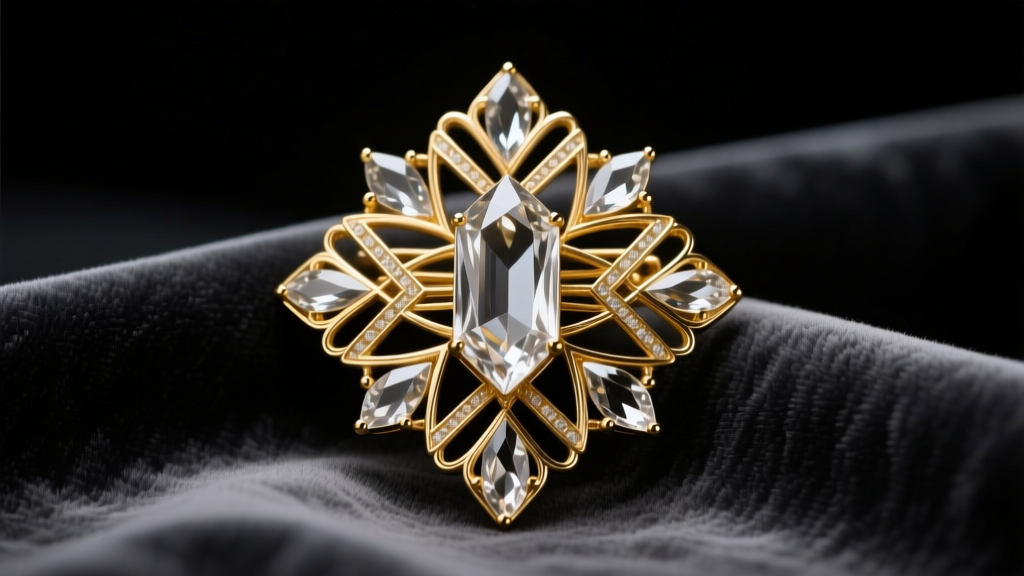
In the contemporary collector's market, the distinction between fine art and wearable adornment has completely dissolved. As we navigate the 2026 landscape, vintage jewelry art is no longer evaluated solely on its gemological carat weight or precious metal melt value. Instead, institutional collectors and high-net-worth stylists are treating mid-century and early 20th-century pieces as sculptural masterworks. This paradigm shift has heavily favored pieces from the Surrealist Retro period (1935-1950) and the late Art Deco movement, where unconventional materials like rock crystal, carved jadeite, and heavy gold alloys were manipulated into avant-garde forms.
According to recent auction data from Sotheby's Jewels Department, the premium placed on "named" artistic provenance over intrinsic material value has widened significantly. A sculptural gold collar by Suzanne Belperron will routinely command 10 to 15 times its raw gold value, reflecting a market that prioritizes artistic genius and historical narrative above all else.
2026 Market Data: Investment Tiers for Wearable Art
Understanding the current valuation matrix is critical for both investors and serious collectors. The table below breaks down the primary art-driven jewelry movements dominating the 2026 secondary market, detailing their material signatures and current auction realizations.
| Art Movement | Primary Materials & Techniques | Avg. Gram Weight (Statement Pieces) | 2026 Auction Range (Mint Condition) | Key Market Drivers |
|---|---|---|---|---|
| Surrealist Retro (1935-1950) | 18k Yellow/Rose Gold, Rock Crystal, Enamel, Repoussé | 45g - 120g | $35,000 - $180,000+ | Sculptural forms, named designers (Belperron, Boivin) |
| Art Deco (1920-1935) | Platinum, Carved Jadeite, Onyx, Coral, Millegrain | 25g - 60g | $15,000 - $95,000 | Geometric precision, high-contrast color blocking |
| Art Nouveau (1895-1915) | Plique-à-jour Enamel, Horn, Opal, Guilloché | 15g - 40g | $20,000 - $120,000 | Organic motifs, fragility, Lalique/Mucha influence |
Movement Spotlight: The Surrealist Retro Surge
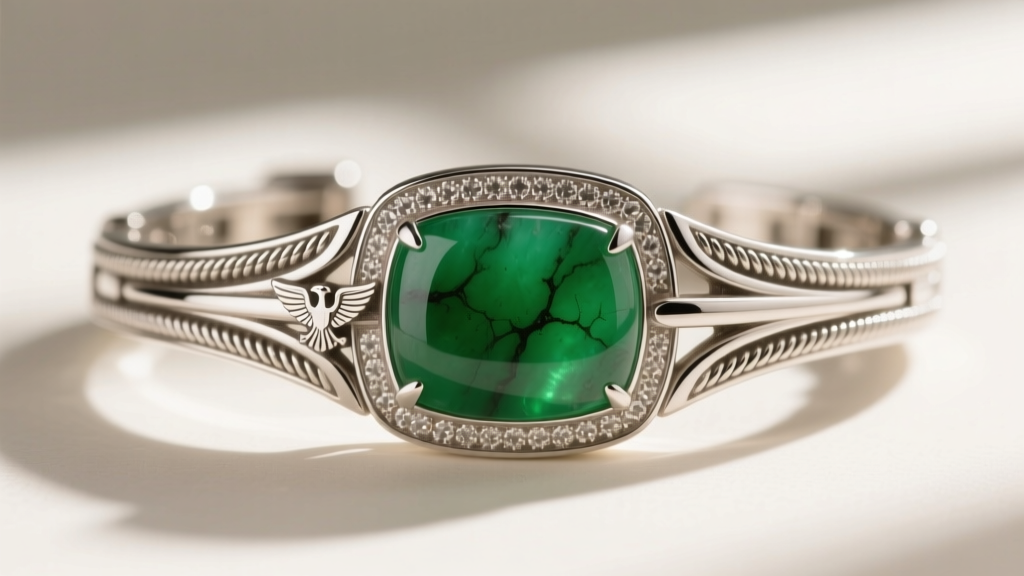
The most aggressive capital inflow in the 2026 vintage jewelry art sector is directed toward the French Retro period. Driven by the platinum shortages of World War II, Parisian jewelers were forced to innovate with gold and semi-precious stones. The result was a bold, three-dimensional aesthetic that mirrored the Surrealist art movement happening concurrently in galleries.
Authentication Markers for Sculptural Gold
With the surge in demand for Retro gold pieces, the market has seen an influx of high-quality 1970s reproductions and modern cast replicas. Authenticating true 1940s vintage jewelry art requires moving beyond basic visual inspection and employing metallurgical and structural analysis.
- XRF Alloy Ratios: French 18k gold from the 1940s often exhibits a specific copper-to-silver ratio (frequently 75% gold, 15% copper, 10% silver) that yields a distinct warm, rose-tinged hue. Modern 18k yellow gold typically uses a 75/12.5/12.5 split. X-ray fluorescence (XRF) testing can reveal these historical alloy fingerprints.
- Casting vs. Fabrication: True Retro pieces were rarely cast in their entirety. They were fabricated from rolled gold sheet, hammered, and soldered. Look for microscopic solder seams and slight asymmetries that indicate hand-fabrication rather than the perfectly uniform surfaces of modern lost-wax casting.
- The Poinçon de Maître: French pieces must bear the maker's mark inside a lozenge (diamond shape). According to the Victoria and Albert Museum's Jewellery Collection archives, the wear pattern on this hallmark should be consistent with the age of the piece; a pristine, sharp hallmark on a supposedly 80-year-old heavily worn bracelet is an immediate red flag.
Styling Framework: Integrating Art Pieces into Modern Wardrobes
Styling heavy, sculptural vintage jewelry art requires a deliberate approach to proportion and textile interaction. The goal is to allow the piece to function as a standalone gallery exhibit on the body, rather than competing with busy patterns or conflicting accessories.
"When styling a 60-gram Retro gold collar or a massive Art Deco jadeite brooch, the textile must act as a matte canvas. High-sheen fabrics like silk satin create visual friction with polished gold. Instead, opt for heavy silk crepe, matte wool gabardine, or raw linen to absorb ambient light and force the eye directly to the jewelry's sculptural topography."
The Rule of Asymmetrical Balance
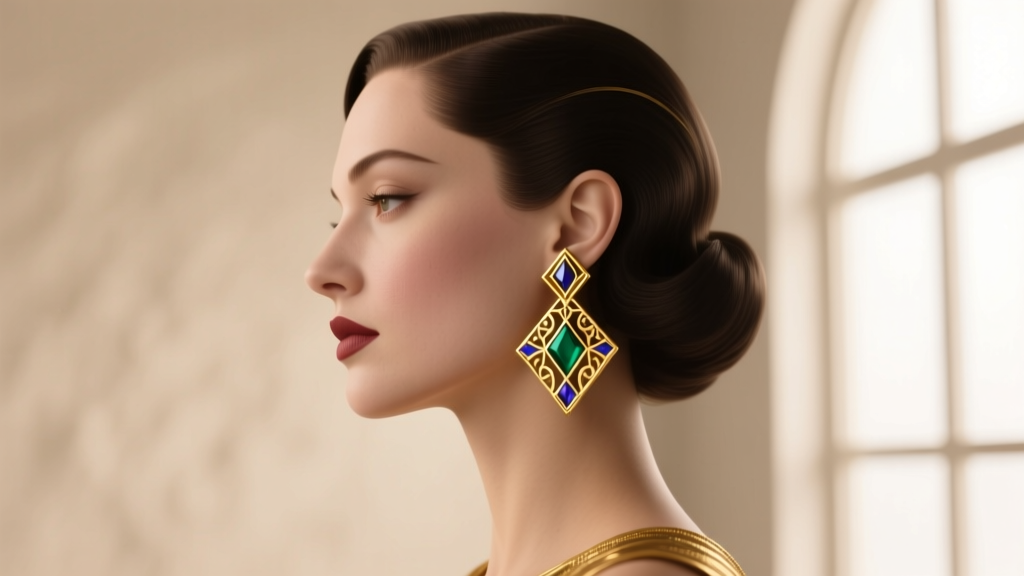
The modern 2026 styling framework rejects the traditional "matched set" approach. Wearing a pair of heavy 1930s Art Deco ear clips can overwhelm the facial structure and feel costumey. Instead, elite stylists employ the Rule of Asymmetrical Balance:
- The Single Statement: Wear a single, oversized Art Deco ear clip or a bold Retro gold dress clip on one side of the collar or lapel.
- The Counterweight: Balance the visual weight on the opposite side not with another piece of jewelry, but with structural tailoring—an architectural shoulder, a deep asymmetrical neckline, or a sharp lapel fold.
- Negative Space: Ensure at least four inches of bare skin or unadorned fabric surrounds the piece to preserve its artistic integrity.
Material Deep Dive: Testing Bakelite and Early Plastics
While gold and platinum dominate the high-end auction blocks, the intersection of Art Deco design and early synthetic materials remains a vital subset of vintage jewelry art. Bakelite, the first synthetic plastic, was heavily utilized in the 1930s for its ability to be carved into bold, geometric shapes and dyed in vibrant "end-of-day" colors.
Authenticating carved Bakelite requires chemical testing, as visual identification is notoriously unreliable against modern cast resins. The industry standard is the Simichrome Polish test. Applying a small amount of Simichrome metal polish to a cotton swab and rubbing it on an inconspicuous area of the plastic will yield a bright yellow stain on true Bakelite. Conversely, celluloid (another early plastic) will not react to Simichrome but can be identified by its distinct camphor scent when gently warmed with friction. The Gemological Institute of America (GIA) frequently publishes updated guidelines on identifying these early polymers, emphasizing that hot-pin testing is destructive and should be avoided by serious collectors.
Final Verdict on the 2026 Collector's Market
The 2026 market for vintage jewelry art is characterized by a ruthless flight to quality and provenance. Mid-tier, mass-produced antique pieces are experiencing price stagnation, while true sculptural masterworks from the Art Deco and Retro Surrealist periods continue to appreciate at double-digit annual rates. For the modern collector, the mandate is clear: prioritize artistic merit, structural integrity, and historical authenticity over mere carat weight. By understanding the metallurgical nuances and embracing modern, asymmetrical styling frameworks, collectors can fully realize the dual value of these pieces as both robust financial assets and profound works of wearable art.


