Victorian Hair Jewelry Mourning: Material Properties & ID Guide
Explore the material properties of Victorian hair jewelry mourning pieces. Learn to identify human hair, jet, gutta-percha, and vulcanite.

The Anatomy of Grief: Why Materials Mattered
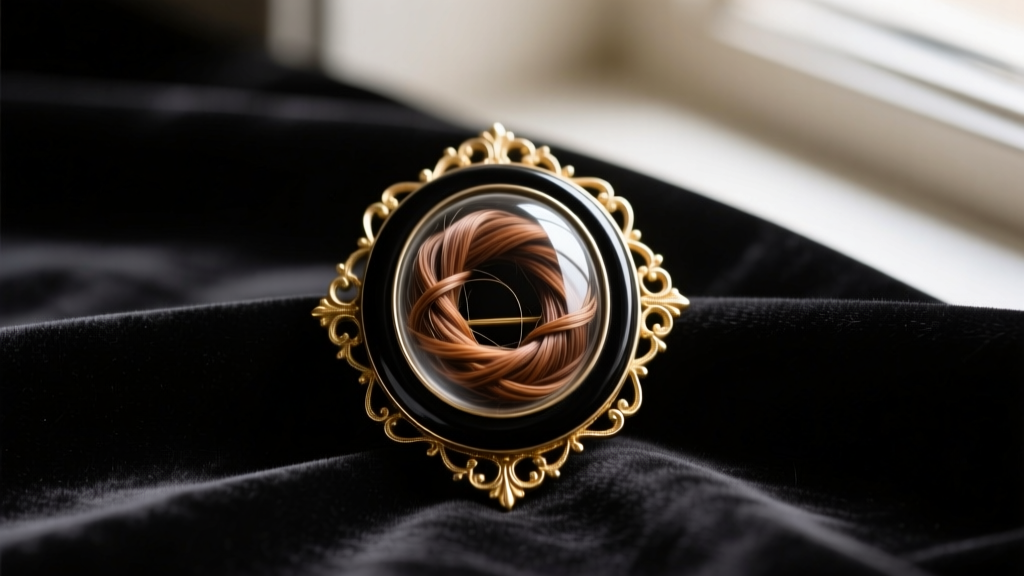
The Victorian era (1837–1901) institutionalized grief, transforming mourning into a highly codified social performance. Following the death of Prince Albert in 1861, Queen Victoria’s prolonged mourning set a cultural standard that permeated all levels of society. Within this framework, Victorian hair jewelry mourning pieces served as deeply intimate mementos, bridging the physical and spiritual worlds. However, the strict etiquette of the era dictated that the materials used in these pieces must correspond to the specific stages of mourning: first mourning (deep, matte black), second mourning (subtle lusters and dark garnets), and half-mourning (amethysts, pearls, and lighter tones).
For modern collectors and appraisers in 2026, understanding the exact chemical and physical properties of these materials is not merely an academic exercise; it is essential for accurate valuation, authentication, and conservation. According to the Victoria and Albert Museum, the rapid industrialization of the 19th century introduced a flood of new synthetic and semi-synthetic materials designed to mimic expensive natural gems, making material identification a critical skill for any serious antiquarian.
Human Hair: The Core Medium of Remembrance
At the heart of Victorian hair jewelry mourning traditions was the use of human hair. Unlike floral tributes that withered, hair was viewed as an immortal substance. From a materials science perspective, human hair is primarily composed of keratin, a fibrous structural protein rich in cysteine, which forms strong disulfide bonds. This chemical structure gives hair its remarkable tensile strength and resistance to biological decay.
Preparation and Weaving Techniques
Before being woven, the hair was boiled in an alkaline solution to strip natural oils and ensure uniformity. Artisans utilized two primary techniques:
- Table Work: Using a specialized braiding table with a central hole and weighted bobbins, artisans created complex, multi-strand tubular chains and watch fobs. The tension was maintained by lead or glass weights.
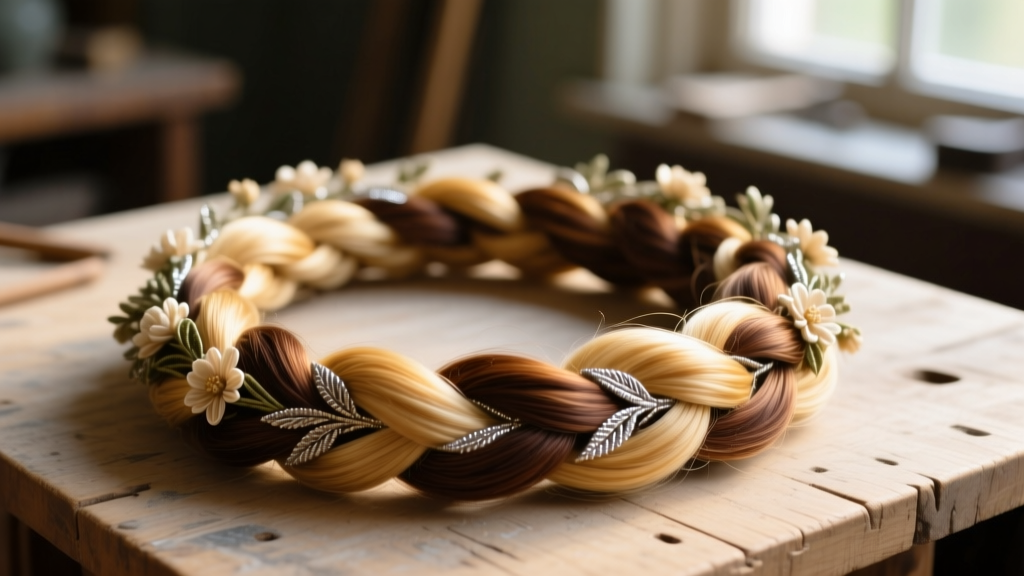
- Palette Work: Executed on a flat surface, this technique involved arranging hair into intricate two-dimensional motifs, such as weeping willows, urns, or floral wreaths, often secured with gum arabic or hide glue before being sealed under a glass bezel.
Degradation and Conservation
While keratin is resilient, it is highly susceptible to environmental stressors. High humidity can cause the hair shaft to swell and warp, while prolonged exposure to UV radiation breaks down the disulfide bonds, leading to embrittlement and color fading. Furthermore, the adhesives used in the 19th century, such as animal glues, are hygroscopic and can attract pests or foster mold if stored in environments with relative humidity above 60%.
The Black Gemstones & Substitutes: A Comparative Analysis
During 'first mourning,' only non-reflective, matte black materials were permitted. While genuine Whitby jet was the gold standard, its high cost and limited supply spurred the development of numerous alternatives. Distinguishing between these materials requires an understanding of their specific gravity (SG), Mohs hardness, and thermal conductivity.
| Material | Mohs Hardness | Specific Gravity | Key Identifier & Properties |
|---|---|---|---|
| Whitby Jet | 2.5 - 4.0 | 1.30 - 1.40 | Fossilized wood; leaves a brown streak on unglazed porcelain; warm to the touch. |
| French Jet | 5.5 - 6.0 | 2.40 - 2.60 | Black glass; cold to the touch; highly reflective when faceted; no streak. |
| Gutta-Percha | 2.0 - 3.0 | 0.95 - 1.00 | Natural latex; molded seams visible; smells like burning rubber under hot water. |
| Vulcanite | 2.0 - 3.0 | 1.10 - 1.20 | Hardened rubber; originally black but oxidizes to a distinct brown/green over time. |
| Bog Oak | 2.0 - 3.0 | 1.00 - 1.30 | Fossilized wood; visible grain under 10x loupe; lightweight; matte finish. |
Deep Dive: Jet vs. Its Imitators
Genuine Whitby jet is a type of lignite coal derived from the fossilized wood of the Araucaria tree. Its low specific gravity makes it exceptionally light, allowing for the creation of massive, heavy-looking parures (matching jewelry sets) that remained comfortable to wear. When rubbed against wool, jet develops an electrostatic charge and will attract small pieces of paper—a property not shared by glass or vulcanite.
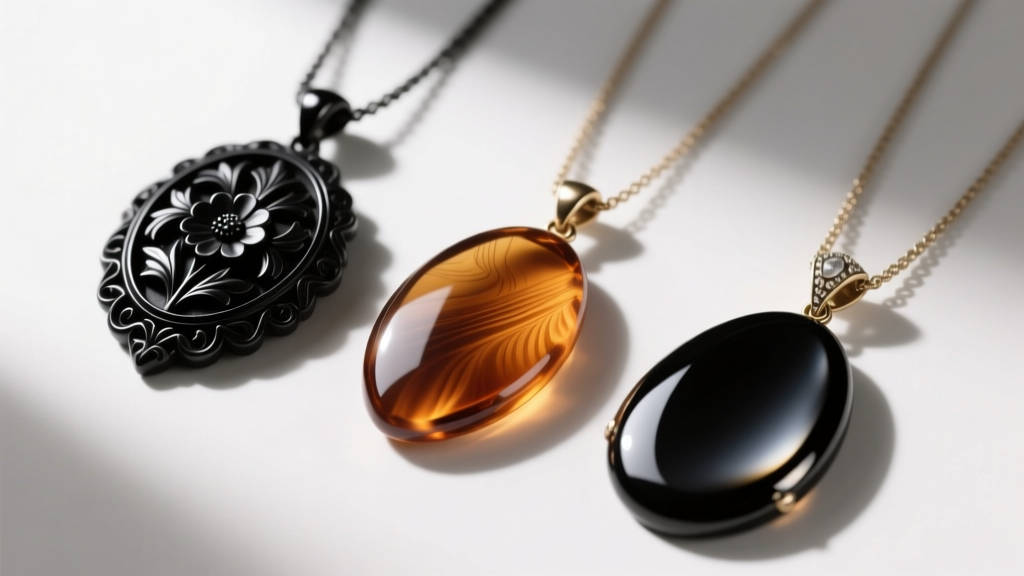
Gutta-percha, derived from the sap of the Palaquium tree, was the first thermoplastic used in jewelry. Because it was molded rather than carved, close inspection with a jeweler's loupe will often reveal faint mold lines or seam marks along the edges of the piece. Vulcanite, invented by Charles Goodyear, was created by vulcanizing India rubber with sulfur. A critical diagnostic feature of aged vulcanite is its color shift; while jet remains eternally black, vulcanite undergoes photo-oxidation, turning a rusty brown or olive green where exposed to light over the last century and a half.
Metalwork & Alloys in Mourning Jewelry
The metal settings of Victorian hair jewelry mourning pieces also adhered to strict aesthetic and economic realities. While high-karat gold was used for the wealthy, the rising middle class relied on innovative alloys.
- Pinchbeck: An alloy of approximately 89% copper and 11% zinc, invented by Christopher Pinchbeck. It closely mimics the color and luster of 18k gold but is much harder and more durable. Over time, Pinchbeck develops a distinct, dark patina that differs from the tarnish of standard brass.
- Rolled Gold & Gold Filled: A layer of gold mechanically bonded to a base metal (usually brass or copper) through heat and pressure. Victorian rolled gold is significantly thicker than modern gold plating, often surviving over 150 years of wear without wearing through to the base metal.
- Black Enamel: Created by fusing powdered glass (frit) mixed with cobalt or manganese oxides to a metal surface at high temperatures. In mourning rings, black enamel was frequently used to frame the hair compartment or to inscribe the dedicator's name and date of death in stark, legible contrast.
Preservation Protocols for the Modern Collector
As we navigate the antiquities market in 2026, the preservation of these fragile artifacts requires a departure from outdated 20th-century methods. Storing Victorian hair jewelry in PVC plastics or standard cardboard boxes can lead to catastrophic off-gassing and acid burns.
Actionable Storage Framework
- Micro-Environments: Store hairwork brooches and lockets in acid-free, lignin-free archival tissue paper, placed inside polyethylene or polypropylene zip bags. Avoid PVC at all costs, as plasticizers will migrate and degrade the hair and adhesives.
- Humidity Control: Maintain a stable relative humidity (RH) of 45-55%. Use conditioned silica gel packets in storage boxes, but ensure they do not physically touch the jewelry to prevent localized desiccation.
- UV Mitigation: Display pieces in UV-filtering vitrines or drawers. Prolonged exposure to even ambient indoor lighting will bleach the melanin in the human hair and accelerate the vulcanization breakdown of rubber-based materials.
Authentication Framework: Spotting Fakes & Reproductions
The surge in demand for mourning jewelry has inevitably led to modern reproductions. According to the historical archives at The Metropolitan Museum of Art, understanding the manufacturing limitations of the 19th century is your best defense against fakes.
Authentic Victorian hairwork exhibits microscopic fraying and slight irregularities in the weave pattern. Modern laser-cut or machine-woven synthetic hair alternatives will appear unnaturally uniform and lack the organic variations in strand thickness found in genuine human hair.
Furthermore, beware of the 'hot pin test' for identifying jet and gutta-percha. While heating a needle and touching it to the material will yield a distinct smell (burning coal for jet, burning rubber for gutta-percha), this is a destructive test. In modern conservation, we rely on non-destructive methods such as long-wave UV fluorescence (French jet will often fluoresce due to uranium or manganese content in the glass) and X-ray fluorescence (XRF) to determine the exact elemental composition of metal alloys without scratching the surface.
By mastering the material properties of Victorian hair jewelry mourning artifacts, collectors can move beyond superficial aesthetics to appreciate the profound intersection of chemistry, craftsmanship, and human emotion that defines this remarkable era of jewelry design.


