How to Authenticate Vintage Aurora Borealis Jewelry Safely
Learn how to identify, authenticate, and safely clean vintage aurora borealis jewelry with our expert step-by-step guide for mid-century rhinestones.

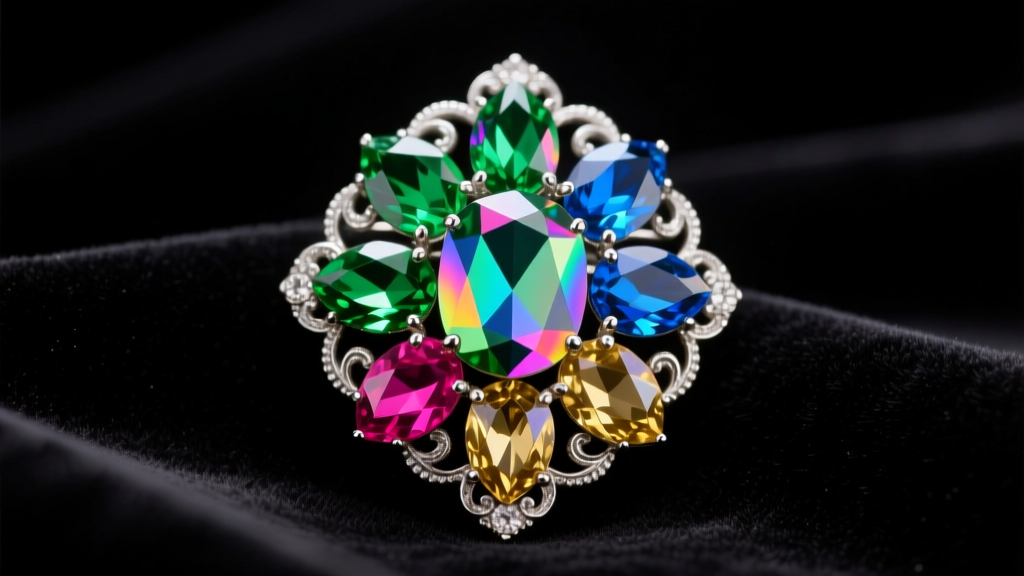
The introduction of the Aurora Borealis (AB) finish in 1955 fundamentally altered the landscape of mid-century costume jewelry. Developed through a collaboration between Manfred Swarovski and Christian Dior, this revolutionary vaporized metallic coating gave glass rhinestones an ethereal, iridescent rainbow flash that mimicked the Northern Lights. As we navigate the vintage market in 2026, the proliferation of high-quality resin replicas and modern acrylic imitations requires collectors to be more vigilant than ever. Authenticating and caring for vintage aurora borealis jewelry demands a precise understanding of mid-century manufacturing techniques, material science, and delicate preservation protocols.
This comprehensive, step-by-step guide will teach you how to confidently identify genuine mid-century AB pieces, evaluate their structural findings, and clean them without destroying the fragile nanometer-thin metallic coating.
The Science and History of the AB Finish
Before diving into authentication, it is crucial to understand what you are actually looking for. The original AB finish was not a paint, a dye, or a surface film. It was achieved through a process called vacuum deposition or physical vapor deposition (PVD). According to the Swarovski historical archives, glass crystals were placed in a vacuum chamber where vaporized metals (typically gold or cobalt) bonded to the surface at a microscopic level, creating a layer often measuring less than 100 nanometers in thickness.
This ultra-thin metallic oxide layer is what creates the signature blue, pink, and green light refractions. Modern reproductions often achieve a similar look using chemical iridescent paints or resin molds, which lack the sharp, glassy brilliance and the specific light-bending properties of genuine vaporized metal on leaded glass.
Step 1: Visual Authentication Under Magnification
The first step in authenticating vintage aurora borealis jewelry is a thorough visual inspection using a 10x jeweler's loupe. Modern mass-produced replicas often exhibit telltale signs of mold lines, surface pitting, or a 'milky' undercoat that vintage glass does not possess.
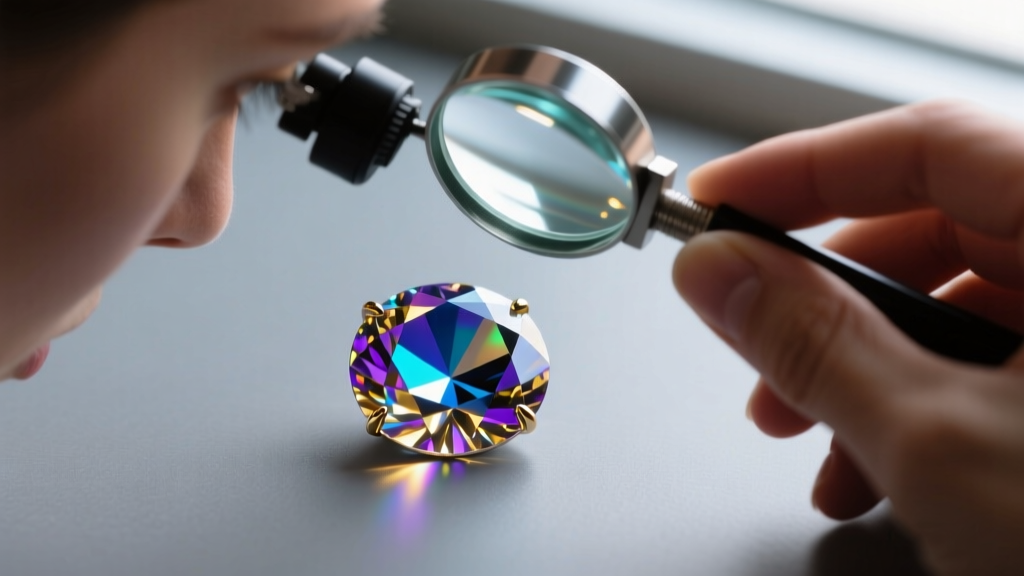
- Examine the Facet Junctions: Genuine mid-century Swarovski or Czech glass stones were machine-cut with razor-sharp facet junctions. Run your eye along the edges where the facets meet; they should be crisp. Molded acrylic replicas will have slightly rounded, softened edges.
- Look for the 'Rainbow Shift': Tilt the stone under a direct, cool-white LED light. A true vintage AB coating will flash distinct bands of pink, blue, and green. Modern iridescent paints often look uniformly 'oily' or shift in muddy yellows and purples rather than sharp, distinct colors.
- Check for Foil Backing: Many vintage AB stones are foil-backed to amplify the refraction. Use your loupe to check the back of the setting. If the foil is tarnished, slightly crinkled, or shows age-appropriate oxidation, it is a strong indicator of a genuine mid-century piece. Modern foils are typically flawless, laser-sealed mylar.
Step 2: Evaluating Mid-Century Settings and Findings
A genuine vintage AB rhinestone is only as authentic as the metalwork holding it. In the 1950s and 1960s, high-end costume jewelers like Weiss, Coro, and Dior used specific base metals and clasps that differ vastly from contemporary manufacturing. The Lang Antiques University notes that the transition from pot metal to rhodium-plated brass and sterling silver is a key dating metric for mid-century costume pieces.
| Feature | True Vintage (1950s-1960s) | Modern Reproduction (Post-2000s) |
|---|---|---|
| Stone Setting | Hand-set prongs, often slightly asymmetrical; mechanical clinching. | Machine-stamped prongs, perfectly uniform; heavy reliance on cyanoacrylate (super glue). |
| Base Metal | Rhodium-plated brass, pot metal, or sterling silver. Heavy, dense feel. | Lightweight zinc alloys, aluminum, or hollow-cast brass. |
| Clasp Types | Trombone clasps, early fold-over safety clasps, barrel clasps. | Lobster claws, modern magnetic clasps, cheap spring rings. |
| Soldering Marks | Visible, slightly messy lead/tin solder joints at the hinge and catch. | Laser-welded or cast-in-place hinges with no visible solder. |
If you encounter a 'vintage' AB brooch featuring a modern lobster claw clasp and perfectly uniform, glue-set stones, you are likely looking at a contemporary reproduction. True vintage pieces will almost always feature prong settings where the metal claws are mechanically folded over the girdle of the glass stone.
Step 3: The 365nm UV Blacklight Test
One of the most effective, non-destructive methods for separating vintage glass rhinestones from modern acrylic or resin fakes is the ultraviolet blacklight test. You must use a 365nm UV flashlight, not the common 395nm versions sold for pet urine detection. The 395nm wavelength emits too much visible purple light, which obscures the fluorescence of the materials.
When you shine a 365nm UV light on genuine vintage leaded glass rhinestones, the glass itself will often exhibit a faint, milky-green or yellowish fluorescence due to the uranium or lead oxide content used in mid-century glassmaking. Conversely, modern acrylic and resin replicas will either absorb the light completely (appearing dead or dark) or fluoresce with a stark, artificial bright white/blue glow due to modern optical brighteners added to the plastic. This test is particularly useful when evaluating unbranded estate pieces where the clasp or findings might have been replaced over the decades.
Step 4: Safe Cleaning Protocols for Vaporized Coatings
The most common way collectors ruin vintage aurora borealis jewelry is through improper cleaning. The AB coating is incredibly fragile. Standard jewelry dips, ultrasonic cleaners, ammonia, and even rubbing alcohol will cause 'spalling'—a process where the metallic oxide layer delaminates, flakes, or dissolves entirely, leaving behind a dull, clear stone.
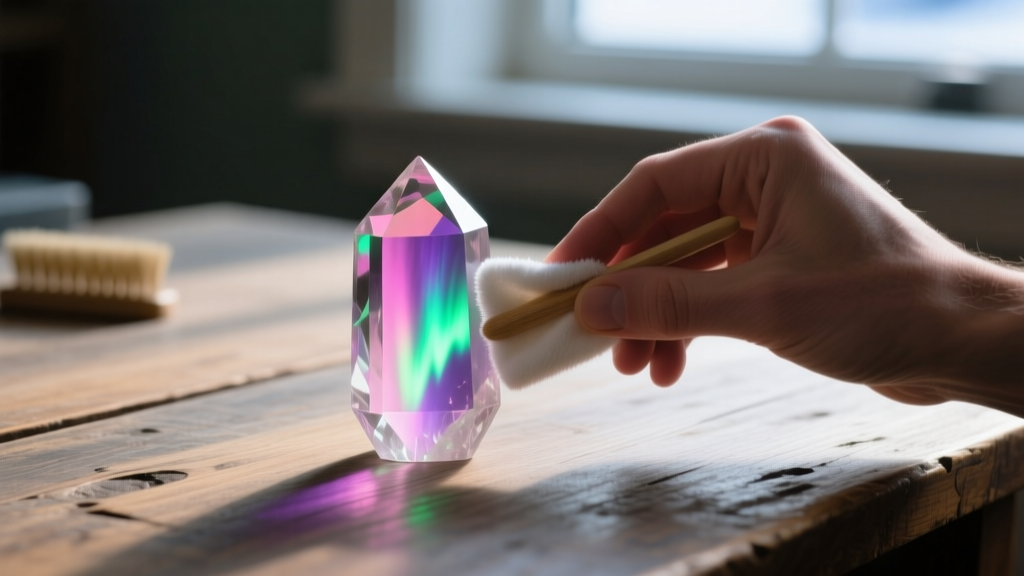
Follow this strict, conservation-grade cleaning protocol to safely remove decades of skin oils, lotion, and dust:
- Prepare a Neutral Solution: Mix distilled water with a single drop of pH-neutral, lotion-free dish soap (such as original Dawn). Do not use tap water, as the minerals can leave micro-scratches when wiped.
- Use the Right Tools: Discard the toothbrush. The bristles, even soft ones, will create micro-abrasions on the 50-nanometer metallic coating. Instead, use lint-free microfiber swabs or a 100% cotton makeup wedge.
- The Dab-and-Roll Technique: Dip the swab into the solution and dab it on a paper towel so it is damp, not wet. Gently roll the swab over the faceted surface of the AB stone. Never scrub back and forth.
- Immediate Drying: Use a dry, clean microfiber cloth to immediately pat the stone dry. Allowing water to air-dry on the surface can cause water spots that permanently etch into the metallic layer over time.
- Polishing the Metalwork: If the rhodium-plated brass settings are tarnished, use a dry jeweler's polishing cloth strictly on the metal. Avoid letting the polishing compound touch the AB stones, as the mild abrasives will strip the finish.
Expert Warning: Never use silver polish, brass dip, or ultrasonic jewelry cleaners on vintage AB pieces. The high-frequency vibrations of an ultrasonic bath will shatter the bond between the glass and the vaporized metal, causing the rainbow finish to peel off in microscopic flakes.
Valuation Tiers for Vintage Aurora Borealis Jewelry
Understanding the market value of authenticated pieces is essential for both collectors and sellers. In the current estate market, pricing is heavily dictated by the designer attribution, the complexity of the setting, and the condition of the AB coating.
- Tier 1: Unbranded / Unsigned Pieces ($25 - $75): High-quality but unsigned mid-century pieces, often featuring excellent Czech or Austrian glass stones set in heavy pot metal or brass. Value relies entirely on condition and design complexity.
- Tier 2: Mid-Tier Designers ($80 - $250): Pieces from prolific costume houses like Weiss, Coro, Kramer, or Art. These often feature intricate floral or geometric designs, fully prong-set stones, and original fold-over clasps.
- Tier 3: High-End Couture ($300 - $2,500+): Attributed pieces from Christian Dior, Eisenberg, or Miriam Haskell. Dior's early 'boutique' pieces featuring the original Swarovski AB stones command massive premiums, especially when accompanied by original hangtags or presentation boxes.
By mastering the use of a 10x loupe, understanding mid-century metallurgy, and employing conservation-safe cleaning methods, you can confidently build, authenticate, and preserve a stunning collection of vintage aurora borealis jewelry that will retain its brilliance for generations to come.


