Beginner Guide to Identifying Rare Antique Costume Jewelry
Learn how to identify rare antique costume jewelry. Discover expert tips on early plastics, rhinestones, makers' marks, and valuation benchmarks.

Introduction to the World of Vintage Adornment
Entering the secondary market for vintage adornments can feel like stepping into a labyrinth of hallmarks, obscure materials, and shifting trends. For the uninitiated, the term 'costume' often implies disposability or low value. However, seasoned collectors know that rare antique costume jewelry represents a fascinating intersection of art history, material science, and haute couture. Unlike fine jewelry, which derives its baseline value from precious metal melt weights and gemstone carat counts, costume pieces are valued on their design provenance, material innovation, and condition.
In this comprehensive 2026 beginner's guide, we will bypass the generic advice and dive straight into the actionable, technical details you need to authenticate, evaluate, and confidently acquire early-to-mid 20th-century masterpieces. Whether you are hunting for Art Deco plastics or Depression-era glass, understanding the physical anatomy of these pieces is your greatest defense against reproductions.
Defining 'Rare' in the Costume Jewelry Market
In the strict antiques trade, an item must be at least 100 years old to be classified as an antique. However, the costume jewelry market operates on a slightly different timeline. Because the golden age of costume design peaked between the 1920s and 1950s, pieces from the Art Nouveau, Art Deco, and early Retro periods are frequently grouped under the 'rare antique' umbrella by collectors and auction houses.
Rarity in this niche is driven by three primary factors:
- Material Obsolescence: Materials that are no longer manufactured due to toxicity or cost, such as early celluloid or specific leaded glass pastes.
- Maker Provenance: Pieces designed by specific artists for high-end fashion houses, such as Elsa Schiaparelli's surrealist collaborations with Jean Clément.
- Survival Rate: Fragile components like early glued-in foil-backed rhinestones often degrade, making pristine, un-oxidized examples exceptionally scarce.
According to the Vintage Fashion Guild, understanding the historical context of the manufacturer is just as critical as examining the physical piece. A brooch is not just a brooch; it is a snapshot of the manufacturing capabilities and aesthetic sensibilities of its specific decade.
The Plastic Revolution: Bakelite, Celluloid, and Lucite
One of the most lucrative and heavily counterfeited sectors of rare antique costume jewelry involves early synthetic plastics. In the 1920s and 30s, designers like Coco Chanel embraced these modern materials, elevating them from industrial novelties to high-fashion statements.
Bakelite vs. Celluloid vs. Lucite
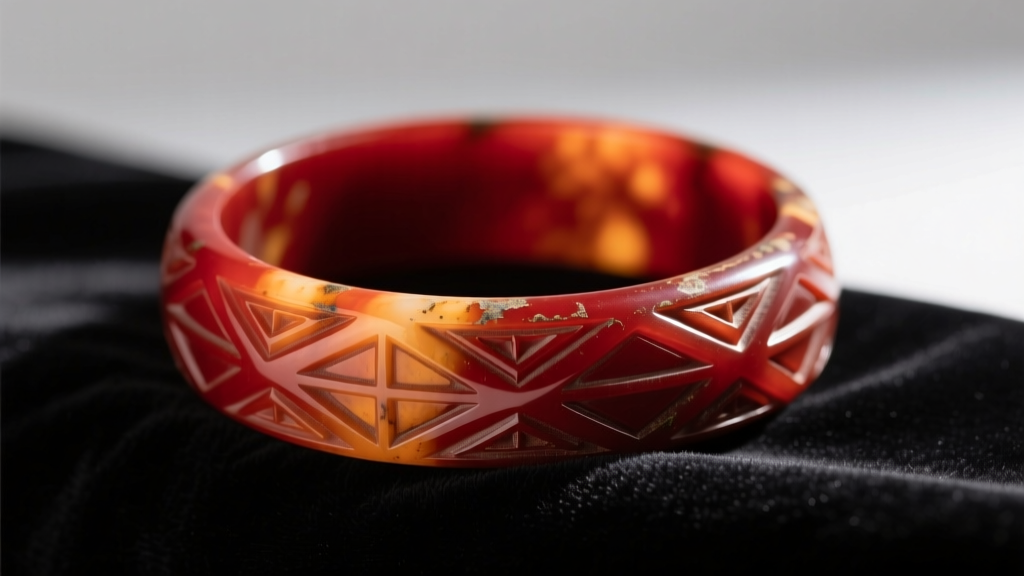
Beginners often use the word 'Bakelite' as a catch-all term for vintage plastic, but this is a critical error. Bakelite (polyoxybenzylmethylenglycolanhydride) is a phenol formaldehyde resin. It is heavy, dense, and was typically carved or molded into thick, chunky bangles and brooches. Celluloid, an earlier plastic derived from cellulose nitrate and camphor, is paper-thin, highly flammable, and often mimics tortoiseshell or ivory. Lucite (polymethyl methacrylate), which gained prominence in the 1940s, is crystal clear and was frequently used to encapsulate glitter, seashells, or metallic confetti.
| Material | Era of Peak Use | Weight & Feel | Diagnostic Test | Visual Clues |
|---|---|---|---|---|
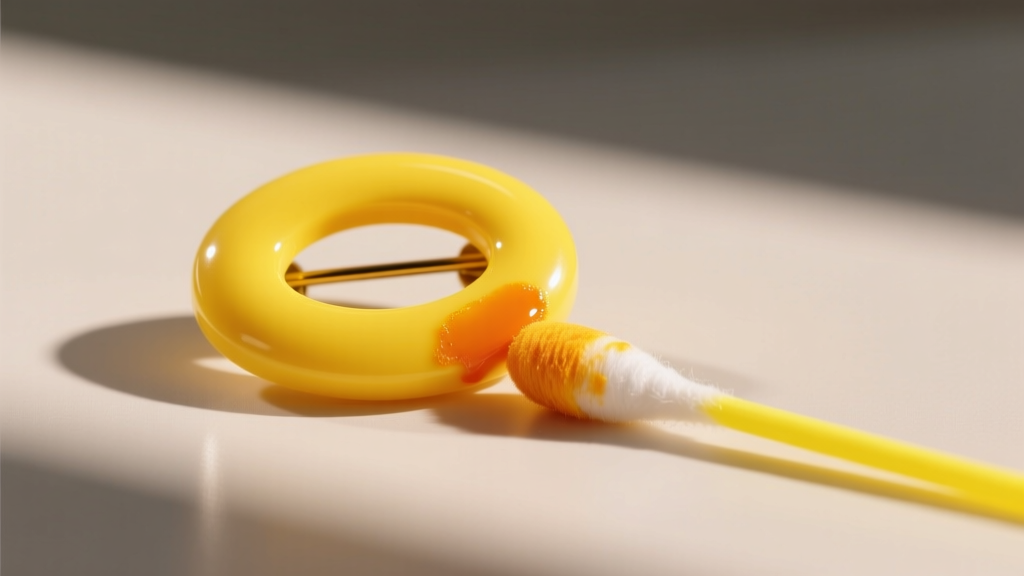
| Bakelite | 1920s - 1940s | Heavy, dense, clunky sound when tapped | Simichrome polish turns Q-tip yellow/orange | Seamless carving, deep patina, no mold lines |
| Celluloid | 1890s - 1920s | Extremely lightweight, thin, brittle | Hot water test releases distinct camphor odor | Mimics natural materials (ivory, horn, tortoise) |
| Lucite/Acrylic | 1940s - 1960s | Medium weight, smooth, glass-like | Hot water test yields no odor; UV light may glow | Embedded objects (confetti), reverse carving |
Expert Warning: Never use the 'hot pin' test to identify plastics. Not only will it permanently damage a valuable antique piece, but testing celluloid with a hot pin can actually cause it to ignite.
Rhinestones and Glass: Spotting the Anachronisms
The most common way forgers and unwitting sellers misdate rare antique costume jewelry is through the misuse of rhinestones. To accurately date a piece, you must understand the timeline of glass coating technologies.
The Aurora Borealis Trap
If you are examining an Art Deco piece (circa 1920-1935) and the rhinestones exhibit a rainbow-like, iridescent oil-slick finish, you are looking at a reproduction or a 'franken-piece'. The Aurora Borealis (AB) finish was co-developed by Swarovski and Christian Dior in 1955. It is physically impossible for an authentic 1920s antique piece to feature original AB stones.
Foiled vs. Unfoiled Glass
Antique paste and glass stones were almost universally 'foiled'—backed with a thin layer of metallic foil (usually silver or copper-colored) to reflect light and mimic the brilliance of diamonds. Over decades, moisture breaches the glue seals, causing the foil to oxidize, turn black, or flake away entirely. A piece featuring dead, gray, or blackened stones is a prime candidate for professional restoration, but collectors should be wary of pieces where the foil looks brand new and pristine on a supposedly 100-year-old setting.
Decoding Makers' Marks and Hardware
While fine jewelry relies on purity hallmarks (like 14K or 925), costume jewelry relies on maker's marks, patents, and specific hardware designs. According to research archived by Antique Trader, hardware evolution is one of the most reliable dating methods available to collectors.
Trifari: From KTF to the Crown
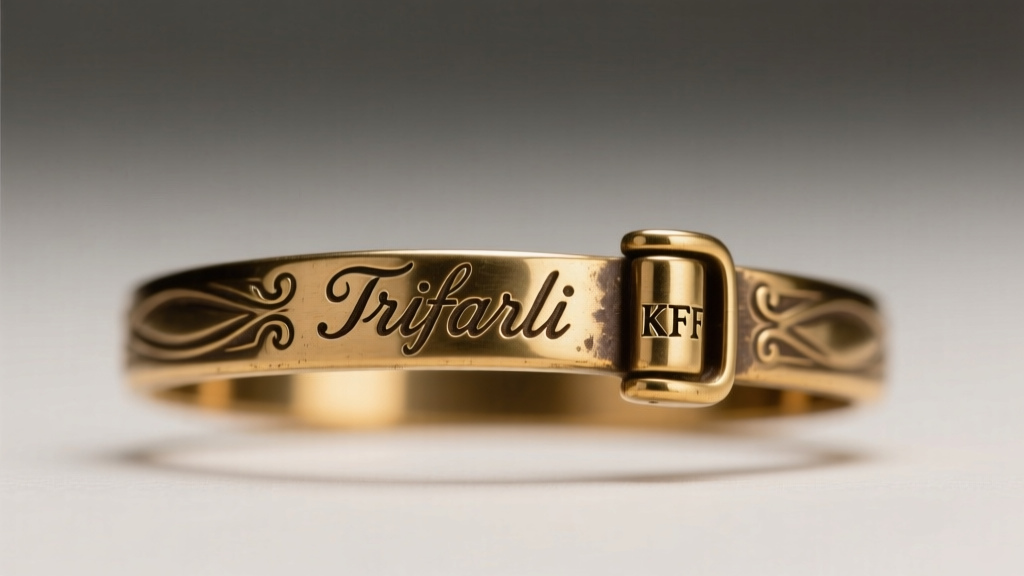
Gustavo Trifari founded his company in the early 20th century. Early, highly sought-after antique pieces (pre-1955) often bear the 'KTF' mark (representing Krussman, Trifari, and Fishel) or a simple, unadorned 'Trifari' stamp. In 1955, the company introduced the 'Crown Trifari' mark. If a seller claims a piece is a rare 1930s antique but it features the Crown logo, it is a mid-century vintage piece, not an antique.
Miriam Haskell and the 'Unmarked' Era
Miriam Haskell's early work (1920s through the late 1940s) is notoriously difficult for beginners because the vast majority of her early pieces were not signed. Authentication relies on identifying her signature 'Russian Gold' plating (a specific copper-gold alloy that ages to a distinct mottled patina) and the use of complex, hand-wired horseshoe clasps and barrel clasps. It wasn't until the late 1940s and 1950s that the familiar oval 'Miriam Haskell' cartouche became standard.
The Threat of 'Franken-Pieces' and Marriages
A 'marriage' or 'franken-piece' occurs when parts from two or more broken, authentic vintage items are combined to create one 'complete' piece. For example, a broken 1930s dress clip might be glued onto a replacement pinback from the 1960s. While the materials are genuinely old, the piece as a whole is historically compromised and holds significantly less value.
'Always examine the reverse of a brooch. The solder joining the pin stem assembly to the body should look uniform in age and oxidation. If the pin mechanism looks bright and shiny while the front of the brooch is heavily tarnished, you are likely looking at a marriage.' — Kovels Antiques & Collecting
Use a 10x jeweler's loupe to inspect the solder joints. Modern solder often has a different color profile and lacks the micro-scratches and patina of 90-year-old metalwork.
Valuation Benchmarks: What Should You Pay?
Pricing in the rare antique costume jewelry market fluctuates based on collector demand, but as of 2026, here are general baseline ranges for authentic, excellent-condition pieces:
- Carved Bakelite Bangle (Standard Colors): $150 - $400
- Carved Bakelite Bangle (Rare Colors like Blue or End-of-Day): $800 - $2,500+
- Early Unmarked Miriam Haskell Necklace (Russian Gold, Faux Pearls): $600 - $1,200
- Art Deco Eisenberg Original Sterling Brooch (Pre-War): $350 - $900
- Schiaparelli Surrealist Novelty Brooch (1930s): $1,500 - $4,000+
Always factor in the cost of professional restoration. Re-foiling rhinestones or restringing a multi-strand faux pearl necklace can easily add $100 to $250 to your total acquisition cost.
Essential Tools for the Beginner Collector
To successfully navigate estate sales, flea markets, and online auctions, build a portable authentication kit. Your kit should include a 10x triplet jeweler's loupe for inspecting solder joints and stone settings, a small tube of Simichrome polish and cotton swabs for testing phenol formaldehyde plastics, a digital pocket scale to weigh suspiciously light 'Bakelite' pieces, and a UV blacklight flashlight to check for modern synthetic glues or modern glass repairs, which will often fluoresce brightly under ultraviolet light.
Final Thoughts on Building Your Collection
Collecting rare antique costume jewelry is an exercise in historical detective work. By focusing on the physical realities of the materials—understanding the chemical makeup of early plastics, the chronological invention of glass coatings, and the evolution of hardware—you can build a collection that is not only visually stunning but historically authentic and financially sound. Take your time, trust your loupe, and never let the fear of missing out pressure you into buying a piece that fails your diagnostic tests.