Victorian Silhouette Jewelry: A Material & Properties Guide
Discover the unique materials used in Victorian silhouette jewelry. Compare properties of ivory, enamel, gutta-percha, and paper for authentication.

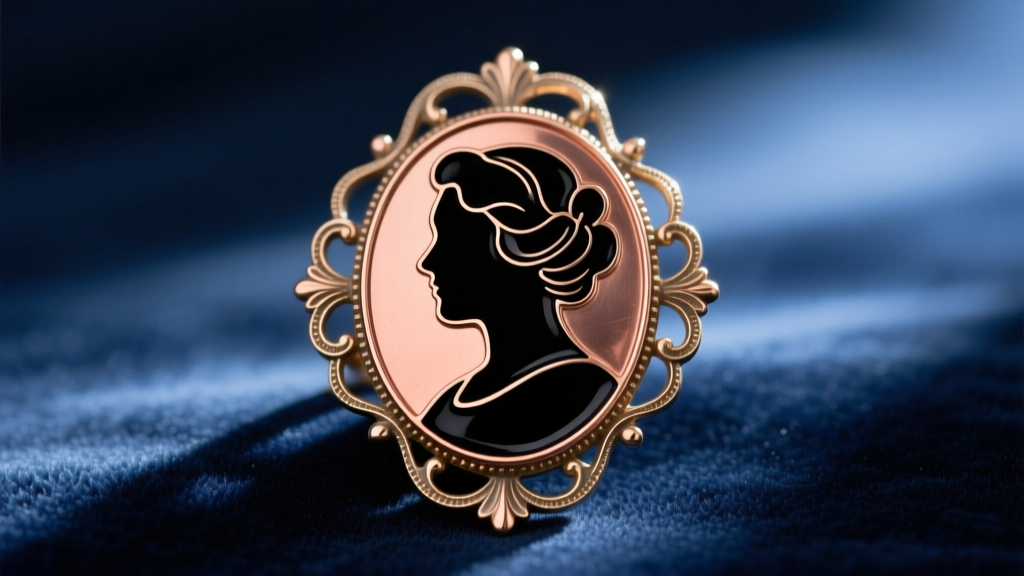
The Evolution of Victorian Silhouette Materials
Victorian silhouette jewelry represents a fascinating intersection of sentimentality, mourning customs, and material science. Before the advent of commercial photography in the mid-19th century, silhouettes were the most accessible and affordable method for capturing a loved one's likeness. While collectors often focus on the artistic execution of the profile, the true key to authentication, valuation, and preservation lies in understanding the physical and chemical properties of the materials used. From hygroscopic ivories to thermoplastic mourning rubbers, each medium dictates how these antique pieces have survived over the last 150 years.
According to the Victoria and Albert Museum, the transition from Georgian to Victorian jewelry saw a massive shift toward sentimental and mourning motifs, heavily influencing material selection. This guide provides a deep-dive comparison of the core materials found in Victorian silhouette jewelry, equipping collectors with the E-E-A-T frameworks needed to identify, grade, and preserve these historical artifacts.
The Core Materials: Properties & Identification
Painted Ivory and Vellum
Ivory was the premier substrate for high-end silhouette miniatures, particularly those painted in watercolor or gouache. From a material science perspective, ivory is a dense, hygroscopic biological composite consisting of inorganic hydroxyapatite and organic collagen. This composition gives it a Mohs hardness of approximately 2.5, making it soft enough to be carved but highly susceptible to environmental fluctuations.
- Identification: Authentic elephant ivory exhibits 'Schreger lines'—a cross-hatching pattern visible under 10x magnification, intersecting at angles greater than 115 degrees. Bone substitutes will show parallel Haversian canals instead.
- Failure Modes: Because ivory absorbs and releases moisture, it is prone to warping and delamination if the relative humidity drops below 40% or spikes above 60%. The watercolor pigments applied to the surface are also highly fugitive and will fade under UV exposure.
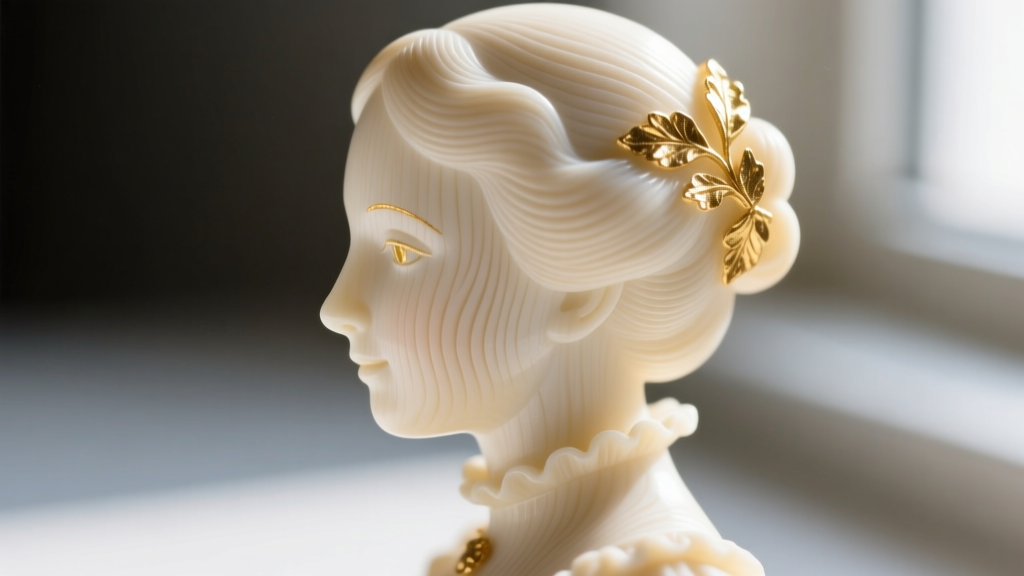
Enamel on Copper and Gold
Enamel silhouettes, often featuring a black or white opaque glass fused to a metal backing, were popular for their durability and striking contrast. The material property that defines enameled jewelry is the coefficient of thermal expansion (CTE). The glass enamel and the metal substrate (usually copper, pinchbeck, or low-karat gold) must have closely matched CTEs to prevent structural failure during the cooling process after firing.
Experts at Lang Antiques note that copper-backed enamels are particularly common in mid-Victorian pieces. Over time, the differing expansion rates and physical impacts lead to 'crazing' (hairline cracks) or outright chipping. When examining enamel silhouettes, always use a loupe to check the edges where the glass meets the metal bezel; micro-chipping here is a hallmark of age and authentic wear, whereas modern reproductions will have perfectly flush, laser-cut edges.
Cut Paper and Gouache
The most accessible form of silhouette jewelry was the cut paper profile, often layered over a white or gold-foil background and sealed inside a glazed locket. The paper used was typically high-rag content, which is more resistant to acid degradation than modern wood-pulp paper. However, the adhesives used to mount the paper—often animal glues or starch pastes—are highly attractive to silverfish and prone to acidic breakdown, leading to the 'foxing' (brown spotting) commonly seen on surviving paper silhouettes.
Mourning Materials: Gutta-Percha vs. Vulcanite
The Victorian obsession with mourning jewelry, catalyzed by Queen Victoria's prolonged grief for Prince Albert, birthed a demand for black materials that could be mass-produced. This led to the widespread use of two distinct rubber-based polymers: gutta-percha and vulcanite.
Gutta-Percha: The Thermoplastic Pioneer
Gutta-percha is a natural latex derived from the sap of the Palaquium tree. Chemically, it is a trans-isomer of polyisoprene. Its defining physical property is its thermoplasticity: it becomes highly malleable when heated to just 60°C (140°F) and hardens upon cooling. This allowed Victorian jewelers to press it into intricate molds for brooches and parures.
- Sensory Test: When vigorously rubbed or immersed in warm water, gutta-percha emits a distinct, earthy rubber odor.
- Visual Properties: It typically has a matte, slightly porous finish. Over time, exposure to UV light causes photo-oxidation, resulting in a dusty, grayish-brown patina on the surface.
Vulcanite: The Thermoset Alternative
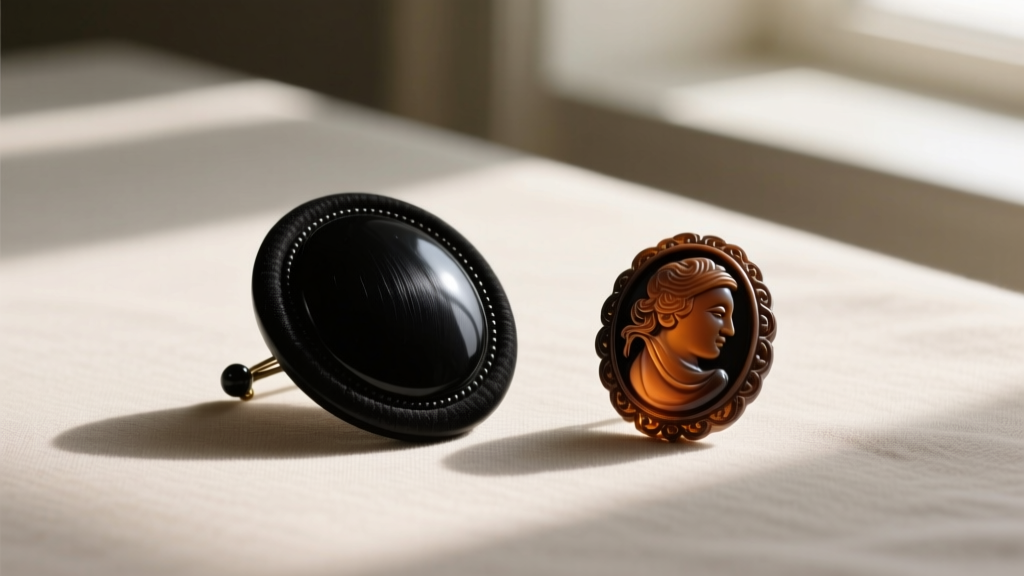
Vulcanite (or ebonite) is created by vulcanizing natural rubber with sulfur. Unlike gutta-percha, vulcanite is a thermosetting polymer; it will not melt when heated, but will char and burn. It is significantly harder and takes a higher polish than gutta-percha, making it ideal for carved mourning cameos and silhouettes.
- Sensory Test: Rubbing vulcanite releases a sulfurous, 'burnt match' smell due to the sulfur cross-links in the polymer matrix.
- Visual Properties: Vulcanite was originally dyed deep black, but sulfur oxidation causes it to turn a distinct, mottled brown over decades. This brown oxidation is a primary diagnostic tool for authenticating 19th-century vulcanite versus modern black plastics like Bakelite or acrylic.
Frames and Settings: Alloys of the Era
The material encasing the silhouette is just as critical to the piece's overall value and identification. While high-karat gold was used for aristocratic pieces, the burgeoning middle class relied on advanced metallurgical alloys.
Pinchbeck: Invented in the 18th century but heavily used in the Victorian era, pinchbeck is an alloy of copper and zinc (typically 89% copper and 11% zinc). Its specific gravity and light-reflective properties closely mimic 18k gold. Crucially, unlike brass, high-quality pinchbeck does not tarnish easily due to its specific zinc ratio, retaining a warm, golden luster.
Tombac: A cheaper alternative to pinchbeck, tombac contains a higher zinc content (up to 20%) and sometimes trace amounts of arsenic. It is harder, more brittle, and tarnishes to a dark, muddy brown. The Gemological Institute of America (GIA) frequently highlights the importance of X-ray fluorescence (XRF) testing to differentiate between historical tombac, pinchbeck, and later gold-filled rolled plate when assessing antique settings.
Material Comparison & Valuation Chart
Understanding the intersection of material rarity, condition, and market demand is essential for collectors. The table below outlines the current 2026 market parameters for authentic Victorian silhouette jewelry based on material composition.
| Material Substrate | Frame / Setting | Mohs Hardness | Primary Failure Mode | Est. Market Value (USD) |
|---|---|---|---|---|
| Painted Elephant Ivory | 15k Gold / Pinchbeck | 2.5 | Warping, pigment fading | $1,200 - $5,000+ |
| Opaque Black Enamel | Copper / Tombac | 5.0 - 7.0 | Crazing, edge chipping | $400 - $900 |
| Cut Paper / Gouache | Brass / Rolled Gold | N/A (Fibrous) | Foxing, adhesive failure | $75 - $250 |
| Molded Gutta-Percha | Integrated / Steel | 1.5 - 2.0 | UV degradation, cracking | $200 - $600 |
| Carved Vulcanite | Pinchbeck / Brass | 3.0 - 4.0 | Sulfur oxidation (browning) | $150 - $450 |
Preservation and Care by Material Type
Because Victorian silhouette jewelry encompasses such a wide array of chemical compositions, a 'one-size-fits-all' approach to cleaning and storage will result in catastrophic damage. Here are the strict preservation protocols based on material properties:
- Ivory & Vellum: Store in a microclimate with a stable 50% relative humidity. Never submerge in water or use chemical solvents, as the collagen matrix will swell and the watercolor pigments will bleed. Dust only with a soft, dry camel-hair brush.
- Enamel: Protect from thermal shock. Never clean enameled silhouettes with ultrasonic cleaners; the high-frequency vibrations will propagate existing micro-cracks (crazing) and cause the glass to shatter or pop off the metal substrate.
- Gutta-Percha & Vulcanite: Keep away from direct sunlight and heat sources. Store in acid-free tissue paper. Do not apply oils or waxes to 'restore' the black color, as these will trap dust and accelerate polymer degradation. The brown patina on vulcanite should be preserved as a mark of authenticity.
- Paper: Ensure the glass covering the paper is completely sealed to prevent insect ingress. If the paper is loose inside the locket, consult a professional paper conservator to re-mount it using archival, reversible methylcellulose adhesive.
By mastering the material properties of Victorian silhouette jewelry, collectors can move beyond superficial aesthetics to appreciate the chemical and physical engineering of the 19th century. Whether you are examining the Schreger lines of an ivory miniature or smelling the sulfur of a vulcanite cameo, the materials themselves tell the true story of the era.


