A Beginner Guide to Buying Authentic Art Deco Jewelry
Learn how to identify, authenticate, and price authentic Art Deco jewelry. A beginner-friendly guide to platinum, hallmarks, and geometric designs.

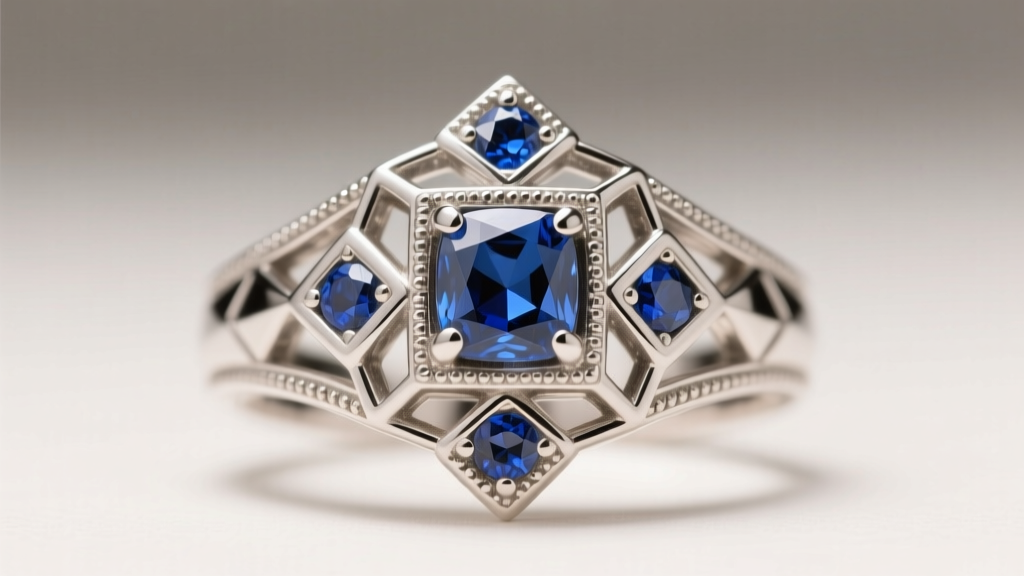
The Allure of the Roaring Twenties
For novice collectors, the world of vintage gems can feel like navigating a minefield of reproductions and mislabeled estate pieces. Among all historical periods, art deco jewelry remains the most fiercely collected and, consequently, the most frequently counterfeited. Spanning roughly from 1920 to 1939, this era marked a radical departure from the soft, floral garlands of the Edwardian period, embracing the bold geometry, industrial progress, and Cubist influences of the machine age.
Whether you are hunting for an engagement ring or a statement cocktail piece, understanding the structural and material DNA of the 1920s and 1930s is your best defense against overpaying for a modern replica. This guide breaks down the exact specifications, hallmarks, and pricing tiers you need to know in 2026 to build an authentic collection.
4 Non-Negotiable Hallmarks of Authenticity
Authenticating period jewelry requires looking past the overall design and examining the microscopic details of construction. According to the Lang Antiques Encyclopedia, the manufacturing techniques of the 1920s left specific physical evidence that modern casting methods struggle to replicate.
1. Platinum and Die-Struck Filigree
Platinum was the undisputed king of the Art Deco era. Its immense tensile strength allowed jewelers to create impossibly delicate, lace-like filigree settings that would snap if made in gold. When examining a platinum piece from this era, look for die-struck construction. Authentic 1920s filigree was stamped under immense pressure from steel dies, resulting in incredibly crisp, sharp edges on the front, while the back often shows slight recesses or a 'shadow' of the pattern. If the metal feels thick, heavy, or rounded on the edges, it is likely a modern 3D-printed wax cast.
2. Old European and Old Mine Cut Diamonds
This is the most common trap for beginners. The modern Round Brilliant cut (with its precise 58 facets and optimized light return) was not standardized until the late 1930s and 1940s. Authentic art deco jewelry will almost exclusively feature Old European Cuts (OEC) or Old Mine Cuts (OMC). These antique cuts feature a high crown, a small table, and a visible, flat culet (the point at the bottom of the stone). If you are looking at a purported 1925 engagement ring and the center diamond is a laser-inscribed, GIA-certified modern brilliant, the stone has been replaced, or the setting is a reproduction.
3. Calibre-Cut Gemstones and Channel Settings
To achieve the seamless, geometric color-blocking synonymous with the era, lapidaries custom-cut precious stones to fit precisely into metal channels. Known as calibre-cutting, these rubies, sapphires, and emeralds were shaped into exact rectangles, trapezoids, or half-moons. In authentic pieces, the stones sit flush against one another with virtually no metal visible between them. Modern reproductions often use standard round or baguette stones with visible prongs or excessive metal gaps to mimic the look.
4. Hand-Applied Milgrain vs. Cast Milgrain
Milgrain refers to the tiny, beaded borders applied to the edges of metalwork. In the 1920s, this was done by hand using a knurling tool, which results in slight, organic irregularities in the bead size and spacing. Modern reproductions feature cast milgrain, where the beads are part of the original wax mold. Cast milgrain looks perfectly uniform, slightly flattened, and lacks the sharp, distinct separation of hand-tooled beads.
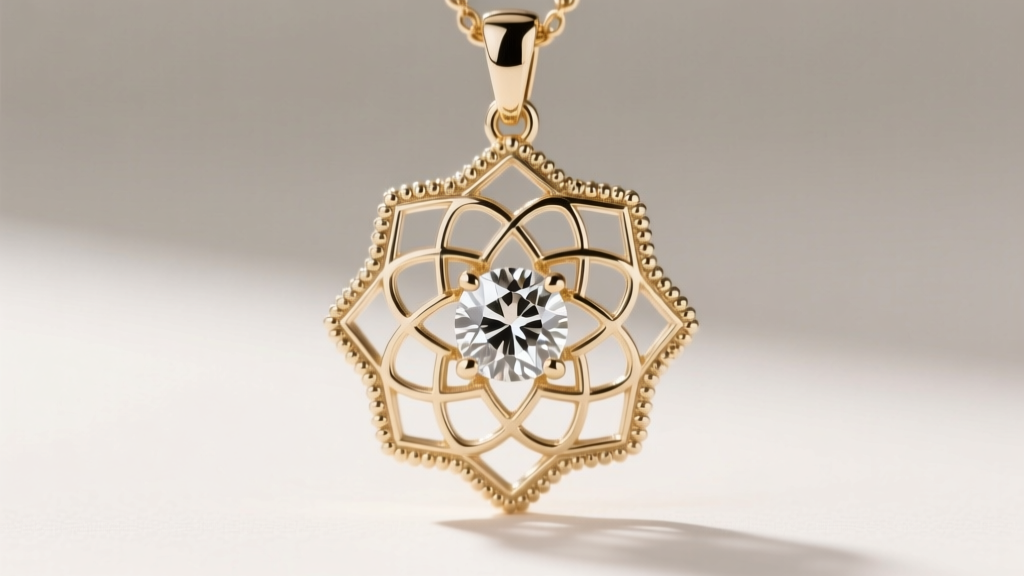
Authentic vs. Reproduction: The Spotter's Matrix
Use this quick-reference table when evaluating potential purchases at estate sales or online auctions.
| Feature | Authentic (1920-1939) | Modern Reproduction |
|---|---|---|
| Diamond Cut | Old European, Old Mine, or early Transitional cuts with open culets. | Modern Round Brilliant, Princess, or laser-drilled stones. |
| Metal Purity | 900 or 950 Platinum; 18k or 14k White Gold (often rhodium plated). | 14k White Gold, Palladium, or Platinum 950 with modern alloy mixes. |
| Construction | Die-struck, hand-pierced, or hand-fabricated with solder joints visible under magnification. | Lost-wax cast; smooth, uniform backs with no solder seams. |
| Patina & Wear | Soft wear on shanks, slight thinning of milgrain, natural patina in crevices. | Uniform polishing, artificial darkening (oxidation) in crevices that wipes off. |
| Hallmarks | French Eagle/Dog head, British maker's marks, or specific US maker stamps (e.g., WB, J&H). | Generic '14K', 'PT950', or modern brand stamps. |
2026 Market Pricing Tiers for Beginners
Understanding current market valuations prevents you from falling for 'too good to be true' pricing. The market for authentic art deco jewelry has matured, with premium pieces appreciating steadily. Here is what you should expect to pay in the current landscape:
- Entry-Level ($400 - $1,500): Expect 14k or 18k white gold pieces, silver-topped gold, or platinum pieces with semi-precious stones (onyx, coral, lapis lazuli) and small, melee-sized OEC diamonds. Costume jewelry featuring genuine Bakelite or early plastics also falls here.
- Mid-Range Collector ($2,500 - $8,500): The sweet spot for engagement rings. This tier includes die-struck platinum filigree rings featuring 0.75ct to 1.50ct Old European Cut diamonds (typically VS-SI clarity, G-H color), often accented with calibre-cut sapphires.
- High-End & Signed ($15,000 - $100,000+): Museum-quality pieces featuring exceptional craftsmanship, flawless colourless OEC diamonds over 2 carats, or signed pieces by heritage houses like Cartier, Van Cleef & Arpels, Boucheron, or Tiffany & Co. Tutankhamun-revival and 'Tutti Frutti' styles dominate this bracket.
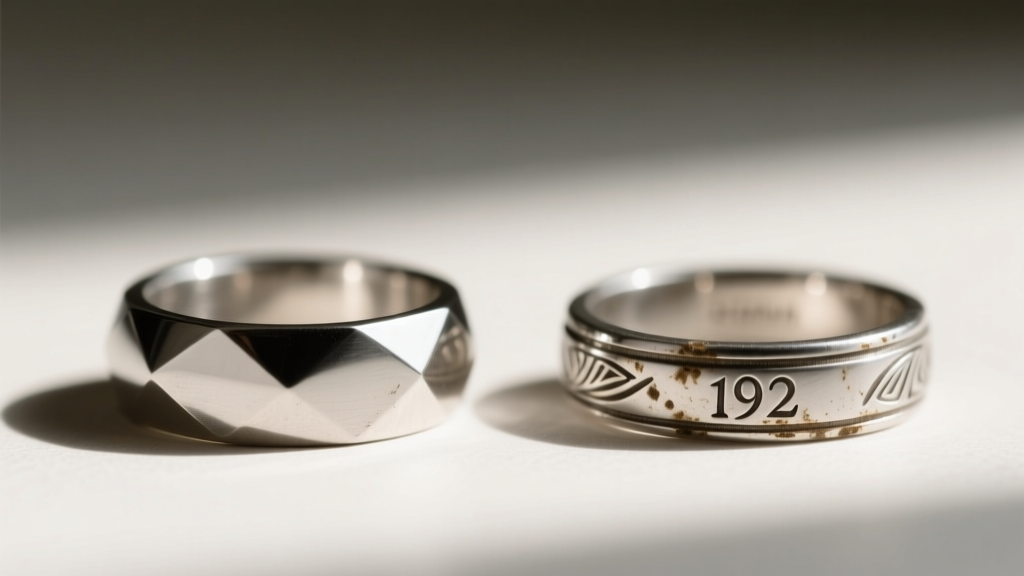
Testing Bakelite and Costume Materials
Not all art deco jewelry is made of precious metals. The 1920s and 30s saw the explosion of high-end costume jewelry, heavily utilizing Bakelite (the first synthetic plastic) and celluloid. Chanel and Schiaparelli popularized these materials, making them highly collectible today.
Beginners should avoid the destructive 'hot pin test' (which melts modern plastics and ruins the piece). Instead, use the hot water method: run the piece under hot tap water for 30 seconds and smell it. Genuine Bakelite emits a distinct, sharp chemical odor reminiscent of formaldehyde or camphor. Alternatively, a tiny drop of Simichrome polish on a cotton swab will turn bright yellow when rubbed against authentic, un-lacquered Bakelite. For a deeper dive into historical materials, the Victoria and Albert Museum's jewelry archives offer excellent visual references for period-specific plastics and enameling techniques.
Final Sourcing Advice for the Novice
When buying online, always request macro photographs of the side profile (the gallery) and the back of the setting. The back of an authentic Art Deco ring will often look almost as intricate as the front, with hand-sawn openwork and visible file marks from the original jeweler's bench. Reproductions usually have flat, smooth, or heavily polished backs to save on manufacturing costs.
'The true beauty of 1920s jewelry lies in its architectural integrity. You are not just buying a gemstone; you are buying a microscopic building forged in platinum.'
Start your collection with smaller, verified pieces from reputable estate jewelers who offer a lifetime authenticity guarantee. Train your eye by studying the die-struck patterns and the unique, chunky faceting of Old European cuts under a 10x jeweler's loupe. Once you learn to read the metal and the light, the vibrant, geometric world of the 1920s will open up to you with unparalleled clarity.


