A Collector's Guide to Buying Vintage Mosaic Jewelry
Discover how to identify, value, and buy authentic vintage mosaic jewelry. Learn to spot Taxco silver and Italian micro-mosaics with our expert guide.

The Allure of Mosaic Craftsmanship in Vintage Jewelry
When navigating the estate and antique market in 2026, few categories offer the tactile beauty and historical depth of vintage mosaic jewelry. Unlike standard gemstone settings that rely on prongs or bezels to hold a single stone, mosaic jewelry involves the meticulous cutting, shaping, and setting of dozens—or even hundreds—of smaller material pieces to create a unified, pictorial, or geometric design. For serious collectors and vintage enthusiasts, understanding the distinction between the two dominant schools of mosaic craftsmanship—Mexican Taxco silver inlay and Italian micro-mosaic—is the first step toward building a valuable, authentic collection.
This comprehensive buying guide will equip you with the technical knowledge required to authenticate hallmarks, evaluate structural integrity, and accurately price vintage mosaic pieces, ensuring you avoid the costly pitfalls that plague novice buyers.
Decoding the Two Giants: Taxco Silver vs. Italian Micro-Mosaic
The term "mosaic jewelry" is frequently misapplied. True vintage mosaic jewelry generally falls into two distinct historical and geographical categories, each with its own materials, techniques, and valuation metrics.
Mexican Taxco Aztec and Mosaic Silver (1940s–1970s)
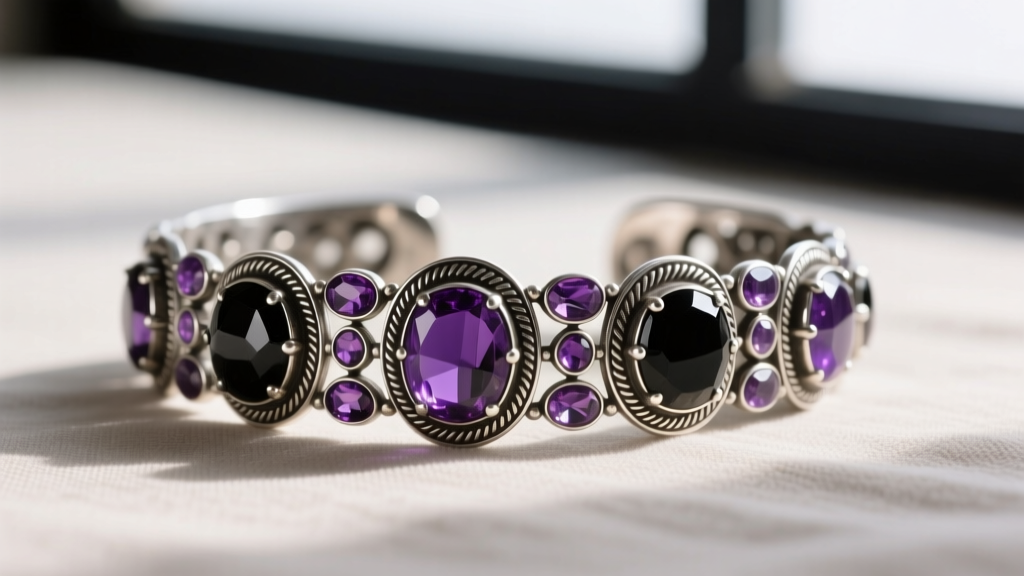
The mid-century boom in Taxco, Mexico, birthed a renaissance in silver jewelry design. Masters like Margot de Taxco (Margot van Voorhies Carr), the Castillo brothers (Los Castillo), and Hector Aguilar pioneered a style that married heavy, sculptural sterling silver with vibrant, flush-set mosaic inlays. These pieces typically feature semi-precious stones such as amethyst, obsidian, turquoise, lapis lazuli, and malachite, cut into precise geometric shapes and set into silver cells.

Authentication relies heavily on the Mexican assay system. In 1948, Mexico introduced the "Eagle" hallmark system to guarantee silver purity. According to the comprehensive archives at 925-1000.com, an Eagle mark stamped with the number "16" specifically denotes that the piece was assayed in Taxco. When buying vintage Taxco mosaic jewelry, always look for this Eagle 16 stamp alongside the maker's specific registry number (e.g., Los Castillo's number 15 or Margot's later registry marks).
Italian Micro-Mosaic and Pietra Dura (18th–19th Century)
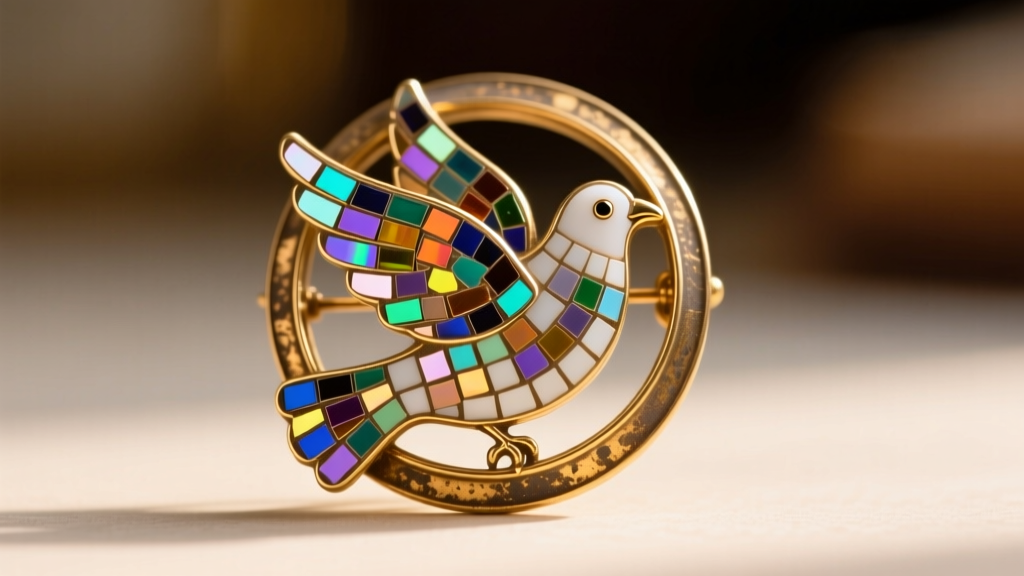
Traveling back to the Grand Tour era, Italian mosaic jewelry represents the pinnacle of miniature artistry. It is vital to distinguish between micro-mosaic and pietra dura. Micro-mosaics are crafted from smalti—tiny, opaque glass threads cut into minuscule cubes called tesserae. Pietra dura, conversely, uses precisely fitted hardstones like agate, jasper, and lapis lazuli.
As noted by the gemological historians at Lang Antiques' Antique Jewelry University, the quality of a micro-mosaic is directly correlated to the density of its tesserae. A high-quality Victorian-era micro-mosaic brooch will feature upwards of 1,000 to 1,500 tesserae per square inch, creating an image so seamless it appears painted. Lower-quality, later tourist-trade pieces will have visible gaps and larger, irregular glass chunks.
The 5-Point Authentication Checklist for Buyers
Before purchasing any vintage mosaic jewelry, run the piece through this rigorous physical inspection checklist:
- Hallmark and Registry Verification: For Taxco silver, confirm the Eagle assay mark and cross-reference the maker's number. For Italian pieces, look for 14k or 18k gold frame stamps, though many 19th-century tourist pieces were set in unmarked silver-gilt or base metals.
- Stone Seating and Grout Inspection: Run a microfiber cloth lightly over the surface. In authentic Taxco pieces, the stones should be perfectly flush with the silver bezels. If you feel catching, or if the "grout" (adhesive) looks milky, overly glossy, or smells faintly of chemicals when warmed by your hand, the piece has likely been re-glued with modern epoxy.
- Tesserae Density and Alignment: Use a 10x jeweler's loupe to examine Italian micro-mosaics. The glass cubes should be tightly packed with minimal visible cement. Look for "shading"—the use of slightly different colored glass pieces to create depth and shadow, a hallmark of master Roman workshops.
- Structural Gauge and Weight: Authentic mid-century Taxco silver is notoriously heavy. A standard mosaic cuff bracelet should weigh between 45 and 80 grams. The silver backing should be at least 18-gauge to support the tension of the stone inlays without warping.
- Backing and Pin Stem Analysis: Examine the reverse of brooches. Original Victorian micro-mosaics will feature a C-clasp and a T-hinge pin stem. If you see a modern rolling safety clasp on a piece purported to be from the 1880s, it has either been heavily modified or is a later reproduction.
Valuation Matrix: What Drives the Price?
Pricing vintage mosaic jewelry requires an understanding of provenance, material density, and condition. The table below outlines the current market valuations for top-tier pieces as of 2026.
| Category & Origin | Notable Makers / Eras | Condition Factor | Estimated Market Value (USD) |
|---|---|---|---|
| Taxco Mosaic Silver Cuffs | Margot de Taxco, Los Castillo (1950s) | Excellent (No missing stones, crisp hallmarks) | $600 – $1,400 |
| Taxco Mosaic Necklaces | Hector Aguilar, Matl (1940s-1950s) | Very Good (Minor silver patina, intact clasp) | $1,200 – $3,500+ |
| Italian Micro-Mosaic Brooches | Roman Grand Tour Era (1860-1900) | Fine (High tesserae density, original C-clasp) | $800 – $2,500 |
| Italian Pietra Dura Pendants | Florentine Workshops (1920s-1940s) | Good (Minor stone pitting, replaced bail) | $250 – $600 |
Common Flaws and Red Flags to Avoid
The most prevalent issue in vintage Taxco mosaic jewelry is "stone pop." Because the stones are set using a hardened mastic or early epoxy rather than metal prongs, decades of temperature fluctuations can cause the adhesive to become brittle. Gently tap the piece near your ear; a faint rattling sound indicates loose stones that will require professional conservation.
For Italian micro-mosaics, the primary red flag is missing tesserae. Even a single missing glass cube drastically reduces the value of a Grand Tour piece, as sourcing historically accurate, color-matched 19th-century smalti is nearly impossible. Additionally, beware of "married" pieces—mosaic plaques that were originally part of a snuff box or desk set, which have been improperly soldered onto modern brooch findings to masquerade as vintage jewelry.
Sourcing and Caring for Your Mosaic Pieces
When sourcing, prioritize specialized estate jewelers, vetted antique silver dealers, and reputable auction houses over general online marketplaces, where modern resin replicas are frequently mislabeled as vintage stone inlay. Always request high-resolution macro photos of the hallmarks and the reverse side of the settings.
Care and maintenance require strict discipline. Never place vintage mosaic jewelry in an ultrasonic cleaner. The high-frequency vibrations will instantly shatter fragile Italian glass tesserae and will shake Taxco stones loose from their adhesive beds. Instead, clean silver settings with a soft horsehair brush and a mild, phosphate-free dish soap, carefully avoiding prolonged water exposure to the stone inlays. Store pieces flat in anti-tarnish cloth rolls to prevent the heavy silver from bending and cracking the rigid mosaic surfaces.
Final Thoughts for the Discerning Collector
Collecting vintage mosaic jewelry is an exercise in appreciating microscopic architecture. Whether you are drawn to the bold, modernist geometry of mid-century Taxco silver or the romantic, pictorial narratives of Victorian micro-mosaics, success lies in the details. By scrutinizing hallmarks, evaluating adhesive integrity, and understanding the distinct material properties of smalti versus hardstone, you can confidently acquire heirloom-quality pieces that will only appreciate in historical and monetary value.


