Antique Jewelry Auction News: A 2026 Beginner Guide
Learn to decode antique jewelry auction news in 2026. Discover how to read hammer prices, spot market trends, and bid on estate pieces like an expert.

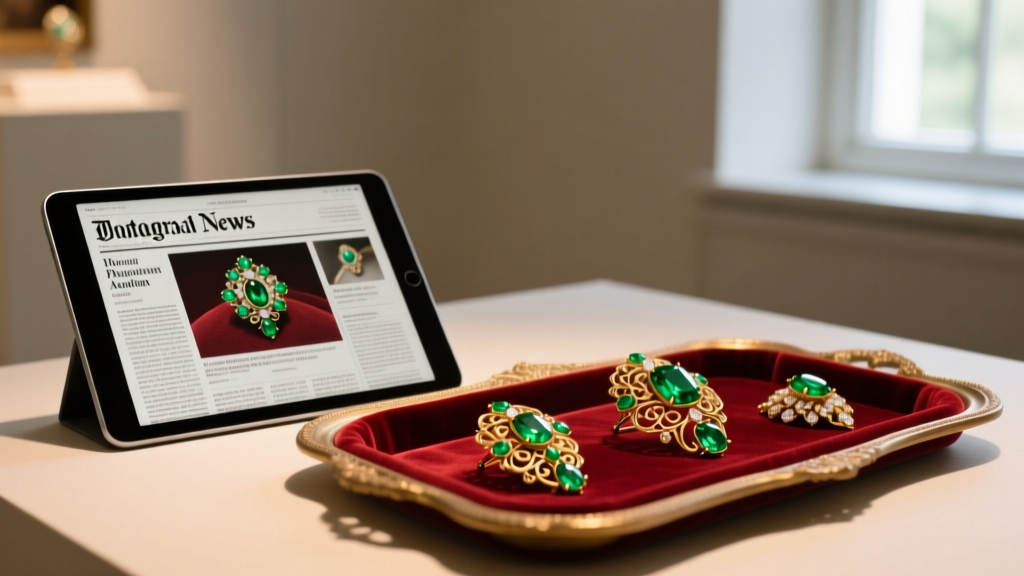
For beginners stepping into the world of vintage and estate adornments, keeping up with antique jewelry auction news can feel like trying to read a foreign language. Headlines boasting seven-figure hammer prices for Art Deco diamond bracelets or record-breaking Georgian parures often dominate the press. However, beneath the sensationalism lies a goldmine of actionable data. Auction results are the most transparent, real-time indicators of market value, shifting collector tastes, and gemological trends.
This comprehensive 2026 explainer will teach you how to decode auction jargon, interpret catalog notes like a seasoned gemologist, and leverage market headlines to build a smart, investment-grade antique jewelry collection.
Why Antique Jewelry Auction News Matters for Beginners
Many novice collectors mistakenly believe that auction news only applies to ultra-high-net-worth individuals bidding at Sotheby's or Christie's. In reality, the auction market dictates the baseline retail pricing for the entire secondary jewelry market. When auction news reports a surge in demand for Victorian mourning jewelry or Mid-Century Retro gold, local estate jewelers and online vintage dealers adjust their pricing accordingly within weeks.
By tracking Christie's Jewelry and Sotheby's Jewelry Department results, beginners can identify undervalued categories before they hit peak retail saturation. Furthermore, studying auction catalogs provides a free, masterclass in authentication, teaching you how to spot the nuanced differences between a genuine 1920s piece and a later reproduction.
Decoding the Jargon: Estimates, Hammer Prices, and Premiums
The most common pitfall for beginners reading auction news is misunderstanding the final sale price. When a headline states a sapphire ring "sold for $15,000," it rarely tells the whole financial story. To accurately track market values, you must understand the anatomy of an auction transaction.
| Term | Definition | Example Impact |
|---|---|---|
| Low/High Estimate | The auction house's predicted selling range, excluding fees. | Est. $8,000 - $12,000 |
| Hammer Price | The final winning bid struck by the auctioneer's hammer. | $10,000 |
| Buyer's Premium | A percentage fee added to the hammer price, paid to the house. | 25% of the first $400k ($2,500) |
| Overhead/Storage Fees | Additional administrative, shipping, or insurance charges. | ~$150 flat fee |
| Total Realized Price | The actual out-of-pocket cost to the winning bidder. | $12,650 |
When reading antique jewelry auction news, always check if the reported figure is the hammer price or the realized price (hammer plus premium). In 2026, major auction houses typically charge a buyer's premium ranging from 20% to 28%, which drastically alters the true market valuation of a piece.
2026 Market Trends: What the Headlines Are Telling Us
Current auction news highlights a distinct shift in collector behavior, moving away from generic diamond solitaires toward pieces with historical provenance, unique material combinations, and distinct period craftsmanship.
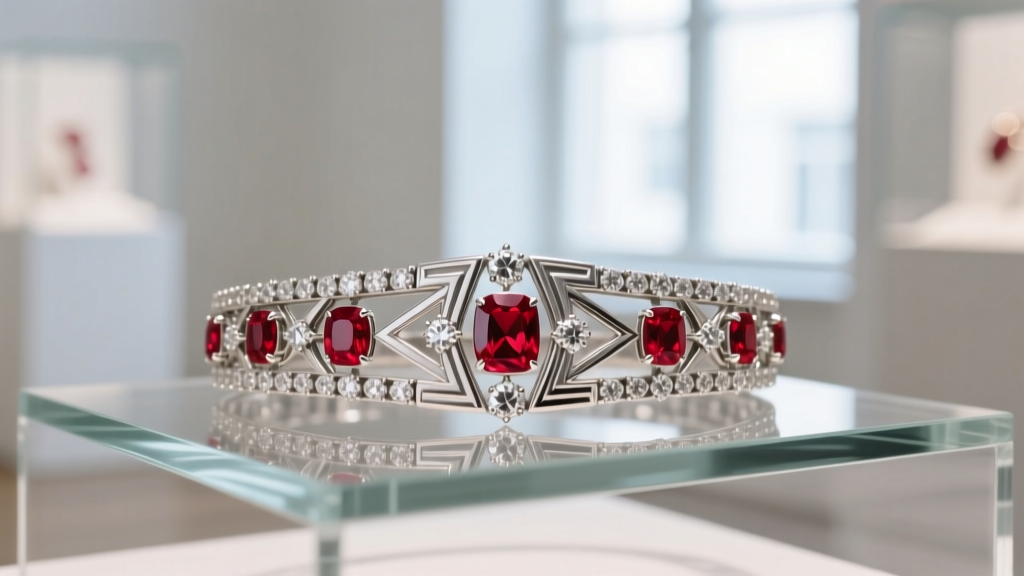
The Surge in Signed Art Deco
Recent auction news consistently shows that "signed" pieces—those bearing the maker's mark of iconic houses like Cartier, Van Cleef & Arpels, or Boucheron—command premiums of 40% to 60% over unsigned equivalents. Collectors are heavily favoring Art Deco jewels featuring calibré-cut stones (custom-cut gems fitted seamlessly into geometric platinum mountings) and carved jade or coral.
Victorian Mourning and Sentimental Jewelry
Driven by a renewed interest in macabre history and sentimental craftsmanship, Victorian mourning jewelry is seeing record hammer prices. Pieces featuring woven hairwork, black Whitby jet, and black enamel banding with hidden memorial compartments are highly sought after. However, auction catalogs frequently note condition issues with hairwork (which can degrade or suffer insect damage), making pristine examples exceptionally rare and valuable.
Georgian Foil-Backed Gems
Pre-1837 Georgian jewelry remains the holy grail for advanced collectors. Auction news often highlights the sale of foil-backed garnets, topazes, and rock crystal. Because the closed-back settings utilize delicate silver or gold foil to enhance the stone's brilliance, these pieces cannot be submerged in water. Auction condition reports that state "foil intact" or "original foil backing" significantly boost the hammer price, whereas "foil missing" or "replaced stones" will halve the value.
How to Read Catalog Notes Like a Gemologist
The true value of antique jewelry auction news lies in the archived catalogs. Auction houses employ expert gemologists who write highly specific condition reports. Learning to read between the lines of these reports is a critical skill for any beginner.
Diamond Cut Terminology
According to the Gemological Institute of America (GIA), understanding historical diamond cuts is essential for verifying a piece's age. Auction catalogs will rarely use the term "vintage diamond." Instead, look for:
- Old Mine Cut: Prevalent in Georgian and early Victorian jewelry. These feature a high crown, a squarish or cushion shape, and a distinctly large, visible culet (the flat point at the bottom of the stone).
- Old European Cut: The predecessor to the modern round brilliant, popular from the 1890s through the Art Deco era. They are rounder than Old Mine cuts with a smaller culet and heavier lower-half facets.
- Rose Cut: Flat-bottomed stones with a domed, faceted top, heavily used in 18th and 19th-century silver-topped gold settings.
If an auction catalog describes an "18th-century Georgian ring" but notes the presence of "modern brilliant cut diamonds," it is a massive red flag indicating the piece has been altered or is an outright reproduction.
Hallmarks and Metal Purity
Catalog notes regarding metal purity provide vital clues about a piece's origin. For instance, if you are reading about a Victorian-era brooch, the metal grade can pinpoint its geography. In 1854, the UK standardized 15k, 12k, and 9k gold to make jewelry more affordable, whereas American Victorian pieces were typically crafted in 14k gold. Seeing a "15k gold" hallmark on a purported American Civil War-era piece should immediately prompt further investigation.
Actionable Steps to Track and Use Auction Data
You do not need a multi-million dollar budget to benefit from auction data. Here is a practical framework for beginners to integrate auction news into their buying strategy:
- Set Up Automated Alerts: Use platforms like Invaluable, LiveAuctioneers, and Artnet to set up keyword alerts for specific eras or makers (e.g., "Edwardian platinum garland style" or "Rene Lalique").
- Study the "Unsold" Lots: Pay close attention to auction news regarding "bought-in" or unsold lots. If a specific category (like Mid-Century 18k gold mesh bracelets) fails to meet its reserve price across multiple houses, it indicates market cooling, giving you leverage to negotiate lower prices with retail vintage dealers.
- Analyze Provenance Premiums: Track how much extra a piece sells for when it has documented provenance (e.g., "from the estate of a European royal" or "featured in a 1950s Vogue editorial"). This will help you decide if paying a premium for a documented piece is worth the historical pedigree.
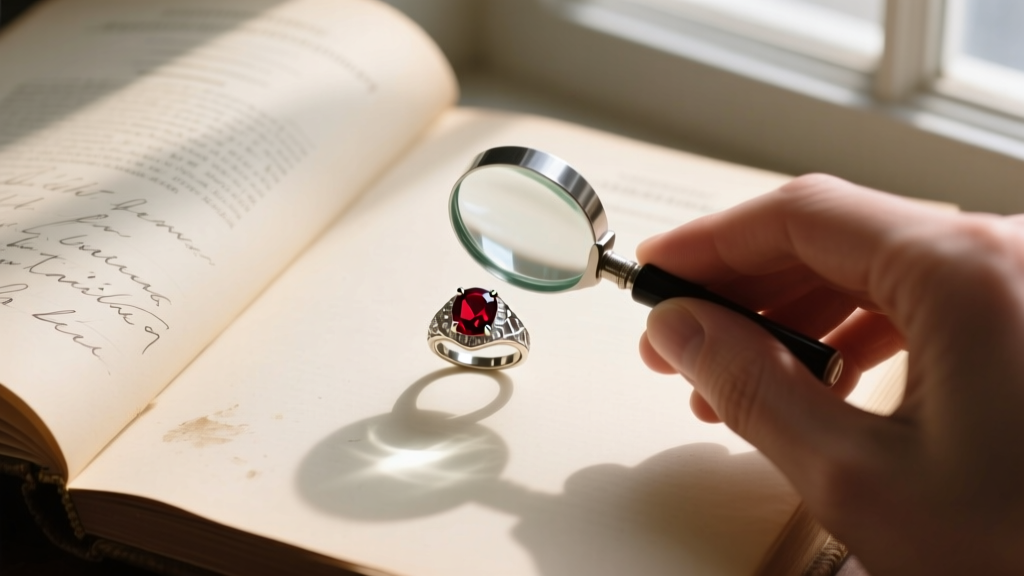
- Cross-Reference Condition Reports: Before buying a similar piece from a private seller, pull up three recent auction catalogs for comparable items. Note the exact phrasing used to describe common wear, such as "shank repaired," "prongs tipped," or "enamel loss," and use this terminology to question private sellers about their items' true condition.
Final Thoughts
Reading antique jewelry auction news is not just about marveling at the astronomical prices paid by elite collectors; it is an essential educational tool. By understanding the mechanics of the hammer price, mastering gemological terminology, and tracking shifting period trends, beginners can navigate the vintage jewelry market with confidence. The auction block is the ultimate arbiter of authenticity and value—use its public records to ensure your next antique acquisition is both historically significant and fairly priced.


