The Ultimate Vintage Jewelry Stamps List for Gift Buyers
Discover our essential vintage jewelry stamps list to authenticate, value, and match historical pieces to the perfect milestone gift.

Why Hallmarks Matter When Gifting Antique Jewelry
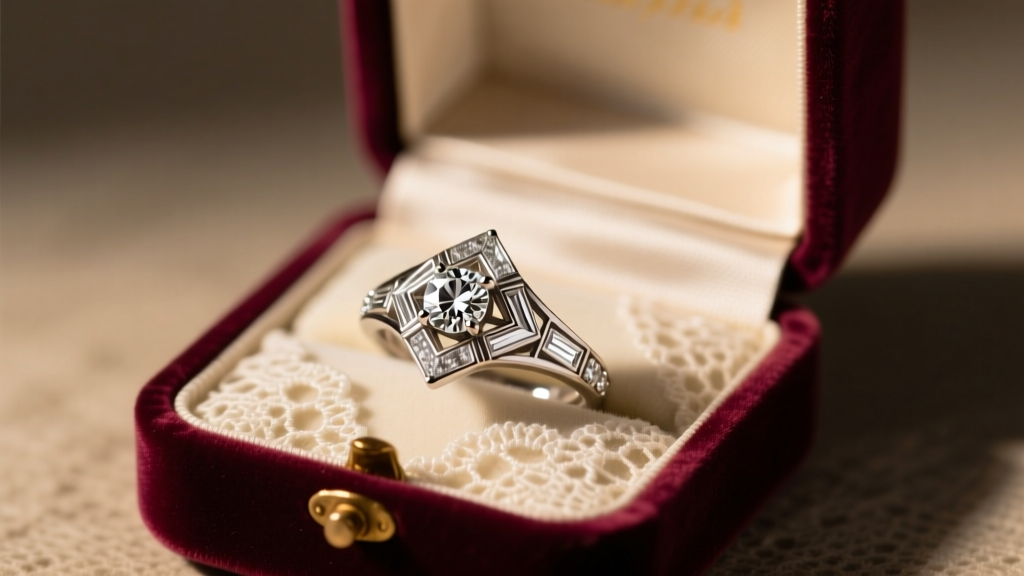
Gifting a piece of history is one of the most profound gestures in the world of fine jewelry. Whether you are marking a 50th wedding anniversary, a milestone graduation, or a significant career promotion, antique and vintage pieces carry a rich narrative that modern, mass-produced items simply cannot replicate. However, as the secondary market for estate jewelry continues to surge in 2026, so does the sophistication of modern reproductions and counterfeit hallmarks. This is where a reliable vintage jewelry stamps list becomes your most critical tool as a buyer.
Understanding hallmarks, maker's marks, and purity stamps ensures that the heirloom you are gifting is exactly what the dealer claims it to be. More importantly, it allows you to accurately date the piece and match its historical era to the emotional weight of the occasion. In this comprehensive guide, we bridge the gap between technical authentication and emotional gifting, helping you verify provenance and match specific historical periods to life's most significant milestones.
The Anatomy of Antique Hallmarks
Before diving into specific occasions, it is vital to understand that a true hallmark is rarely just a single stamp. According to the London Assay Office, a full traditional British hallmark consists of three compulsory marks: the sponsor's (maker's) mark, the metal purity mark, and the assay office mark. In the United States, the 1906 National Stamping Act mandated that any item stamped with a purity mark (like 14k or 925) must also bear a registered maker's trademark. Therefore, if you are consulting a vintage jewelry stamps list and find a piece with a '14k' stamp but no accompanying maker's mark, you should immediately exercise caution.
European pieces, particularly French and British, offer much more rigorous traceability through regional assay symbols. For example, the French Tête d'aigle (Eagle's Head) guarantees a minimum of 18k gold, while the Boar's Head (Tête de sanglier) was historically used for silver. Recognizing these specific regional stamps elevates your gifting from a simple purchase to a curated acquisition of global history.
Your Quick-Reference Vintage Jewelry Stamps List
Use this structured data table to quickly identify common stamps and understand their best gifting applications.
| Stamp / Mark | Meaning & Origin | Primary Era | Gifting Context & Advice |
|---|---|---|---|
| 925 / Sterling | 92.5% Pure Silver | Victorian to Mid-Century | Ideal for graduations or 16th birthdays; look for maker marks like Gorham or Tiffany & Co. |
| 750 / Tête d'aigle | 18k Gold (French Assay) | Edwardian & Art Deco | High-value anniversaries; signifies premium European craftsmanship and rich gold color. |
| 585 / 14k | 14k Gold (US / European) | Retro & Mid-Century | Versatile for career milestones; highly durable for everyday vintage wear. |
| PLAT / IRID.PLAT | Platinum / Iridium-Platinum | Art Deco (1920s-1930s) | Engagements or major anniversaries; indicates high-end, secure diamond settings. |
| 375 | 9k Gold (British Assay) | Victorian & Edwardian | Budget-friendly antique gifting; very common in English estate jewelry and mourning rings. |
| 385 | 14k Gold (Swiss Assay) | Mid-Century | Look for Swiss watchmaker jewelry or high-end European mid-century link bracelets. |
Matching Authenticated Eras to Milestone Occasions
Engagements and Major Anniversaries (Edwardian & Art Deco)
When gifting an engagement ring or celebrating a major milestone like a 10th or 20th anniversary, Art Deco (1920-1935) and Edwardian (1901-1915) pieces represent the pinnacle of romantic prestige. For these eras, your vintage jewelry stamps list should prioritize platinum indicators. Look for 'PLAT', 'PT950', or the older 'IRID.PLAT' (Iridium-Platinum). The Gemological Institute of America (GIA) notes that platinum became the dominant metal for fine diamond settings during the Art Deco period due to its immense tensile strength and ability to hold intricate milgrain and filigree work securely.
Gifting a verified platinum Art Deco ring communicates permanence, rarity, and enduring value. If the piece is European, look for the French Dog's Head (Tête de chien) or the British orb and cross mark for platinum. These specific assay marks guarantee the metal's integrity, ensuring the diamonds are set in a historically accurate, premium alloy.
Graduations and Career Milestones (Retro & Mid-Century)
For graduations, 21st birthdays, or career promotions, Retro (1935-1950) and Mid-Century (1950-1970) jewelry offers bold, wearable statements that align with modern professional aesthetics. During the Retro era, gold was the primary metal due to platinum shortages during WWII. You will frequently encounter '14k' or '585' stamps, often accompanied by substantial maker's marks from iconic houses like Trifari, Coro, or Boucheron.
Mid-century pieces often feature '18k' or '750' stamps alongside textured gold work, geometric motifs, and vibrant cabochon gemstones. These pieces are perfect for gifting because they are robust enough for daily wear in a modern environment, yet carry the distinct, optimistic design language of the post-war economic boom. They serve as a powerful talisman for a graduate entering the workforce.
Authentication Troubleshooting: Cast vs. Struck Stamps
The most common pitfall for gift buyers relying on a basic vintage jewelry stamps list is assuming that the mere presence of a stamp guarantees authenticity. Modern counterfeiters can easily cast a fake hallmark into a silicone mold. To protect your investment, you must learn to differentiate between a 'struck' stamp and a 'cast' mark.
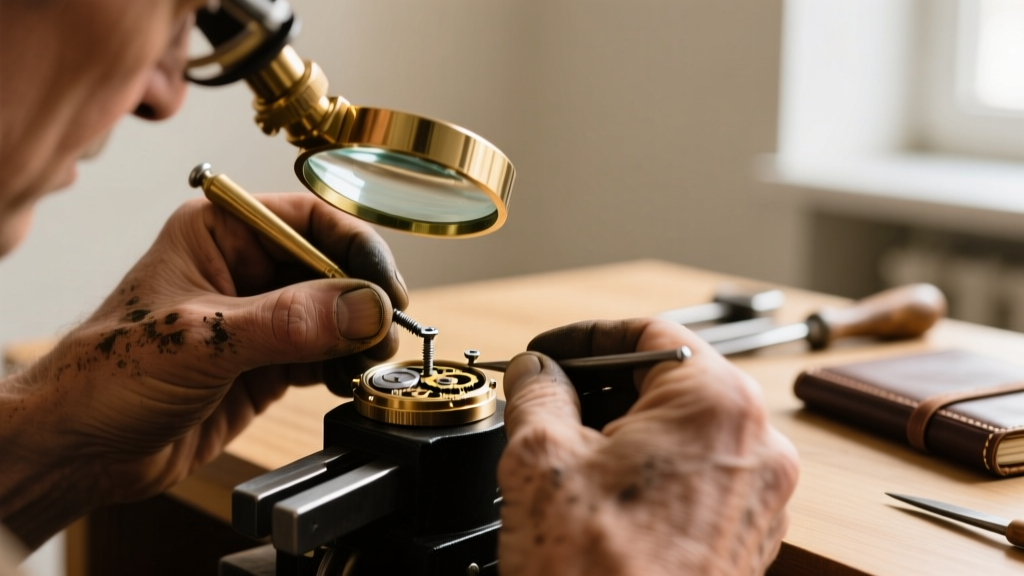
Using a 10x jeweler's loupe, examine the edges of the stamp. A genuine struck stamp is punched into the solid metal after the piece is formed; the edges will be crisp, sharp, and slightly displaced, with a clean, flat background. A cast mark, however, is a reproduction of a stamp that was molded from an original piece. Under magnification, cast marks appear muddy, rounded, and slightly raised or pitted, lacking the sharp incision of a steel punch.
Furthermore, if you see a '925' stamp on a piece with heavy, sloppy solder joints or modern laser welding, it is likely a contemporary reproduction masquerading as vintage. Always cross-reference the maker's mark with specialized databases like Lang Antiques University to verify the font, logo geometry, and spacing specific to the claimed decade. A Cartier stamp from 1955 looks distinctly different from one used in 1985; knowing these micro-details is the hallmark of an expert buyer.
The Pre-Purchase Gifting Checklist
Before you finalize the purchase of an antique heirloom, run through this actionable checklist to ensure the piece is worthy of the occasion:
- Verify the Purity: Match the stamp to the visual color and weight of the metal. For instance, 18k yellow gold should have a distinct, rich, buttery hue compared to the paler tone of 14k gold.
- Inspect the Wear Pattern: Genuine vintage stamps on rings often show wear on the bottom of the shank, while the stamp inside remains relatively protected. If a ring looks heavily worn but the interior stamp is perfectly crisp, be highly suspicious of a re-shank or reproduction.
- Check the Clasp Mechanics: On necklaces and bracelets, the clasp should match the era. A modern lobster clasp on a piece stamped with a 1920s maker's mark indicates alteration or a 'franken-piece' assembled from different eras.
- Demand Non-Destructive Testing: Reputable dealers in 2026 use XRF (X-ray Fluorescence) scanners to verify the exact metal composition beneath the surface without damaging the antique patina. Avoid dealers who rely solely on destructive acid testing on valuable antiques.
- Request Provenance: Ask the dealer for any original receipts, appraisal documents, or historical box packaging that corroborates the stamps and the piece's lineage.
A true antique jewel speaks through its scars and its stamps. The hallmark is the artisan's signature across time; verifying it is how we honor their legacy when passing it to the next generation.
Gifting vintage jewelry is an act of preserving history. By mastering this vintage jewelry stamps list and understanding the deep nuance of historical hallmarks, you ensure that your gift is not only emotionally resonant but authentically invaluable. Whether it is a platinum Art Deco engagement ring or a bold Mid-Century gold bracelet, the stamps are your guarantee that you are gifting a genuine piece of the past.


