Mid Century Modern Jewelry: Value Assessment & Budget Guide
Discover how to evaluate mid century modern jewelry. Learn pricing tiers, maker marks, condition traps, and budget tips for vintage art jewelry.

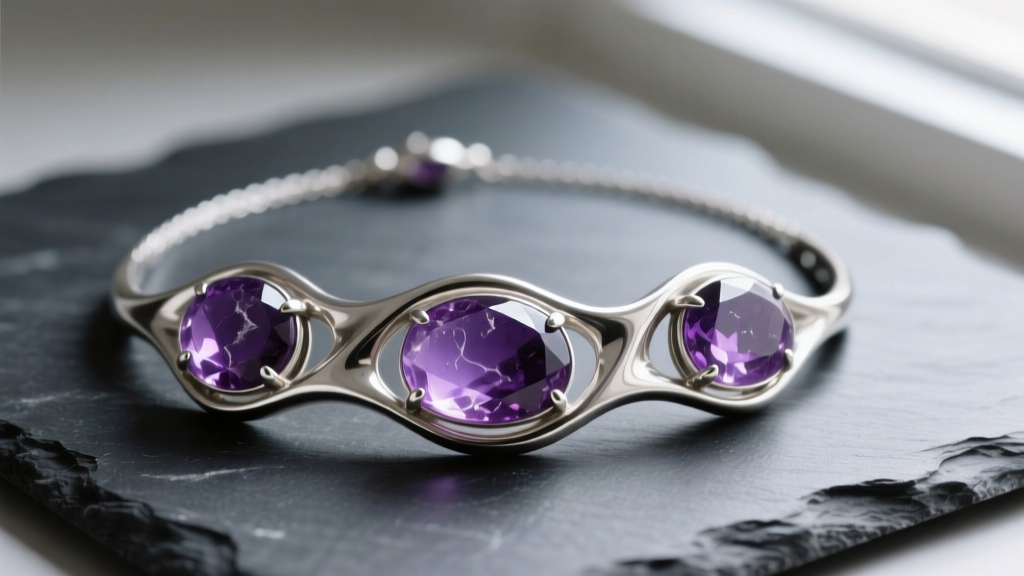
The Allure of Mid Century Modern Jewelry: Beyond the Price Tag
The mid century modern jewelry movement (roughly 1945 to 1965) represented a radical departure from the heavy, ornate, and gemstone-obsessed Retro era that preceded it. Driven by the post-war economic boom, the rise of the studio art jewelry movement, and a cultural pivot toward abstraction, mid-century pieces prioritized sculptural form, innovative materials, and wearable art. For collectors and budget-conscious enthusiasts in 2026, this era offers a fascinating landscape where unsigned, heavy-gauge silver pieces can sometimes outshine mass-market costume jewelry in both aesthetic value and long-term investment potential.
However, assessing the true value of mid century modern jewelry requires looking past the surface. Unlike Victorian or Edwardian pieces, where karat gold and diamond clarity dictate the price, mid-century valuation hinges on maker provenance, architectural design, material integrity, and the preservation of original finishes. This guide will break down the exact metrics you need to evaluate, price, and acquire mid-century pieces without overpaying.
Decoding Value: What Drives the Price of Mid-Century Pieces?
To accurately assess a piece from this era, you must first identify which tier of the mid-century market it belongs to. The market is broadly divided into mass-market costume, artisan copper/brass, and the highly coveted studio art jewelry movement.
The Greenwich Village Studio Art Movement
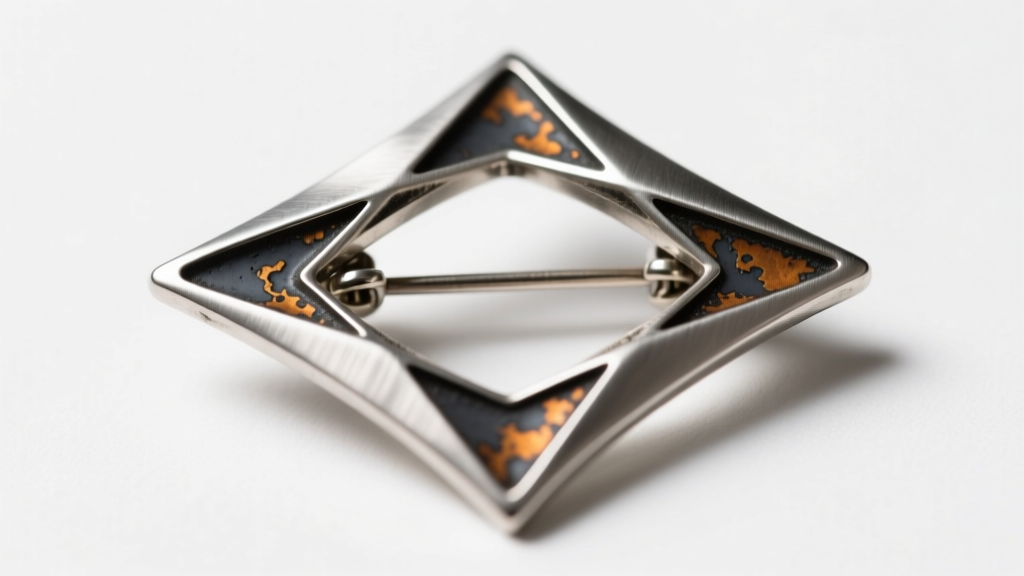
The highest tier of mid century modern jewelry value is dominated by the New York studio art jewelers. Masters like Art Smith, Ed Wiener, and Sam Kramer treated silver not as a precious metal to be polished to a mirror shine, but as a sculptural medium. Their biomorphic, atomic-age designs often featured raw, uncut semi-precious stones or intentional oxidation. An authenticated Art Smith silver cuff can easily command $8,000 to $15,000 at auction in 2026, while an Ed Wiener atomic brooch might sit between $2,500 and $6,000.
Taxco Silver and the Mexican Renaissance
Simultaneously, Taxco, Mexico, was producing a massive volume of mid-century sterling silver. While legendary makers like Hector Aguilar and William Spratling command premium prices, the real budget opportunity lies in the "lesser-known" Taxco workshops. Pieces stamped with the Mexican eagle mark and a specific artist number (e.g., Hecho en Mexico, Taxco, 925) often feature heavy silver weights and high-quality bezel-set amethyst or tiger's eye cabochons. According to the 925-1000 Mexican Silver Marks Database, cross-referencing these eagle numbers can sometimes reveal a piece was produced by a master silversmith for a different brand, instantly multiplying its value.
2026 Market Pricing Tiers: A Budget Breakdown
Understanding current market rates is critical to avoid overpaying for mass-produced pieces masquerading as high art. Below is a structured assessment of pricing tiers for mid century modern jewelry in today's market.
| Category | Typical Materials | Est. Price Range (2026) | Key Value Drivers |
|---|---|---|---|
| Mass-Market Costume | Brass, Rhinestones, Aurora Borealis glass | $30 - $150 | Brand (Coro, Trifari), Prong condition |
| Artisan Copper & Brass | Copper, Enamel, Carved Lucite | $80 - $400 | Maker (Rebajes, Matisse, Renoir), Patina |
| Unsigned Taxco Sterling | 925 Silver, Semi-precious cabochons | $150 - $600 | Silver weight, Eagle mark number, Stone quality |
| Master Studio Art | Oxidized Sterling, Raw Stones, Iron | $2,500 - $20,000+ | Provenance, Maker (Smith, Wiener, Kramer) |
Spotting Fakes and Assessing Condition: The Over-Polishing Trap
When evaluating mid century modern jewelry, condition assessment requires a completely different mindset than evaluating antique diamond jewelry. The most common mistake novice buyers make is misjudging the finish.
Patina vs. Tarnish vs. Intentional Oxidation
Studio jewelers of the 1950s frequently used liver of sulfur to create deep, dark oxidation in the recessed areas of their biomorphic designs. This was an intentional design choice to create contrast and highlight the three-dimensional, sculptural nature of the metal. Never buy a mid-century studio piece that has been polished to a bright, mirror-like finish. Over-polishing strips away this intentional oxidation, flattening the visual depth of the piece and reducing its collector value by 30% to 50%. True tarnish is uniform and yellowish-brown; intentional oxidation is dark grey or black and localized in the crevices.
Pin Stems, Hinges, and Clasp Mechanics
Flip the brooch over. The hardware on the reverse side tells the story of the piece's authenticity and condition. Mid-century brooches typically feature a rolling safety catch or a simple C-clasp with a tube hinge. If you see a modern, lightweight, stamped-metal safety clasp soldered onto a heavy, hand-forged silver body, the piece has been repaired. Furthermore, examine the solder used on the repair. Original mid-century silver solder blends seamlessly, whereas later, amateur repairs often use lead-based solder, which appears as a dull, raised, grey blob. Lead solder repairs on a piece by an artisan like Sam Kramer will severely depress its resale value.
Gemstone Treatments of the 1950s: What to Look For
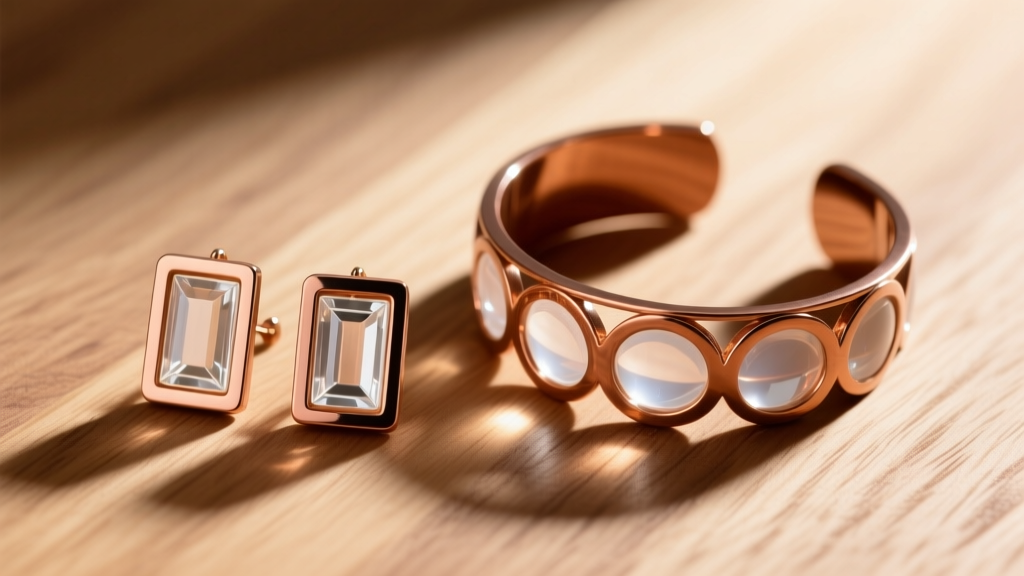
Mid century modern jewelry heavily favored cabochon-cut semi-precious stones—particularly turquoise, amethyst, lapis lazuli, and tiger's eye—because their smooth, rounded domes echoed the era's organic, atomic-age silhouettes. However, the 1950s and 60s were also a time of rampant, undisclosed gemstone treatments.
- Turquoise: Natural, un-stabilized turquoise from the mid-century will often show a network of fine cracks (crazing) or slight color shifts where oils from the skin have penetrated the stone over 70 years. Perfectly uniform, bright blue turquoise in a 1950s piece is likely stabilized with epoxy or is a synthetic imitation like Gilson turquoise.
- Lapis Lazuli: Lower-grade lapis was frequently dyed in the mid-century to mimic the prized Afghan royal blue. According to the GIA Gem Encyclopedia, you can spot dyed lapis by using a 10x jeweler's loupe to look for blue dye concentrated in the white calcite veins of the stone, or by wiping the stone with a cotton swab lightly dampened with acetone to see if color transfers.
- Amethyst: Mid-century amethyst cabochons were often cut from lighter, lower-grade rough and backed with foil or dark paint in closed-bezel settings to enhance their purple hue. Always check if the bezel is open on the back to assess the true color of the stone.
Building a High-Value Collection on a Modest Budget
If you are priced out of the Greenwich Village masterworks, you can still build a museum-quality collection by focusing on specific, undervalued niches within the mid century modern jewelry market.
"The secret to budget collecting in the mid-century space is to buy the best unsigned pieces rather than mediocre signed ones. A heavy, 80-gram unsigned Taxco silver cuff with masterful repoussé work will always outlast and outperform a thin, damaged piece by a recognized maker."
Strategy 1: Hunt for "Forstner" and "Rebajes" Copper
Copper was the darling of the mid-century artisan movement due to its low cost and malleability. Makers like Frank Rebajes and the Forstner company produced incredible, sculptural copper pieces. Because copper is not a "precious" metal, these pieces are often overlooked by traditional fine jewelry investors, keeping prices in the $100 to $300 range despite their immense historical and artistic value.
Strategy 2: Embrace Mid-Century Plastics and Lucite
The post-war era saw an explosion in the use of acrylics and Lucite. Carved Lucite brooches and cuff bracelets, particularly those featuring embedded elements like starbursts or confetti, capture the optimistic, space-age zeitgeist of the 1950s. When assessing Lucite, use your sense of smell. Vintage Lucite is odorless when cool, but if you rub it vigorously and it smells sharply of chemicals or camphor, it may be a later reproduction or a different, less stable plastic like celluloid, which is prone to cracking and off-gassing.
Final Thoughts on Valuation
Evaluating mid century modern jewelry is an exercise in appreciating form over traditional material wealth. By understanding the architectural intent of the studio jewelers, recognizing the hallmarks of Taxco silver, and avoiding the fatal trap of over-polishing, you can confidently navigate the 2026 market. Whether you are spending $50 on an unsigned copper cuff or $5,000 on a biomorphic silver necklace, the true value lies in the piece's ability to capture the bold, unapologetic spirit of the mid-century design revolution.


