Vintage Goldstone Jewelry: 2026 Valuation & Price Guide
Discover how to appraise vintage goldstone jewelry in 2026. Learn pricing tiers, spot authentic Murano glass, and evaluate metal settings for true value.

The Misnomer of Goldstone: Understanding Aventurine Glass
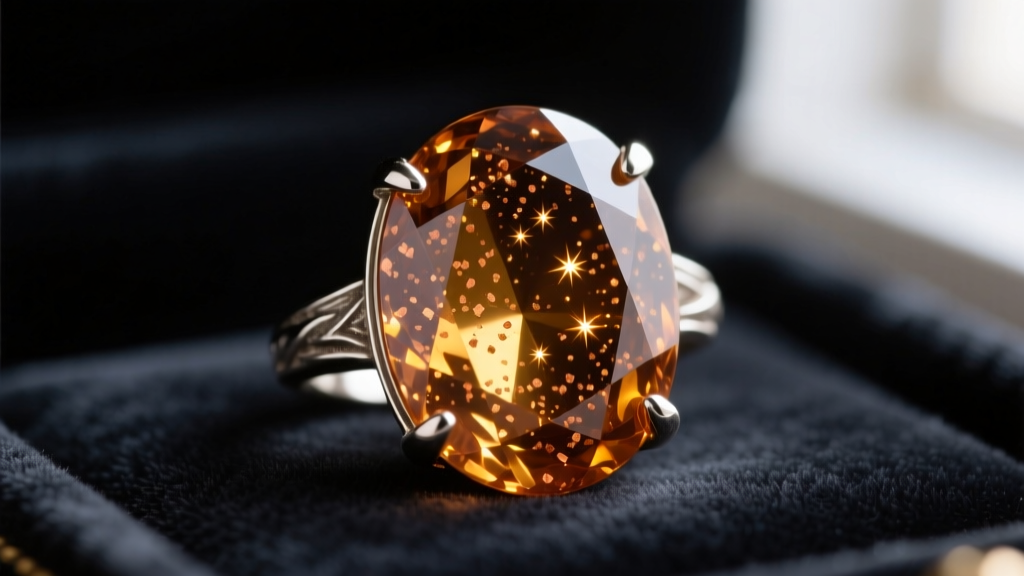
When evaluating vintage goldstone jewelry, the first rule of appraisal is recognizing that you are not looking at a natural gemstone. Goldstone is a type of aventurine glass, a man-made material born from a serendipitous kiln accident in 17th-century Venice. According to historians at The Corning Museum of Glass, the Miotti family famously held a monopoly on this sparkling material, which gets its glitter from microscopic copper crystals suspended in a silica matrix.
For the modern collector in 2026, this distinction is critical for budget assessment. You are paying for historical craftsmanship, the quality of the glass batch, and the preciousness of the metal setting—not the rarity of a mined mineral. Natural aventurine (a quartz variety) contains mica inclusions and looks vastly different from the sharp, metallic glitter of true copper-bearing goldstone.
2026 Market Valuation: Pricing Tiers for Vintage Goldstone
The secondary market for vintage goldstone jewelry is highly stratified. A piece's value is rarely dictated by the goldstone itself, but rather by the era, the metal setting, and the complexity of the fabrication. Below is a current valuation framework for estate buyers and sellers.
| Era & Style | Typical Setting | Estimated Value Range (2026) | Key Value Drivers |
|---|---|---|---|
| Mid-Century Costume (1940s-1970s) | Base metal, gold-tone alloy, rhodium plate | $15 - $65 | Brand name (e.g., Trifari, Monet), condition of plating, clasp mechanics. |
| Victorian & Edwardian (1850s-1910s) | Sterling silver, low-karat gold (9k-14k), vermeil | $120 - $450 | Hallmarks, Etruscan revival granulation, marcasite accents, bezel quality. |
| Art Deco & Retro (1920s-1940s) | Sterling, white gold, early plastics (Bakelite) | $85 - $300 | Geometric cutting of the glass, carved Bakelite integration, enamel work. |
| High-Karat Artisan & Mourning (1800s) | 15k-18k Gold, woven hair integration, pinchbeck | $500 - $1,500+ | Provenance, intricate metalwork, mourning jewelry lineage, museum-quality glass. |
Evaluating the Glass: Flecks, Clarity, and Fatal Flaws
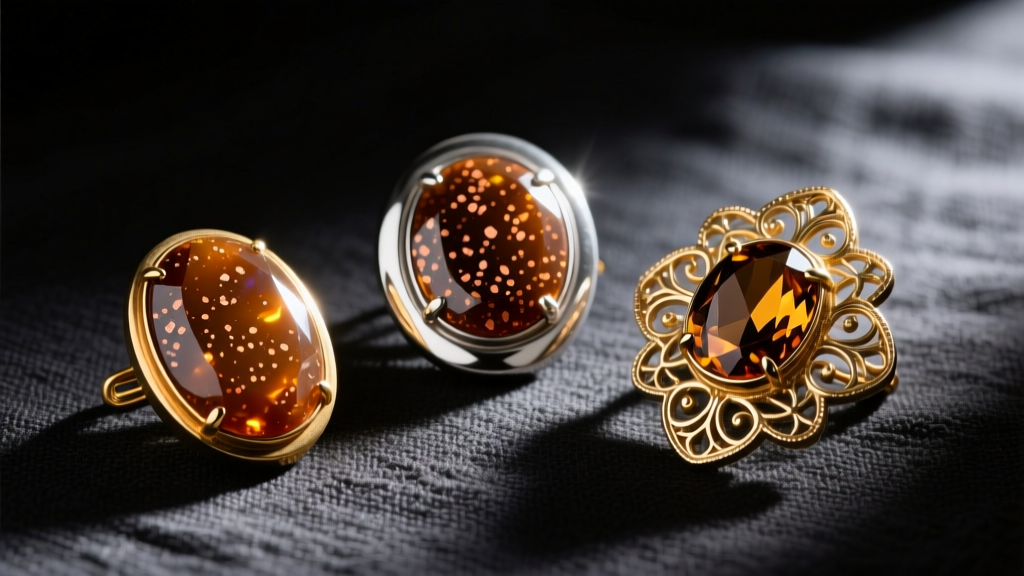
Not all vintage goldstone is created equal. The manufacturing process requires a highly controlled reduction atmosphere in the kiln to prevent the copper from oxidizing into a dull green. If oxygen enters the melt, the copper turns into cuprite, ruining the sparkle. When appraising a piece, use a 10x jeweler's loupe to inspect the glass for the following characteristics:
The 'Dead Zone' Defect
In vintage glass batches, the center of the crucible often cooled at a different rate than the edges. This created 'dead zones'—areas where the copper failed to crystallize into flat, reflective plates, resulting in cloudy, brownish, or completely transparent patches. High-end Victorian jewelers meticulously cut around these zones. If a vintage pendant features a prominent dead zone in the center of the cabochon, deduct 30% to 50% from its baseline market value.
Bubbles and Striations
While a few microscopic bubbles are expected in 19th-century hand-poured glass, large or clustered bubbles indicate poor temperature control or later, mass-produced 20th-century reproductions. Striations (swirl marks) should be minimal. Heavy striations distract from the copper inclusions and lower the aesthetic and monetary value.
Surface Abrasions
Goldstone has a Mohs hardness of roughly 5.5 to 6.0, making it softer than quartz and highly susceptible to scratching from everyday dust (which contains quartz particles). When evaluating estate jewelry, check the 'table' or highest point of the cabochon under direct light. Micro-scratches are common and acceptable, but deep gouges that catch your fingernail require professional lapidary repolishing, which costs between $40 and $90 and alters the original historical profile of the stone.
Assessing Metal Settings and Hardware Integrity
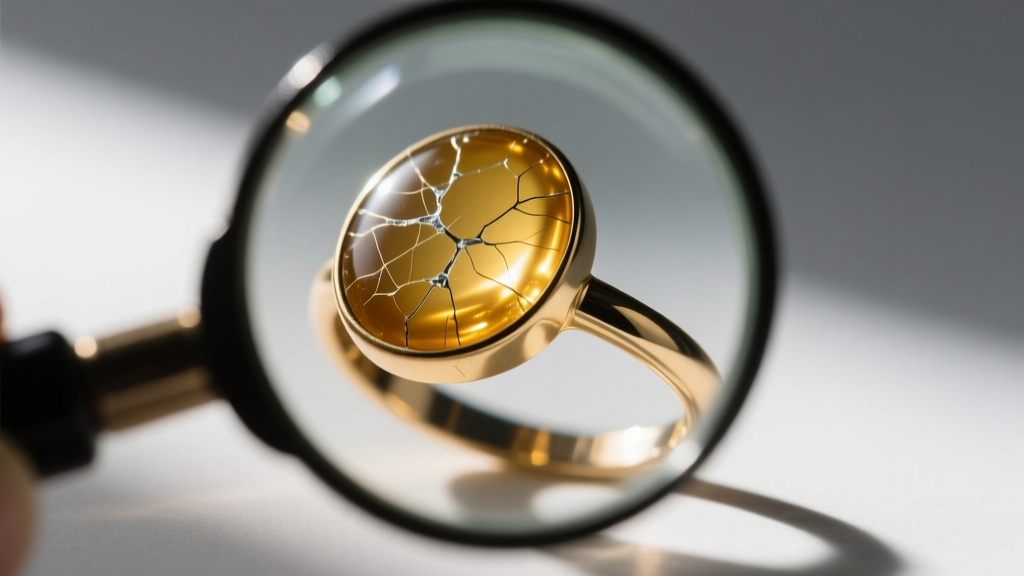
Because the glass itself is relatively inexpensive to reproduce, the bulk of the financial value in vintage goldstone jewelry lies in the metalwork. Here is how to assess the hardware:
- Bezel vs. Prong Settings: Bezel settings are vastly superior for goldstone. Because the glass is brittle and prone to conchoidal chipping, prong settings leave the edges vulnerable. A Victorian bezel-set piece commands a 20% premium over an identical prong-set piece due to the superior protection and higher labor cost of the original fabrication.
- Vermeil and Gold Wash Wear: Many Edwardian and Retro pieces feature gold-washed silver (vermeil). If the gold wash is entirely worn away on the high-contact points (like the back of a ring band or the clasp of a brooch), expect a 15% to 25% reduction in value. Re-plating is possible but destroys the original antique patina, which serious collectors prefer.
- Clasp Mechanics: For bracelets and necklaces, the clasp is a primary dating tool. A simple C-clasp indicates a pre-1900s origin, while a safety chain and locking barrel clasp suggest post-1920s. Ensure the pin stem is not bent and that the solder joints at the hinge show no signs of modern, clumsy repair with lead-based solder.
Provenance and Maker Marks: When Does the Brand Matter?
In the realm of vintage goldstone jewelry, the maker's mark can either be irrelevant or the sole driver of the price. For Victorian and Edwardian pieces, the jewelry is rarely signed by a specific brand; instead, you look for metal hallmarks (like the British lion passant for sterling silver or anchor for Birmingham). In these cases, the craftsmanship dictates the price.
However, moving into the Art Deco and Mid-Century eras, brand names come into play. A goldstone brooch by Miriam Haskell or Schiaparelli can easily fetch $400 to $800, regardless of the base metal setting, because you are paying for the designer's artistic provenance and the complex, multi-layered assembly techniques unique to their houses. Conversely, a mass-produced 1960s goldstone ring by Sarah Coventry or Avon will rarely exceed $25, even in mint condition, because these were catalog-ordered costume pieces produced in the tens of thousands.
Appraiser's Tip: Always test the metal before finalizing a budget assessment. A heavy, ornate Victorian-style pendant might look like solid gold, but if it is unmarked and fails a specific gravity test or XRF scan, it is likely gold-filled or pinchbeck. Never pay solid-gold premiums for vintage goldstone jewelry without verified metallurgical proof.
Color Variations: Red, Blue, and Green Goldstone
While the classic reddish-brown copper aventurine is the most common, vintage goldstone jewelry occasionally features blue or green variations. True vintage blue goldstone (often utilizing cobalt or manganese inclusions) is significantly rarer and was popularized in mid-century Italian tourist-trade jewelry. A verified 1950s Italian blue goldstone silver bracelet can command a 40% premium over its brown counterpart. Green goldstone, however, is almost exclusively a modern (post-1980s) invention using barium or chromium. If a dealer attempts to sell you a 'Victorian' green goldstone piece, walk away—it is a modern reproduction, and its antique value is zero.
Maintenance and Storage Protocols
To preserve the value of your vintage acquisitions, never use ultrasonic cleaners or harsh chemical dips on goldstone. The glass is porous on a microscopic level, and the metal settings (especially porous cast silver) can trap chemicals that eventually cause the copper inclusions to oxidize and turn black from the inside out. Clean vintage goldstone only with a soft, dry microfiber cloth and store it in individual anti-tarnish flannel bags to prevent the metal settings from scratching adjacent glass cabochons.
Final Thoughts on Budgeting for Goldstone
Building a collection of vintage goldstone jewelry in 2026 requires a balance of aesthetic appreciation and material realism. Set your budget based on the precious metal content and the historical era of the fabrication, rather than the 'gemstone' itself. By understanding the chemistry of aventurine glass, recognizing the fatal flaws of dead zones and edge chips, and accurately reading period hallmarks, you can confidently navigate estate sales and antique dealers, securing sparkling pieces of history at their true market value.