Victorian Hairwork Jewelry: 2026 Trend Revival & Styling Guide
Discover the 2026 revival of Victorian hairwork jewelry. Learn to authenticate palette and table work, understand market values, and style antique pieces.

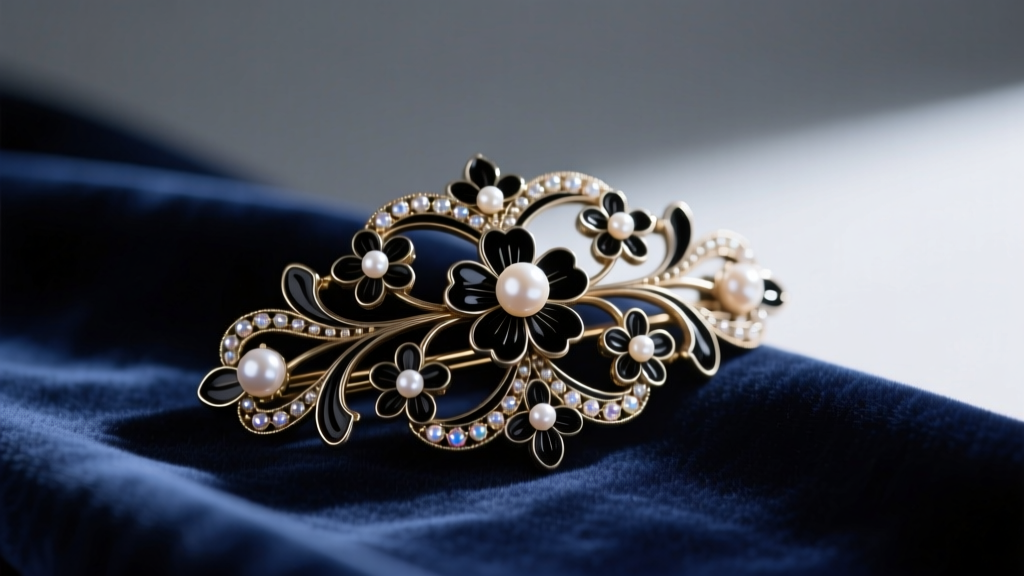
The 2026 Revival: Why Victorian Hairwork Jewelry is Trending Again
Once relegated to the back of antique store display cases and dismissed by modern audiences as 'macabre' or 'creepy,' Victorian hairwork jewelry is experiencing a massive renaissance in 2026. Driven by the sustained popularity of dark academia, neo-romanticism, and a broader cultural shift toward sustainable, deeply personal adornment, collectors and fashion-forward stylists are actively hunting for authentic pieces. Unlike mass-produced contemporary jewelry, hairwork represents the ultimate slow fashion—each piece is a literal fragment of a human being, woven into an enduring testament of love, grief, or friendship.
According to the Victoria and Albert Museum's jewelry archives, the Victorian era saw hairwork transition from a private, domestic craft performed by women in the parlor to a highly commercialized industry. Today, the 2026 market is defined by a sophisticated buyer who understands the distinction between mourning pieces and sentimental tokens, and who values the microscopic precision required to create these wearable artifacts. Whether you are an estate jewelry dealer or a vintage enthusiast looking to integrate historical pieces into a modern wardrobe, understanding the technical nuances of hairwork is essential.
Decoding the Craft: Palette Work vs. Table Work
To accurately identify and value Victorian hairwork jewelry, one must first understand the two primary construction methods utilized in the 19th century. The terminology dictates not only the piece's aesthetic but also its structural integrity and market value.
Palette Work
Palette work was executed on a flat surface, much like painting. Artisans used a specialized palette to arrange and weave incredibly fine strands of hair into intricate, two-dimensional motifs—most commonly florals, weeping willows, or urns. The hair was secured using gum arabic, a natural tree sap adhesive. Because palette work required immense dexterity and artistic vision, pieces featuring complex, multi-colored floral bouquets (often utilizing hair from several different family members) command the highest premiums in today's market. Palette work is almost exclusively found in brooches, pendants, and the flat faces of rings.
Table Work
Table work, conversely, is a three-dimensional braiding technique. Using a specialized braiding table with a central hole and a system of weighted bobbins, artisans braided hair into complex, tubular geometric patterns. This method was primarily used to create watch chains, bracelets, and necklaces. The tension required for table work meant that the hair had to be exceptionally strong. While human hair was preferred for sentimental pieces, Lang Antiques' Antique Jewelry University notes that horsehair was frequently used in commercial, lower-cost table work due to its superior tensile strength and length.
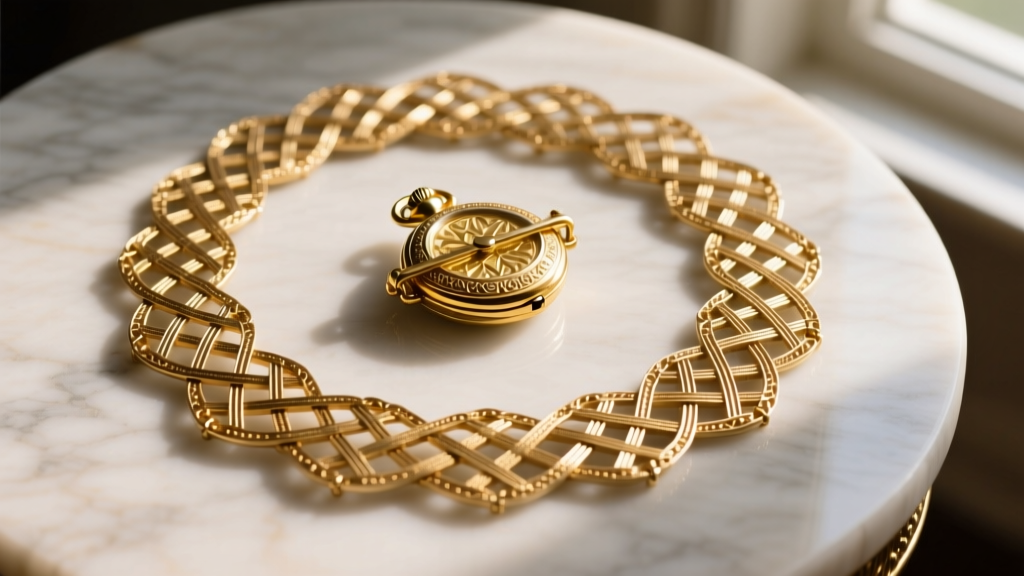
Authentication & Material Analysis: Spotting the Fakes
As the 2026 trend accelerates, the market has seen an influx of reproductions and 'frankenstein' pieces (where damaged hair is replaced with synthetic fibers). Authenticating Victorian hairwork jewelry requires a multi-sensory approach and an understanding of historical manufacturing techniques.
- The Ferrule and Crimping: Examine the metal collars (ferrules) where the hair meets the metal findings. Authentic Victorian table-work chains feature precise, hand-crimped metal ends. If the ferrule is glued over the hair with modern epoxy, or if the crimping looks machine-stamped and overly uniform, proceed with caution.
- Material Degradation: Human hair is remarkably stable, but the gum arabic used in palette work is highly susceptible to humidity fluctuations. Authentic 1860s palette brooches often show microscopic flaking or slight lifting of the hair motif under a 10x jeweler's loupe. Reproductions made in the 1980s or later often use synthetic resins that remain perfectly flat and glossy.
- The Burn Test (Destructive - Use with Extreme Caution): If you have access to a single, loose strand from a damaged piece, burning it will reveal its origin. Human hair burns slowly, smells like burnt feathers, and leaves a crushable ash. Synthetic nylon or rayon melts into a hard plastic bead. Note: Never perform this test on an intact, valuable antique.
- Seed Pearl Accents: High-end Victorian palette work often incorporates seed pearls to represent 'tears' or floral buds. Authentic pieces use pearls ranging from 1.5mm to 2.5mm, often with irregular shapes. Uniform, perfectly round pearls are a red flag for modern synthetic substitutes.
Market Valuation & Pricing Tiers
The valuation of Victorian hairwork jewelry in 2026 is heavily dependent on construction complexity, the karat of the gold fittings, and the presence of auxiliary materials like black enamel or seed pearls. Below is a current market framework for estate buyers and collectors.
| Category | Construction Type | Identifying Features | 2026 Market Value (USD) |
|---|---|---|---|
| Basic Watch Chains | Table Work | Simple 4-8 strand braids, base metal or gold-filled clasps | $120 - $350 |
| Sentimental Brooches | Palette Work | Flat woven motifs, seed pearls, no mourning enamel | $450 - $900 |
| Mourning Rings | Table Work / Encased | Hair encased in glass or woven in bezel, black enamel shoulders | $600 - $1,800 |
| Masterpiece Parures | Palette & Table Combo | Full suites (necklace, earrings, brooch), 14k+ gold, complex florals | $3,500 - $8,000+ |
Provenance dramatically alters these baselines. A mourning ring with a documented inscription linking it to a known historical figure can easily exceed $5,000, while an unmarked, damaged table-work chain might only fetch scrap value for its gold-filled fittings.
Modern Styling: Integrating Hairwork into Contemporary Wardrobes
The biggest hurdle for modern collectors is styling hairwork without appearing as though they are wearing a Halloween costume. The key to the 2026 aesthetic is juxtaposition—pairing the delicate, historical nature of hairwork with structured, modern, or subtly edgy garments.
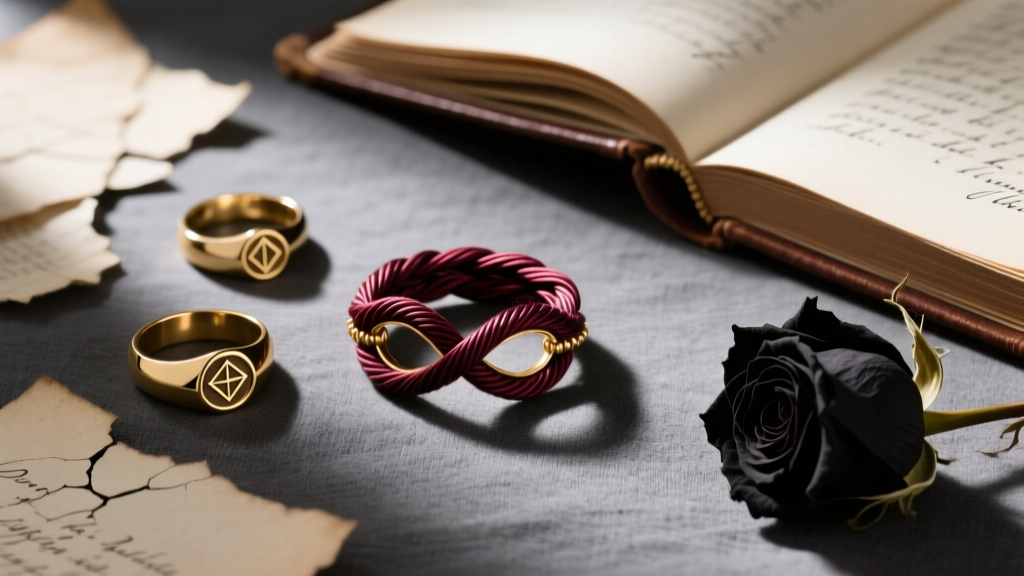
Layering and Conversion
Victorian brooches are notoriously difficult to wear on modern lapels, as the heavy C-clasps can damage delicate fabrics. Instead of piercing your garments, utilize non-damaging magnetic brooch converters or have a jeweler attach a hidden, screw-top bail to the back, converting the piece into a heavy pendant. Wear a complex palette-work pendant over a crisp, white button-down shirt or a black turtleneck to allow the intricate brown and blonde weaves to pop against a stark, minimalist background.
The Ring Stack
Victorian hairwork mourning rings, particularly those with flat, glass-covered bezels, integrate beautifully into modern ring stacks. Flank a delicate 15k gold hairwork ring with chunky, contemporary signet rings or textured silver bands. The mix of macabre history and modern brutalism creates a highly curated, fashion-forward look that aligns perfectly with current gothic-romantic trends.
Archival Care and Preservation
Hair is an organic protein, and while it survives centuries, the materials holding it together do not. Proper archival care is non-negotiable for preserving the value and integrity of your collection.
UV and Humidity Control: Prolonged exposure to ultraviolet light will bleach human hair, stripping it of its rich auburn and brown tones and turning it a brittle, pale yellow. Store all hairwork jewelry in a dark, climate-controlled environment. Maintain a relative humidity of around 45-55%. High humidity will rehydrate and soften the gum arabic in palette work, causing the intricate floral motifs to slump or detach entirely.
Storage Materials: Never store hairwork in PVC plastics or standard cardboard boxes, which off-gas chemicals that can degrade the hair proteins and tarnish the metal fittings. Wrap each piece individually in acid-free, unbuffered tissue paper and place them in archival-quality polyethylene bags. For rings and brooches, use acid-free jewelry boxes with untarnished cotton padding. By treating these pieces as the museum-grade artifacts they are, you ensure that these intimate tokens of Victorian life survive for generations to come.
For further historical context on the societal norms surrounding these pieces, The Metropolitan Museum of Art's overview of mourning jewelry provides an excellent deep dive into the strict etiquette that governed the wearing of hairwork during the 19th century.


