Authenticating Art Deco 1920s Jewelry: A Technical Guide
Master the technical authentication of art deco 1920s jewelry. Explore platinum alloys, die-striking methods, OEC diamonds, and 2026 market valuations.

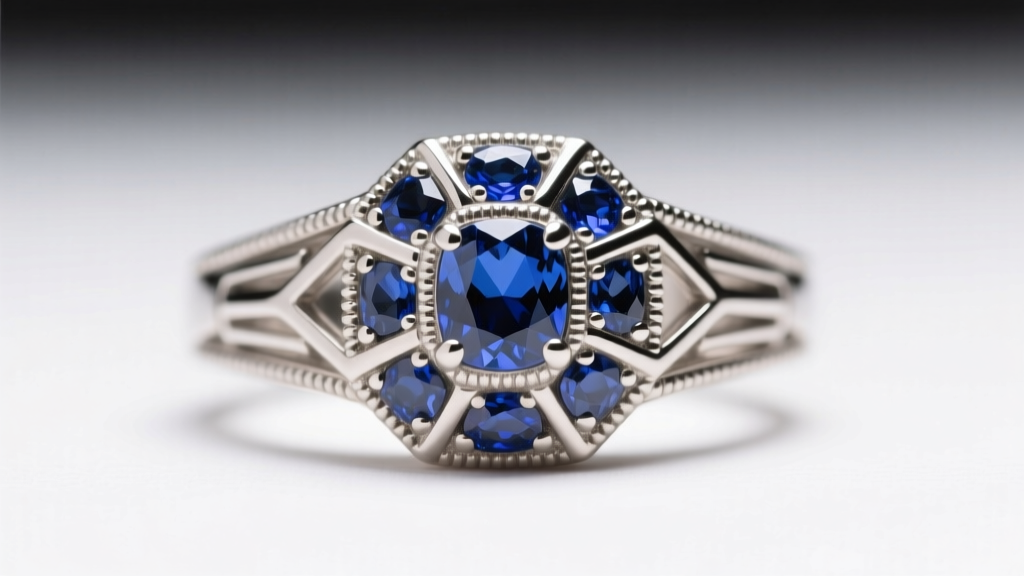
The Metallurgy of the Jazz Age: Platinum vs. White Gold
When evaluating art deco 1920s jewelry, the metallurgical composition is your first and most reliable indicator of authenticity. The 1920s marked the golden age of platinum in fine jewelry. However, not all platinum is created equal. Authentic pieces from this era were predominantly fabricated using a Pt900/Ir100 alloy (90% platinum, 10% iridium). This specific composition offered the ideal balance of malleability for intricate hand-sawing and the tensile strength required to hold delicate diamond melee securely. Under 10x magnification, Pt900/Ir100 exhibits a slightly warm, grayish-white patina that develops a soft luster over a century of wear.
Conversely, modern reproductions often utilize Pt950/Ru50 (platinum alloyed with ruthenium). Ruthenium makes the metal significantly harder, whiter, and more brittle, which is ideal for modern casting but historically inaccurate for the 1920s. If a purported 1920s piece features crisp, cast-looking prongs in bright white Pt950, it is almost certainly a modern reproduction or has undergone a complete modern re-mount.
White gold was also utilized, primarily in 14k or 18k formulations alloyed with nickel or palladium. 1920s 18k white gold inherently possesses a yellowish-gray undertone. To achieve the 'platinum look' demanded by the market, these pieces were heavily rhodium-plated. If you encounter a 1920s-style white gold ring that is un-plated yet brilliantly white, suspect a modern alloy (which often uses higher palladium content or modern bleaching agents) rather than an original Jazz Age mounting.
Stone Selection and Lapidary Techniques of the 1920s
The gemological profile of art deco 1920s jewelry is defined by strict geometric precision and specific historical cutting styles. The dominant diamond cut of the era was the Old European Cut (OEC). Unlike modern Round Brilliant cuts optimized for light return via a 57-58 facet arrangement with a 53-58% table, the OEC was cut to retain carat weight from the rough. An authentic 1920s OEC will typically feature a small table (38-53%), a high crown, and a distinctly open culet that is visible to the naked eye when looking straight down through the table.
For colored gemstones, the 1920s introduced the widespread use of calibré-cut stones. Sapphires, rubies, and emeralds were custom-cut and faceted to fit precisely into tapered channels, halos, or geometric negative spaces within the platinum mounting. Authentic calibré work requires immense skill; the stones should sit flush against one another with virtually no visible gaps, and the girdles are often left unpolished to reduce slippage during setting. Modern cast reproductions frequently use uniformly sized, commercially cut baguettes or squares that are held in place by excessive prongs or epoxy, lacking the bespoke, friction-fit precision of 1920s lapidary work.
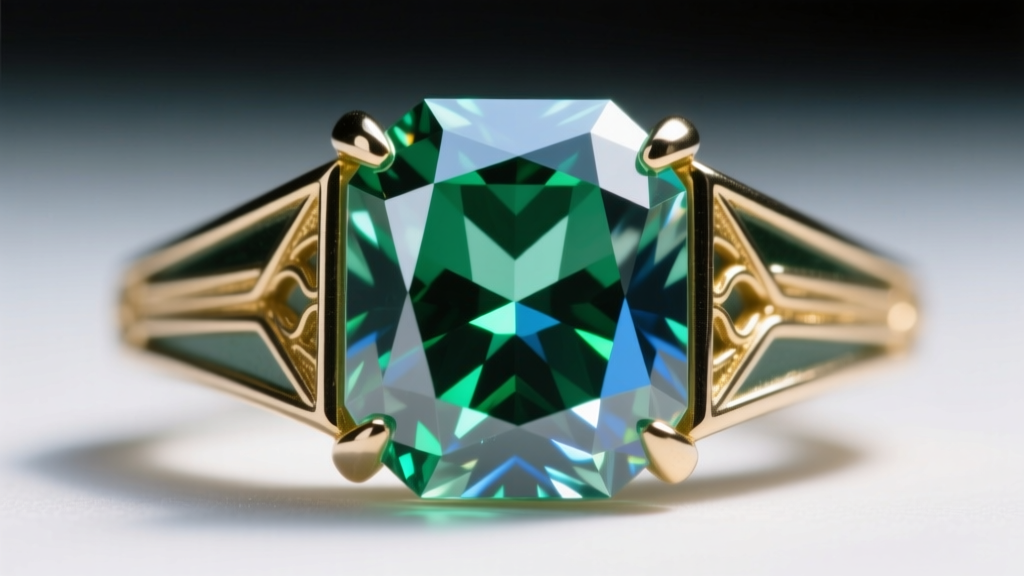
It is also vital to address synthetics. The Verneuil flame-fusion process for creating synthetic sapphires and rubies was commercially viable in the 1920s, and their presence does not automatically disqualify a piece from being authentic. However, flux-grown or hydrothermal synthetic emeralds and rubies are mid-to-late 20th-century inventions. If a GIA or AGL report identifies flux-grown inclusions in a purported 1920s piece, the stone is a later replacement.
Construction Methods: Die-Struck vs. Cast Reproductions
The most critical technical differentiator between authentic art deco 1920s jewelry and modern replicas lies in the manufacturing method. Genuine pieces were predominantly die-struck. This process involved placing a sheet of platinum or gold between two hardened steel dies and applying up to 50 tons of pressure via a drop press. This immense force compresses the metal's grain structure, resulting in a piece that is incredibly dense, durable, and capable of holding razor-sharp, knife-edged details.
Modern reproductions are almost exclusively cast using the lost-wax method. Cast metal cools with a porous, randomized grain structure, making it softer and incapable of holding the crisp, aggressive angles characteristic of the 1920s. Under a loupe, cast filigree will appear slightly rounded, soft, and occasionally exhibit microscopic porosity or pitting.
| Feature | Authentic 1920s Die-Struck | Modern Cast Reproduction |
|---|---|---|
| Edge Crispness | Knife-edged, sharp, aggressive angles | Rounded, soft, slightly bulbous edges |
| Metal Density | Highly compressed, non-porous | Prone to microscopic pitting and porosity |
| Millegrain Detail | Hand-applied; sharp, slightly irregular beads | Cast into mold; uniform, soft, 'melted' dots |
| Weight/Thickness | Surprisingly lightweight yet rigid | Often heavier, thicker, and more cumbersome |
Furthermore, examine the millegrain (the tiny beaded edges used to secure stones and decorate borders). In the 1920s, millegrain was applied by hand using a knurling wheel tool. Under magnification, authentic millegrain beads will show microscopic tool marks, slight irregularities in spacing, and sharp peaks. Cast millegrain, which is simply molded into the wax model, looks like perfectly uniform, soft, melted domes lacking any structural definition.
Hallmarks, Maker's Marks, and Dating Clues
Hallmarking laws varied drastically by country in the 1920s, making authentication a geographically nuanced endeavor. According to the Victoria and Albert Museum's archives on Art Deco design, French pieces from this era are heavily regulated. An authentic French platinum piece will bear the dog's head hallmark (tête de chien), introduced in 1912 for platinum, alongside a maker's mark in a lozenge-shaped cartouche. French 18k gold will feature the eagle's head hallmark.
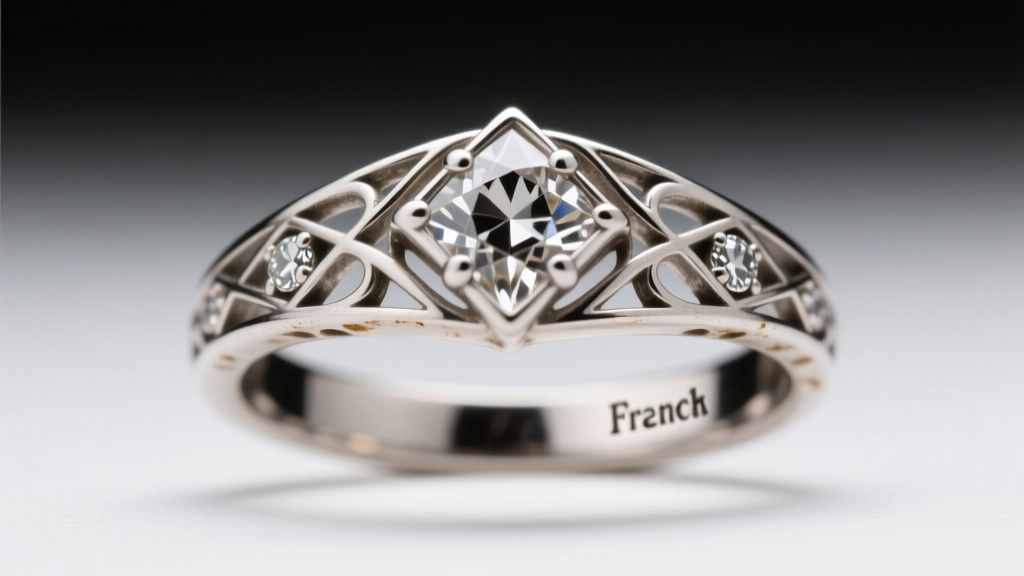
In the United States, hallmarking was not strictly enforced by federal law until the National Stamping Act of 1906, and even then, compliance was spotty. US pieces often lack metal purity stamps entirely, relying instead on the maker's mark or the retailer's stamp (e.g., Tiffany & Co., Marcus & Co., or J.E. Caldwell). As noted by the Lang Antique Jewelry University, identifying the specific maker's mark or retailer stamp is often more valuable for dating US art deco 1920s jewelry than searching for a 'PLAT' or '14K' stamp, which could easily be added decades later.
Another vital dating clue is the presence of solder joints. Authentic 1920s platinum jewelry was hand-fabricated, meaning components like basket settings, shanks, and gallery wires were soldered together. Look for slight discolorations or thicker joints under the gallery. Modern CAD/CAM designs are printed as a single, seamless 3D wax model and cast in one piece; a complete lack of solder joints on a complex, multi-tiered 1920s design is a massive red flag for a modern reproduction.
2026 Market Valuation and Investment Grades
The market for authentic art deco 1920s jewelry has matured significantly, with collectors heavily penalizing altered or heavily restored pieces. In the current 2026 landscape, condition and originality dictate the premium. A piece with its original hand-cut millegrain, un-replaced OEC diamonds, and original Pt900/Ir100 alloy will command a 40% to 60% premium over a similar piece that has been re-tipped with modern platinum solder or fitted with laser-drilled replacement stones.
- Entry-Level (Filigree & Melee): $1,200 – $3,500. Typically 14k white gold or simple platinum die-struck rings featuring single-cut or small OEC melee diamonds without major center stones.
- Mid-Tier (Geometric & Calibré): $8,000 – $25,000. Platinum rings or bracelets featuring high-quality calibré-cut sapphires/rubies paired with 1.00ct to 3.00ct OEC or transitional cut center diamonds.
- Investment Grade (Haute Joaillerie): $50,000 – $250,000+. Signed pieces by Cartier, Van Cleef & Arpels, or Boucheron featuring complex Tutti Frutti carvings, impeccable provenance, and untouched original condition.
Expert Tip: Never purchase high-value art deco 1920s jewelry based solely on a visual inspection. Always require a gemological report from a reputable lab (GIA, AGL, or SSEF) that explicitly identifies the cutting style of the diamonds and the origin/treatment status of the colored gemstones, ensuring the stones are period-correct and free from modern fracture filling or heat treatment.


