A Step-by-Step Guide to Authenticating Antique Cloisonne Jewelry
Learn how to authenticate, clean, and value antique cloisonne jewelry with our expert step-by-step guide on wire gauges, enamel tests, and conservation.

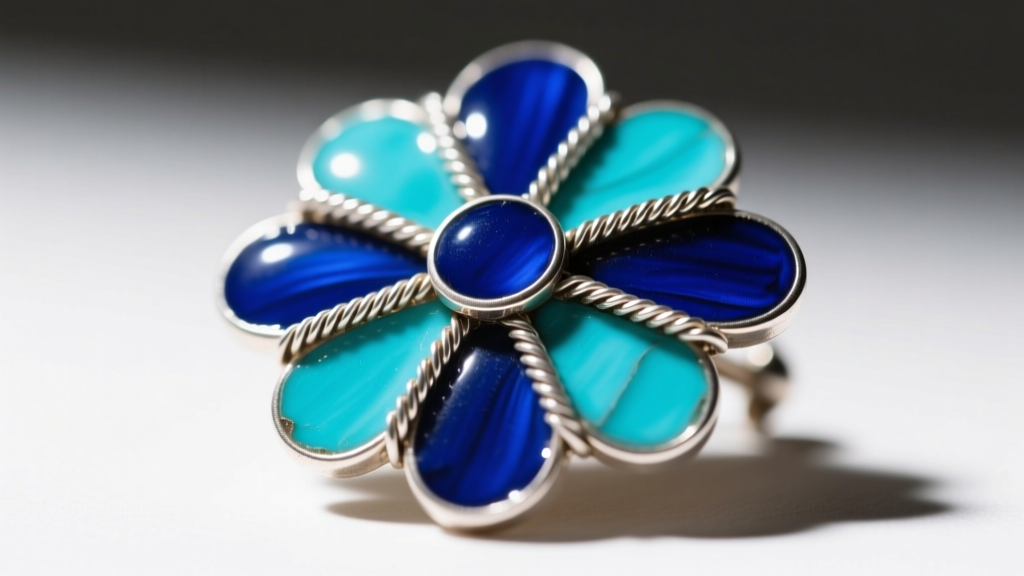
The Anatomy of True Cloisonné
Cloisonné is a meticulous enameling technique where fine metal wires (cloisons) are soldered to a metal base to create cellular compartments, which are then filled with vitreous enamel paste and fired in a kiln at temperatures exceeding 1400°F (760°C). For collectors and estate buyers, distinguishing genuine antique cloisonne jewelry from modern resin-cast reproductions or cold-enamel fakes requires a trained eye and an understanding of historical metallurgy. This guide provides a definitive, step-by-step framework for authenticating, cleaning, and evaluating these fragile masterpieces.
Step 1: Regional Authentication and Wire Gauge Analysis
The first step in evaluating antique cloisonne jewelry is identifying its regional origin, which dictates the expected base metal, wire thickness, and enamel composition. The three primary historical centers for antique cloisonné are Russia, Japan, and China, each with distinct manufacturing signatures.
| Origin & Era | Base Metal | Wire Gauge & Style | Enamel Characteristics | Typical Hallmarks |
|---|---|---|---|---|
| Russian (1860-1917) | Silver (84 zolotnik) | 0.3mm - 0.5mm, slightly irregular | Opaque, vibrant cobalt, turquoise, and white | Maker marks (e.g., Khlebnikov, Ovchinnikov), 84 silver standard |
| Japanese Meiji (1868-1912) | Silver, Copper, Shakudo | 0.1mm or 'wireless' (Musen) | Translucent, deep ruby red, forest green, mirror polish | Kakihan (studio seals), Ando, Namikawa |
| Chinese Qing/Export (1800-1930) | Copper, Brass | 0.5mm+, uniform, heavily gilded | Opaque, lapis lazuli blue, turquoise, lotus motifs | Rarely marked; later export pieces stamped 'CHINA' |
According to the Victoria and Albert Museum, Japanese artisans like Namikawa Yasuyuki pioneered the 'wireless' (musen) technique in the late 19th century, removing the wires before the final firing to create a seamless, painterly enamel surface. If you encounter a piece marketed as 19th-century Japanese cloisonné but it features thick, uniform, machine-drawn wires, it is likely a mid-century tourist trade reproduction.
Step 2: Material Verification Tests
Modern counterfeiters often use epoxy resins or cold enamel paints to mimic the glassy surface of vitreous enamel. Because true vitreous enamel is essentially glass, it reacts to physical and thermal stimuli differently than polymers.
The Hot Needle Test
Heat a fine steel needle with a lighter until it is warm (not red-hot, to avoid damaging the piece). Gently touch the tip to an inconspicuous area of the enamel. Vitreous enamel will remain completely unaffected. If the material is epoxy or resin, the needle will leave a permanent indentation, and you may detect a faint chemical odor.
Longwave UV Light Inspection
Shine a 365nm longwave ultraviolet flashlight across the jewelry's surface. Genuine antique vitreous enamel is inert and will not fluoresce. Conversely, modern synthetic resins, cyanoacrylate adhesives used in amateur repairs, and cold enamel paints will typically fluoresce bright white, blue, or milky green under UV light.
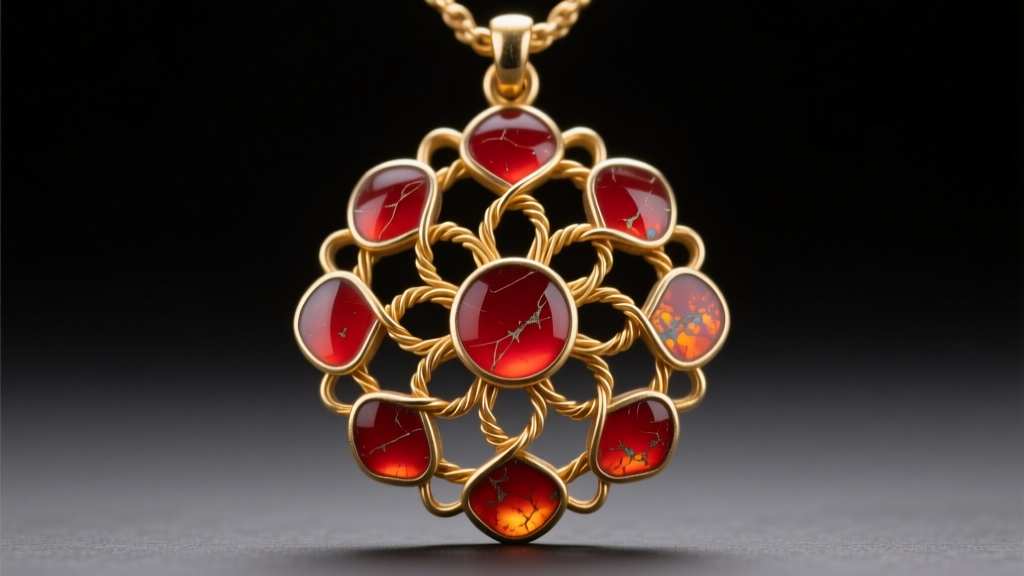
Step 3: Safe Cleaning Protocols for Vitreous Enamel
Cleaning antique cloisonne jewelry is fraught with risk. The metal base and the enamel expand and contract at different rates when exposed to temperature changes, meaning aggressive cleaning can easily cause the glass to fracture or pop out of its wire cells.
What to Avoid at All Costs
- Ultrasonic Cleaners: The high-frequency vibrations will shatter micro-fissures in century-old enamel.
- Silver Dips and Ammonia: Chemical baths will strip the historic patina from the silver wires and can cloud the surface gloss of the enamel.
- Steam Cleaners: Sudden thermal shock will cause immediate enamel delamination.
The Conservator's Washing Method
- Line a plastic basin with a soft towel to prevent impact damage if the piece slips.
- Mix a solution of distilled water and a few drops of pH-neutral conservation soap (such as Orvus WA paste or plain, unscented Dawn dish soap).
- Submerge the jewelry for no more than 3-5 minutes to loosen surface oils and skin acids.
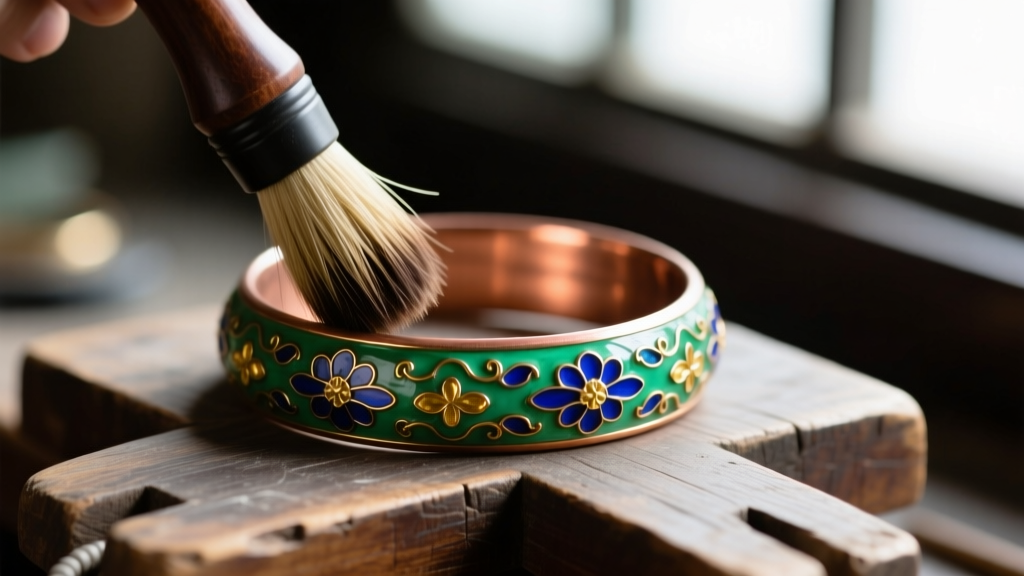
- Using a soft, natural horsehair brush, gently agitate the surface. Do not use nylon or synthetic bristles, which can harbor micro-scratches on softer, historic enamel glazes.
- Rinse thoroughly with room-temperature distilled water to prevent hard water mineral deposits.
- Pat dry with a lint-free microfiber cloth and allow to air-dry completely in a low-humidity environment.
Step 4: Assessing Damage and Valuation Metrics
When evaluating estate acquisitions, understanding the difference between acceptable age-related wear and catastrophic damage is critical for accurate pricing. The Metropolitan Museum of Art notes that true enamel restoration requires kiln-firing new glass frit into the damaged cells, a process that risks destroying the surrounding antique enamel.
"Never attempt to press down a lifted cloisonné wire with pliers. The wire is fused to the base metal and the surrounding glass; applying mechanical pressure will almost certainly crack the adjacent enamel cells." — Master Enamel Conservator Guidelines
Market Valuation Tiers (2026 Estimates)
Pricing for antique cloisonne jewelry varies wildly based on provenance, maker, and condition. Below is a realistic market framework for authentic pieces:
- Russian Silver Cloisonné Spoons & Small Brooches: $300 – $900. Pieces by renowned makers like Feodor Rückert or Khlebnikov command premiums up to $2,500.
- Japanese Meiji Era Pendants & Hatpins: $800 – $3,500. Wireless (musen) pieces or those featuring silver/yuki (silver foil inclusions) under translucent enamel fetch the highest prices at auction.
- Chinese Qing Dynasty Copper Bracelets & Belt Hooks: $400 – $1,200. Look for heavy copper bases and natural lapis lazuli or turquoise inlay accents, which elevate the value above standard 1920s export pieces ($150 – $300).
Final Storage and Preservation Advice
Once authenticated and cleaned, antique cloisonne jewelry must be stored in a climate-controlled environment. Extreme humidity can cause the copper or silver base metals to oxidize from the inside out, pushing the enamel outward and causing 'spalling.' Store each piece individually in acid-free, unbuffered tissue paper inside a sealed polyethylene bag with a silica gel desiccant packet to maintain a stable microclimate. By following these rigorous authentication and conservation steps, collectors can preserve the vibrant, glass-like beauty of these historical artifacts for generations to come.


