Identifying Antique Austro Hungarian Jewelry: Hallmarks & Metals
Master the identification of antique Austro Hungarian jewelry. Explore 800 silver hallmarks, gold wash techniques, and valuation metrics.

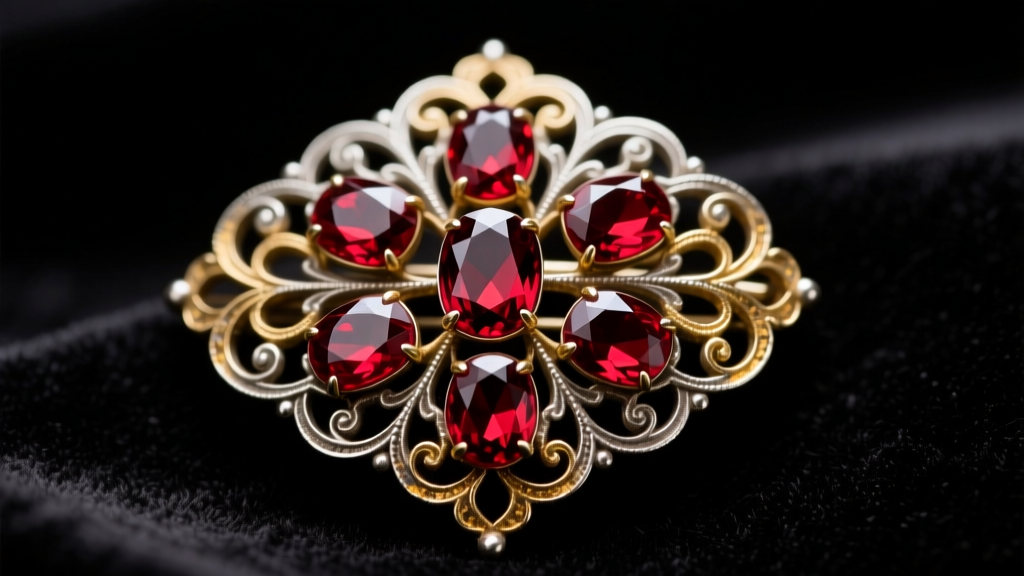
The Austro-Hungarian Empire (1867–1918) was a sprawling nexus of cultural cross-pollination, and its material legacy is nowhere more evident than in its metalwork and lapidary arts. For serious collectors and estate appraisers, identifying antique austro hungarian jewelry requires moving beyond superficial aesthetic appreciation and into the realm of metallurgical analysis, hallmark decoding, and structural forensics. Unlike the streamlined production of the British Industrial Revolution, Austro-Hungarian pieces often represent a hybrid of highly localized folk traditions—such as Transylvanian filigree and Bohemian stone-cutting—merged with strict, imperially mandated assay standards.
In this technical deep dive, we deconstruct the exact alloys, hallmarking matrices, and structural failure modes that define authentic Dual Monarchy jewelry, providing a definitive framework for identification and valuation in the current 2026 collector's market.
The Metallurgical Foundation: Silver, Talmi Gold, and Pinchbeck
To authenticate antique austro hungarian jewelry, one must first understand the base metals utilized across the empire's diverse economic strata. While high-karat gold was reserved for the aristocracy, the burgeoning middle class and regional folk markets relied on highly specific alloys that serve as vital dating and provenance clues today.
800 and 833 Silver Standards
Unlike the British sterling standard (925/1000), the Austro-Hungarian empire predominantly utilized 800/1000 and 833/1000 silver for commercial and folk jewelry. This slightly lower silver content was not a mark of inferiority, but a practical metallurgical choice. The 800 silver alloy (80% silver, 20% copper) provided superior tensile strength, which was absolutely critical for the structural integrity of the empire's signature cannetille and tight filigree wirework. When examining a piece under a loupe, look for the distinct, slightly warmer patina that 800 silver develops compared to the cooler, brighter oxidation of 925 sterling.
Talmi Gold and Gold Wash
A frequent point of confusion for novice collectors is the presence of 'Talmi Gold' (or Talmigold). Developed and heavily utilized in the late 19th-century Austro-Hungarian empire, Talmi Gold is a specific copper-zinc alloy (typically 90% copper, 10% zinc) that was electroplated with a microscopic layer of gold. It was vastly superior to standard Pinchbeck due to its resistance to tarnish and its ability to hold intricate die-stamped details. However, by 2026, the galvanic layers on many surviving Talmi Gold pieces have worn through, revealing the reddish-copper base metal at high-friction contact points, such as brooch pin stems and clasp hinges.
Decoding the Austro-Hungarian Hallmarking System (1867–1918)
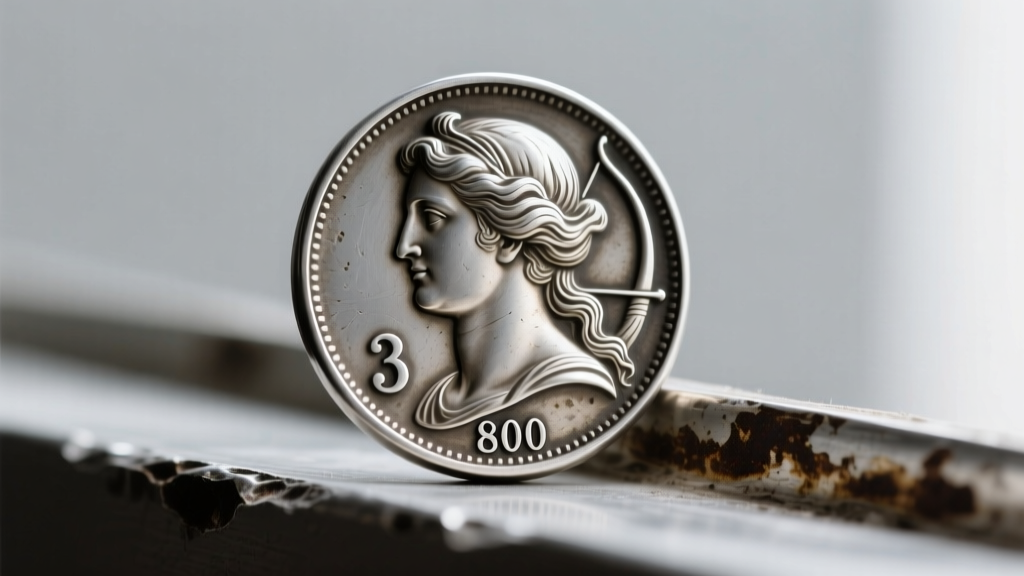
The hallmarking act of 1867, which came into full legal effect in 1872, standardized assay marks across the Dual Monarchy. According to the 925-1000 Silver Hallmarks Database, these punch marks are the most reliable method for authenticating antique austro hungarian jewelry, though they are notoriously difficult to read due to their small size and frequent placement in hidden crevices of filigree work.
The system relied on mythological profiles combined with numerical fineness indicators and, occasionally, a letter denoting the specific assay office (e.g., 'A' for Vienna, 'B' for Prague, 'C' for Lemberg).
| Metal | Profile Mark | Number | Fineness | Karat Equivalent |
|---|---|---|---|---|
| Silver | Diana (Female head with crescent moon) | 1 | 937.5 / 1000 | N/A |
| Silver | Diana | 2 | 900 / 1000 | N/A |
| Silver | Diana | 3 | 800 / 1000 | N/A |
| Gold | Apollo (Male head) | 2 | 840 / 1000 | ~20K |
| Gold | Apollo | 3 | 771 / 1000 | ~18K |
| Gold | Apollo | 4 | 750 / 1000 | 18K |
Expert Note: The 'Diana' mark is frequently misidentified by generalist appraisers as a generic female profile. Under 10x magnification, the true Diana mark will reveal a distinct crescent moon woven into the hair at the nape of the neck. If the moon is absent, you are likely looking at a later reproduction or a mark from a different regional assay office.
Gemstone and Enamel Techniques: Bohemian Garnets to Cannetille
The structural metalwork of the empire was only half the equation; the lapidary applications were equally distinct. As noted by the Victoria and Albert Museum's jewelry archives, the Austro-Hungarian empire had direct access to some of Europe's most prolific gemstone deposits, which heavily dictated regional styling.
Bohemian Pyrope Garnets
Mined primarily in the Bohemian region (modern-day Czech Republic), these pyrope garnets are famous for their deep, blood-red color and high refractive index. In authentic antique austro hungarian jewelry, these stones are almost exclusively rose-cut or flat-back cabochon, set in closed-back, foil-backed settings to maximize light return. The settings were typically crafted from 'garnet gold' (a low-karat gold alloy with a high copper content to match the red hue of the stones) or silver with a heavy gold wash.
Cannetille vs. Traditional Filigree
While filigree utilizes flat, twisted wires soldered to a backplate, cannetille is a highly specialized technique involving tightly coiled, spring-like wires and granulated beads built up in three dimensions. Transylvanian and Hungarian folk jewelers elevated cannetille to an art form. Authentic 19th-century cannetille will show microscopic variations in the coil tension and slight soldering overflows, whereas 20th-century revival pieces often exhibit the uniform, machine-stamped perfection of die-struck wire.
Common Failure Modes and Conservation Protocols
When evaluating estate pieces for acquisition or restoration, understanding the specific failure modes of Dual Monarchy jewelry is critical to avoid catastrophic conservation errors.
- Foil Oxidation in Closed-Back Settings: Moisture ingress through microscopic gaps in the bezel will cause the silver or copper foil behind Bohemian garnets and paste stones to oxidize, turning black and killing the stone's brilliance. Protocol: Never use ultrasonic cleaners or steam on these pieces. The backing must be carefully removed by a master jeweler, the foil replaced, and the bezel re-burnished.
- Galvanic Corrosion in Multi-Metal Pieces: Pieces combining 800 silver components with Talmi Gold or copper-alloy structural pins are highly susceptible to galvanic corrosion when exposed to high humidity. This manifests as a bright, powdery green verdigris at the junction points. Protocol: Mechanical removal under a microscope using a fiberglass brush, followed by the application of a micro-crystalline wax barrier (like Renaissance Wax) to seal the bimetallic junction.
- Enamel Thermal Shock: Austro-Hungarian champlevé and guilloché enamels were fired onto copper and silver bases. Sudden temperature changes during improper cleaning can cause the glass enamel to craze or pop off the metal substrate due to differing coefficients of thermal expansion.
2026 Market Valuation and Collector Pricing Tiers
The market for antique austro hungarian jewelry has matured significantly. According to recent auction data analyzed by Lang Antiques University, collectors are increasingly prioritizing structural integrity and regional specificity over mere karat weight. Below is the current valuation framework for authenticated, hallmarked pieces in excellent to mint condition.
| Category | Material & Technique | Estimated Market Value (USD) |
|---|---|---|
| Folk Filigree Brooches | 800 Silver, Talmi Gold wash, basic granulation | $150 – $350 |
| Bohemian Garnet Parures | Garnet Gold / Silver, Rose-cut Pyrope, matched sets | $800 – $2,500 |
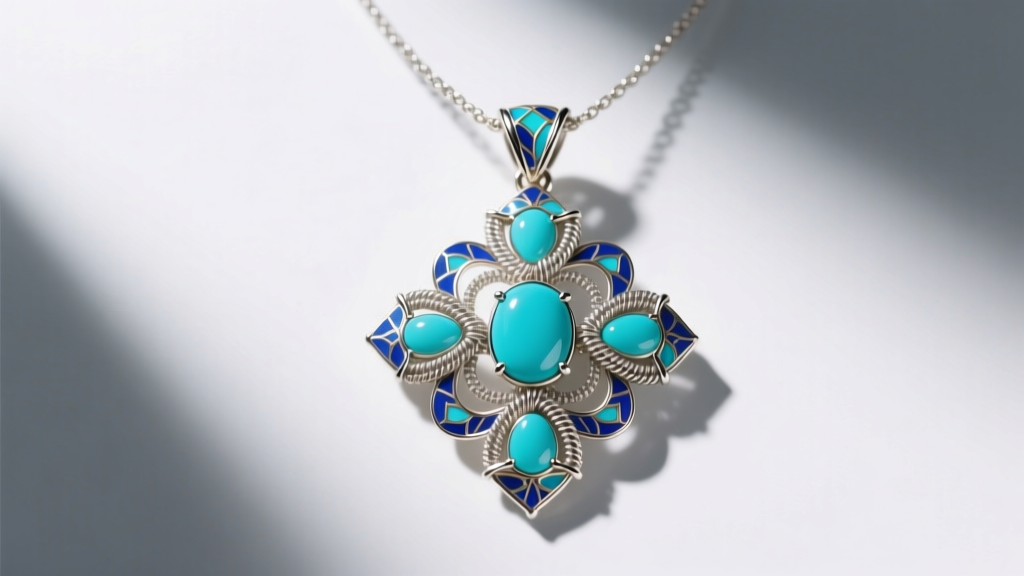
| High Cannetille Pendants | 833 Silver, Turquoise/Coral, complex 3D wirework | $1,200 – $3,800 |
| Vienna Secession / Enamel | High Karat Gold, Plique-à-jour or Guilloché enamel | $5,000 – $15,000+ |
The Appraiser's Maxim: In the realm of Austro-Hungarian metalwork, the complexity of the wirework and the survival of the original gold wash often dictate the premium far more than the intrinsic melt value of the 800 silver beneath it. Always value the artisan's labor over the assay weight.
By mastering the nuances of the Diana and Apollo hallmarks, recognizing the specific alloy compositions of Talmi Gold, and respecting the delicate structural engineering of cannetille wirework, collectors can confidently navigate the secondary market. Authentic antique austro hungarian jewelry remains a masterclass in the marriage of imperial standardization and fierce regional artistry.


