Vendome Vintage Jewelry: Material Properties & Value Guide
Explore the unique metals, glass rhinestones, and plating properties of Vendome vintage jewelry to authenticate, value, and preserve mid-century pieces.

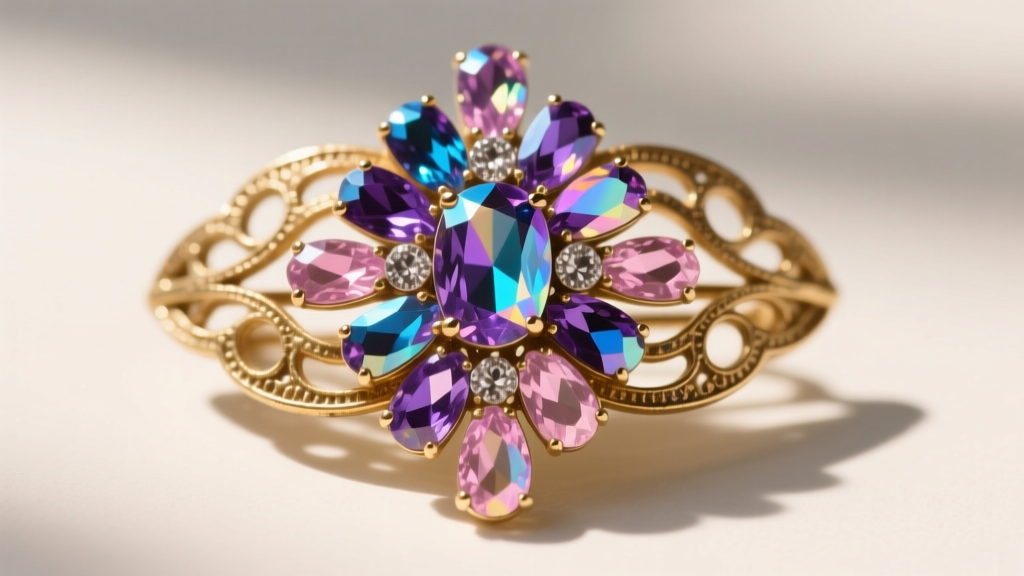
When evaluating mid-century costume jewelry, collectors often focus on design aesthetics, but the true marker of quality and longevity lies in the underlying materials. Vendome vintage jewelry, a premier subsidiary of the Coro corporation active from the 1920s through the 1980s, represents a masterclass in material engineering. Unlike lower-tier manufacturers that relied on brittle base metals and cheap plastics, Vendome utilized high-grade brass alloys, thick micron plating, and precision-cut leaded glass. Understanding the specific metallurgical and lapidary properties of these pieces is essential for accurate authentication, proper preservation, and precise market valuation in today's estate jewelry landscape.
The Metallurgical Foundation: Base Alloys and Plating
The structural integrity of any piece of vintage costume jewelry begins with its base metal. While many contemporaries in the 1940s and 1950s utilized "pot metal" (a cheap, brittle alloy of zinc, aluminum, and lead), Vendome predominantly cast their premium lines in high-quality brass and copper-alloy bases. This material choice provided superior tensile strength, allowing for the intricate, lace-like metalwork and delicate prong settings that define the brand's mid-century floral and geometric motifs.
Once cast, the base metal was subjected to rigorous electroplating processes. Vendome was renowned for its heavy gold-tone and rhodium finishes. While standard costume jewelry of the era featured a "flash" plating of less than 0.5 microns, Vendome frequently applied 2 to 3 microns of 14k or 18k gold wash. This substantial thickness not only provided a richer, more authentic luster that closely mimicked fine jewelry but also significantly delayed the inevitable wear-through that plagues lesser vintage pieces.
Authentication via Magnetic and Specific Gravity Tests
Because Vendome relied heavily on brass and copper, their pieces should exhibit zero magnetic attraction. If a suspected Vendome brooch or necklace clasp is drawn to a neodymium magnet, it likely contains a steel core or is a modern reproduction utilizing cheaper ferrous alloys. Furthermore, the specific gravity of brass (approximately 8.4 to 8.7 g/cm³) gives authentic Vendome pieces a distinct, satisfying heft that is noticeably absent in modern aluminum or hollow-cast reproductions.
Lapidary Properties: Leaded Glass vs. Early Acrylics
The brilliance of Vendome vintage jewelry is largely attributed to its masterful use of strass—a high-lead-content glass. By incorporating 20% to 30% lead oxide into the glass mixture, Vendome's lapidaries achieved a refractive index (RI) between 1.60 and 1.70. This high RI allows the stones to bend light aggressively, creating the fiery dispersion that collectors prize. In contrast, early acrylics and Lucite, which were popular in the 1940s for chunky, carved pieces, possess an RI of only 1.49, resulting in a flatter, less brilliant optical performance.
| Material | Refractive Index | Mohs Hardness | Specific Gravity | Era Prevalence |
|---|---|---|---|---|
| Leaded Glass (Strass) | 1.60 - 1.70 | 5.0 - 6.0 | 2.8 - 3.2 | 1930s - 1960s |
| Early Acrylic (Lucite) | 1.49 | 3.0 - 4.0 | 1.18 | 1940s - 1950s |
| Modern Lead-Free Crystal | 1.52 - 1.54 | 6.0 - 7.0 | 2.5 - 2.7 | 1980s - Present |
To amplify this brilliance, Vendome utilized precision-applied metallic foils (typically silver or gold-colored) on the pavilion (back) of the stones. This foil acts as a mirror, reflecting light back through the crown of the stone. The prong settings were engineered with exact tolerances to create a near-hermetic seal, protecting the delicate foil from atmospheric moisture and oxidation.
The Aurora Borealis (AB) Vapor Deposition Revolution
In the mid-1950s, following Swarovski's pioneering collaboration with Christian Dior, the jewelry industry saw the introduction of the Aurora Borealis (AB) coating. Vendome rapidly adopted and perfected this technology for their premium lines. The AB effect is not a paint or a dip; it is a microscopic layer of titanium dioxide and silica applied via vacuum vapor deposition. When light strikes this ultra-thin layer, it undergoes thin-film interference, splitting into iridescent waves of blue, pink, and gold. Authentic mid-century Vendome AB stones exhibit a smooth, integrated iridescence, whereas modern counterfeit coatings often appear cloudy, overly thick, or prone to flaking under 10x loupe magnification.
Material Degradation and Authentication Markers
Understanding how materials fail over time is a critical skill for any vintage jewelry appraiser. The specific degradation patterns of Vendome pieces serve as secondary authentication markers and heavily influence market value.
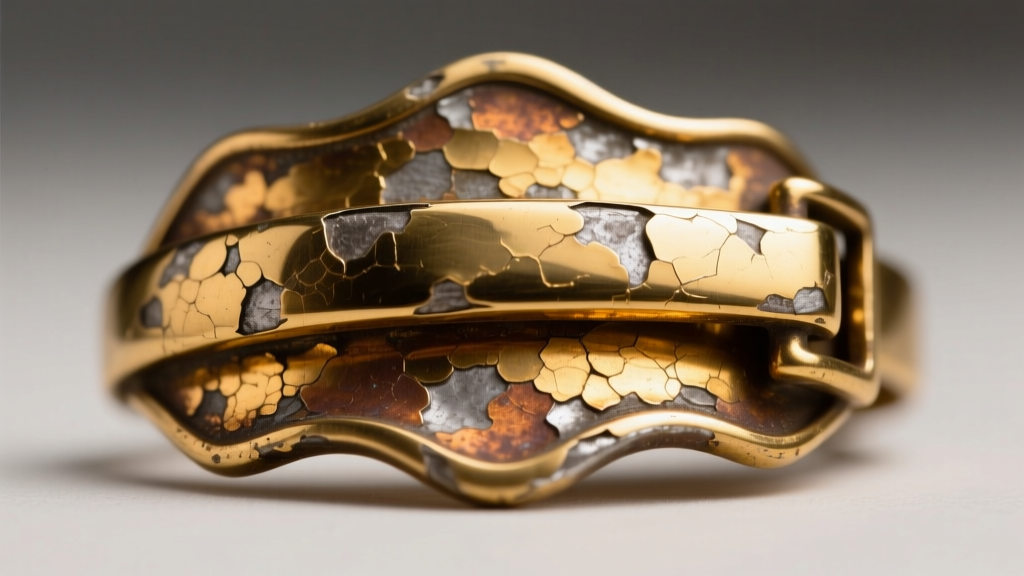
- Zinc Pest vs. Brass Tarnish: While pot metal suffers from "zinc pest"—a catastrophic intergranular corrosion caused by impurities in the zinc alloy that causes the metal to swell, crack, and crumble—Vendome's brass bases generally survive intact. Brass may develop superficial dezincification or a dark patina, but it retains its structural integrity and can be safely stabilized.
- Foil Blackening: The most common flaw in surviving Vendome vintage jewelry is the blackening of the rhinestone foil. This occurs when the adhesive seal around the prongs fails, allowing humidity to oxidize the metallic backing. Once the foil turns black, the stone appears "dead" or gray, and the value of the piece drops significantly unless professionally re-foiled.
- Verdigris Accumulation: Copper-rich brass alloys can develop verdigris (copper carbonate) in the crevices of the metalwork, especially near the clasp or pin stem. While light verdigris is easily removed with a soft brush and distilled white vinegar, deep pitting indicates advanced chemical degradation that compromises the piece's structural safety.
Valuation Framework Based on Material Integrity
In the current estate market, the valuation of Vendome vintage jewelry is strictly tiered based on the preservation of its original materials. According to data aggregated by Costume Jewelry Collectors International, buyers are increasingly prioritizing material integrity over mere brand recognition.
"A Vendome parure with pristine foil backing and intact micron plating will command a 300% premium over the exact same design suffering from foil oxidation and brass bleed-through. Material survival is the ultimate arbiter of mid-century costume jewelry value."
2026 Pricing Tiers for Vendome Parures (Necklace, Earrings, Brooch)
- Mint / Archival Condition ($450 - $850+): Zero brass exposure, pristine AB coatings with no micro-scratches, completely intact silver foil, and fully functional original trombone clasps.
- Excellent / Wearable Condition ($150 - $350): Minor wear to the gold-tone plating on high-contact areas (like the clasp), slight dimming of one or two rhinestones, but structurally flawless with no verdigris.
- Fair / Restoration Required ($40 - $90): Widespread foil blackening, noticeable brass bleed-through, missing stones, or stiff pin stems. These pieces are generally valued for their salvageable stones or as study pieces for novice collectors.
For those looking to dive deeper into identifying specific Coro and Vendome manufacturing marks and material shifts across the decades, The Spruce Crafts' guide to vintage costume jewelry identification offers an excellent visual database of hallmarks. Ultimately, mastering the material properties of Vendome vintage jewelry transforms the collecting experience from simple aesthetic appreciation into a rigorous, rewarding exercise in mid-century material science.


