What Are Vintage Jewelry Styles? A Guide to Era-Defining Metals
Discover what are vintage jewelry styles by analyzing era-defining metals, from Georgian silver-topped gold to Retro rose gold alloys.

Decoding the Question: What Are Vintage Jewelry Styles Through Metallurgy?
When collectors and enthusiasts ask, "what are vintage jewelry styles," the conversation often defaults to visual motifs: the scrollwork of the Edwardian era, the geometric boldness of Art Deco, or the romantic florals of the Victorian period. However, as a domain expert in antique jewelry valuation, I argue that visual aesthetics are merely the symptom of a much deeper driver: metallurgical innovation and material constraints. To truly understand what are vintage jewelry styles, one must examine the specific alloys, gemstone treatments, and structural properties that defined each epoch.
In 2026, with advanced spectrometry and metallurgical analysis more accessible than ever, we no longer rely solely on hallmarks to authenticate estate pieces. We look at the Vickers hardness (HV) of the platinum, the copper-to-silver ratios in rose gold, and the degradation patterns of silver-topped gold. This guide strips away the aesthetic fluff and dives deep into the material science that separates genuine antique jewelry from modern reproduction.
The Evolution of Alloys: A Comparative Data Matrix
Before dissecting individual eras, it is crucial to understand how the physical properties of primary metals dictated the design limitations of their time. The table below outlines the core metallurgical profiles of major vintage jewelry periods.
| Era | Primary Metal | Secondary / Alternative | Avg. Hardness (HV) | Common Material Failure Mode |
|---|---|---|---|---|
| Georgian (1714-1837) | 18k+ Yellow Gold | Silver-Topped Gold, Pinchbeck | 120-140 HV | Silver layer oxidation, foil backing degradation |
| Victorian (1837-1901) | 15k-18k Yellow Gold | Jet, Gutta-Percha, 9k Gold | 130-160 HV | Base metal rot in mourning pieces, low-karat surface corrosion |
| Edwardian (1901-1915) | Platinum (90/10 Ir) | Silver accents | 110-130 HV | Filigree metal fatigue, millegrain wear |
| Art Deco (1920-1935) | Platinum, White Gold | Onyx, Jade, Calibré Gems | 140-160 HV | White gold rhodium depletion, gemstone chipping |
| Retro (1935-1950) | 14k-18k Rose Gold | Citrine, Aquamarine | 150-180 HV | Copper oxidation (verdigris), alloy brittleness |
Georgian & Victorian: The Era of Silver-Topped Gold and Pinchbeck
To answer what are vintage jewelry styles of the 18th and 19th centuries, you must understand the absence of workable platinum. Before the invention of the oxyhydrogen torch in the late 19th century, platinum's melting point of 1,768°C made it impossible to cast or solder. Yet, the demand for white metal settings to enhance the brilliance of old mine cut diamonds was high.
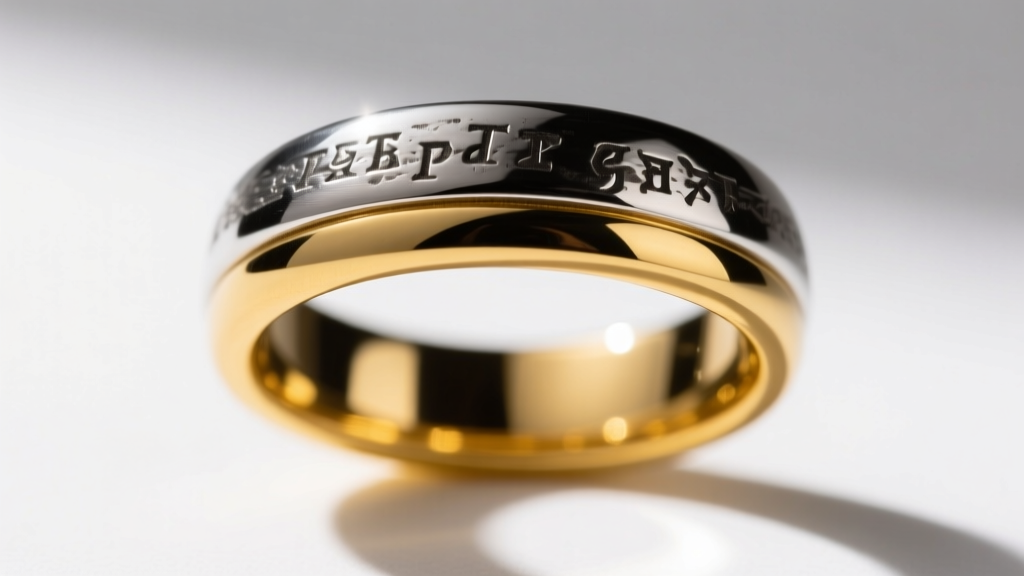
The Georgian solution was silver-topped gold. Artisans fused a thin layer of silver over a structural base of 18k yellow gold. The silver provided the desired white color, while the gold prevented the piece from tarnishing the skin. According to the Antique Jewelry University, this technique is a primary diagnostic marker for pre-1850 diamond jewelry. However, the material failure mode is obvious: the silver layer inevitably oxidizes, turning black. Modern collectors often mistakenly polish this away, destroying the historical integrity and exposing the yellow gold beneath.
Material Failure Modes: Foil Degradation and Base Metal Rot
Georgian and early Victorian gemstones were frequently foil-backed to enhance color and brilliance. This foil, often made of copper or silver alloys, is hermetically sealed within closed-back settings. If the setting's seal is compromised by a bent prong or micro-fracture, moisture enters and oxidizes the foil, turning a vibrant ruby into a dull, muddy brown. Actionable advice: Never submerge closed-back Georgian jewelry in water or ultrasonic cleaners.
During the Victorian Grand Period (1861-1880), mourning jewelry popularized materials like jet (fossilized wood) and gutta-percha (a natural thermoplastic latex). Gutta-percha is highly susceptible to UV degradation and heat. If left in direct sunlight, it will desiccate, crack, and emit a distinct burnt rubber odor—a definitive identification test for the material.
Edwardian & Art Deco: The Platinum Revolution and White Gold Alternatives
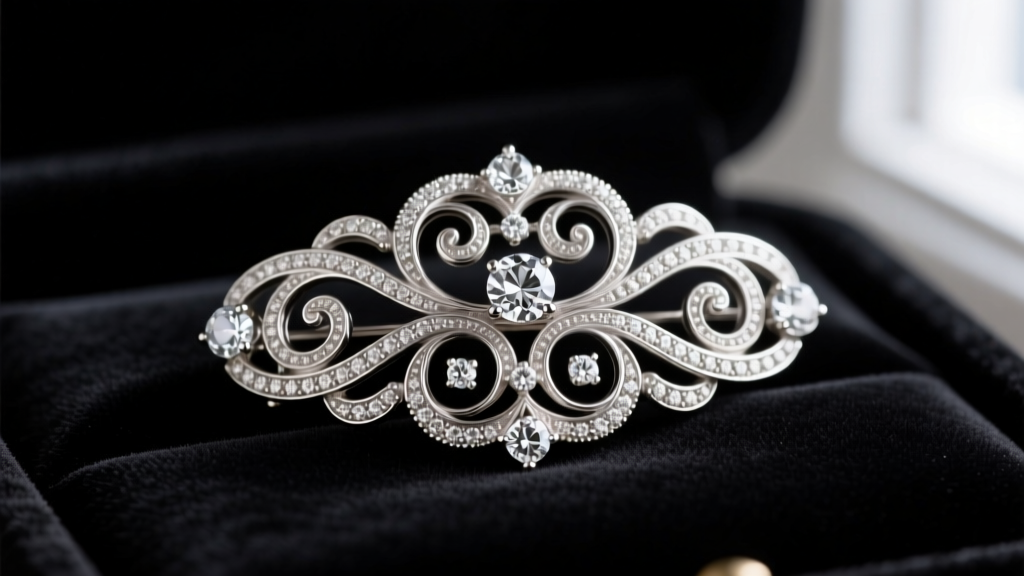
The transition into the Edwardian era fundamentally shifted the answer to what are vintage jewelry styles, driven entirely by the mastery of platinum. Alloyed with 10% iridium (90/10 Pt/Ir), Edwardian platinum possessed a unique combination of high tensile strength and malleability. This allowed jewelers to create the impossibly delicate lace-like filigree and millegrain (tiny beaded edges) that define the era.
However, platinum's malleability is also its weakness. Over a century of wear, the microscopic beads of millegrain flatten, and ultra-thin filigree wires suffer from metal fatigue, leading to structural snapping. When restoring Edwardian pieces, modern jewelers often use 5% ruthenium platinum, which is harder and whiter, but lacks the exact working properties of the original iridium alloy, making seamless repairs difficult.
Millegrain Fatigue and Rhodium Plating Realities
As platinum prices soared, the Art Deco era saw the rise of white gold. Patented by David Belais in 1912, early white gold was an alloy of gold, nickel, and zinc. By the 1930s, palladium-based white gold emerged as a hypoallergenic alternative. The material reality of white gold is that it is inherently yellowish-gray; it requires rhodium plating to achieve a bright white finish. When evaluating Art Deco white gold estate pieces today, expect significant rhodium depletion. Replating is standard, but collectors must ensure the underlying prongs haven't suffered from stress corrosion cracking, a known issue in early nickel-heavy white gold alloys.
Retro & Mid-Century: Copper Alloys and the Post-War Gemstone Shift
The outbreak of World War II drastically altered global material supply chains, directly impacting what are vintage jewelry styles of the 1940s. Platinum was classified as a strategic military metal and banned for civilian jewelry use. Simultaneously, gold was heavily rationed. The result was the Retro period, characterized by massive, three-dimensional designs executed in low-karat rose and yellow gold alloys.
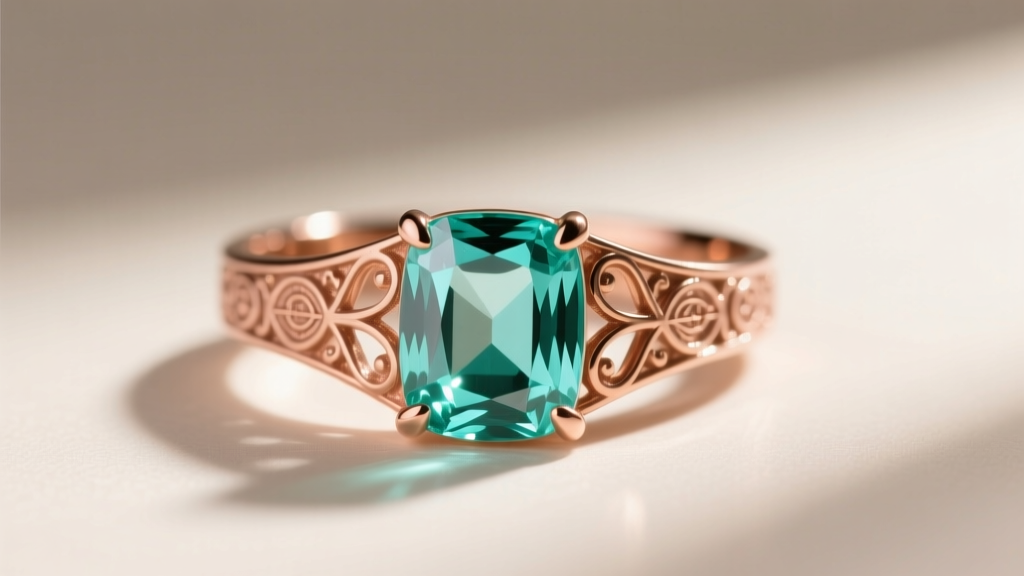
Rose gold achieves its pinkish hue through a high copper content. A standard 18k rose gold alloy contains 75% gold, 22.25% copper, and 2.75% silver. The high copper content increases the Vickers hardness, making it highly durable but prone to a specific failure mode: verdigris. When exposed to chlorides, sweat, and cosmetics, the copper oxidizes, forming a green, powdery crust in the crevices of the mounting. While mild verdigris can be removed with a soft brush and distilled water, aggressive chemical dips will strip the copper from the surface layer, permanently altering the alloy's color and destroying the warm patina that collectors prize.
Because precious gemstones were scarce during the war, Retro jewelers turned to massive semi-precious stones like aquamarine, citrine, and amethyst, often cut in large emerald or cushion shapes to maximize carat weight in the absence of diamonds.
Practical Valuation: How Material Properties Impact 2026 Market Pricing
Understanding the material science behind these eras is not just an academic exercise; it directly dictates market valuation in the current estate jewelry landscape. A piece's value is heavily penalized if its material integrity has been compromised by improper modern interventions.
"In the 2026 auction market, an Art Deco platinum ring with original, unpolished millegrain and natural calibré-cut sapphires will command a 40-60% premium over an identical piece where the platinum has been laser-welded with modern alloys and the gems replaced with synthetic Verneuil stones." — Senior Valuation Director, Heritage Estate Appraisals
Furthermore, the Gemological Institute of America (GIA) frequently notes that the presence of early synthetic stones (like Verneuil process rubies) in 1920s pieces is historically accurate and should not be viewed as a defect, provided they are disclosed. However, replacing original porous materials like Victorian turquoise or opal with modern, stabilized equivalents will instantly relegate a piece from 'antique' to 'modern reproduction' in the eyes of serious collectors.
Ultimately, when you ask what are vintage jewelry styles, you are asking a question about human ingenuity in the face of material limitations. By evaluating the specific alloys, recognizing era-correct failure modes, and respecting the metallurgical DNA of each period, you transition from a casual observer to an informed, expert collector.
For further reading on historical metallurgy and gemological identification, consult the Victoria and Albert Museum's Jewellery Collection archives.


