Mid Century Jewelry Care: Cleaning Rhinestones & Plastics
Learn expert techniques for cleaning mid century jewelry. Discover safe methods for rhinestones, aurora borealis glass, and vintage plastics.

The Unique Material Landscape of Mid-Century Jewelry
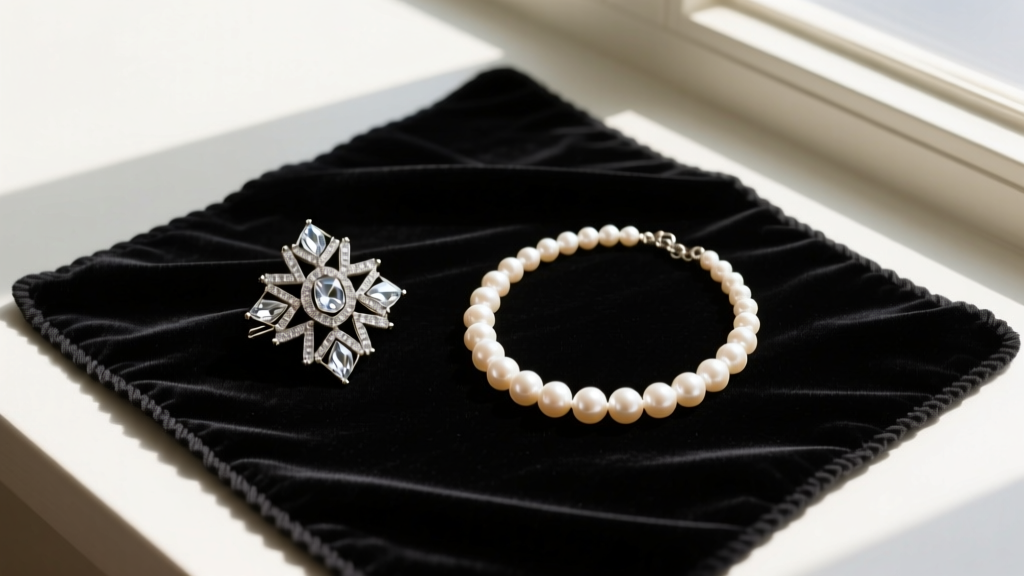
Mid-century jewelry, spanning roughly from the 1940s through the 1960s, represents a fascinating intersection of post-war optimism, technological innovation, and haute couture influence. Designers like Trifari, Coro, Miriam Haskell, and Christian Dior utilized an array of new and experimental materials to create accessible luxury. However, this era's reliance on specialized coatings, early synthetics, and specific metal alloys means that modern cleaning techniques can easily destroy these vintage pieces. According to the Vintage Fashion Guild, understanding the exact material composition of your mid-century pieces is the most critical step before introducing any cleaning agents.
Unlike solid gold or platinum contemporary fine jewelry, mid-century costume and semi-fine jewelry requires a highly specialized, conservative approach to maintenance. In this comprehensive guide, we will break down the exact chemical and physical vulnerabilities of mid-century materials and provide actionable, step-by-step care protocols to preserve your collection for decades to come.
The Golden Rules of Mid-Century Maintenance
Before diving into specific materials, every collector and enthusiast must internalize three foundational rules of vintage jewelry care. Ignoring these will inevitably lead to irreversible damage.
- Never Submerge or Soak: Water is the enemy of vintage costume jewelry. Submerging a piece can loosen water-soluble glues used to set stones and cause hidden ferrous metal components (like steel pins or springs) to rust from the inside out.
- Avoid Ultrasonic Cleaners: The high-frequency vibrations of ultrasonic cleaners will shatter fragile vintage glass, strip delicate electroplated finishes, and completely dissolve the foil backing on rhinestones.
- Test in an Inconspicuous Area: Whether you are using a commercial polish or a mild DIY solution, always test it on the back of a clasp or an unexposed edge of a plastic bangle before applying it to the entire piece.
Cleaning Rhinestones and Aurora Borealis Glass
The mid-century era saw the explosion of the rhinestone as a primary design element, culminating in the invention of the Aurora Borealis (AB) finish. Developed in 1955 through a collaboration between Swarovski and Christian Dior, the AB effect was achieved by vaporizing a microscopically thin layer of blue metal onto the surface of cut glass. This coating is incredibly fragile.
Identifying Foil-Backed vs. Unfoiled Stones
Look closely at the back of the rhinestones. If you see a mirrored, silver, or gold backing, the stone is foil-backed. This foil is essentially thin metallic paint or leaf applied to the back of the glass to increase refraction. If moisture penetrates the setting and touches this foil, it will oxidize, turn black, and flake off—a condition collectors call 'dead stones.' There is no way to repair a damaged foil backing; the stone must be replaced.
The Dry-Cleaning Protocol for Foil-Backed Stones
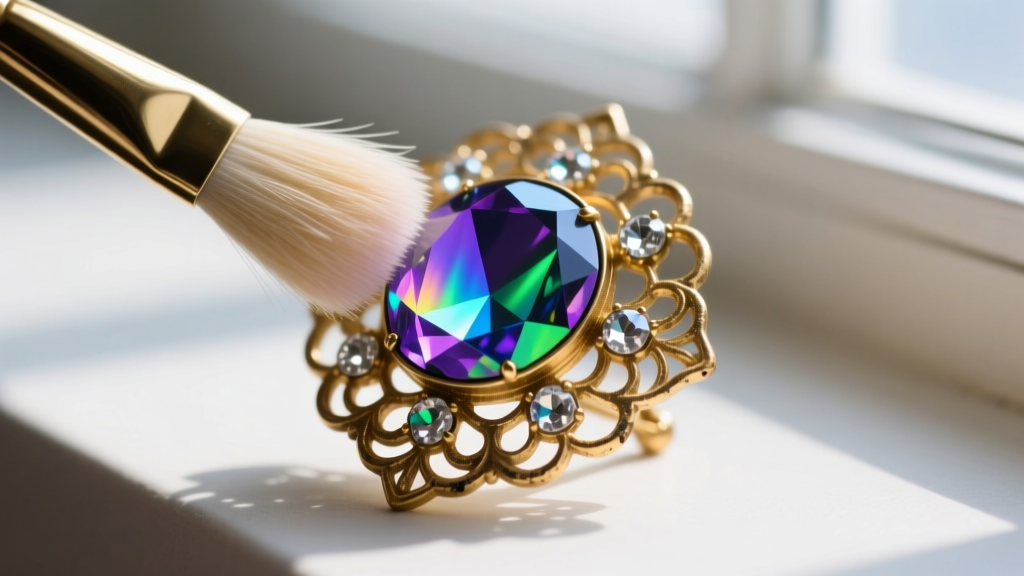
For foil-backed rhinestones and delicate AB glass, avoid all liquids. Instead, use a clean, soft-bristled makeup brush (like a fluffy eyeshadow blending brush) to gently sweep away dust and skin oils from the crevices of the settings. If a stone is heavily soiled, lightly dampen a cotton swab with distilled water—never tap water, as the minerals can leave spots—and carefully wipe only the top facet of the glass, ensuring no moisture seeps into the prongs.
Warning: Never use Windex, ammonia, or alcohol-based cleaners on AB rhinestones. The Gemological Institute of America (GIA) notes that harsh chemicals will strip the vaporized metallic coating, leaving the glass looking dull and ordinary.
Polishing Mid-Century Metals: Pot Metal, Sterling, and Rhodium
Mid-century jewelry makers utilized a wide spectrum of base metals and platings. Identifying the metal dictates your polishing strategy. Using an abrasive silver paste on a rhodium-plated brass brooch will strip the plating down to the yellow base metal in seconds.
| Material | Safe Cleaning Agent | Strictly Avoid | Drying Method |
|---|---|---|---|
| Rhodium-Plated Base Metal | Mild dish soap & distilled water | Silver dip, abrasive pastes, polishing cloths | Pat dry with microfiber, air dry completely |
| Sterling Silver (Solid) | Silver polishing cloth, mild tarnish remover | Ultrasonic cleaners, bleach | Buff with clean flannel cloth |
| Pot Metal (Zinc Alloy) | Dry microfiber cloth, mineral oil for stubborn spots | Water immersion, acidic cleaners | Wipe immediately, store in dry environment |
| Gold-Tone Brass (Unplated) | Brass polish (applied carefully), soapy water | Ammonia, harsh scrubbing pads | Rinse quickly with distilled water, pat dry |
Understanding 'Zinc Pest' and Pot Metal
During the 1940s and 1950s, many manufacturers used pot metal (a zinc-based alloy) for heavy cast pieces like brooches and buckle frames. Pot metal is highly susceptible to a destructive crystalline degradation known as 'zinc pest' or metal rot. This occurs when impurities in the zinc cause the metal to expand, crack, and crumble from the inside. While you cannot reverse zinc pest, you can slow it by keeping the jewelry in a low-humidity environment and occasionally wiping the metal with a microscopic amount of mineral oil to seal the pores against atmospheric moisture.
Caring for Mid-Century Plastics: Bakelite, Lucite, and Celluloid
The mid-century period was the golden age of plastic jewelry. Designers carved, molded, and laminated early synthetics into bold, sculptural forms. However, each plastic requires a distinct chemical approach.
Bakelite (Phenol Formaldehyde)
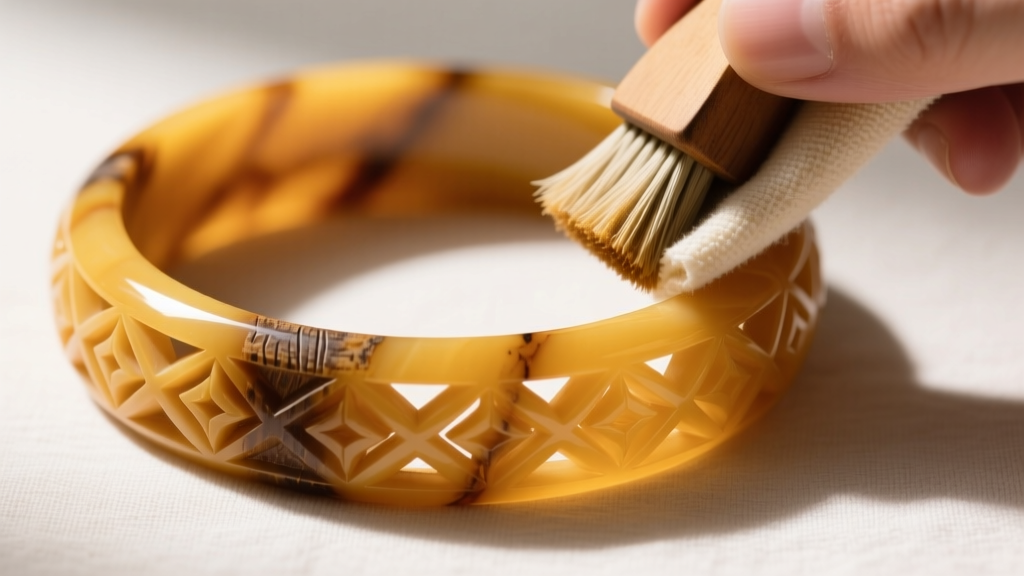
Bakelite is highly prized for its deep, rich colors and heavy, carved motifs. Over time, Bakelite develops a dark, oxidized patina (often called 'bloom') on its surface. While some collectors prize this patina as proof of age, others prefer the vibrant, original color. To safely remove oxidation, apply a small amount of Simichrome metal polish or a specialized plastic polish like Novus #2 to a soft cloth and buff the surface in circular motions. The cloth will turn yellow—this is the oxidized layer lifting off. Wipe clean with a damp cloth and dry immediately. Never use alcohol or acetone on Bakelite, as it can cause the surface to craze and crack.
Lucite (PMMA) and Acrylics
Lucite is a clear or tinted acrylic that was often embedded with glitter, rhinestones, or confetti (a style known as 'reverse carved' or 'confetti' Lucite). Lucite is much more chemically stable than Bakelite but is highly prone to scratching. Clean Lucite using only warm water, a drop of mild baby shampoo, and your fingertips. Rinse with distilled water and pat dry with a lint-free microfiber cloth. Avoid all commercial window cleaners, as the ammonia will cause Lucite to cloud and micro-fracture over time.
Celluloid: The Fragile Ancestor
Though more common in the Art Deco era, celluloid persisted into the early 1940s. Made from nitrocellulose and camphor, celluloid is highly unstable, flammable, and prone to a destructive degradation that releases acidic gases, which will corrode any metal it touches. If your jewelry smells strongly of camphor or vinegar, it is likely degrading celluloid. Do not apply any polishes or liquids. Store it separately from other jewelry in a well-ventilated, acid-free archival box to prevent its off-gassing from damaging your wider collection.
Storage and Preventative Maintenance
Proper storage is just as critical as cleaning. Mid-century jewelry should never be stored in PVC plastic bags, as the polyvinyl chloride releases gases that will turn silver black and degrade early plastics. Instead, wrap each piece individually in acid-free tissue paper or unbleached cotton muslin pouches.
For rhodium-plated and silver pieces, place a 3M anti-tarnish strip or a piece of Pacific Silvercloth inside the storage container. These materials actively absorb hydrogen sulfide and other airborne pollutants that cause oxidation. Finally, always put your vintage jewelry on after applying perfume, hairspray, and lotions, as the alcohols and oils in these cosmetics are the primary culprits behind the dulling of mid-century rhinestones and the degradation of enamel work.
When to Seek Professional Conservation
If you possess a rare, high-value mid-century piece—such as a signed Dior parure or a complex Miriam Haskell floral spray with severe verdigris (copper corrosion)—stop your at-home cleaning immediately. Verdigris can spread like a fungus and eat through base metals. In these cases, consult a professional jewelry conservator who specializes in vintage costume jewelry. They possess the specialized micro-abrasion tools and chemical stabilizers required to halt corrosion without compromising the piece's historical integrity or collector value.


