How to Find Valuable Vintage Costume Jewelry: A Guide
Learn how to identify valuable vintage costume jewelry. Discover top designers, hallmarks, material tests, and 2026 pricing for Trifari, Haskell, and more.

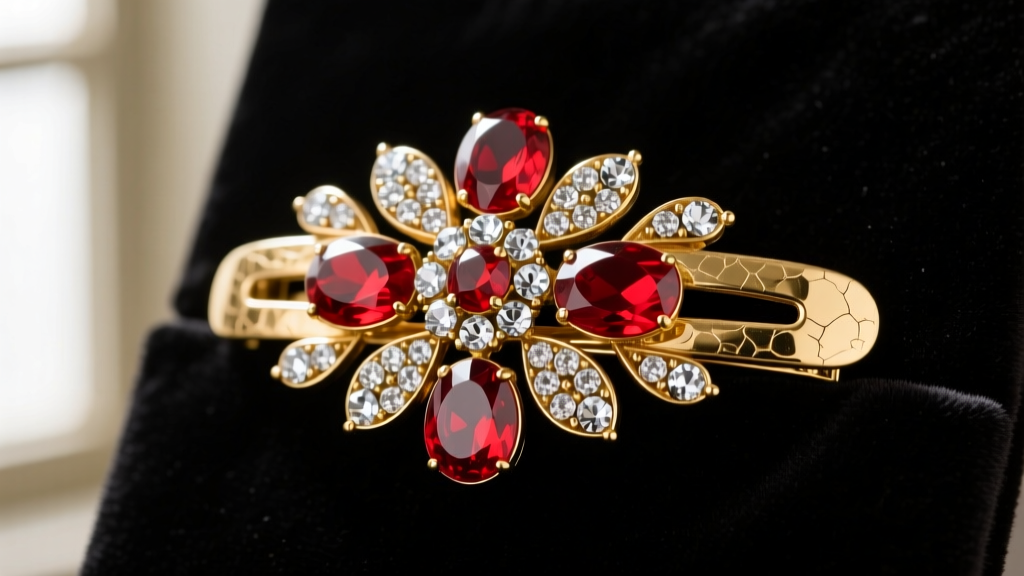
When most people hear the word "jewelry," they immediately think of karat gold, platinum, and natural diamonds. However, the secondary market for valuable vintage costume jewelry has exploded, with serious collectors and fashion historians paying premium prices for pieces made from base metals, glass, and synthetic stones. According to archival data from the Victoria and Albert Museum, costume jewelry was never meant to be mere "fake" jewelry; it was designed as an accessible, avant-garde art form that mirrored the haute couture of its time.
For beginners, the challenge lies in separating the mass-produced, low-quality junk from the highly collectible masterpieces. This guide will teach you how to evaluate construction, identify elite mid-century designers, test vintage materials, and understand current market valuations.
The Golden Rule: Construction Over Materials
The first mistake beginners make is dismissing a piece because it lacks precious metals. In the realm of vintage costume jewelry, value is dictated by construction quality and design provenance, not melt value. High-end costume jewelers employed the same master craftsmen who worked with fine jewelry.
When examining a potential find, turn the piece over and inspect the back. Elite vintage pieces feature finished, smooth backings, often with the same gold or rhodium plating as the front. Mass-market pieces from the 1970s and later often have rough, pitted, or hollow backs. Furthermore, look closely at how the stones are set. Valuable vintage costume jewelry almost exclusively uses prong-set or bezel-set rhinestones. If the stones are simply glued into the metal, you are likely looking at a lower-tier, later-century production piece.
Top-Tier Designers: The Heavyweights of Costume
To identify valuable vintage costume jewelry, you must familiarize yourself with the "Big Three" mid-century design houses. These brands command the highest prices at auction houses like Sotheby's and specialized vintage dealers.
Trifari and the Crown Mark
Founded by Gustavo Trifari, this brand reached its zenith under the creative direction of Alfred Philippe, a master jeweler who previously designed for Cartier and Van Cleef & Arpels. Philippe patented the famous "Jelly Belly" figurines in the 1940s, which featured carved Lucite bellies set in sterling silver or gold-plated metal.
What to look for: The most coveted Trifari pieces bear the "Crown Trifari" hallmark (a crown over the word Trifari), used primarily between 1937 and 1955. Post-1955 pieces will include a copyright symbol (©). A 1940s Crown Trifari Jelly Belly poodle brooch in excellent condition can easily fetch between $800 and $1,500 today.
Miriam Haskell and Russian Gold
Miriam Haskell’s jewelry is instantly recognizable to trained eyes due to its intricate, hand-wired construction. Her lead designer, Frank Hess, pioneered the use of "Russian Gold" finish—a patented, matte, antique-looking gold plating that resists tarnishing. Haskell pieces are heavily layered, featuring hand-sewn faux pearls, seed beads, and filigree backings.
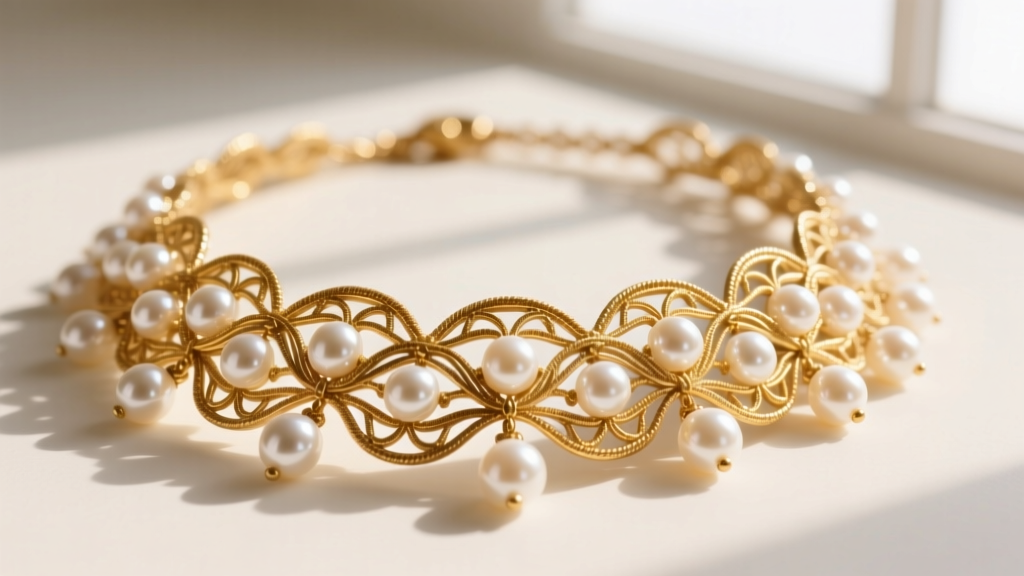
What to look for: Early Haskell pieces (1920s–1940s) are rarely signed, making authentication reliant on recognizing the specific horseshoe-shaped filigree plates and the distinct matte Russian Gold hue. Later pieces feature an oval cartouche stamped "Miriam Haskell." Because of the fragile, hand-wired nature of these pieces, mint-condition examples are rare and highly prized, often selling for $400 to $1,200.
Material Markers: Spotting High-End Components
Beyond the designer's signature, the raw materials used in the manufacturing process can instantly elevate a piece's value. Here are three materials that signal high-end vintage costume jewelry:
- Bakelite: The premier thermosetting plastic of the 1930s. Unlike later injection-molded plastics, Bakelite was carved from solid blocks, allowing for deep, three-dimensional laminations and end-of-day marbleized patterns. The Test: Rub a small, hidden area with Simichrome polish on a cotton swab. If the swab turns yellow or mustard-colored, it is genuine Bakelite. (Note: Never use the "hot pin" test, as it damages the piece and releases toxic fumes).
- Gripoix Poured Glass: Championed by Elsa Schiaparelli and Chanel, this technique involves pouring molten glass directly into metal bezels, resulting in stones with slightly rounded, bubble-filled, jelly-like appearances. True Gripoix glass is incredibly labor-intensive and highly valuable.
- Aurora Borealis (AB) Rhinestones: Developed by Swarovski in collaboration with Christian Dior in 1955, AB stones feature a micro-thin metallic coating that creates an iridescent, rainbow-like oil slick effect. Dating Tip: If a piece features AB stones, it was manufactured in 1955 or later. It cannot be an Art Deco or early Retro piece.
Condition and the Cost of Restoration
Condition is the ultimate multiplier for valuable vintage costume jewelry. Unlike fine jewelry, which can be easily soldered and re-polished, costume jewelry restoration is fraught with complications. Base metals like "pot metal" (a zinc alloy) cannot be easily soldered; if a pin stem breaks off a pot metal brooch, the repair often requires messy adhesives or visible rivets.
Furthermore, replacing missing rhinestones is notoriously difficult. Vintage stones were often custom-cut or featured specific foil backings that are no longer manufactured. A missing stone on a pavé-set Trifari fur clip can reduce its market value by 30% to 50%. Always inspect the piece under a jeweler's loupe or a bright LED light to ensure every prong is holding a stone.
Hallmarks and Dating: A Quick Reference Table
Hallmarks are your best defense against modern reproductions. The following table outlines key marks and their corresponding market values in the current 2026 collector's market.
| Designer / Brand | Era | Key Hallmark to Find | Avg. Market Value (Mint) |
|---|---|---|---|
| Trifari | 1937–1955 | Crown over "Trifari" (no ©) | $250 – $1,500+ |
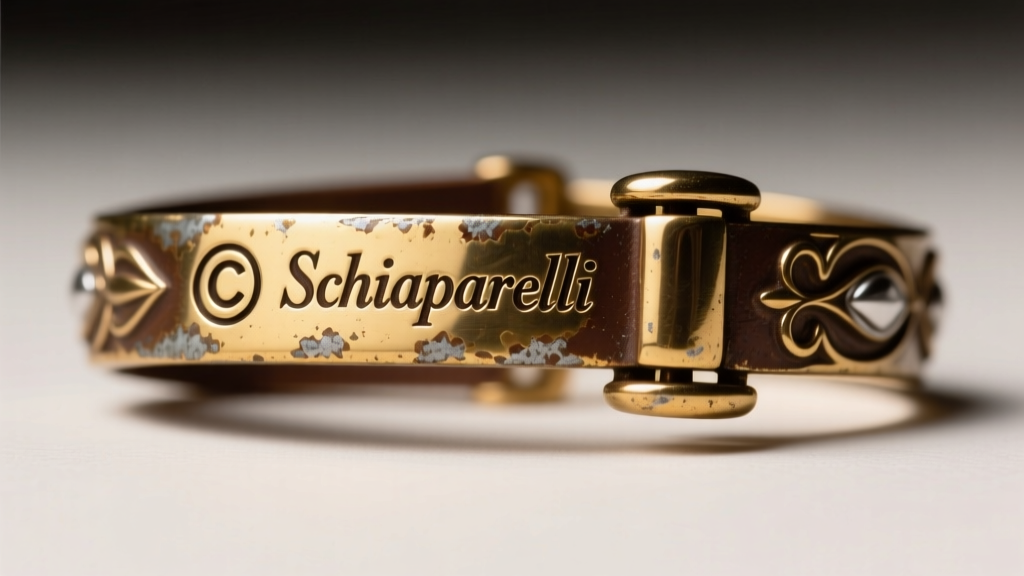
| Schiaparelli | 1950s–1960s | "Schiaparelli" in script or block, usually with © | $300 – $900 |
| Dior (Early) | 1950s | "Chr. Dior" or "Dior" with year (e.g., 1958) | $400 – $2,000 |
| CoroCraft | 1940s–1950s | "CoroCraft" or "Coro" with a flying horse (Pegasus) | $150 – $600 |
| Eisenberg | 1940s | "Eisenberg Original" (block letters) | $200 – $800 |
The 3-Step Authentication Checklist for Beginners
When you are at an estate sale, flea market, or browsing online auctions, run every potential purchase through this rapid checklist:
- The Weight and Clasp Test: Pick up the piece. High-end vintage costume jewelry feels surprisingly heavy due to the dense brass or bronze base metals used before the lightweight alloys of the 1980s. Check the clasp: early pieces (1920s-1930s) often use C-clasps or simple barrel clasps, while the 1950s introduced the fold-over clasp and the trombone clasp.
- The Loupe Inspection: Use a 10x jeweler's loupe to examine the stone settings. Look for glued stones (a red flag for high-value authentication) and check the foil backings of the rhinestones. If the foil is black, scratched, or missing, the stone will look dead and gray, significantly lowering the value.
- The Copyright Symbol Check: The U.S. Copyright Act of 1954 (enforced heavily starting in 1955) allowed jewelry designers to copyright their designs. If you see a © symbol next to the brand name, the piece is post-1955. If a seller claims a piece with a © mark is from the 1920s Art Deco era, they are either misinformed or attempting a scam.
Final Thoughts on Building a Collection
Identifying valuable vintage costume jewelry requires a shift in perspective. You are not buying raw commodities; you are collecting wearable mid-century sculpture. Focus your budget on acquiring fewer, higher-quality pieces from recognized design houses with verifiable hallmarks and pristine condition. By mastering the Simichrome test, recognizing Russian Gold, and understanding the evolution of jewelry clasps, you will confidently navigate the vintage market and uncover hidden treasures that continue to appreciate in both historical significance and financial value.


