Vintage Jewelry Show Prep: Advanced Cleaning & Care Tips
Master pre-show prep with our expert cleaning guide for a vintage jewelry show. Learn era-specific care, ultrasonic safety, and patina preservation.

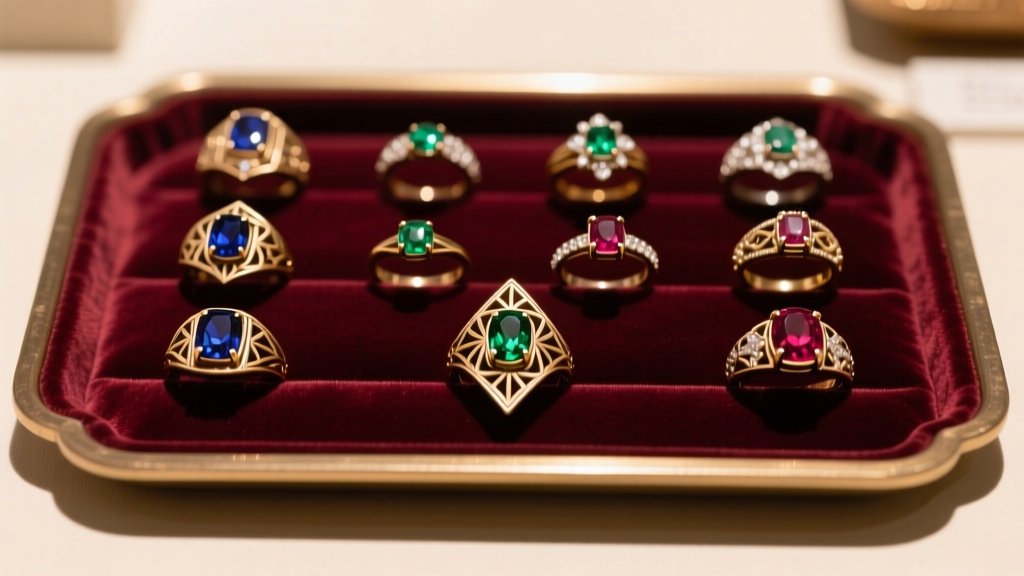
As the 2026 exhibition season approaches, preparing your collection for a major vintage jewelry show requires far more than a quick polish. Whether you are a dealer setting up a booth or a serious collector attending to acquire rare pieces, understanding the nuanced chemistry of antique metals and historical gemstones is critical. Standard modern cleaning methods can instantly destroy centuries-old patinas, dissolve delicate foils, and fracture treated stones. This guide provides an advanced, era-specific framework for cleaning, maintaining, and protecting vintage and antique jewelry before, during, and after a show.
The Golden Rule of Antique Patina Preservation
The most common mistake made by novice exhibitors is treating all tarnish as dirt. In the realm of antique jewelry, oxidation is often a desirable feature that provides depth and historical authenticity. According to conservation guidelines from the Gemological Institute of America (GIA), removing the dark silver sulfide layer from the recesses of an Edwardian filigree piece or a Victorian mourning ring strips the design of its three-dimensional contrast.
Actionable Insight: Never use liquid silver dips (like Tarn-X) on vintage jewelry. These products contain thiourea and hydrochloric acid, which aggressively strip all oxidation and leave a flat, chalky white surface that is highly susceptible to rapid re-tarnishing. Instead, use a micro-crystalline wax like Renaissance Wax to seal and protect existing patinas without altering their tone. Apply a microscopically thin layer with a soft cotton swab, let it dry for five minutes, and buff gently with a lint-free microfiber cloth.
Era-Specific Cleaning Protocols
Different historical periods utilized vastly different metallurgical techniques and gemstone cuts. Your cleaning protocol must adapt to the specific vulnerabilities of each era.
Georgian (1714–1837): The Foil-Back Danger Zone
Georgian jewelry frequently features closed-back settings with silver or gold foil placed behind rose-cut diamonds and paste stones to enhance their refractive brilliance. Never submerge Georgian jewelry in water or liquid cleaners. Even a single drop of moisture seeping through a worn bezel will cause the foil to oxidize, turn black, and cloud the stone permanently. Clean these pieces strictly 'dry' using a soft, dry sable makeup brush to dust the gallery and shank.
Victorian (1837–1901): Organics and Enamel
The Victorian era saw a surge in organic materials like seed pearls, coral, jet, and tortoiseshell, alongside intricate taille d'épargne (black enamel) work. Seed pearls are highly porous and possess a Mohs hardness of just 2.5 to 4.5. Ultrasonic cavitation will literally dissolve the nacre off the bead nucleus. For Victorian enamel, avoid any cleaner containing ammonia or alcohol, which can cause the glass-powder enamel to craze or lift from the metal substrate.
Art Deco (1920–1935): Platinum Milgrain and Calibré Cuts
Art Deco masterpieces are defined by crisp geometric lines, platinum filigree, and microscopic milgrain edging. Dirt, hand creams, and show-floor dust become impacted in these tiny crevices.
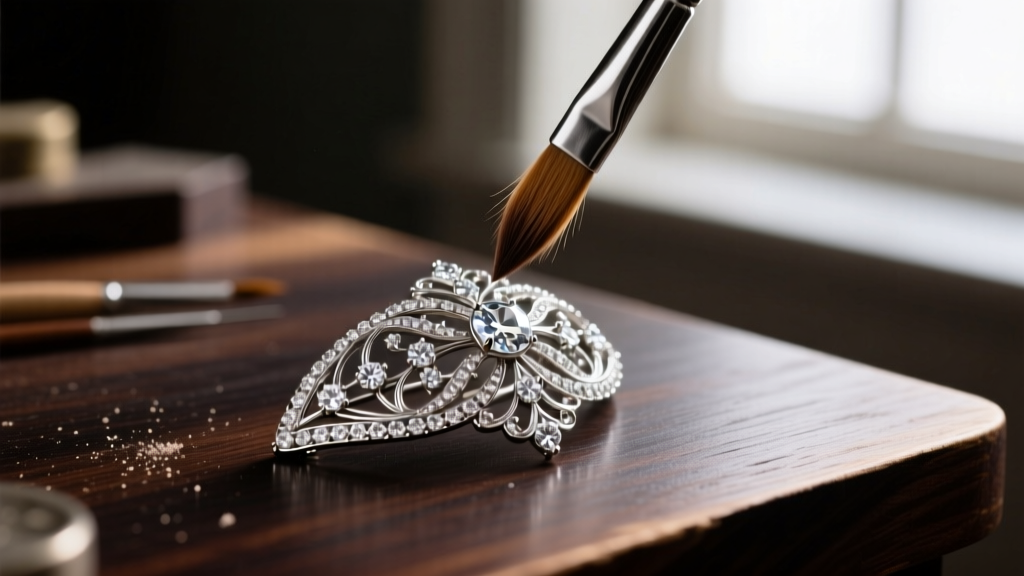 To clean Art Deco milgrain without blunting the delicate metal beads, use a wooden toothpick or a soft, rubber-tipped interdental brush dipped in a mild solution of distilled water and a single drop of phosphate-free dish soap. Gently trace the milgrain lines. Avoid hard-bristled toothbrushes, as platinum, while durable, can still suffer micro-scratches from stiff synthetic bristles over time.
The Exhibitor’s Ultrasonic & Steam Danger Zone
At a busy vintage jewelry show, dealers are often tempted to use ultrasonic cleaners and steamers for rapid, high-volume cleaning. While highly effective for modern solitaire diamonds, these machines are notorious for causing catastrophic damage to antique pieces. The American Gem Society explicitly warns against using ultrasonics on fractured, treated, or porous gems.
| Material / Gemstone | Ultrasonic Safe? | Steam Safe? | Specific Vintage Failure Mode |
|---|---|---|---|
| Oiled Emeralds | NO | NO | Ultrasonic waves and heat boil out the cedar oil filler, revealing heavy internal fracturing and turning the stone opaque white. |
| Opals (Australian/Ethiopian) | NO | NO | Rapid temperature changes from steam cause 'crazing' (internal spiderweb cracking), destroying the play-of-color. |
| Turquoise & Lapis Lazuli | NO | NO | Porous structure absorbs ultrasonic cleaning chemicals, leading to permanent discoloration and structural weakening. |
| Old Mine Cut Diamonds | CAUTION | YES | Generally safe if the girdle is not frayed or chipped. Loose antique settings can vibrate open in an ultrasonic bath. |
| Platinum & 18k Gold | YES | YES | Metals are safe, but ensure no porous secondary stones (like pearls) are present in the mounting. |
The Foiled-Back Test
If you inherit or acquire an unverified piece at a show and are unsure if it is foiled-back, perform the 'breath test'. Breathe lightly onto the back of the stone. If the metal backing looks completely sealed and the stone takes an unusually long time to defog compared to an open-backed modern stone, assume it is foiled and keep it entirely away from liquids.
Post-Show Maintenance and Storage
The environment of a vintage jewelry show is harsh on metals. Halogen and LED lighting generate localized heat, while the ambient air is filled with human oils, perfumes, and sulfur compounds from crowded convention centers. Once the show concludes, proper decommissioning of your inventory is vital.
Neutralizing Show-Floor Acids
Human skin has an average pH of 5.5, but stress and diet can make perspiration highly acidic, accelerating the tarnishing of silver and lower-karat gold alloys (like 9k and 14k, which contain higher copper content). Before packing your pieces away, wipe down the shanks of rings and the clasps of necklaces with a slightly damp microfiber cloth, followed immediately by a thorough drying with a lint-free tissue. This removes the acidic salt buildup that causes pitting in silver alloys.
Advanced Anti-Tarnish Storage Solutions
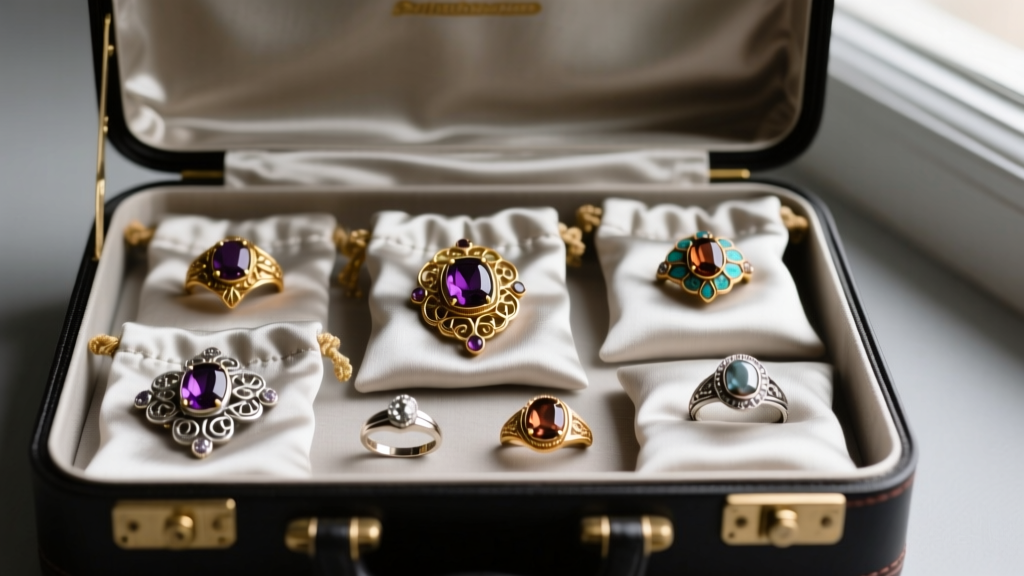
Do not rely on standard ziplock bags, as polyethylene can trap moisture and off-gas trace sulfur over time. For long-term storage post-show, invest in Pacific Silvercloth or 3M Anti-Tarnish Strips. Pacific Silvercloth is embedded with microscopic silver particles that intercept and absorb hydrogen sulfide gas before it reaches your jewelry. Place a 3M strip inside each individual acid-free archival box, replacing the strip every six months to ensure maximum chemical interception.
Conclusion
Presenting a pristine, historically respected collection at a vintage jewelry show elevates your reputation as a knowledgeable dealer or collector. By abandoning aggressive modern chemicals in favor of era-specific, conservation-grade techniques, you ensure that Georgian foils remain brilliant, Art Deco milgrain stays crisp, and Victorian enamels survive for another century. Remember: when dealing with antique jewelry, the gentlest approach is almost always the most effective.


