Vintage Jewelry Art Ideas: 2026 Display & Styling Trends
Discover top vintage jewelry art ideas for 2026. Learn expert techniques for framing, displaying, and styling antique pieces as high-end collectible art.

The Shift: From Jewelry Box to Gallery Wall
In the evolving landscape of interior design and personal curation, the way we interact with historical adornments has fundamentally changed. As we navigate the design trends of 2026, collectors and style enthusiasts are no longer satisfied with hiding their most prized possessions in dark, velvet-lined drawers. The search for innovative vintage jewelry art ideas has surged, driven by a desire to treat estate pieces not merely as accessories, but as wearable sculpture and fine art. This paradigm shift transforms Georgian, Victorian, Art Deco, and Mid-Century Retro pieces into focal points of residential and commercial spaces.
Treating vintage jewelry as art requires a delicate balance between aesthetic presentation and archival preservation. A 1920s Art Deco diamond filigree brooch or an 1880s Victorian mourning hair weave possesses immense historical and monetary value. Displaying them improperly can lead to catastrophic degradation. Therefore, modern curation demands a rigorous understanding of material science, environmental controls, and spatial styling.
2026 Trend Report: Curating Vintage Jewelry as Fine Art
This year's most prominent vintage jewelry art ideas revolve around deconstruction, floating perspectives, and contextual maximalism. Designers are moving away from traditional busts and flat shadow boxes, opting instead for dynamic, three-dimensional presentations that highlight the architectural brilliance of antique craftsmanship.
The Floating Filigree Technique
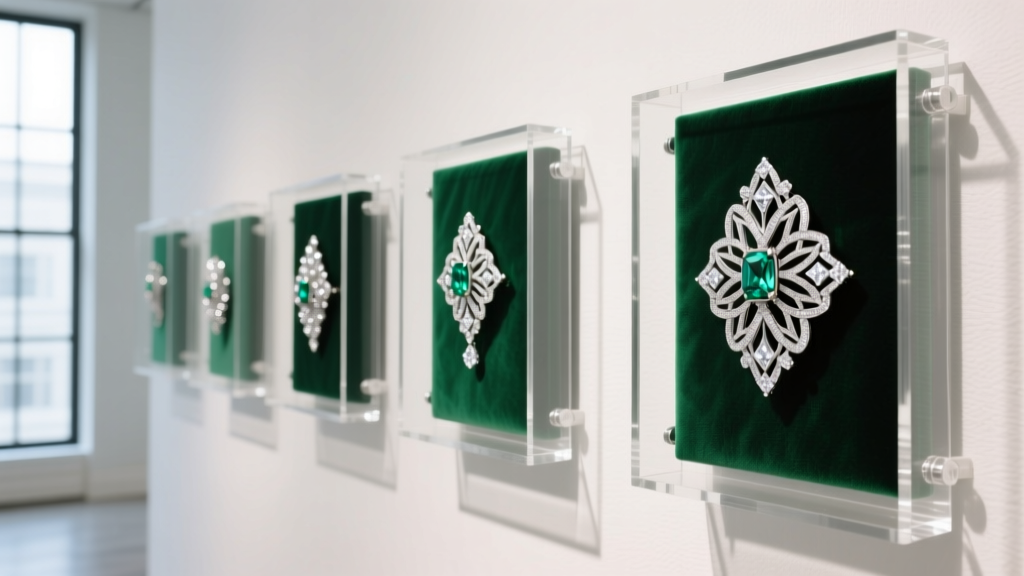
One of the most striking trends for 2026 is the "Floating Filigree" display. Edwardian and Art Deco jewelry is renowned for its intricate openwork and millegrain detailing—features that are entirely lost when pinned flat against a backing board. Curators are now utilizing museum-grade, optically clear acrylic boxes with invisible polyethylene strapping to suspend brooches and pendants in mid-air. This allows ambient light to pass through the piece, casting intricate, lace-like shadows on the wall behind it while revealing the complex gallery wire and hand-engraved underbellies that define early 20th-century masterworks.
Maximalist Shadow Boxes & Mixed Media
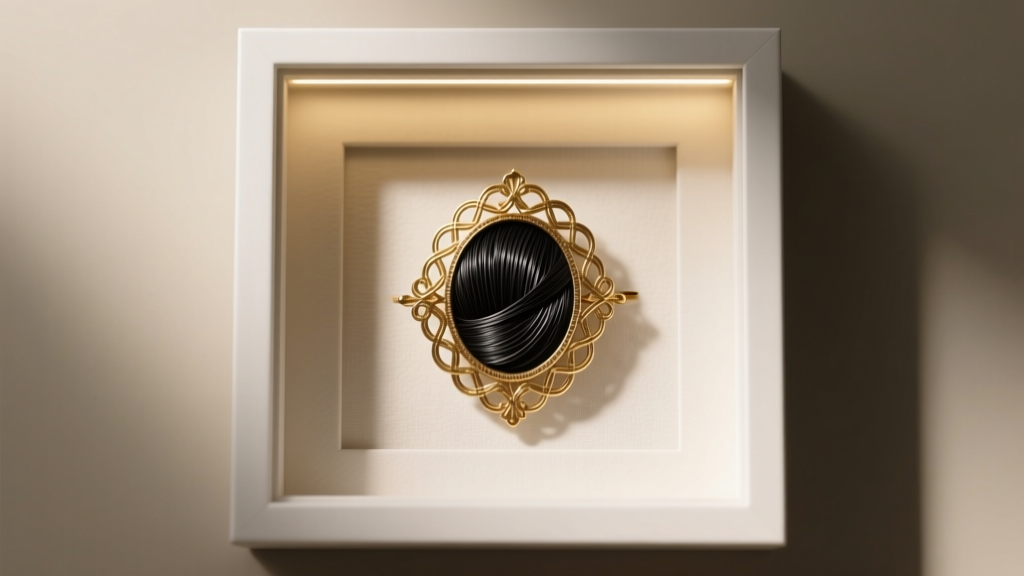
For Victorian and Georgian pieces, the trend leans heavily into contextual maximalism. Rather than isolating a single cameos or intaglio, stylists are creating deep-set shadow boxes that incorporate period-accurate ephemera. A carved shell cameo might be displayed alongside a handwritten 19th-century correspondence, dried botanicals, and antique silk ribbons. This approach tells a holistic story, transforming a single piece of jewelry into a comprehensive historical diorama.
Technical Specifications for Archival Jewelry Display
Executing these vintage jewelry art ideas safely requires strict adherence to conservation standards. The materials used in direct contact with antique metals and organic gemstones must be chemically inert. Many commercial display cases utilize PVC-based plastics or standard wood pulp mats, which off-gas volatile organic compounds (VOCs) and acidic vapors. These vapors will rapidly tarnish sterling silver, corrode copper alloys, and degrade organic gems like pearls, tortoiseshell, and coral.
According to the Victoria and Albert Museum's conservation department, maintaining a stable microclimate and utilizing archival-grade barriers are non-negotiable for long-term preservation. Below is a technical framework for selecting display materials based on jewelry era and composition.
| Era / Material Type | Display Medium | UV Protection Requirement | Mounting & Adhesive Protocol |
|---|---|---|---|
| Victorian / Organic (Hair, Ivory, Pearl) | Deep Shadow Box (Powder-coated Aluminum) | 99% UV Block (Museum Glass) | Stainless steel micro-wire; NO adhesives |
| Art Deco / Platinum & Diamond | Floating Acrylic Vitrine | 92% UV Block (Conservation Glass) | Polyethylene strapping; Jade Neutral pH hinge |
| Georgian / Foiled Gems (Paste, Topaz) | Sealed Climate-Controlled Case | 99% UV Block; Humidity < 45% | Custom-carved Ethafoam mounts lined in Tyvek |
| Mid-Century Retro / 18k Gold & Rubies | Angled Display Easel (Acrylic) | Standard UV Filtered Room Lighting | Friction-based acrylic slots; Renaissance Wax base |
"Never use standard craft glues, double-sided tapes, or hot glue to secure antique jewelry for display. The chemical solvents in these adhesives will permanently etch porous gemstones and strip historical patinas. Always rely on mechanical mounting or conservation-grade, reversible adhesives like Lascaux 498 HV applied only to the display mount, never the artifact."
Lighting and Environmental Controls for Estate Pieces
Illumination is where vintage jewelry art ideas either succeed brilliantly or fail destructively. The goal is to maximize the scintillation of antique-cut diamonds (such as Old European or Mine cuts) while preventing thermal and photochemical damage to sensitive materials.
Lux Levels and Gemstone Degradation
Different gemstones possess varying thresholds for light exposure. The Sotheby's expert jewelry care guidelines emphasize that prolonged exposure to high-intensity light can cause irreversible fading in treated or naturally sensitive stones. When designing your gallery wall or display vignette, adhere to these strict illuminance limits:
- Organic Materials (Pearls, Amber, Tortoiseshell, Mourning Hair): Maximum 50 lux. These materials are highly susceptible to desiccation and UV-induced yellowing.
- Sensitive Crystalline Gems (Amethyst, Kunzite, Topaz, Foiled Paste): Maximum 150 lux. Prolonged exposure will bleach the color centers within the crystal lattice.
- Stable Inorganic Gems (Diamonds, Sapphires, Rubies, Jade): Up to 300 lux is generally safe, provided the heat output of the light source is negligible.
For 2026 displays, high-CRI (Color Rendering Index > 95) LED lighting is the absolute standard. Avoid halogen or incandescent bulbs entirely, as their infrared heat output will dry out the natural oils in pearls and emeralds, leading to catastrophic crazing and cracking. Position LEDs at a 30-degree angle to the piece to eliminate harsh glare on the protective glass while maximizing the internal fire of the gemstones.
Sourcing and Styling: Where Art Meets Antique
Integrating these displays into your home requires a thoughtful approach to interior styling. The juxtaposition of hyper-detailed antique jewelry against stark, modern architectural elements creates a powerful visual tension that is highly sought after in contemporary design.
The Vanity Vignette
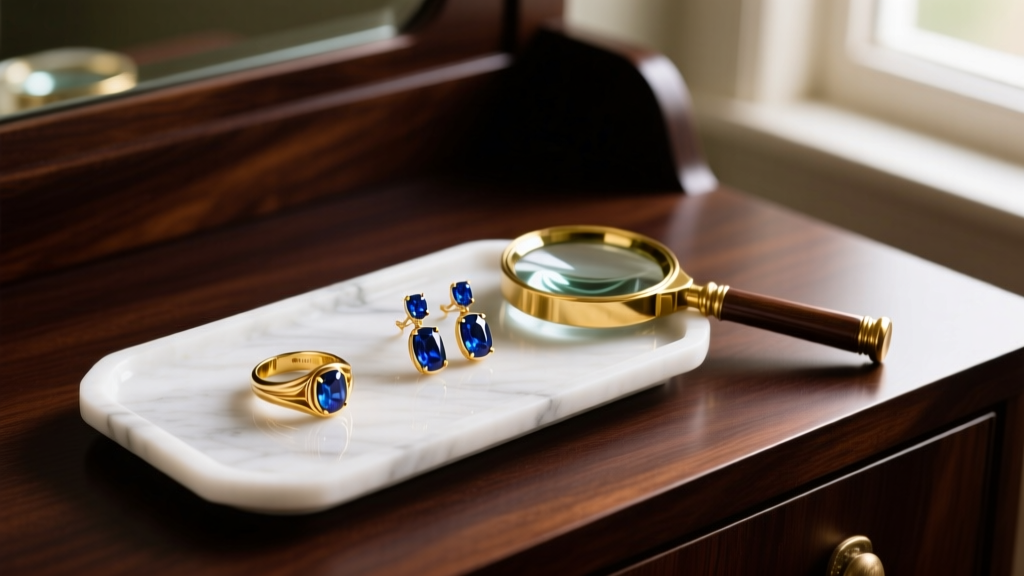
For pieces that are still worn occasionally, such as Mid-Century Retro cocktail rings or Edwardian lavalier pendants, the "Vanity Vignette" is an ideal styling concept. Instead of framing them permanently, utilize heavy, carved marble trays or dark walnut valets. Pair the jewelry with functional antique tools—a brass loupe, a silver-handled buttonhook, or a crystal perfume flacon. This keeps the pieces accessible while elevating them to the status of everyday sculpture. To protect the metals from ambient humidity and sulfur in the air when not on display, keep small, activated charcoal packets or Pacific Silvercloth tucked discreetly beneath the tray.
Gallery Wall Integration
When building a dedicated gallery wall for your collection, uniformity in framing is key to preventing visual chaos. Select a single frame profile—such as a matte black, 1-inch flat aluminum profile—and use it across all pieces. Vary the size of the acid-free rag board mats (using 4-ply or 8-ply thickness) to create hierarchy and breathing room. A large, ornate Victorian star brooch might require a generous 6-inch mat border to let the eye rest, while a cluster of delicate Art Deco bar pins can be grouped tightly within a shared mat window. This museum-standard approach ensures that the focus remains entirely on the historical craftsmanship of the jewelry.
Conclusion
The evolution of vintage jewelry art ideas in 2026 represents a mature, deeply respectful approach to historical adornments. By stepping away from concealed storage and embracing archival-grade, visually dynamic display techniques, collectors can honor the master artisans of the past. Whether you are suspending an Art Deco diamond brooch in a floating vitrine or contextualizing a Victorian cameo within a maximalist shadow box, the key lies in marrying aesthetic boldness with uncompromising conservation science. Treat your collection with the reverence of a fine art gallery, and your vintage pieces will continue to captivate and endure for generations to come.


